
Bar Pipa
We pay for a post of 10$

Elon Musk

OPENAI MOVES INTO HARDWARE: A $230 KEYBOARD AND LEGAL BATTLES WITH APPLE
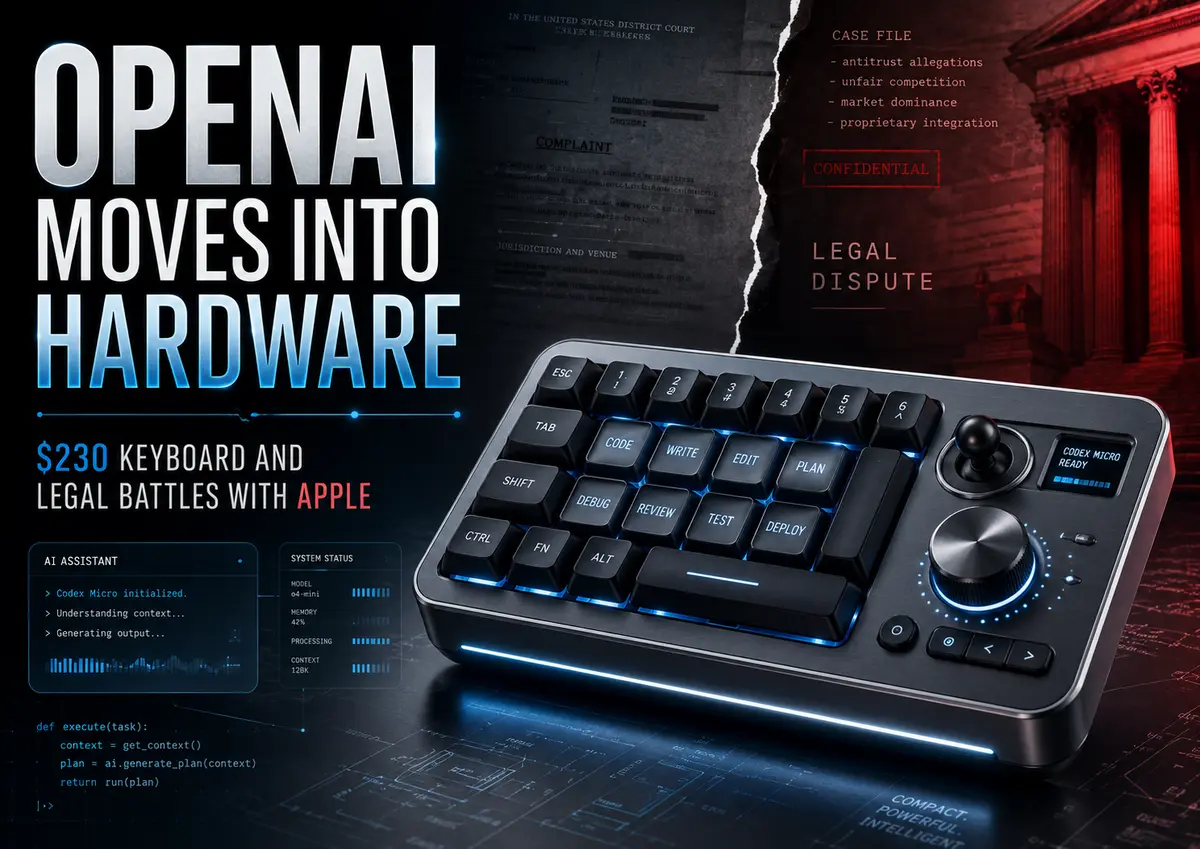
OPENAI MOVES INTO HARDWARE: A $230 KEYBOARD AND LEGAL BATTLES WITH APPLE

A SMALL KEYBOARD WITH BIG AMBITIONS

OpenAI has finally taken a step that many people have been expecting for a long time: it has released its own device. The surprise, however, is that it is neither a smart speaker nor a wearable gadget with a voice assistant. It is simply a keyboard—a small, compact keyboard equipped with a joystick and a rotary dial. Its name is Codex Micro.

The device was created in partnership with Work Louder, a Canadian-Italian company known for producing mechanical keyboards for technology enthusiasts and professionals. Visually, Codex Micro resembles some of the manufacturer’s other products, such as the Creator Micro 2, which was developed in collaboration with Figma. Internally, however, it is a completely different story.

The device looks like a compact control panel featuring thirteen illuminated keys, a mini joystick, and a rotary controller. All these elements are connected to Codex, OpenAI’s proprietary AI platform for programming. The idea is simple but ambitious: instead of clicking a mouse and navigating menus on a screen, developers can control their AI agents with the press of a button.

The LED keys display the status of individual agents: white means idle, blue indicates that a task is being processed, green means the task has been completed, and red signals an error. A single click allows the user to switch between different AI assistants, while a double-click brings the selected assistant to the foreground.

The joystick can be used to launch common tasks such as reviewing code, searching for errors, or performing refactoring. The rotary dial is the most interesting element of the device. It controls the AI’s “reasoning level”—in other words, how much time and computing power the neural network will spend solving a particular task. Turn it in one direction to receive a quick response to...


Continue reading...
0
0

Tesla Shares Fall 7.5% Despite Strong Report: Elon Musk’s Paradox

Tesla Shares Fall 7.5% Despite Strong Report: Elon Musk’s Paradox

Introduction: When Good News Becomes a Bad Signal

Thursday should have been a triumph for Tesla. The company reported its second-quarter delivery numbers, and the figures exceeded analysts’ expectations by a wide margin. 480,126 vehicles delivered, 451,758 produced — growth of 25% year over year and 34% compared with the first quarter. The market had expected roughly 406,000 deliveries, while Tesla delivered almost 20% more. It seemed like a reason to celebrate.

But the market decided otherwise. Tesla shares plunged 7.49% — their worst day in almost a year. This was not a coincidence. It was a trend: the stock has fallen after each of the last three quarterly delivery reports. This time was no exception. Investors voted with their wallets against a company that had done everything it could to please them.

So what is happening? Why is Tesla, which seemingly met and exceeded its targets, being punished by the market? The answer does not lie in the numbers themselves, but behind them: in Elon Musk’s political rhetoric, in competitive pressure from Chinese manufacturers, in growing consumer fatigue with electric vehicles in the United States, and in the fact that even the best delivery numbers in the world cannot compensate for fundamental problems that have been building up for years.

Let’s break down why Tesla has found itself in this paradoxical situation, where a strong report turns into a stock decline, and what it means for the company’s future.

Delivery Report: Numbers That Should Have Encouraged Investors

Record Deliveries and Their Structure

Let’s start with the good news. Tesla delivered 480,126 vehicles in the second quarter. This was not just a good result — it marked a return to growth after several disappointing quarters. A year ago, the company reported 384,000 deliveries, while in the first quarter of 2026...

Continue reading...
0
0
Tom Maffin

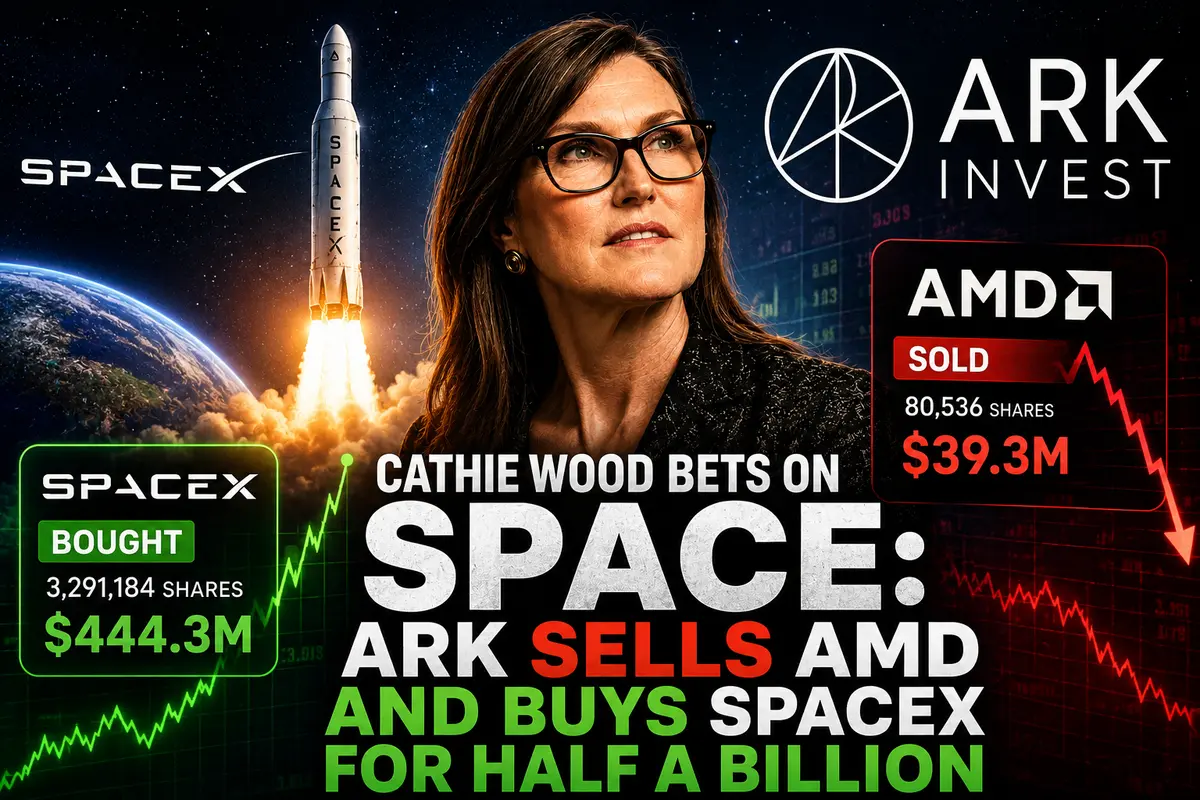
Cathie Wood Bets on Space: ARK Sells AMD and Buys $500 Million Worth of SpaceX

Cathie Wood Bets on Space: ARK Sells AMD and Buys $500 Million Worth of SpaceX

Sunday Brings Major Changes to the Portfolio of a Legendary Investor

While most investors spent Sunday digesting news from the Middle East and the latest swings in Bitcoin, Cathie Wood and her team at ARK Invest were hard at work. The firm released its daily trading report, and it immediately caught Wall Street’s attention.

The headline-grabbing move: ARK purchased 3,291,184 shares of SpaceX worth approximately $444.3 million. Nearly half a billion dollars invested in a single company—a company that had only recently become publicly available through an IPO after being inaccessible to most investors for years.

At the same time, ARK sold 80,536 shares of AMD worth $39.3 million. Nearly $40 million was raised by trimming a position in a chipmaker that had long been one of ARK’s favorite holdings.

What does this mean? A strategic shift. Cathie Wood, famous for her bets on disruptive innovators such as Tesla, Zoom, and Roku, appears to be making a new major wager: space. More specifically, SpaceX. And, once again, Elon Musk.

Let’s take a closer look at what may be behind these trades.

SpaceX: Why Cathie Wood Bought $444 Million Worth of Shares

Space Exploration Technologies Corp.—better known as SpaceX—is Elon Musk’s aerospace company responsible for launching rockets, delivering cargo to the International Space Station, building the Starlink satellite internet network, and pursuing the long-term goal of sending humans to Mars.

Until recently, SpaceX was a private company. Its shares were available primarily to venture capital firms, institutional investors, and employees through specialized programs. Retail investors had little or no access.

Last week, however, SpaceX reportedly completed an initial public offering (IPO), listing under the ticker SPCX with a valuation of roughly $250 billion. That valuation would make it one of the most valuable publicly traded companies in the...

Continue reading...
0
0
Tom Maffin

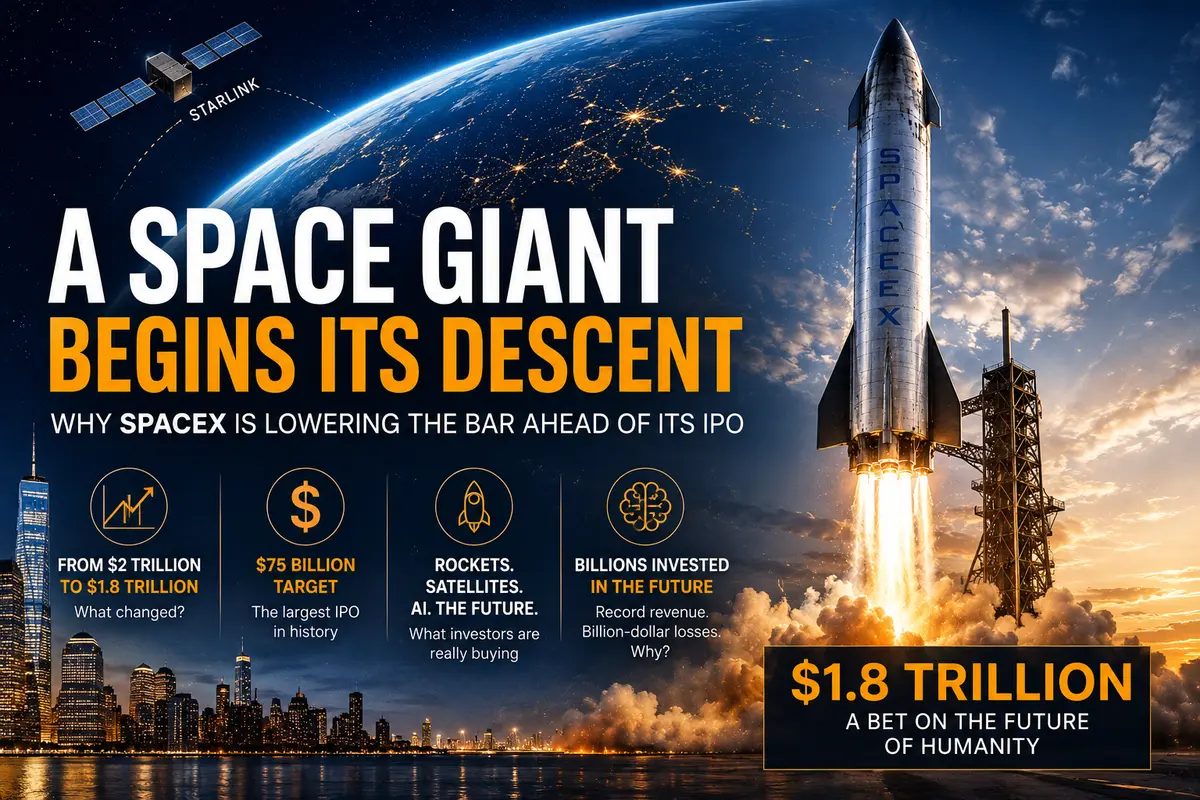
A Space Giant Begins Its Descent: Why SpaceX Is Lowering the Bar Ahead of Its IPO

A Space Giant Begins Its Descent: Why SpaceX Is Lowering the Bar Ahead of Its IPO

In a world where technology companies are accustomed to inflating valuations to astronomical heights, news that SpaceX is lowering its target valuation ahead of its initial public offering sounds almost like an admission of defeat. But it is not defeat. It is a sober calculation.

According to Bloomberg, Elon Musk and his advisers have revised expectations from $2 trillion down to $1.8 trillion. The difference—$200 billion—is larger than the market capitalization of most Fortune 500 companies. Yet even after lowering the target, SpaceX is still positioning itself for what could become the largest IPO in human history. And that story deserves a closer look.

From $2 Trillion to $1.8 Trillion: Why the Target Is Coming Down

In April, Bloomberg reported that SpaceX was aiming for a valuation exceeding $2 trillion. It was a breathtaking figure. For comparison, Apple, the world’s most valuable public company, is worth around $3 trillion. Microsoft is valued at roughly $2.5 trillion. In other words, before even going public, SpaceX sought to stand shoulder to shoulder with the most powerful corporations of the modern era, surpassing giants such as Saudi Aramco, Alphabet, and Amazon. It was a bold statement reflecting Musk’s belief that SpaceX is not merely a launch provider, but something far greater.

Now the target has been lowered. As is often the case, the reason lies in discussions with advisers and investors. Investment banks tasked with marketing SpaceX shares to the public have conducted preliminary demand assessments. Apparently, investor appetite was not quite as limitless as initially expected. A market that has learned hard lessons from overvalued IPOs in recent years has become more demanding. Investors want not only a grand vision but also numbers that support it. And when it comes to the numbers, the SpaceX story is more nuanced.

A valuation of...

Continue reading...
0
0
Navigation menu
instaforex banner