

Xiaomi Raises Its Sales Target, Betting on a Reversal in Memory Prices

Tuesday: The Chinese Giant Surprises the Market
Chinese technology giant Xiaomi has made an unexpected move that has attracted the attention of the entire smartphone market. The company has raised its annual smartphone sales target from 90 million to 110 million units. This comes despite increasing pressure from high memory and other component prices, which have placed significant strain on manufacturers in recent months.
XIACY ... Xiaomi’s decision, reported by Chinese media outlet Jiemian News citing industry sources, appears bold. Earlier this year, the company lowered its target due to the negative impact of high memory prices. Management now believes that the worst is over and that the market is ready for a reversal.
According to the report, the higher sales target is based on Xiaomi’s internal assessment that the current rise in memory market prices is approaching its peak and could soon be followed by a decline. If this forecast proves accurate, Xiaomi will gain a double advantage: higher sales volumes and lower production costs.
Memory Prices: Drivers and Risks
The memory chip market is going through a highly volatile period. Demand for memory used in artificial intelligence applications has soared, absorbing a significant share of global production. Companies manufacturing memory chips for AI servers are generating exceptional profits, while smartphone manufacturers are being forced to compete with them for limited resources.
For Xiaomi and other smartphone manufacturers, this means higher component costs. Memory chips are among the most expensive and important components of a smartphone, and when their prices rise, manufacturers’ profit margins decline. Earlier this year, Xiaomi even lowered its shipment target for this very reason.
However, the company now believes that the situation is changing. According to Xiaomi’s estimates, the memory chip market is ready for a reversal. This may be related to several factors. First, memory manufacturers are expanding production capacity to meet demand. Second, higher prices are limiting demand in certain market segments. Third, geopolitical risks and trade restrictions are creating uncertainty that could lead to a price correction.
Competitors Respond: OPPO and Vivo Push Back Against Samsung
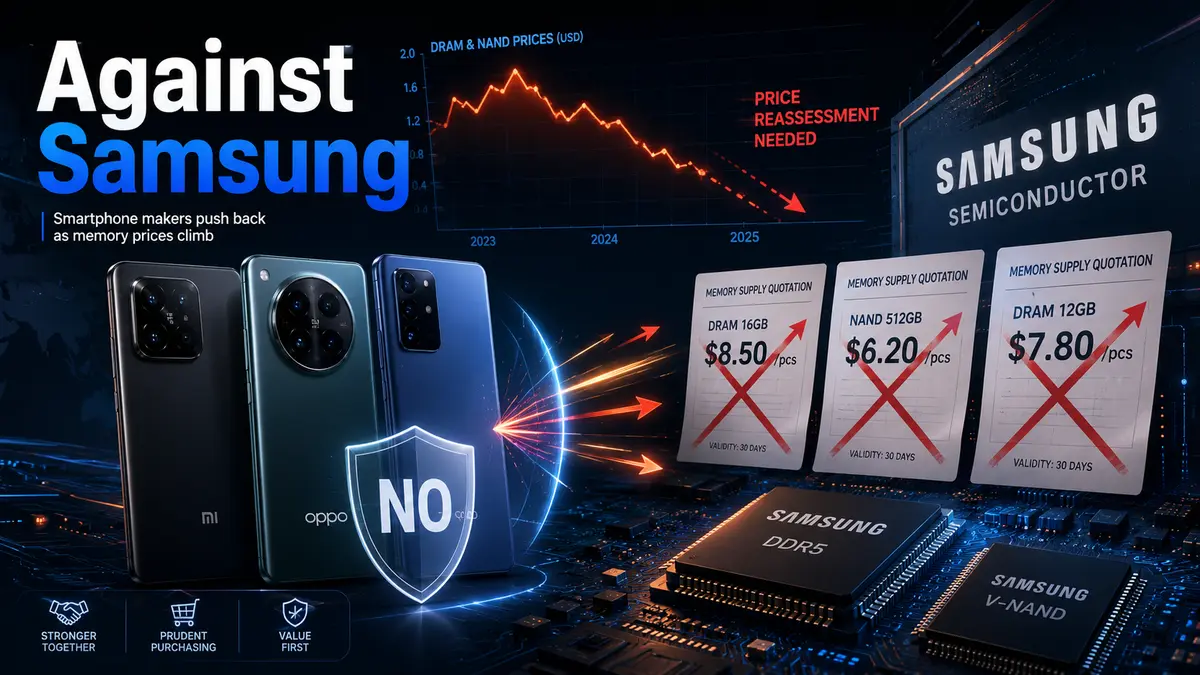
Xiaomi is not the only company attempting to resist rising memory prices. According to Jiemian News, other Chinese manufacturers, including OPPO and Vivo, have begun pushing back more actively against the continuing price increases. They have reportedly rejected BC94.L ... Samsung’s quotations for the third quarter.
This is an important signal. Samsung is one of the world’s largest memory chip manufacturers, and rejecting its quotations is a serious step. OPPO and Vivo, like Xiaomi, are under pressure from high prices and have decided to demonstrate that they are not prepared to pay any price demanded by suppliers.
This position could lead to a reassessment of prices across the market. If major smartphone manufacturers begin rejecting quotations on a large scale, memory producers may be forced to lower prices to avoid losing customers. This is precisely what Xiaomi is counting on as it raises its sales target.
The AI Industry: The Main Consumer of Memory
The rise in memory chip prices has largely been driven by demand from the artificial intelligence industry. Major technology companies are purchasing advanced memory chips for training their neural networks, and this demand significantly exceeds available supply.
Xiaomi, AAPL ... Apple, Huawei, and other smartphone manufacturers have repeatedly warned about increasing pressure caused by rising memory chip prices. Supplies of this critical component are being absorbed to a large extent by the AI industry, forcing smartphone manufacturers to compete for the remaining volumes.
Recently, however, doubts have increasingly emerged over whether the continued growth in memory chip prices can be sustained. Limited production and weakening demand caused by high prices could lead to a reversal in the trend. This is exactly what Xiaomi is betting on by raising its sales target.
Xiaomi’s Strategy: Aggressive Growth
Xiaomi’s decision to raise its sales target to 110 million units represents an aggressive strategy. The company is clearly betting that the smartphone market will recover and that memory prices will decline.
Xiaomi has been actively expanding its presence in the global market for several years. The company has strong positions in China, India, Europe, and other regions. Its strategy is based on offering high-quality smartphones at competitive prices, allowing it to attract a broad customer base.
If memory prices do decline, Xiaomi will be able to improve its profit margins and invest more heavily in research and development. This, in turn, could allow the company to release even more competitive products and strengthen its market position.
However, the strategy is not without risks. If memory prices continue to rise, Xiaomi may encounter difficulties in achieving its increased sales target. Higher production costs could reduce profit margins and negatively affect the company’s financial results.
What Comes Next?
The coming months will be decisive for the memory chip market. If prices begin to decline, Xiaomi and other smartphone manufacturers will be able to breathe a sigh of relief. If prices continue to rise, companies will have to find other ways to reduce costs or raise the prices of their products.
Xiaomi has placed its bet on a market reversal, and this could prove to be either a brilliant move or a costly mistake. In either case, the market will closely monitor further developments.
For now, Xiaomi shares on the Hong Kong Stock Exchange are likely to respond positively to the news. Investors tend to favor companies that demonstrate confidence and pursue aggressive growth strategies.
Xiaomi has shown that it is not afraid of challenges and is prepared to take risks to achieve its objectives. If its forecasts prove correct, the company could significantly strengthen its position in the global smartphone market. If they do not, the lesson will be expensive, but valuable.




Comments
No comments yet. Be the first to share your thoughts!
Authentication Required
You must be logged in to post a comment.