

Understanding the Role of a Financial Trader
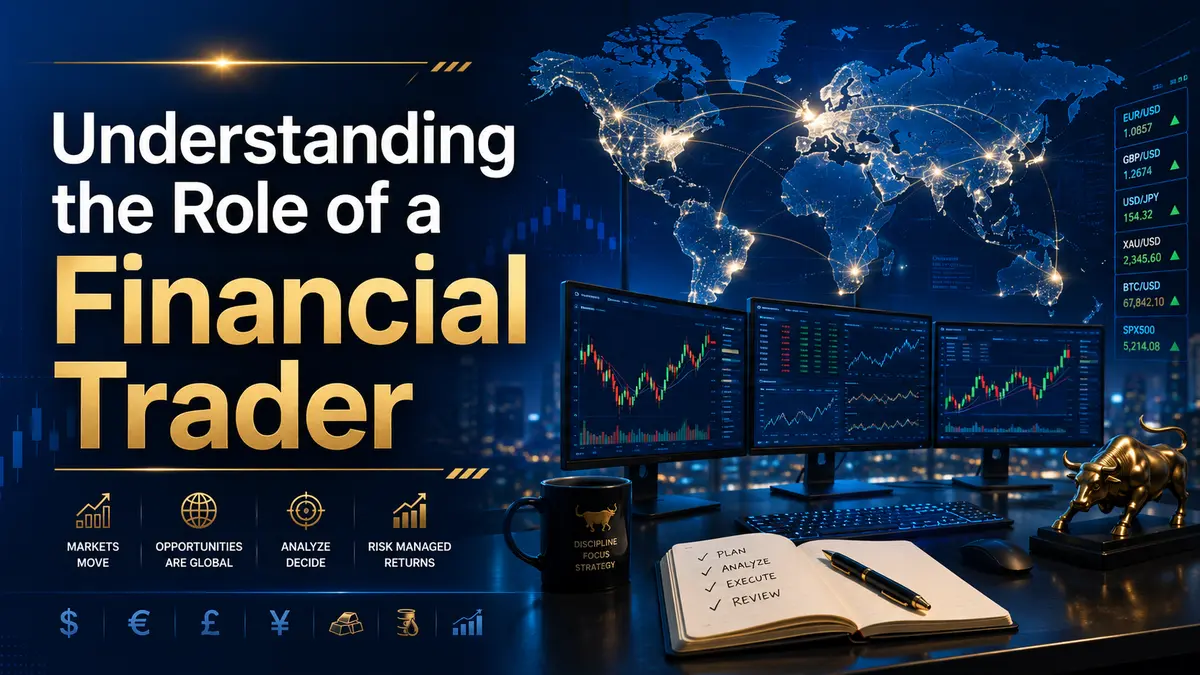
A trader is a highly specialized market participant who actively buys and sells financial instruments within the global financial markets to generate a profit. Unlike passive market participants, traders thrive on movement, capitalizing on the constant price fluctuations that occur every second across international exchanges.
Operating at the very heart of the global economy, traders can work independently from a home office as retail traders, or they can be employed by massive financial institutions — such as Wall Street investment banks (e.g., Goldman Sachs, Morgan Stanley), global hedge funds (like Citadel or Bridgewater Associates), and proprietary trading firms.
By constantly executing buy and sell orders, traders provide the essential liquidity that keeps global markets functioning smoothly. They ensure that when a pension fund wants to offload a massive block of shares, or a multinational corporation needs to hedge its currency exposure, there is someone on the other side of the trade willing to take the risk.
The Arsenal of a Modern Trader: Instruments and Strategies
Traders do not limit themselves to simply buying stocks. The global market offers a vast array of complex financial instruments, allowing traders to profit whether the broader economy is booming or crashing.
Equities (Stocks): Trading shares of global powerhouses like Apple AAPL ... , Tesla TSLA ... , or LVMH LVMHF ... , often attempting to capture intraday price movements driven by earnings reports or global news.
Derivatives (Options and Futures): These contracts allow traders to speculate on the future price of an asset without owning it. A trader might buy crude oil futures (like the West Texas Intermediate benchmark) or S&P 500 options to leverage their capital and amplify potential returns.
Foreign Exchange (Forex): The largest and most liquid market in the world, where traders speculate on currency pairs like the EUR/USD EURUSD ... or GBP/JPY GBPJPY ... ,...