

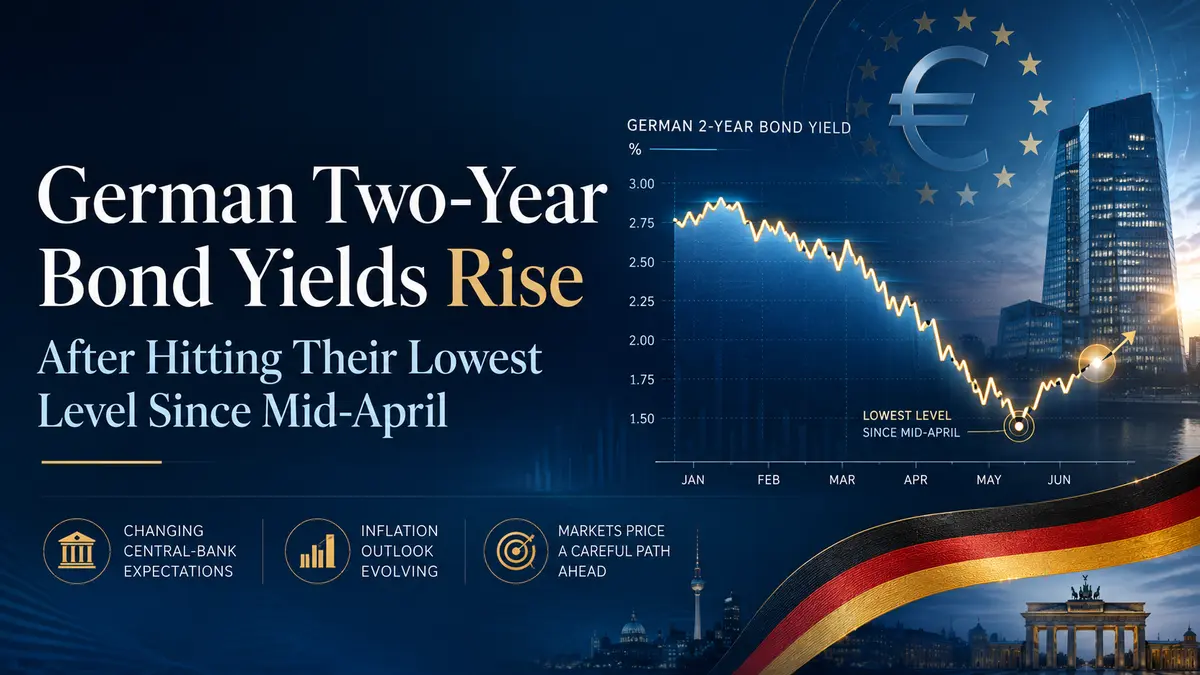
German Two-Year Bond Yields Rise After Hitting Their Lowest Level Since Mid-April
Introduction: A Rebound After the Drop
Friday. European markets are opening after a turbulent Thursday, when German two-year bonds experienced a powerful rally that pushed their yields down to the lowest levels since mid-April. 2.51% — this is what short-term eurozone bonds now offer, and this figure symbolizes not just a technical rebound, but a deep reassessment of expectations about where the global economy is heading.
What happened over these few days? Markets went through a real information storm that completely washed away previous forecasts. U.S. employment data, which came in significantly weaker than expected, became the trigger that forced investors to reconsider their bets on further Fed rate hikes. Then came European inflation figures, which were also below forecasts, along with geopolitical news from Qatar, where the United States and Iran continue peace talks.
All of this together created a new narrative — a narrative suggesting that inflation risks are retreating and central banks may be able to adopt a softer stance. German two-year bonds, which have always been the most sensitive indicator of expectations regarding ECB rates, reacted faster than anything else. Their yield first collapsed, and then, on Friday, corrected slightly upward — but this is only a technical correction after an excessively sharp move.
Nevertheless, even taking this small increase into account, yields remain significantly below the levels seen at the beginning of the week. This indicates that markets are taking seriously a scenario in which central banks pause their tightening cycle and may even begin considering rate cuts. But is everything really that simple? Let’s take a closer look.
U.S. Labor Market Data: An Unexpected Cold Shower
The Numbers That Changed Expectations
The main event of the week, which changed the balance of power in the markets, was the U.S. employment data for June. Economists...
