

German Two-Year Bond Yields Rise After Hitting Their Lowest Level Since Mid-April
Introduction: A Rebound After the Drop
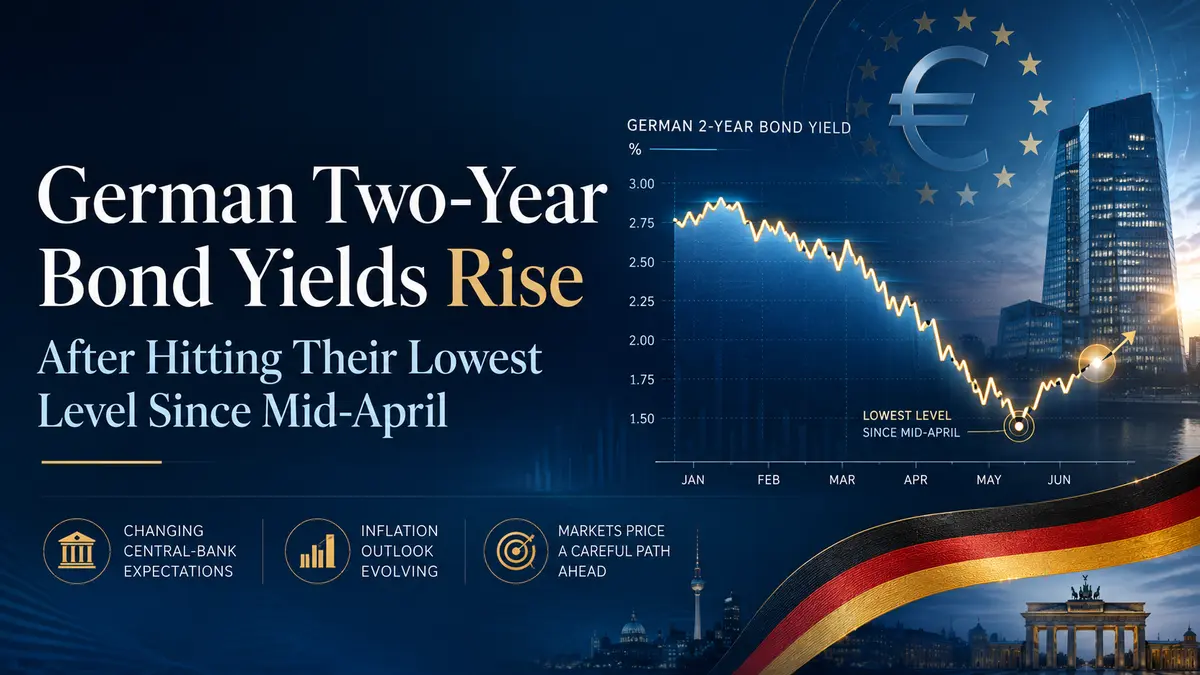
Friday. European markets are opening after a turbulent Thursday, when German two-year bonds experienced a powerful rally that pushed their yields down to the lowest levels since mid-April. 2.51% — this is what short-term eurozone bonds now offer, and this figure symbolizes not just a technical rebound, but a deep reassessment of expectations about where the global economy is heading.
What happened over these few days? Markets went through a real information storm that completely washed away previous forecasts. U.S. employment data, which came in significantly weaker than expected, became the trigger that forced investors to reconsider their bets on further Fed rate hikes. Then came European inflation figures, which were also below forecasts, along with geopolitical news from Qatar, where the United States and Iran continue peace talks.
All of this together created a new narrative — a narrative suggesting that inflation risks are retreating and central banks may be able to adopt a softer stance. German two-year bonds, which have always been the most sensitive indicator of expectations regarding ECB rates, reacted faster than anything else. Their yield first collapsed, and then, on Friday, corrected slightly upward — but this is only a technical correction after an excessively sharp move.
Nevertheless, even taking this small increase into account, yields remain significantly below the levels seen at the beginning of the week. This indicates that markets are taking seriously a scenario in which central banks pause their tightening cycle and may even begin considering rate cuts. But is everything really that simple? Let’s take a closer look.
U.S. Labor Market Data: An Unexpected Cold Shower
The Numbers That Changed Expectations
The main event of the week, which changed the balance of power in the markets, was the U.S. employment data for June. Economists had expected a moderate slowdown in job growth, but the reality turned out to be much harsher. The figures significantly missed forecasts, and this immediately affected all asset classes.
For the bond market, this was a moment of triumph. Before that, for several months, Treasury yields had been rising because the U.S. labor market was showing remarkable resilience. Each new employment report had been stronger than the previous one, reinforcing hawkish expectations and pushing the Fed toward further tightening.
But in June, something broke. Perhaps the effect of high interest rates finally began to weigh on the economy. Perhaps seasonal factors played a role. Perhaps businesses simply grew tired of hiring after two years of record job creation. The reasons are less important than the result: the labor market, which had been the Fed’s main argument in favor of tight policy, suddenly showed signs of weakness.
The CME FedWatch tool, which tracks probabilities of rate changes, reacted instantly. If before the data release the probability of a September rate hike was estimated at more than 60%, afterward it dropped sharply. Investors shifted their baseline expectations toward a prolonged policy pause at least until October, while some analysts began discussing the possibility of rate cuts as early as next year.
Impact on European Bond Markets
For European bonds, especially German bonds, this news was like a breath of fresh air. For several months, they had been hostage to fears that persistent transatlantic tightening by the Fed would lead to higher global borrowing costs and choke regional economic growth.
Markets feared that high interest rates in the United States would draw capital out of the eurozone, weaken the euro, and create additional inflationary pressure through more expensive imports. It was a classic vicious circle that is difficult to escape. But weak U.S. employment data gave hope that this circle could be broken.
If the Fed slows the pace of tightening or stops altogether, this will reduce pressure on European markets. The ECB will gain more room for maneuver and will be able to focus on supporting economic growth, which remains fragile in the eurozone. The decline in German bond yields reflects this new optimism directly.
Of course, one employment report does not change the overall picture. But it creates a precedent and shows that the labor market is not an endless source of strength for the Fed. If the next data releases are also weak, this could become the beginning of a new trend that completely changes monetary policy in the United States and, consequently, in Europe.
Eurozone Inflation: Below Expectations, Above Hopes
June Figures: Disinflation Continues
While markets were digesting U.S. employment data, Europe brought news of its own. Eurozone inflation for June came in below expectations, providing yet another confirmation that price pressure is gradually weakening.
This was an important signal for the ECB. Three weeks ago, the central bank raised rates by 25 basis points, citing concerns that the conflict in the Middle East could trigger a broader inflationary spiral. At the time, the risks seemed high, and the ECB preferred to act preemptively.
But much has changed since then. Peace talks between the United States and Iran in Qatar have made tangible progress, oil prices have returned to pre-war levels, and commercial shipping has begun to normalize. All these factors have reduced supply-side inflation risks and allowed central banks to breathe more easily.
Now, given the new inflation data, the ECB has even more reason to pause. Whereas markets previously priced in further tightening, they are now increasingly leaning toward a scenario in which the ECB refrains from new hikes until autumn — and possibly even longer.
Lagarde’s Comments in Sintra: A Signal of Changing Rhetoric
A landmark moment was the speech by ECB President Christine Lagarde at the annual forum in Sintra, Portugal. Her comments marked a noticeable departure from the position the central bank had taken only three weeks earlier.
Lagarde said that risks related to inflation and economic growth in the eurozone are becoming “more balanced.” This may sound like a cautious diplomatic formulation, but in the world of central banking, such words have a very specific meaning.
When the ECB president speaks about a balance of risks, it means the central bank no longer sees inflation as the main threat that must be fought at any cost. This opens the door to discussions about rate cuts — or, at the very least, a prolonged pause.
Markets picked up this signal immediately. Bond yields began to fall even before the release of U.S. employment data, and then the decline accelerated. German two-year bonds found themselves at the center of this movement because they are the most sensitive to changes in expectations regarding ECB policy.
Geopolitics: Peace Talks and Cheaper Oil
The Qatar Breakthrough
The role of geopolitics in the current decline in bond yields should not be underestimated. Tangible progress in peace talks between the United States and Iran, taking place in Qatar, became an important factor that eased market concerns and allowed investors to breathe more calmly.
The conflict in the Middle East had been one of the main drivers of inflation expectations in recent months. Threats to close the Strait of Hormuz, attacks on tankers, and escalating tensions between Tehran and Washington all created a risk premium in energy prices and, consequently, in inflation expectations.
Now that the talks in Qatar have produced results, this premium is beginning to melt away. Global oil prices have returned to levels not seen since before the conflict, removing a significant portion of inflationary pressure.
For the ECB and the Fed, this means they have more freedom to act. When inflation accelerates because of external shocks, central banks are forced to respond with tightening, even if domestic economic conditions do not require it. But when external shocks weaken, they gain the opportunity to pause and see how the situation develops.

Normalization of Shipping
Another important aspect of the geopolitical breakthrough is the normalization of commercial shipping. In recent months, many shipping companies had been forced to change routes to avoid conflict zones, which increased freight costs and created additional inflationary pressure.
Now that the threat has diminished, shipping companies are beginning to return to their usual routes. Freight costs are falling, supply chains are recovering, and this also helps reduce inflation expectations.
This effect is especially important for the eurozone, which is highly dependent on imported energy and goods. The normalization of shipping lowers import costs and helps contain inflation without the need to raise interest rates.
The Fed and the ECB: A Pause Until Autumn?
The Hawkish Shift That Never Happened
Just a few weeks ago, markets were convinced that the Fed would continue tightening. The debut comments by new Chair Kevin Warsh in Sintra were interpreted as a hawkish signal, and the CME FedWatch tool estimated the probability of a September rate hike at more than 60%.
But now, after weak employment data and geopolitical changes, these expectations have declined substantially. Investors have shifted their baseline expectations toward a prolonged policy pause until October or even later. The hawkish shift that had seemed inevitable never happened.
For the bond market, this means that pressure on yields is weakening. Whereas investors previously priced in further tightening, they are now considering a scenario in which rates remain at current levels or even begin to fall. This creates a favorable environment for bonds, especially short-term instruments such as German two-year bonds.
A “Wait-and-See” Approach
The easing of supply shocks has given both the ECB and the Fed more room to act. Central banks can now afford to take a “wait-and-see” approach until autumn without fearing that inflation will spiral out of control.
This is especially important for the ECB, which has found itself in a difficult position. The eurozone economy is recovering more slowly than the U.S. economy, and any further tightening could choke growth. Now that inflation risks are declining, the ECB can afford not to rush into new hikes.
The situation is similar for the Fed. Weak employment data provide an opportunity to reassess its rhetoric and perhaps even begin preparing markets for rate cuts. Kevin Warsh, who started with tough statements, may now be forced to soften his position.
Technical Picture: Levels and Outlook
German Two-Year Bonds: What the Numbers Say
The yield on German two-year bonds, which currently stands at 2.51%, is an important indicator of market expectations. This level is significantly below the highs reached at the beginning of the year and reflects a shift in perceptions of the monetary policy outlook.
Technically, the drop in yields to the lowest levels since mid-April was sharp and powerful. Such momentum usually points to a strong change in expectations rather than a random correction. The subsequent small increase on Friday is a normal reaction after an excessively strong move, but it does not change the overall trend.
If U.S. employment data continue to surprise to the downside and the geopolitical situation remains calm, yields on two-year bonds may continue to decline. The next support level is at 2.40%, followed by 2.20%. If yields break through these levels, it will signal that markets are seriously expecting ECB rate cuts.
The Broader Bond Market: Rally or Rebound?
The broader eurozone bond market also found significant support after the release of U.S. employment data. Yields declined across the curve, but the move was especially noticeable at the short end, which is most sensitive to changes in monetary policy.
The question is whether this rally is sustainable or whether it is merely a temporary rebound after oversold conditions. Bond markets had been under pressure for several months, and any positive news triggers a powerful reaction. But for the rally to continue, new confirmation is needed that inflation is truly losing momentum.
The next inflation data from the United States and the eurozone will be crucial. If they confirm the disinflationary trend, yields could fall even further. But if inflation comes in above expectations, the rally could quickly end, and yields could return to the levels seen at the beginning of the week.
Conclusion: New Hope for Softer Policy
The week, which began with hawkish statements in Sintra, is ending on a very different note. U.S. employment data, eurozone inflation figures, and progress in peace talks between the United States and Iran have all changed the balance of power in bond markets.
The yield on German two-year bonds, which fell to its lowest level since mid-April, is the main indicator of this shift. Investors who only a few weeks ago were confident in further tightening are now pricing in a scenario of a prolonged pause — and possibly even rate cuts.
Of course, it is still too early to declare victory over inflation. Many factors could still change the situation: geopolitical shocks, new economic data, and unexpected central bank decisions. But at the moment, markets see enough reasons for optimism, and this is reflected in bond prices.
The ECB and the Fed are likely to pause and observe developments until autumn. If inflation continues to decline and the economy shows no signs of overheating, we may see the beginning of a new cycle of monetary easing. In that case, bond yields, which have already started to decline, could fall even further.
For now, markets are enjoying the moment. German two-year bonds have recovered after the drop, but remain significantly below the levels seen at the beginning of the week. This is not a victory, but it is an important step in the right direction. And if the trend continues, an interesting autumn awaits us — an autumn when central banks may, for the first time in a long while, start talking about cuts rather than hikes.

Comments
No comments yet. Be the first to share your thoughts!
Authentication Required
You must be logged in to post a comment.