

Why BofA Remains Bearish on the Euro
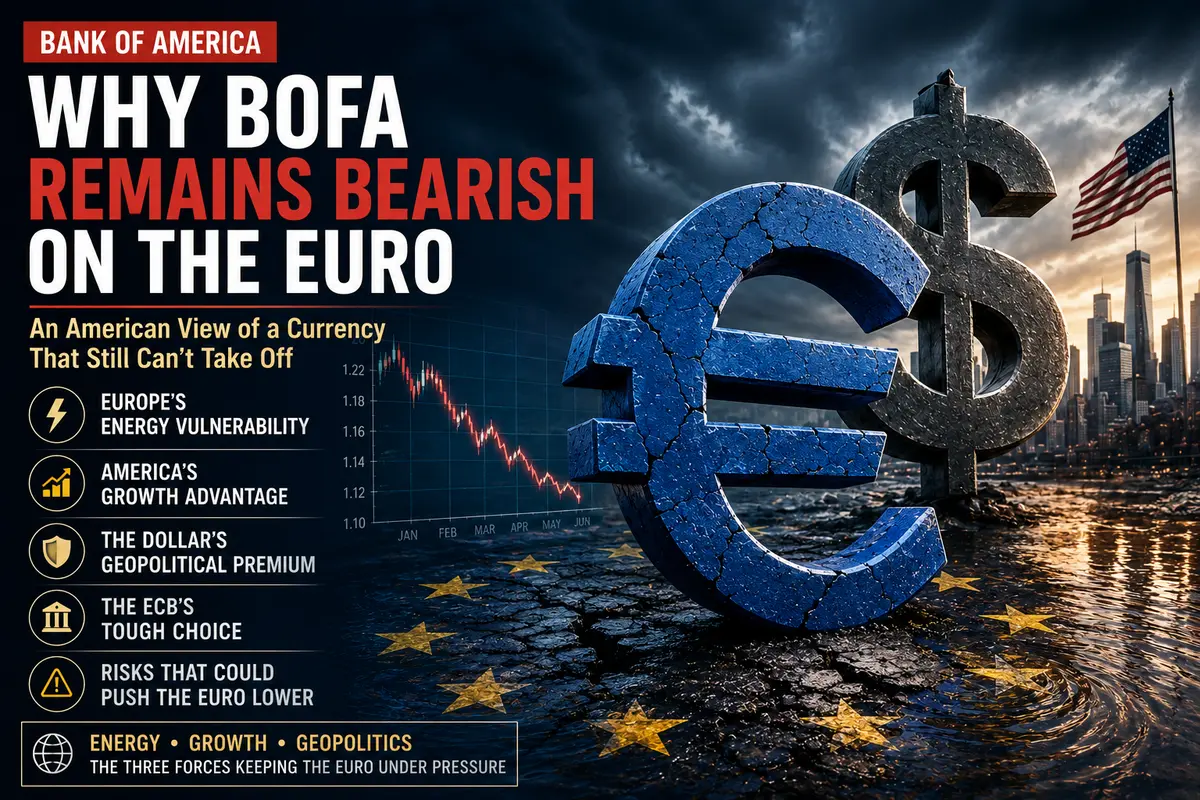
Bank of America, one of the world’s largest financial institutions, has not changed its view on the euro. It looks at the single European currency with caution bordering on pessimism — not catastrophic or panicked, but rather weary and pragmatic. BofA analysts see too many factors that will weigh on the euro in the coming months, and too few that could support it.
The euro is going through a difficult period. It is not collapsing, but it is not rising either. It is moving sideways around 1.16–1.17 against the dollar, sometimes slightly higher, sometimes slightly lower. Investors who just a year ago believed in a quick return to 1.20 and above are now simply hoping it will not fall to 1.10.
BofA offers no false hopes. Its analysts believe pressure on the euro will persist at least through the second and third quarters. Only toward the end of the year, if energy markets begin to normalize and eurozone growth improves, may the single currency have a chance to recover.
But what exactly is holding the euro back? Why can a currency serving an economy of 450 million people and GDP of 15 trillion euros not strengthen against the dollar? The answers lie in three areas: energy, economic growth, and geopolitics.
Europe’s Energy CurseThe first and perhaps main reason for the euro’s weakness is Europe’s energy vulnerability. BofA says directly: Europe remains more vulnerable to rising energy costs than the United States. This is not new, but under current conditions this vulnerability is becoming critical.
Natural gas prices have historically had a much stronger impact on the eurozone economy. European industry, especially Germany’s, was built on cheap Russian gas. After the start of the war in Ukraine and the...
