

Eurozone Bonds Breathe a Sigh of Relief: Peace with Iran Appears Within Reach, Yields Fall
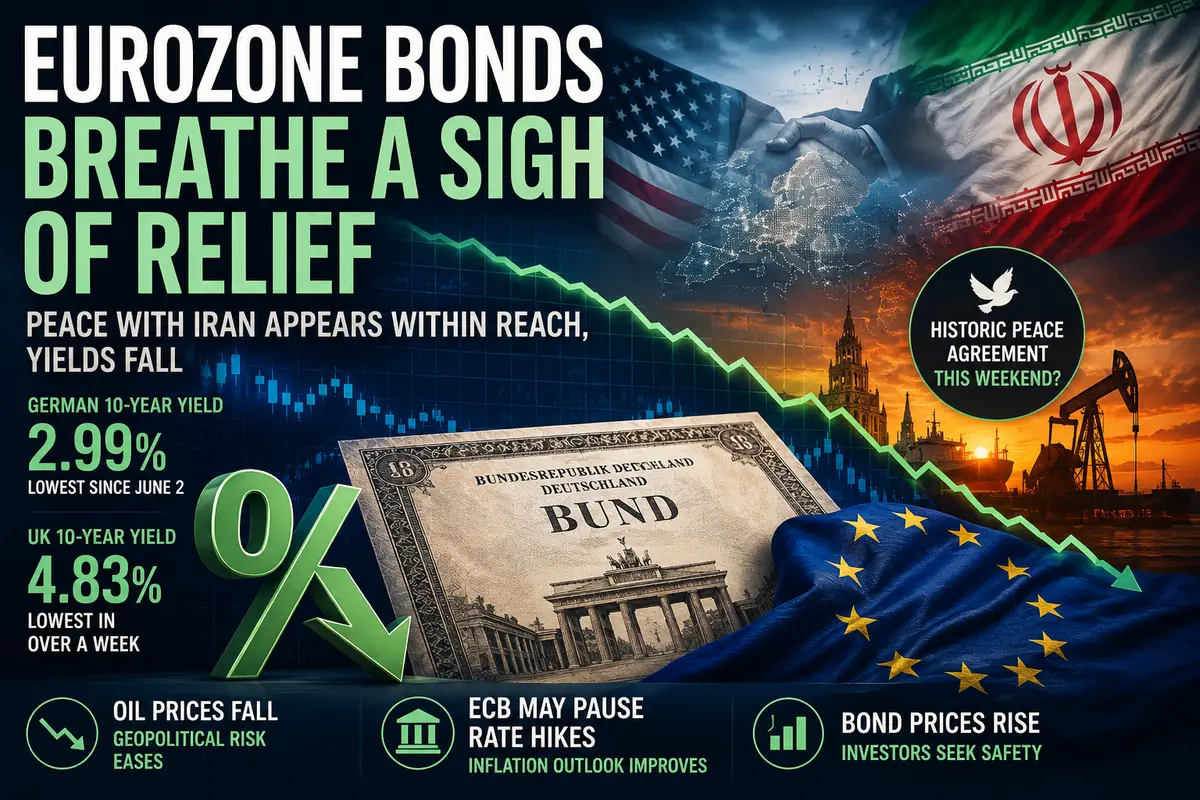
On Friday morning, European markets woke up with the feeling that the heavy burden weighing on them for months had suddenly become a little lighter. It had not disappeared or melted away—it simply stopped suffocating them. Eurozone government bonds rallied, which means their yields declined.
That may sound counterintuitive to those accustomed to thinking that “up” is good and “down” is bad. In the bond market, however, the opposite is true: when bond prices rise, yields fall. And on Friday, the yield on benchmark 10-year German Bunds dropped below 3% for the first time since early June.
Three percent is a psychological threshold. Above it lies a zone of pain, where borrowers—governments, corporations, and mortgage holders—feel the rising cost of money. Below it lies a zone of relief, even if that relief proves temporary.
What happened? Geopolitics.
Donald Trump, who rarely delights markets with predictability, delivered a statement that bond traders would almost be willing to build him a monument for. He said that a historic peace agreement between the United States and Iran could be signed in Europe as early as this weekend.
If true—and Trump is known for presenting wishes as realities—the conflict in the Middle East, which has flared on and off since spring, could finally come to an end. Iran would stop threatening to close the Strait of Hormuz. Israel would halt strikes on the outskirts of Beirut. Oil prices, already at two-month lows, could fall even further. Eurozone inflation, fueled by expensive energy, would begin to slow. And the European Central Bank (ECB), which has been forced to raise interest rates to combat inflation, could at least afford to pause.
All of this is music to the ears of bondholders.
Bonds thrive on low inflation and low interest...
