

Fed concerns and the Iranian dividend split the global bond market
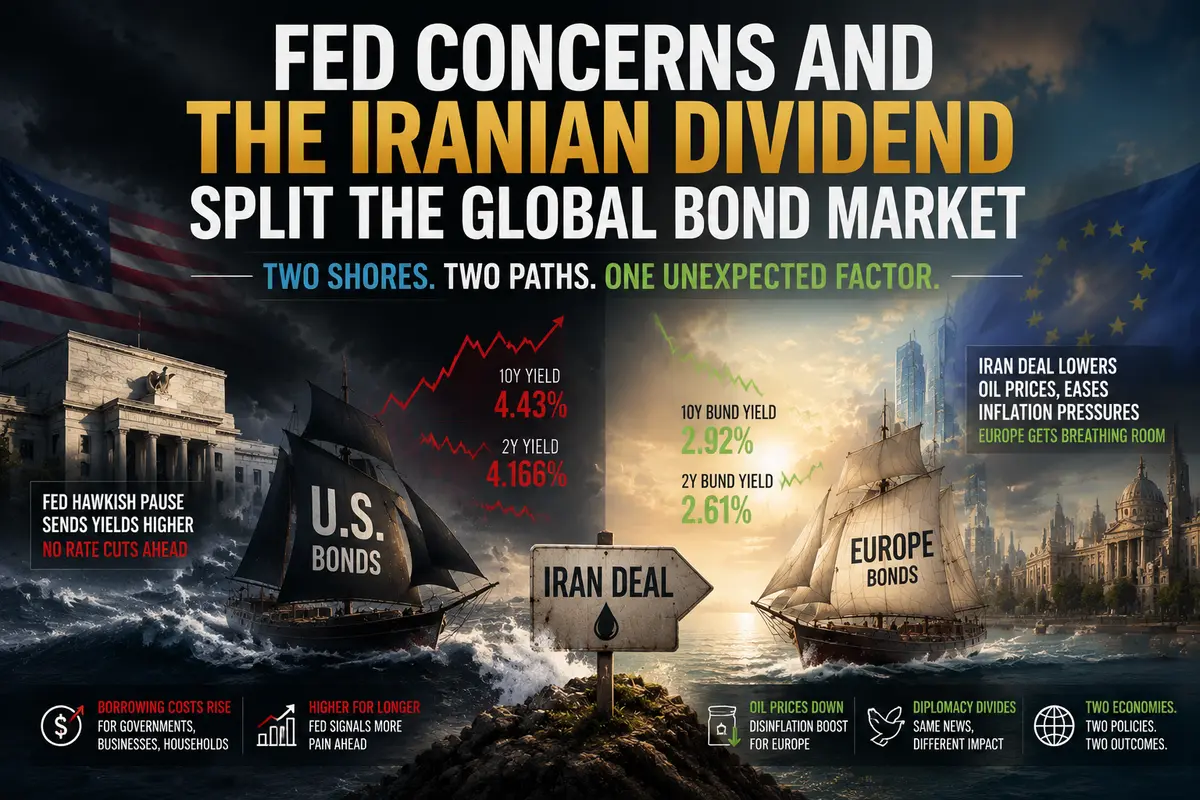
Introduction: two shores of the same Atlantic
Imagine two ships sailing in the same ocean but caught in completely different currents. One is racing forward with a tailwind, its crew confident in its course and ready to tighten the sails. The second is barely moving, its holds underfilled, and its captain anxiously scanning the horizon. That is roughly what the government bond markets on both sides of the Atlantic look like today.
What we are seeing in recent days is not just ordinary yield fluctuations. It is a tectonic rupture exposing fundamental differences in the economic trajectories of the United States and Europe. On one side is the Federal Reserve’s aggressive rhetoric, signaling that the era of cheap money has not ended, only paused. On the other is Europe, where every new price signal from the Middle East is perceived as a potential escape from inflationary suffocation.
And at the center of this storm sits an unexpected factor that would normally seem secondary in any other year — a temporary agreement between the United States and Iran. What diplomats discussed in negotiation rooms, bond traders instantly translated into numbers and charts. And those numbers began speaking different languages on opposite sides of the ocean.
Let’s unpack what is really happening in the bond market, why the Fed and the ECB are looking in different directions, and how a peace initiative with Iran unexpectedly became a point of division for investors.
The Fed said “pause,” markets heard “attack”
A hawkish pause: how unchanged rates became a tightening signal
Thursday, Federal Reserve meeting. Everyone expected a rate decision. And it came — no change. But if you think markets breathed a sigh of relief, you are very wrong. In the world of central banking, it is often not the decision itself that...
