

Bar Pipa
We pay for a post of 10$

Plan

OPEC+ Increased Oil Production Quotas by 188,000 bpd in August

OPEC+ Increased Oil Production Quotas by 188,000 bpd in August

Introduction: The Oil Alliance Takes a Step Forward, but Prices Have Already Collapsed

Sunday. A video conference that changes the balance of power in the global oil market. Seven key OPEC+ participants, led by Saudi Arabia and Russia, agree on another increase in combined production quotas. In August, they will add another 188,000 barrels per day, continuing the gradual reversal of restrictions that have held back production in recent years.

At first glance, this is the kind of news that should have sent prices crashing. More oil on the market means lower prices. But oil futures have already fallen by 43% from their wartime peak, to around $72 per barrel in London. An additional 188,000 barrels per day is only 0.2% of global demand. It is not a drop in the ocean, but it is not a tsunami either.

What really matters in this decision is not so much the number itself, but the signal. OPEC+ is demonstrating that it does not intend to panic because of falling prices. It continues to follow its plan, even if the market is already oversupplied. And this creates a new context for the oil industry — a context in which the old rules of the game no longer work.

Let’s examine what really stands behind this decision, why OPEC+ continues to increase production despite falling prices, and what this means for the future of the oil market.

Figures and Context: What an Increase of 188,000 bpd Means

The Plan to Complete the Reversal of Restrictions

The decision to increase quotas by 188,000 barrels per day is not spontaneous. It is part of a plan that was developed even before the war and that OPEC+ has been consistently implementing. Since the beginning of the conflict, the alliance has increased quotas by 940,000 barrels per...

Continue reading...
0
0
Tom Maffin

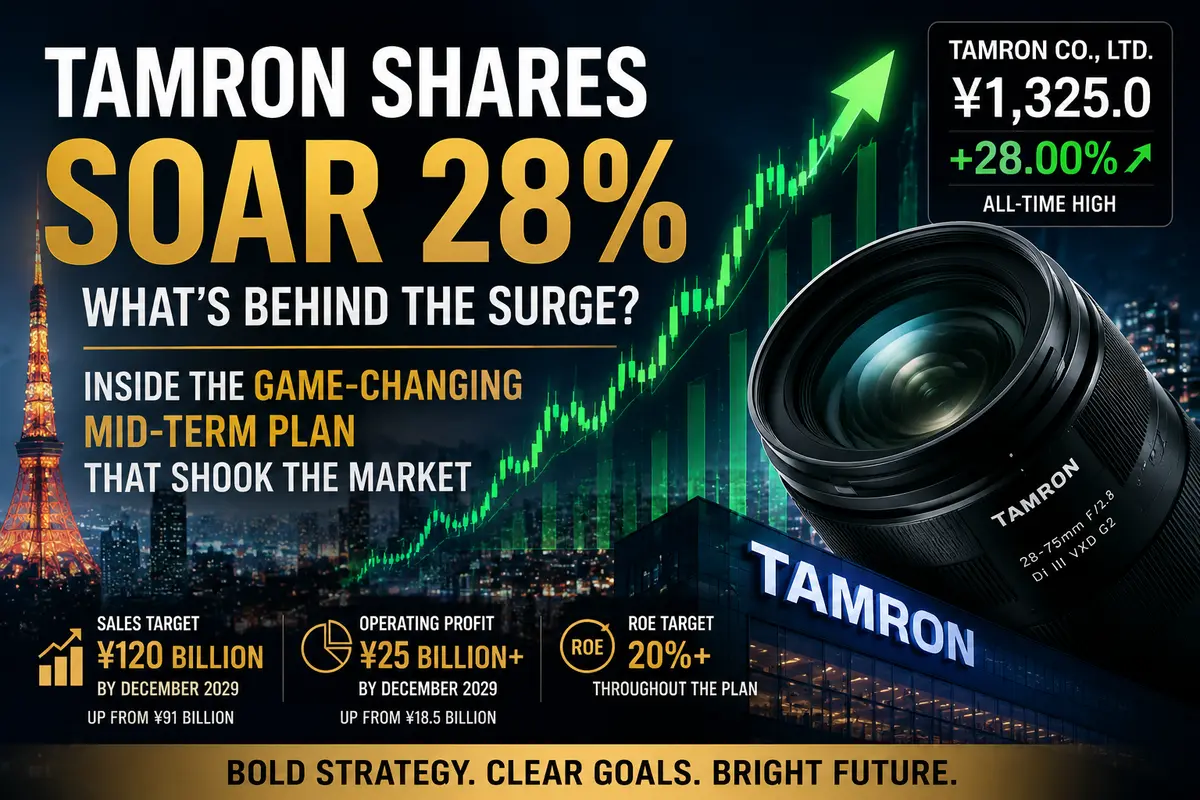
Why Tamron Shares Surged 28%: A Breakdown of the Medium-Term Plan That Shook the Market

Why Tamron Shares Surged 28%: A Breakdown of the Medium-Term Plan That Shook the Market

The day an optical giant rewrote the rules of the game

The Tokyo Stock Exchange witnessed a rare spectacle yesterday. Shares of Tamron—a company many investors have long viewed as a modest but reliable lens manufacturer—soared 28% in a single trading session. The price of ¥1,325.0 per share is not just a number; it is an all-time high that forced investors around the world to open their spreadsheets and recalculate their portfolios.

But what exactly triggered this explosive rally? The answer is not a one-off deal or a short-lived hype around the photography industry. It lies in a fundamental overhaul of the company’s strategy, unveiled in its medium-term management plan running through December 2029. And that plan is impressive not only for its ambition, but also for its level of detail—something institutional investors value highly.

Let’s break down what the market saw in this document and why the reaction was so powerful.

Tamron’s Medium-Term Plan — Numbers That Speak for Themselves

From ¥91 billion to ¥120 billion: why the market believed in revenue growth

The main news that shook the market was a revision of financial targets. Tamron announced that it aims to reach ¥120 billion in sales by December 2029. To understand the scale: the previous target was ¥91 billion by December 2026. In other words, this is not just growth—it is a structural leap of roughly 32% compared to earlier expectations.

But why did investors interpret these figures not as empty promises, but as a credible roadmap? The answer lies in specificity. Tamron did not simply state ambitious numbers—it clearly outlined the segments driving growth. The company is focusing on three key areas:

Photography optics — Tamron’s traditional core business, where it has a strong reputation for producing high-quality zoom lenses for DSLR and mirrorless cameras. Growth here...

Continue reading...
0
0
Navigation menu
instaforex banner
