Bar Pipa
We pay for a post of 10$

IBM

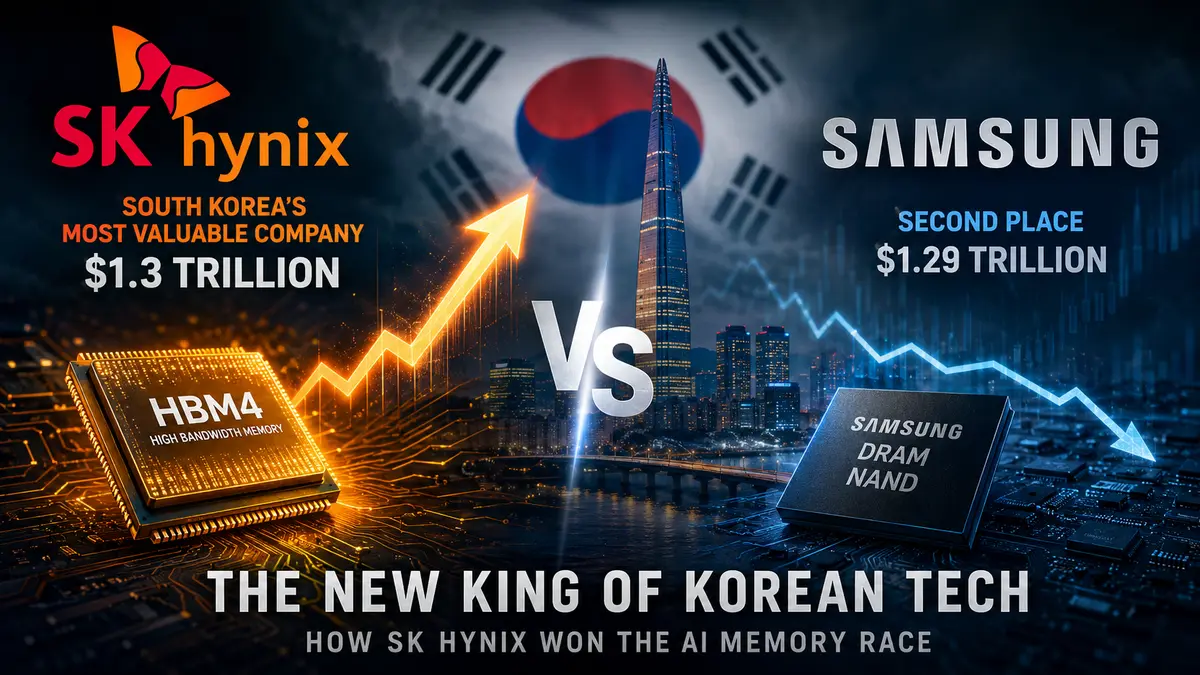
SK Hynix Surpasses Samsung: How a Modest Chipmaker Became South Korea’s Most Valuable Company
SK Hynix Surpasses Samsung: How a Modest Chipmaker Became South Korea’s Most Valuable Company

Introduction: The Day the Crown Fell

Monday morning in Seoul began like any other—people grabbing coffee, traffic filling the roads, office workers hurrying to work. But on the stock exchange, something historic was unfolding. SK Hynix shares surged 3.7%, reaching 2.8 million won per share. At the moment the stock crossed that threshold, South Korea crowned a new market king.

SK Hynix, a company many had written off two decades ago, became the most valuable company in the country. Its market capitalization reached 2,082 trillion won, or approximately $1.3 trillion. Samsung, the longtime champion that had held the title for so long that many investors could scarcely remember another leader, slipped into second place with a valuation of 2,081 trillion won.

The gap between them is only one trillion won. Yet that trillion is more than just a number. It symbolizes a tectonic shift in the global semiconductor industry. It reflects the reality that artificial intelligence is redrawing the map of the technology world, rewarding those who made the right bets at the right time while leaving others struggling to catch up.

How did SK Hynix—a company that once stood on the brink of bankruptcy and desperately searched for a buyer—manage to overtake Samsung, one of the most powerful and resilient technology giants on the planet? And what does this mean for the semiconductor industry as a whole?

Let's take a closer look.

The Rise of SK Hynix: From Bankruptcy to a Trillion-Dollar Empire

2005: The Company Nobody Wanted to Buy

To appreciate SK Hynix's triumph today, we need to go back about twenty years.

In 2005, the company was not merely the second-largest player in the memory market—it was a struggling one. Burdened by debt, saddled with outdated manufacturing facilities, and steadily losing market share, Hynix (as it was...


Continue reading...
0
0
Lin Brings

Binance Adds Over 7,000 U.S. Stocks and ETFs: The Crypto Exchange Becomes a Universal Financial Supermarket

Binance Adds Over 7,000 U.S. Stocks and ETFs: The Crypto Exchange Becomes a Universal Financial Supermarket

Introduction: A Game-Changing Move for 300 Million Users

Imagine waking up in the morning, opening a single app, seeing Bitcoin up 3% overnight, selling part of it, and immediately using those funds to buy NVIDIA stock. No bank transfers, no waiting, no intermediaries. Everything happens in one place, in one currency, at one speed. This is not a futuristic scenario — it is the reality that the world’s largest crypto exchange has just enabled for its users.

Binance, a platform that has grown from a startup into an empire with 300 million users in just eight years, has made more than just another update. It is making a claim to become a universal next-generation financial hub. More than 7,000 U.S. stocks and ETFs are now available for trading directly in the same interface that was previously reserved exclusively for cryptocurrencies.

Let’s break down what is really behind this announcement, how it works, and why it may turn out to be far more significant than just another feature in a long list of exchange upgrades.

What Binance Has Actually Launched and How It Works

From Crypto Monopoly to a Multi-Asset Future

When Changpeng Zhao launched Binance in 2017, he likely could not have imagined that within eight years his creation would be trading Apple, Tesla, and Amazon alongside Dogecoin and Solana. But today, that is a reality. The platform has introduced functionality that allows users in certain jurisdictions to buy and sell more than 7,000 U.S. stocks and exchange-traded funds (ETFs).

The number 7,000 is striking. For comparison, the New York Stock Exchange lists around 2,800 companies, while NASDAQ has approximately 3,300. This means Binance covers virtually the entire U.S. public equity market, including ETFs that represent baskets of stocks. This is not just “a few popular stocks added” — it...

Continue reading...
0
0
John Madnes

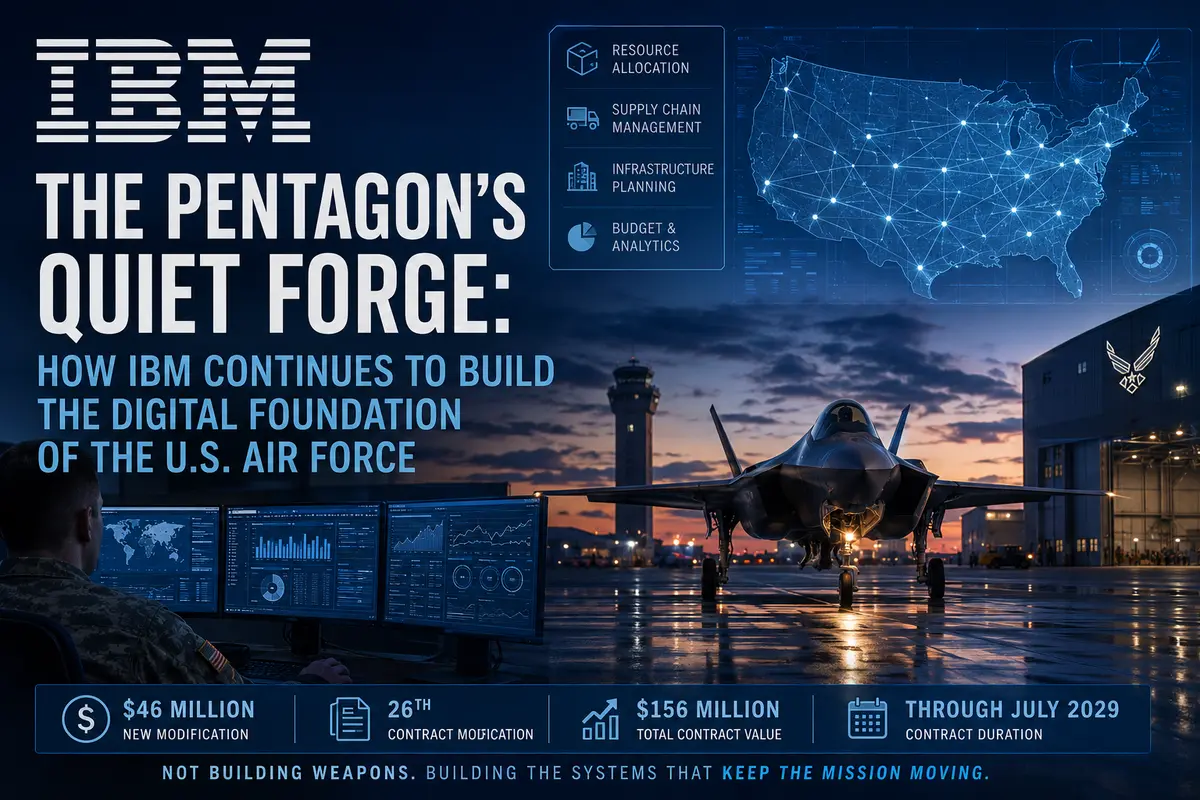
The Pentagon’s Quiet Forge: How IBM Continues to Build the Digital Foundation of the U.S. Air Force

The Pentagon’s Quiet Forge: How IBM Continues to Build the Digital Foundation of the U.S. Air Force

Forty-six million dollars. In the context of the United States defense budget, measured in the hundreds of billions, it is almost an invisible amount. Contracts like this rarely make headlines, spark heated debates in Congress, or ignite storms on social media. Yet it is precisely these quiet, routine contract modifications — signed somewhere deep within the Contracting Directorate of the Air Force District of Washington — that form the very foundation on which the military machine of a superpower rests. IBM has received another contract modification for advisory and support services related to resource distribution and civil engineering programs. It sounds dry and bureaucratic. But behind those words lies work without which no fighter jet would take off, no runway would be repaired, and no budget would be allocated correctly.

What IBM Actually Does for the Air Force

The phrase “advisory and support services for resource distribution and civil engineering programs” is a classic example of how the Pentagon describes things that cannot be explained in detail for security reasons. But if we break it down piece by piece, the picture becomes clearer.

Resource distribution programs are the heart of military logistics. The U.S. Air Force operates thousands of aircraft, hundreds of bases, and tens of thousands of pieces of ground equipment. Spare parts, fuel, ammunition, food, medical supplies — all of it must be delivered to the right place at the right time. A mistake in resource allocation could mean a fighter squadron left without fuel or a military hospital without medicine. IBM helps configure and maintain the systems that manage all of this. This is not simply IT support in the conventional sense. It involves databases, forecasting algorithms, and decision-making systems. It means advising military logisticians on supply chain optimization.

Civil engineering in the Air Force context is...

Continue reading...
0
0
Navigation menu
instaforex banner