

Bar Pipa
We pay for a post of 10$
Intel Corp.

Intel Corp.

INTC NASDAQ

$102.62
-2.68%

Key Statistics

Market Cap
$515.77 B
Volume
76,785,571
Open
$101.60
Day Range
101.48 - 106.85
52W Range
18.97 - 142.35
Price AVG 50
$116.42

About Intel Corp.

Intel Corporation designs, develops, manufactures, markets, sells, and services computing and related end products and services in the United States, Ireland, Israel, and internationally. It operates through three segments: CCG, DCAI, and Intel Foundry. The company offers client computing group products, including client and commercial CPUs, discrete client GPUs, edge computing, and connectivity products; data center and AI products, such as server CPUs, discrete GPUs, and networking products; and semiconductors comprising wafer fabrication, substrates, and other related products and services. It also provides driving assistance and self-driving solutions; and develops and manufactures multi-beam mask writing tools. The company sells its products through sales organizations, distributors, resellers, retailers, and OEM partners. It serves original equipment manufacturers, original design manufacturers, cloud service providers, and other manufacturers and service providers. Intel Corporation has a strategic collaboration with Infosys Limited to develop a multi-layer AI fabric that unifies infrastructure, models, data, applications, and workflows into a composable and agent-ready ecosystem. The company was incorporated in 1968 and is headquartered in Santa Clara, California.

Asset Type: Common Stock
Sector: Technology
Industry: Semiconductors

Discussion

Authentication Required

You must be logged in to post a comment.

Tim Drening

The Era of Smart Factories: Mitsubishi Electric and Sony Join Forces in the Race for Industrial AI
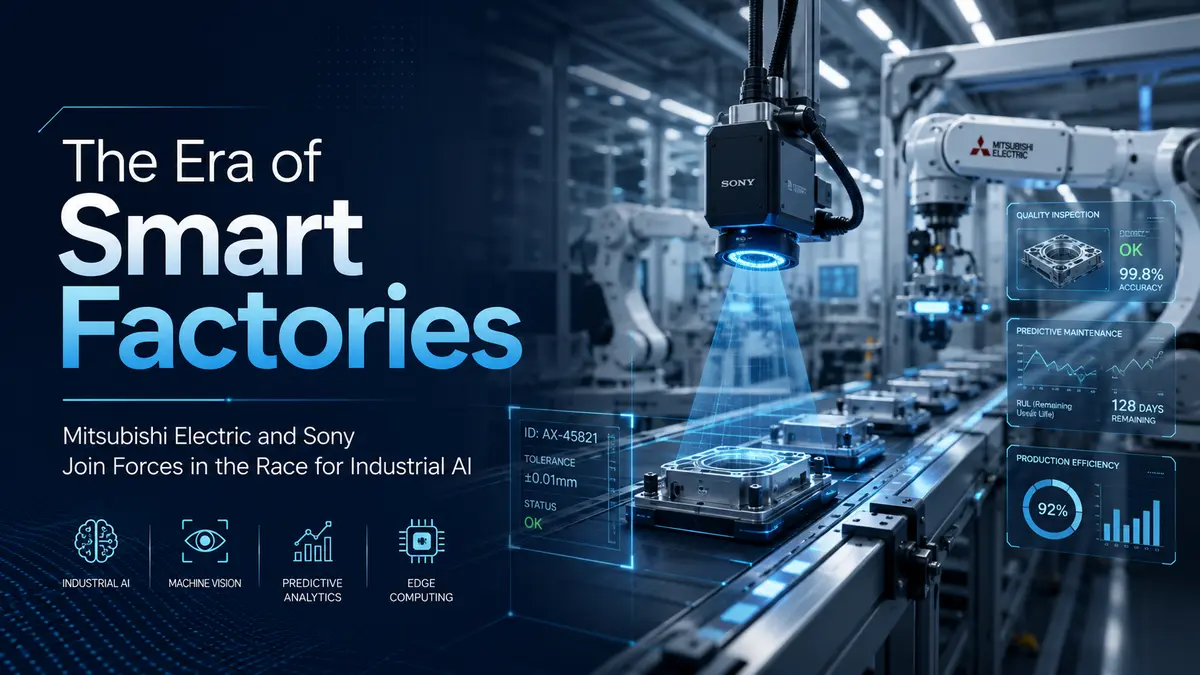
The Era of Smart Factories: Mitsubishi Electric and Sony Join Forces in the Race for Industrial AI

A Partnership of Giants: When Vision Meets Automation

Japanese industry, which has always been renowned for its technological excellence, is taking another enormous step into the future. MSBHF ... Electric, a veteran of factory automation with decades of experience, and SNEJF ... Semiconductor Solutions, a recognized leader in sensors and imaging technology, have announced the creation of a joint venture. The future company will be called Advanced Vision Solutions—a name that sounds more like a promise than a simple sign on the door of a new office.

The partnership between these two corporate giants is far more than another business deal. It is an attempt to unite two different philosophies, two engineering traditions, and two approaches to what the factory of the future should look like. Mitsubishi Electric knows virtually everything about robots, conveyor systems, and manufacturing control technologies. Sony, meanwhile, has spent years perfecting imaging technology and learning how to convert light into digital data with extraordinary precision. When these two worlds collide, they create something greater than the sum of their parts.

The joint venture is scheduled to be established in October 2026, although this is merely the formal launch date. Engineers and managers are already working actively to ensure that the company can operate at full capacity from its very first day. Mitsubishi Electric will hold a controlling 60% stake, which makes sense because it will serve as the primary integrator of the solutions at real manufacturing facilities. Sony will retain 40%, but its role should not be underestimated: without its sensors, the entire project would have little practical meaning.

This ownership structure is more than a collection of numbers. It sends a clear message to the market about which company will take the leading role and which will serve as the key technology partner. In reality, however, experience...


Continue reading...
0
0

Asian Stocks Rise as Oil Prices Fall and Investors Await Earnings

Asian Stocks Rise as Oil Prices Fall and Investors Await Earnings

Tuesday: Markets Recoup Their Losses

Tuesday 21.07.2026 became a day of recovery for Asian stock markets. After several days of volatility and selling pressure driven by geopolitical risks, investors returned to buying. The main catalysts behind the rebound were lower oil prices and hopes for a diplomatic resolution in the Middle East.

Wall Street ended Monday with moderate losses, but U.S. stock futures pointed to a stronger opening on Tuesday. The technology-heavy NASDAQ, which is particularly sensitive to shifts in investor sentiment, led the advance.

Japan was one of the main beneficiaries of the positive momentum across Asian markets. The ^N225 ... rose by more than 2% after the market was closed on Monday for a public holiday. Investors actively purchased technology stocks, while overall market sentiment remained positive.

However, South Korea’s KOSPI delivered perhaps the most impressive performance. The index rebounded by almost 4% after falling approximately 5% during the previous session. This is a classic example of a “dead cat bounce,” as investors return to oversold stocks, particularly in the technology sector.

Technology Sector Leads the Recovery

Technology companies were the primary drivers of growth across Asian markets. BC94.L ... Electronics shares surged by 6%, while SK Hynix gained 4.5%. This represented a powerful recovery following several days of declines, during which concerns about inflated valuations and geopolitical risks weighed heavily on the sector.

For investors, the rebound may indicate that the fundamental positions of these companies remain strong. Samsung recently forecast a nineteenfold increase in operating profit for the second quarter, and the markets appear ready to believe these projections. Like Samsung, SK Hynix is a major supplier of memory chips used in artificial intelligence applications, and demand for these products remains high.

However, the recovery of Asia’s technology sector is taking place against a backdrop of continued uncertainty....

Continue reading...
0
0

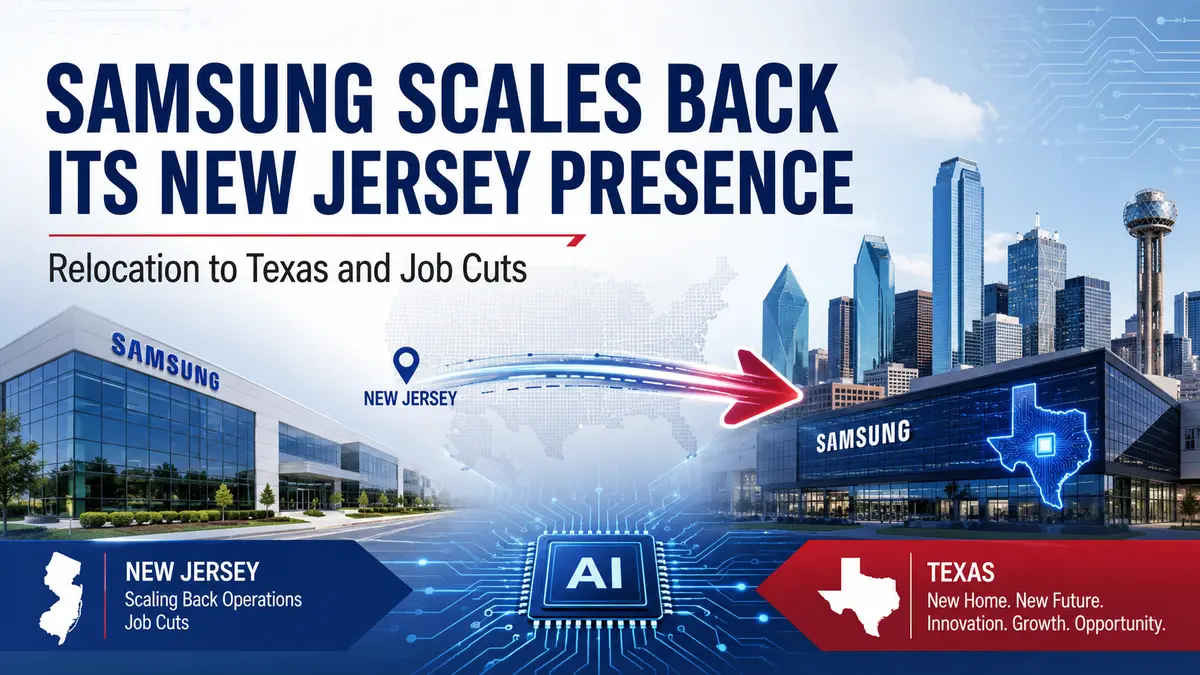
Samsung Scales Back Its New Jersey Presence: Relocation to Texas and Job Cuts

Samsung Scales Back Its New Jersey Presence: Relocation to Texas and Job Cuts

739 Jobs at Risk: What Is Happening?

South Korean technology giant Samsung Electronics has begun a major reorganization of its U.S. operations, affecting hundreds of employees. The company is cutting staff across its display, mobile phone, and consumer electronics divisions while relocating its headquarters to Texas. A total of 739 positions in Englewood Cliffs, New Jersey, are at risk. Until recently, the site served as the North American headquarters of Samsung Electronics America.

For many employees, the news came as a shock—not only because people are losing their jobs, but also because Samsung is relocating to Texas rather than simply closing the office. The company says that most affected employees were offered the opportunity to relocate. Those who were unwilling or unable to move were dismissed. Samsung has not disclosed the official number of layoffs, but sources say that hundreds of employees may be affected.

The timing of the move is particularly noteworthy because Samsung opened new offices in New Jersey only a few months earlier. U.S. Congressman Josh Gottheimer even attended the opening ceremony in September last year. At the time, the division employed approximately 1,200 people. Now, a significant share of them will either relocate to Texas or search for new jobs.

Documents and Notifications: The Legal Side of the Issue

According to documents reviewed by Reuters, the division notified some employees on June 30 about a “company-wide workforce reduction” that would result in a “significant number of changes.” This is a standard procedure for large corporations, but for Samsung employees in New Jersey, it marked the beginning of a troubling period of uncertainty.

LinkedIn posts show that more than 30 employees, including senior sales and marketing managers in Texas and New Jersey, have reported being laid off or leaving the company in recent weeks. These are not...

Continue reading...
0
0

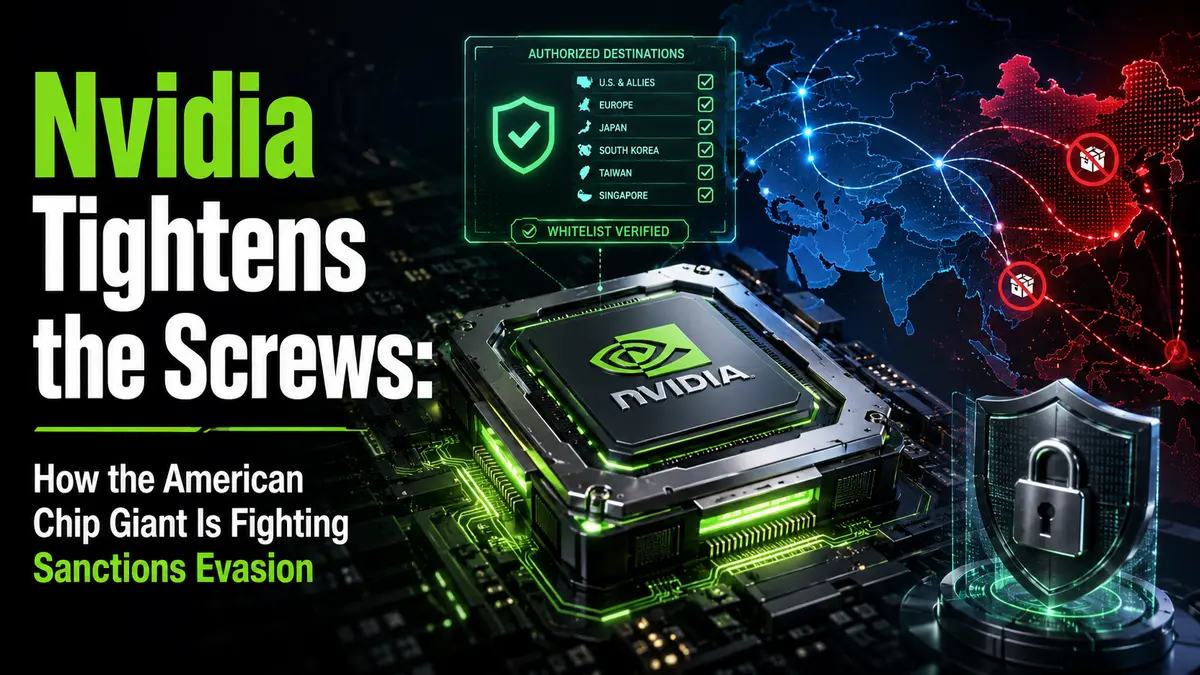
Nvidia Tightens the Screws: How the American Chip Giant Is Fighting Sanctions Evasion

Nvidia Tightens the Screws: How the American Chip Giant Is Fighting Sanctions Evasion

Introduction: A Whitelist Instead of Gray-Market Schemes

In the world of advanced technology, where artificial intelligence chips have become a strategic resource, the struggle to control their distribution is entering a new phase. Nvidia ( NVDA ... ) , the leading manufacturer of graphics processors used for AI, has reduced by more than half the number of Asian customers authorized to purchase its products. The decision is part of stricter compliance procedures designed to prevent the circumvention of export restrictions.

The company has created a new whitelist of approved Asian buyers and strengthened its customer due diligence procedures in Singapore, Malaysia, and Japan. According to the Financial Times, the new screening process excluded more than half of Nvidia’s previous customers. However, companies may reapply after addressing the identified compliance issues.

These measures come amid broader US efforts to close loopholes that allow Chinese companies to gain access to Nvidia’s advanced chips despite strict export restrictions. This article examines the reasons behind the tighter rules, assesses their impact on the market, and considers what may lie ahead for the industry.

Reasons for the Crackdown: Pressure from Washington and the Fight Against Smuggling

Export Restrictions on AI Chips

Washington has imposed strict export restrictions on the sale of AI chips to China since at least 2021. These measures are intended to prevent China from gaining access to advanced technologies that could be used for military purposes and to strengthen the country’s economic capabilities.

As a key manufacturer of AI chips, Nvidia is under close scrutiny from US authorities. The company must balance compliance with US legislation against its desire to retain access to the profitable Chinese market.

Allegations of $2.5 Billion in Chip Smuggling

In March, US prosecutors charged one of Supermicro’s co-founders and two company employees with allegedly organizing the smuggling of...

Continue reading...
0
0
Navigation menu
instaforex banner