
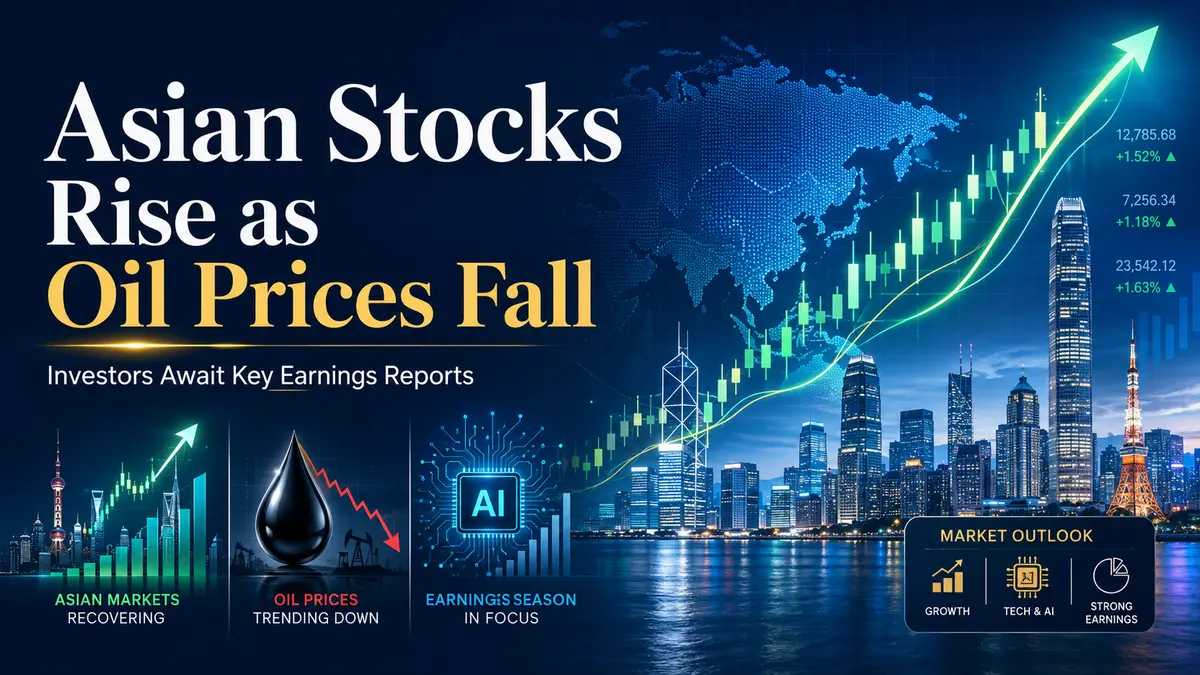
Asian Stocks Rise as Oil Prices Fall and Investors Await Earnings
Tuesday: Markets Recoup Their Losses
Tuesday 21.07.2026 became a day of recovery for Asian stock markets. After several days of volatility and selling pressure driven by geopolitical risks, investors returned to buying. The main catalysts behind the rebound were lower oil prices and hopes for a diplomatic resolution in the Middle East.
Wall Street ended Monday with moderate losses, but U.S. stock futures pointed to a stronger opening on Tuesday. The technology-heavy NASDAQ, which is particularly sensitive to shifts in investor sentiment, led the advance.
Japan was one of the main beneficiaries of the positive momentum across Asian markets. The ^N225 ... rose by more than 2% after the market was closed on Monday for a public holiday. Investors actively purchased technology stocks, while overall market sentiment remained positive.
However, South Korea’s KOSPI delivered perhaps the most impressive performance. The index rebounded by almost 4% after falling approximately 5% during the previous session. This is a classic example of a “dead cat bounce,” as investors return to oversold stocks, particularly in the technology sector.
Technology Sector Leads the Recovery
Technology companies were the primary drivers of growth across Asian markets. BC94.L ... Electronics shares surged by 6%, while SK Hynix gained 4.5%. This represented a powerful recovery following several days of declines, during which concerns about inflated valuations and geopolitical risks weighed heavily on the sector.
For investors, the rebound may indicate that the fundamental positions of these companies remain strong. Samsung recently forecast a nineteenfold increase in operating profit for the second quarter, and the markets appear ready to believe these projections. Like Samsung, SK Hynix is a major supplier of memory chips used in artificial intelligence applications, and demand for these products remains high.
However, the recovery of Asia’s technology sector is taking place against a backdrop of continued uncertainty....