

WTI Crude Oil Declines: Technical Correction or Trend Reversal?
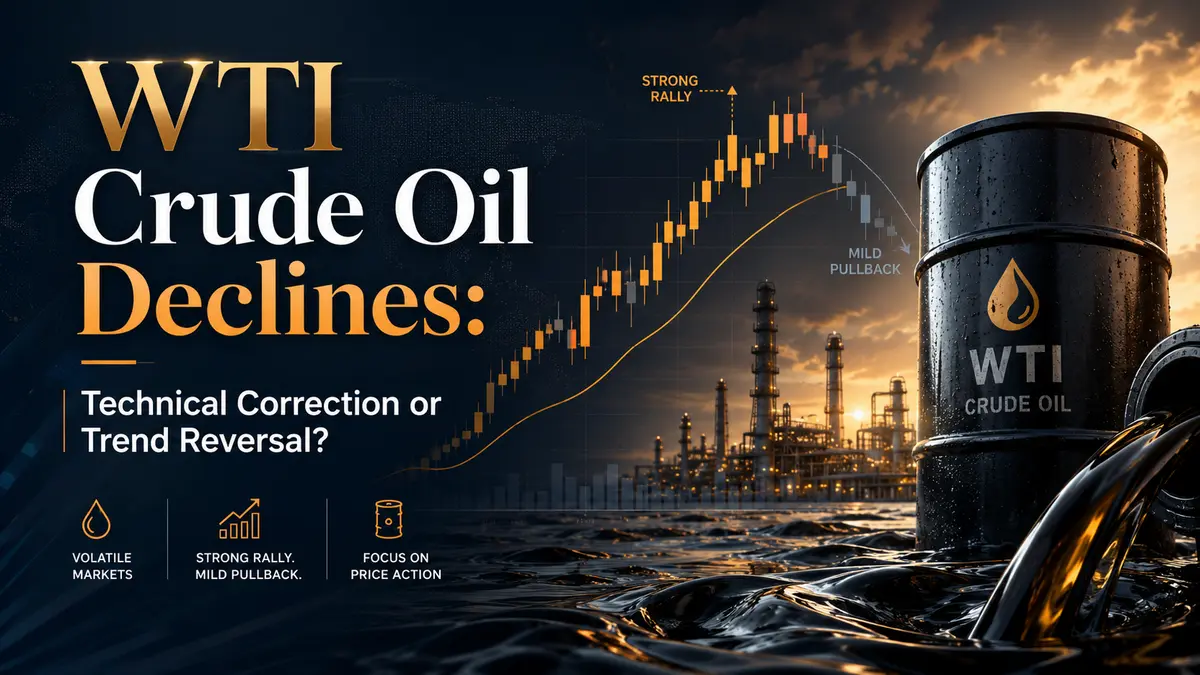
Tuesday in the Commodity Market: A Modest Decline After a Strong Rally
Tuesday 21.07.2026 brought a pause to the oil market. September WTI ... crude oil futures on the New York Mercantile Exchange fell by 0.23% to $82.29 per barrel. The decline may appear insignificant, but it comes after several days of steady growth, during which oil reached new highs and broke through psychologically important levels. The market has taken a breather, and the main question now is whether this is a temporary correction or the beginning of a trend reversal.
There are reasons for caution. The conflict in the Middle East continues to escalate, which is still providing support for oil prices. However, after oil surged following reports of strikes against Iran and disruptions to shipping through the Strait of Hormuz, many traders decided to take profits. This is normal market behavior: a correction usually follows a strong rally, especially when there are no new catalysts to sustain the upward momentum.
The current technical picture supports this view. Support is located at $77.93, while resistance stands at $84.59. The current price of $82.29 is closer to the upper boundary of this range but has not yet reached it. This means the market still has room to move in either direction, although sellers are currently slightly more active than buyers.
Interestingly, WTI is declining against the backdrop of a stronger US dollar. The US Dollar Index rose by 0.03% to 100.81. Although this is a small move, it is symbolically important and places additional pressure on oil prices. The dollar and oil traditionally have an inverse correlation, meaning that even minor changes in the value of the US currency can affect commodity markets.
Brent Falls More Sharply as the Spread Widens
While WTI declined, September BZUSD ... crude oil futures fell by 0.62% to $88.67 per barrel. This was a more substantial drop than that of the US benchmark, widening the spread between the two major crude oil grades to $6.38 per barrel.
Why is Brent falling more sharply? One possible explanation involves geopolitical risks, which may be more significant for the European benchmark. Brent is more dependent on supplies from the Middle East and other regions that could experience disruptions if the conflict escalates. If investors believe the risk of supply interruptions has decreased—or that the conflict will continue without causing actual disruptions—they may exit Brent positions more quickly than WTI positions.
In addition, WTI is a more distinctly American benchmark, and its price reflects domestic supply-and-demand conditions in the United States to a greater extent. If US inventory data or drilling activity remains positive, it may provide stronger support for WTI than for Brent.
A spread of $6.38 is not yet critical, but it is approaching the upper end of its historical range. If the spread continues to widen, it could indicate that the market is pricing a higher risk premium into Brent.
Why Is Oil Falling Despite Geopolitical Tensions?
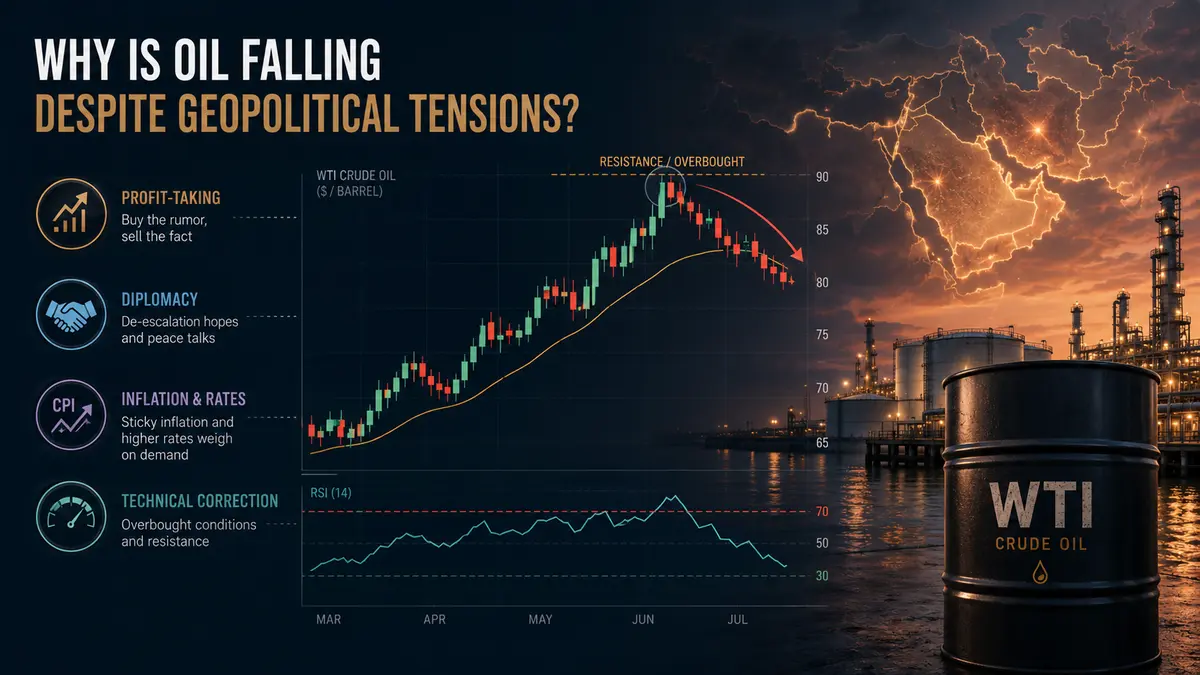
At first glance, the decline in oil prices appears paradoxical. The conflict in the Middle East continues, the threat of supply disruptions remains high, and yet oil prices are falling. However, markets rarely follow such straightforward logic, and several factors are currently at work.
First, there is the “buy the rumor, sell the fact” effect. The rise in oil prices during the previous few days was driven by reports of new strikes and escalating tensions. Once these developments stopped being surprising and became part of the daily news cycle, some investors decided to take profits. This does not necessarily mean they no longer expect prices to rise; they simply want to secure the gains they have already made.
Second, expectations of a diplomatic resolution are influencing the market. Despite the continuing hostilities, there have been indications that negotiations may be possible. US Secretary of State Marco Rubio stated that Washington had received signals suggesting Iran was interested in dialogue. If negotiations begin, the geopolitical premium included in oil prices could decline, and investors may already be pricing this scenario into the market.
Third, rising oil prices create inflationary risks that could force central banks to tighten monetary policy. Higher interest rates slow economic growth and consequently reduce demand for energy. This restraining factor prevents oil prices from rising indefinitely.
Fourth, technical factors are also playing a role. Following the strong rally, many indicators suggested that the market had become overbought. A correction was therefore inevitable, and today’s decline is part of that process.
Support and Resistance: A Technical Perspective
Technical analysis provides important reference points for understanding the current situation. Support at $77.93 represents a relatively broad zone that has formed over several weeks. If the price falls to this level, renewed buying activity may emerge. However, the market is still far from this point, and a modest decline is not causing panic.
Resistance at $84.59 is an area where sellers have traditionally been active. Oil approached this level during the previous few days but failed to break through it. If the price returns to this area and moves above it, the market could open the way toward new highs. If the price is rejected again, oil is likely to continue trading within the current range.
The current price of $82.29 is located approximately midway between these levels. This is a neutral zone in which uncertainty is particularly high. Traders are waiting for new signals before determining the direction of the next significant move.
The Dollar and Oil: An Inverse Correlation
The strengthening of the US dollar, although modest, is putting pressure on oil prices. The US Dollar Index rose to 100.81 amid the escalation of the conflict in the Middle East. Investors view the dollar as a safe-haven currency, and the greater the uncertainty, the stronger the demand for the US currency tends to be.
For oil traders, this has a dual significance. On the one hand, a stronger dollar makes oil more expensive for holders of other currencies, reducing demand. On the other hand, the dollar itself is strengthening because of the same geopolitical tensions that are supporting oil prices. This creates a complex dynamic in which the currency factor can sometimes outweigh fundamental supply-and-demand signals.
What Comes Next?
Tuesday’s decline in oil prices appears to be more of a technical correction than the beginning of a long-term downward trend. The conflict in the Middle East is continuing, and the geopolitical risk premium remains high. Oil prices are still supported by the threat of supply disruptions, and as long as these risks remain, a substantial decline is unlikely.
Nevertheless, investors should monitor several key factors. First, they should watch for diplomatic signals. If there are signs of genuine progress in negotiations, oil prices could experience a more substantial correction.
Second, attention should be paid to US inventory data scheduled for release on Wednesday. If inventories increase unexpectedly, this could place additional downward pressure on prices.
Third, investors should monitor how central banks respond to rising inflation. If the Federal Reserve signals the possibility of higher interest rates, this could strengthen the dollar and weaken oil prices.
For now, the market remains in a wait-and-see mode. Traders are following developments in the Middle East, analyzing technical levels, and waiting for new market catalysts. A decline of 0.23% is not critical, and oil could resume its upward movement at any moment if new reasons for optimism emerge. At the same time, prices could continue to fall if investors conclude that the conflict will not result in actual supply disruptions.


Comments
No comments yet. Be the first to share your thoughts!
Authentication Required
You must be logged in to post a comment.