

Asian Stocks Rise as Oil Prices Fall and Investors Await Earnings
Tuesday: Markets Recoup Their Losses
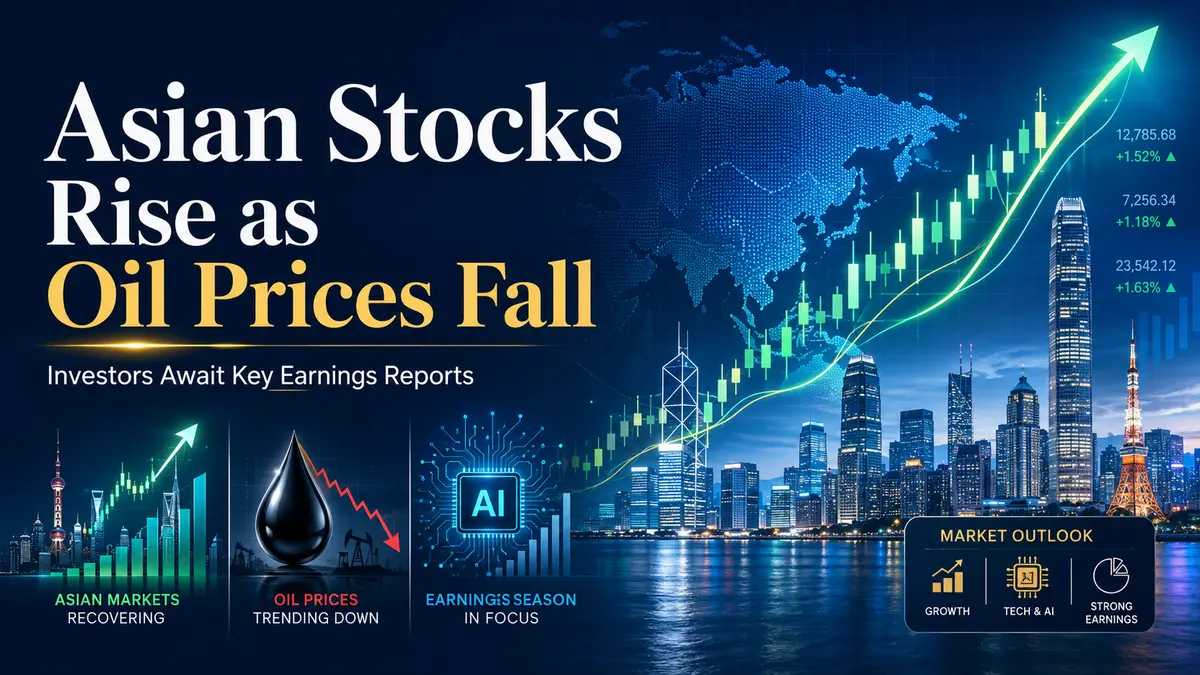
Tuesday 21.07.2026 became a day of recovery for Asian stock markets. After several days of volatility and selling pressure driven by geopolitical risks, investors returned to buying. The main catalysts behind the rebound were lower oil prices and hopes for a diplomatic resolution in the Middle East.
Wall Street ended Monday with moderate losses, but U.S. stock futures pointed to a stronger opening on Tuesday. The technology-heavy NASDAQ, which is particularly sensitive to shifts in investor sentiment, led the advance.
Japan was one of the main beneficiaries of the positive momentum across Asian markets. The ^N225 ... rose by more than 2% after the market was closed on Monday for a public holiday. Investors actively purchased technology stocks, while overall market sentiment remained positive.
However, South Korea’s KOSPI delivered perhaps the most impressive performance. The index rebounded by almost 4% after falling approximately 5% during the previous session. This is a classic example of a “dead cat bounce,” as investors return to oversold stocks, particularly in the technology sector.
Technology Sector Leads the Recovery
Technology companies were the primary drivers of growth across Asian markets. BC94.L ... Electronics shares surged by 6%, while SK Hynix gained 4.5%. This represented a powerful recovery following several days of declines, during which concerns about inflated valuations and geopolitical risks weighed heavily on the sector.
For investors, the rebound may indicate that the fundamental positions of these companies remain strong. Samsung recently forecast a nineteenfold increase in operating profit for the second quarter, and the markets appear ready to believe these projections. Like Samsung, SK Hynix is a major supplier of memory chips used in artificial intelligence applications, and demand for these products remains high.
However, the recovery of Asia’s technology sector is taking place against a backdrop of continued uncertainty. This week, investors will closely monitor the quarterly results of major U.S. technology companies, including YGOG.NE ... , TSLA ... , and INTC ... . Their reports may provide important signals about whether massive investments in artificial intelligence infrastructure are generating meaningful returns.
Oil Prices Fall amid Diplomatic Hopes
Lower oil prices were another positive factor supporting Asian markets on Tuesday. WTI ... and BZUSD ... crude declined by approximately 0.2% to 0.6% following reports that mediators had presented Iran with a proposal for a ten-day ceasefire aimed at restarting negotiations with the United States.
The news raised hopes that the conflict could be resolved diplomatically, reducing the geopolitical risk premium built into oil prices. This is particularly important for energy-importing Asian countries, as cheaper oil means lower costs and reduced inflationary pressure.
However, significant risks remain. Yemen’s Iran-backed Houthis have announced their intention to impose a naval blockade on Saudi Arabia. This creates the risk of further disruptions to regional energy supplies and limits the potential decline in oil prices. The conflict is far from over, and any renewed escalation could quickly push oil prices higher again.
Nevertheless, even a modest decline in energy prices was received positively by the markets. It allowed investors to focus on other factors, including corporate earnings and macroeconomic data.
Chinese Markets Show Mixed Performance
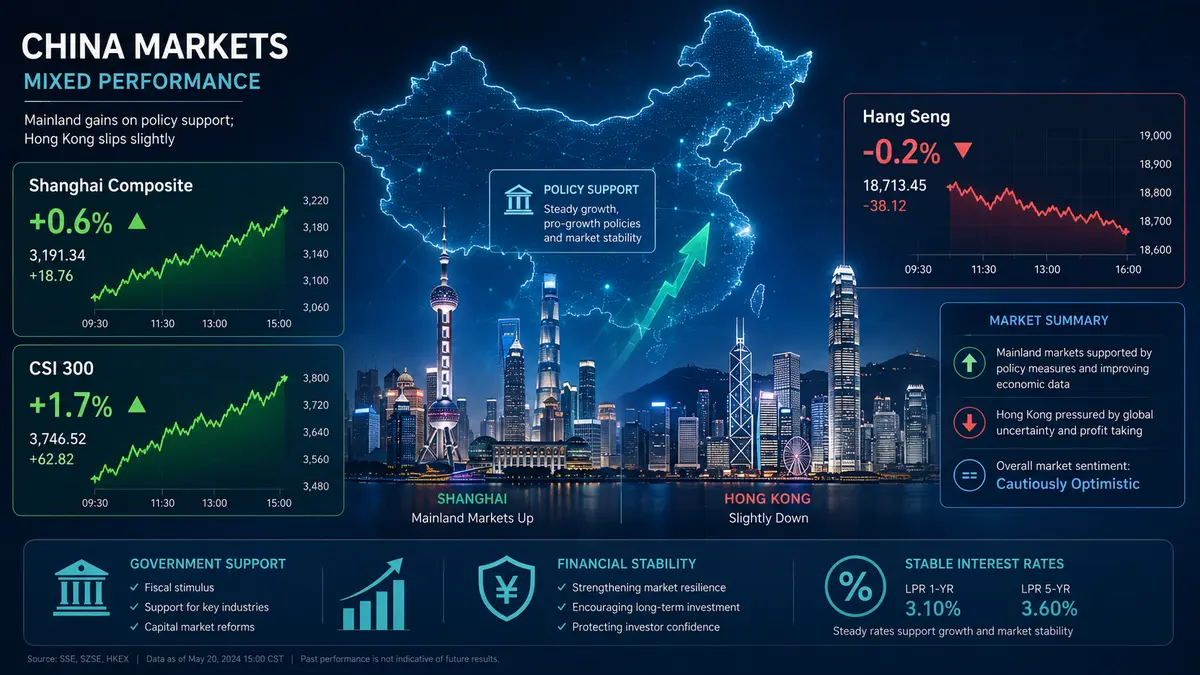
Chinese markets delivered mixed results. The Shanghai Composite rose by 0.6%, while the blue-chip Shanghai Shenzhen CSI 300 Index gained 1.7%. This was a positive outcome for the Chinese market, which has come under pressure in recent weeks because of weak economic data.
The rise in Chinese stocks was likely connected to hopes for additional government support measures. The decision to leave benchmark lending rates unchanged did not disappoint investors because this outcome had been widely expected. Instead of broad monetary easing, the authorities appear to prefer targeted fiscal support, which is being viewed as a measured approach.
Hong Kong’s Hang Seng Index edged down by 0.2% following gains during the previous session. This modest decline placed the index outside the broader regional trend. Hong Kong often behaves differently from mainland China because it is more dependent on international capital flows and more sensitive to global investor sentiment.
Australia, India, and Singapore Post Moderate Gains
Australia’s S&P/ASX 200 traded largely unchanged following a slight decline during the previous session. This reflected continued uncertainty in the markets and a cautious, wait-and-see approach among investors. Australia is a major energy exporter, and rising oil prices generally support its economy, but the markets are currently focused on other factors.
Singapore’s Straits Times Index rose by 0.7%, delivering solid gains amid the broader positive market environment. Singapore is one of the region’s leading financial centers, and its stock market frequently reflects wider regional trends.
Futures linked to India’s Nifty 50 gained 0.4%. The Indian market is also recovering from its recent decline, with investors hoping that the upward momentum will continue.
Earnings Season: A Major Test for the Markets
The main event of the week will be the quarterly earnings reports from the largest U.S. technology companies. Alphabet, Tesla, Intel, and other major corporations are scheduled to publish their results, potentially providing a major catalyst for global markets.
Investors are looking for confirmation that large-scale investments in artificial intelligence infrastructure continue to generate returns. Recent concerns about inflated valuations have shaken chipmakers’ shares worldwide, and the markets now want to see concrete financial results.
Strong results from Taiwan Semiconductor Manufacturing Co. and Samsung Electronics have already established a positive tone. However, analysts note that expectations remain extremely high, leaving little room for disappointment. Should any major technology company fail to meet forecasts, the markets could experience another decline.
Conclusion: Cautious Optimism
Tuesday became a day of recovery for Asian markets. Falling oil prices and hopes for a diplomatic resolution in the Middle East created a supportive environment. The technology sector delivered strong gains, demonstrating that investor interest in artificial intelligence remains firmly in place.
However, the risks should not be overlooked. The conflict in the Middle East continues, and any new escalation could rapidly change the situation. Corporate earnings season also carries considerable risks, as elevated expectations may not be met.
Nevertheless, the current market dynamics appear encouraging. Despite persistent uncertainty, investors remain willing to purchase stocks, particularly within the technology sector. The coming days will show whether this positive momentum can be sustained.






Comments
No comments yet. Be the first to share your thoughts!
Authentication Required
You must be logged in to post a comment.