
Bar Pipa
We pay for a post of 10$

BYD

Asian Roller Coaster: Nikkei and KOSPI Retreat from Record Highs While Hong Kong Surges
Asian Roller Coaster: Nikkei and KOSPI Retreat from Record Highs While Hong Kong Surges

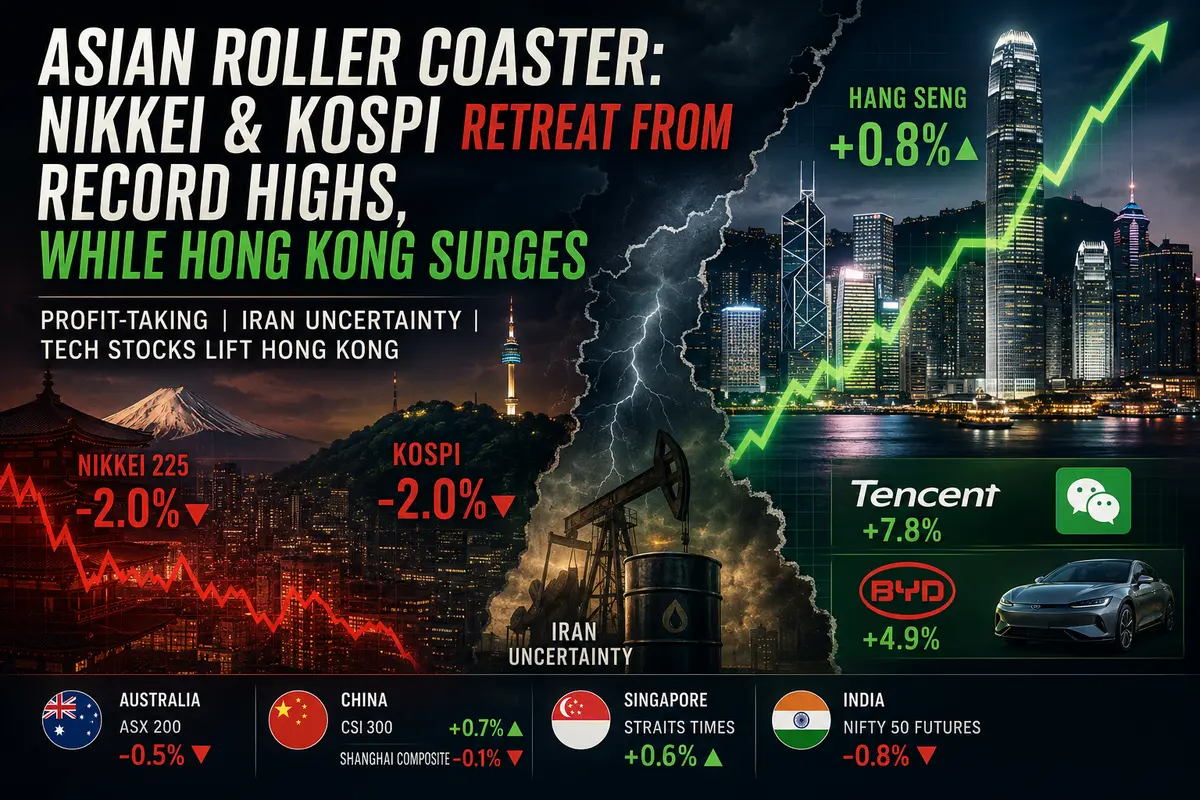
Asian markets on Tuesday resembled a patchwork quilt stitched together from conflicting signals. Japan’s Nikkei 225 and South Korea’s KOSPI, which had been celebrating record highs just a day earlier, pulled back by roughly 2%. Hong Kong’s Hang Seng, by contrast, gained 0.8%, lifted by heavyweight technology stocks. Chinese indexes moved in opposite directions, Australia’s market fell following hawkish comments from the central bank, and Indian futures pointed to further losses. All of this unfolded against a backdrop of uncertainty surrounding Iran and profit-taking in the semiconductor sector. Tuesday was a reminder that markets cannot rise forever.

Nikkei and KOSPI: Profit-Taking After the May Rally

Japanese and South Korean equities were among Tuesday’s biggest casualties. Both indexes retreated about 2% from the record levels reached in previous sessions. The reason was as old as the market itself: profit-taking. After an impressive May rally fueled by optimism around artificial intelligence, investors decided it was time to lock in gains.

May was a triumphant month for Asian chipmakers. SK Hynix joined the ranks of trillion-won companies, Samsung reached fresh all-time highs after resolving a labor dispute, while Renesas and Rohm posted double-digit gains. Nvidia added fuel to the rally on Monday by unveiling new AI-related products. But every rally, no matter how powerful, eventually runs out of steam. Tuesday was the day the bulls took a breather.

The decline in South Korea was particularly notable because it coincided with disappointing macroeconomic news. Consumer inflation in May reached a 26-month high, exceeding expectations. This immediately strengthened expectations that the Bank of Korea could raise interest rates again before year-end. Higher rates are generally unfavorable for equities, especially technology stocks, which are highly sensitive to borrowing costs. Korean investors responded to the inflation data by selling.

The Iran Factor: Tehran Suspends Communication Through Intermediaries

...

Continue reading...
0
0

Quiet Revolution: How Overseas Deliveries Saved BYD from a Prolonged Slump

Quiet Revolution: How Overseas Deliveries Saved BYD from a Prolonged Slump

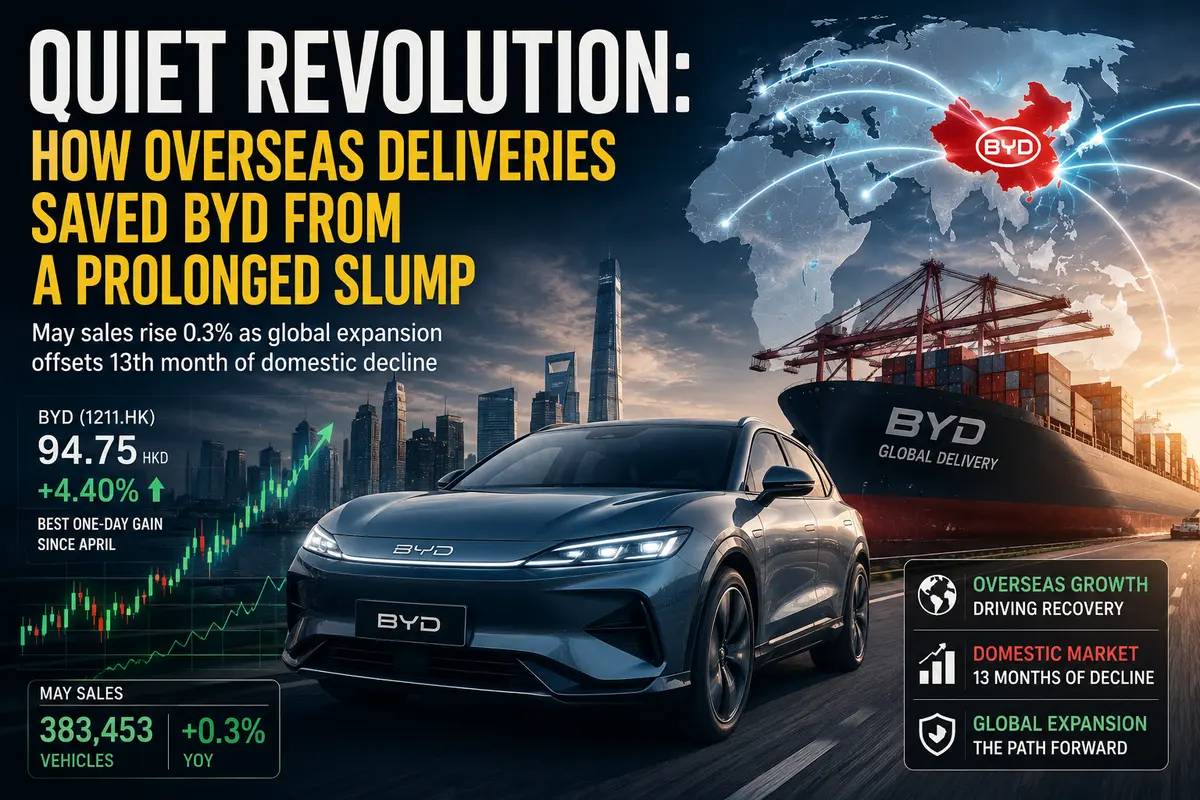
The Hong Kong stock market witnessed an event on Tuesday that BYD shareholders had been waiting eight long months for. Shares of China’s largest electric vehicle manufacturer surged 4.4% to HK$94.75, marking their best single-day gain since late April. The catalyst was the company’s May sales report. BYD finally broke the longest streak of declining sales in its history. Sales increased by 0.3% year-over-year to 383,453 vehicles. The growth was modest—almost within the margin of statistical error. But for a market accustomed to continuous deterioration, it felt like a breath of fresh air.

Eight Months of Decline: Anatomy of a Crisis

To understand why a modest 0.3% increase triggered such a strong market reaction, it is important to recall what BYD has endured over the past several months. A company that was once a symbol of China’s dominance in the electric vehicle industry found itself facing a harsh reality: the domestic market had become saturated, competition had intensified to unprecedented levels, and a fierce price war was squeezing profit margins.

Sales declined for eight consecutive months. This was more than just a statistical trend—it was an indictment of a business model that had become too dependent on a single market. Chinese consumers, who only recently lined up to buy BYD vehicles, now have dozens of brands to choose from, each offering subsidies, discounts, and promotional incentives. BYD found itself caught between the hammer of domestic competition and the anvil of a slowing economy.

Then May brought an unexpected turnaround. And that turnaround happened not in China, but beyond its borders.

Overseas Deliveries as a Lifeline

The primary driver of May’s growth was international sales. BYD has been aggressively expanding its presence outside China, and that strategy is finally beginning to pay off. The company now sells vehicles across Europe, Southeast...

Continue reading...
0
0
Navigation menu