Bar Pipa
We pay for a post of 10$

KOSPI

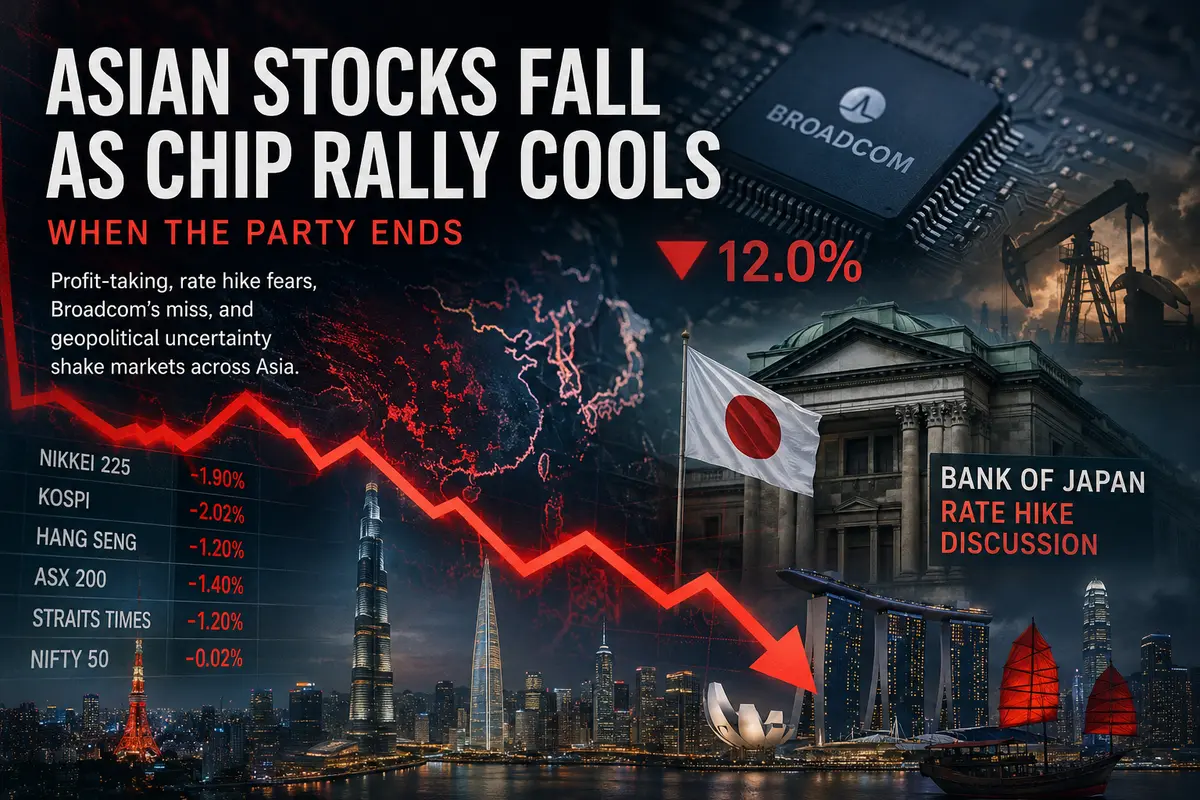
Asian Stocks Fall as Chip Rally Cools

Asian Stocks Fall as Chip Rally Cools
When the Party Ends

Thursday began with a hangover across Asian equity markets. After several days of record-breaking gains in technology and semiconductor stocks, reality set in. Indexes drifted lower—not in a panic, not in a crash, but steadily enough to leave little doubt: the rally is taking a pause.

Several factors contributed to the shift. The main one is simple exhaustion. After the Nikkei reached a fresh all-time high and South Korea’s KOSPI approached its own peaks, investors decided it was time to take profits—especially against a backdrop of increasingly unsettling news.

There were also more concrete triggers. Comments from the Governor of the Bank of Japan regarding possible interest-rate hikes. Mixed results from Broadcom that weighed on the entire semiconductor sector. Ongoing uncertainty surrounding U.S.-Iran negotiations. Together, these factors created a cocktail that Asian markets found hard to stomach.

S&P 500 futures, which often set the tone for global trading, fell 0.4% in after-hours trading. American investors are taking profits as well. The example is contagious.

Japan: Records Give Way to Losses

The Japanese market, which was celebrating only yesterday, found itself deep in the red today. The Nikkei 225 lost 1.9%, while TOPIX, the broader Tokyo Stock Exchange index, fell 1.4%. These are significant moves—the kind that prompt analysts to revisit their forecasts.

What happened?

First, profit-taking. The Nikkei hit record highs this week, and many investors who bought stocks a month or two ago saw their portfolios rise by 20–30%. The temptation to lock in real gains rather than admire paper profits proved stronger than faith in further upside.

Second—and perhaps more importantly—there were comments from Bank of Japan Governor Kazuo Ueda. Speaking at a seminar on Wednesday, he said something markets were not expecting, at least not yet.

Ueda warned that inflation in Japan could...

Continue reading...
0
0

Asian Roller Coaster: Nikkei and KOSPI Retreat from Record Highs While Hong Kong Surges

Asian Roller Coaster: Nikkei and KOSPI Retreat from Record Highs While Hong Kong Surges

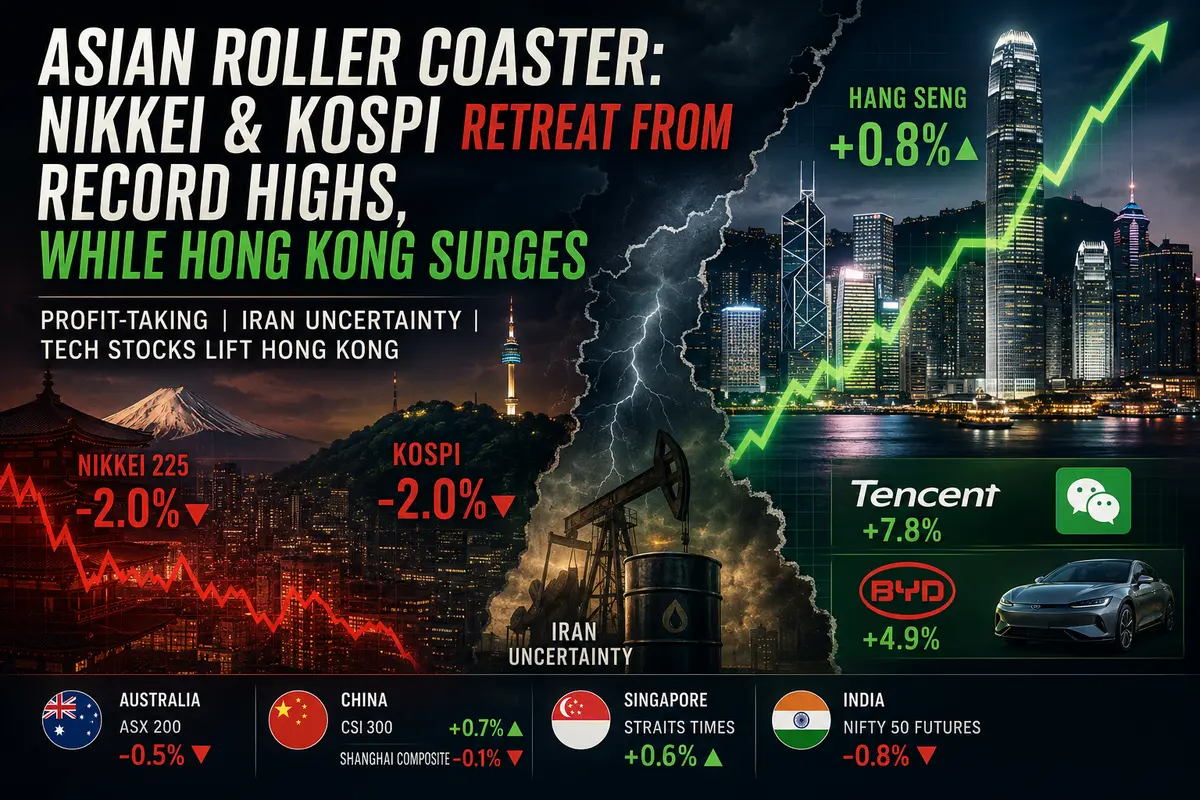
Asian markets on Tuesday resembled a patchwork quilt stitched together from conflicting signals. Japan’s Nikkei 225 and South Korea’s KOSPI, which had been celebrating record highs just a day earlier, pulled back by roughly 2%. Hong Kong’s Hang Seng, by contrast, gained 0.8%, lifted by heavyweight technology stocks. Chinese indexes moved in opposite directions, Australia’s market fell following hawkish comments from the central bank, and Indian futures pointed to further losses. All of this unfolded against a backdrop of uncertainty surrounding Iran and profit-taking in the semiconductor sector. Tuesday was a reminder that markets cannot rise forever.

Nikkei and KOSPI: Profit-Taking After the May Rally

Japanese and South Korean equities were among Tuesday’s biggest casualties. Both indexes retreated about 2% from the record levels reached in previous sessions. The reason was as old as the market itself: profit-taking. After an impressive May rally fueled by optimism around artificial intelligence, investors decided it was time to lock in gains.

May was a triumphant month for Asian chipmakers. SK Hynix joined the ranks of trillion-won companies, Samsung reached fresh all-time highs after resolving a labor dispute, while Renesas and Rohm posted double-digit gains. Nvidia added fuel to the rally on Monday by unveiling new AI-related products. But every rally, no matter how powerful, eventually runs out of steam. Tuesday was the day the bulls took a breather.

The decline in South Korea was particularly notable because it coincided with disappointing macroeconomic news. Consumer inflation in May reached a 26-month high, exceeding expectations. This immediately strengthened expectations that the Bank of Korea could raise interest rates again before year-end. Higher rates are generally unfavorable for equities, especially technology stocks, which are highly sensitive to borrowing costs. Korean investors responded to the inflation data by selling.

The Iran Factor: Tehran Suspends Communication Through Intermediaries

...

Continue reading...
0
0
Tom Maffin

Korean Record Amid the Ashes of War: How Asian Markets Live Between Bombs and Chips

Korean Record Amid the Ashes of War: How Asian Markets Live Between Bombs and Chips

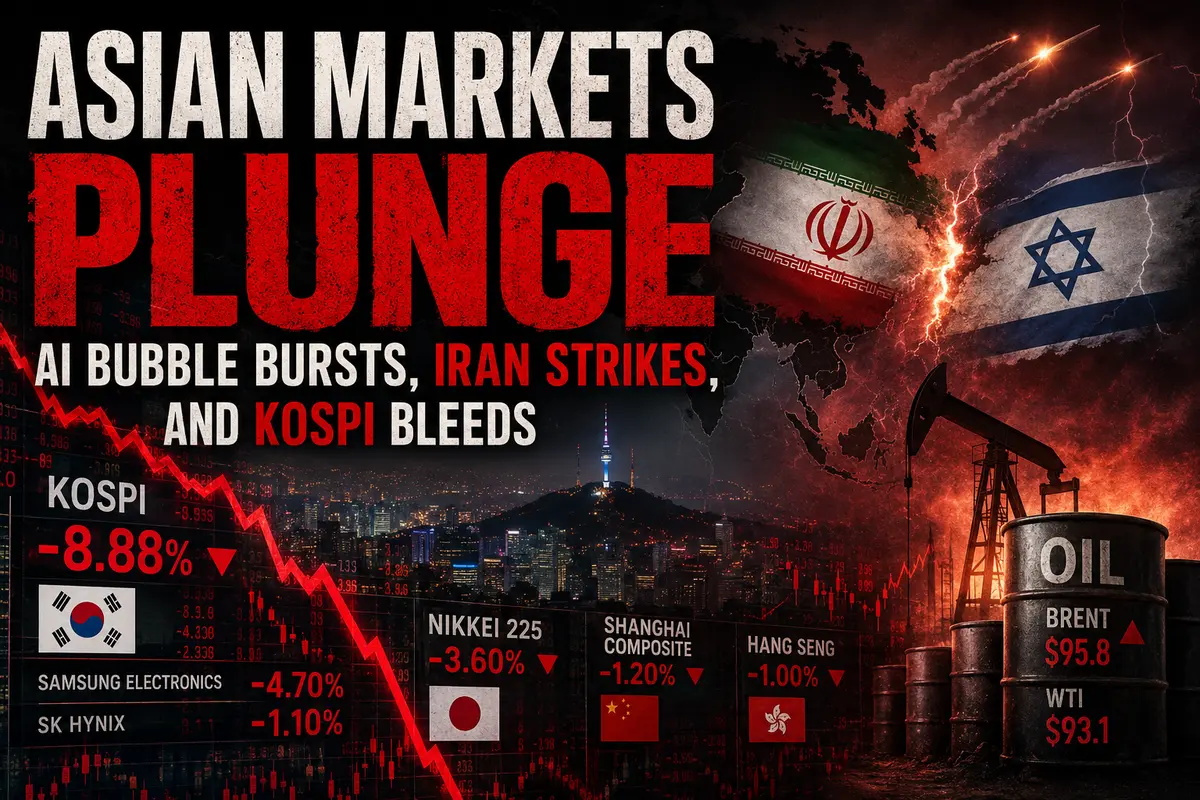
Asian stock markets on Tuesday looked like a chessboard where the black and white squares had been mixed together without any logic. Japan declined, China fell, Australia and Singapore slipped into the red. But in the middle of this sea of red indices, like an iceberg rising above the waves, stood the KOSPI — South Korea’s benchmark index hit a new all-time high, surging above 8,131 points. Hong Kong, lifted by a rally in chipmakers, also closed higher. This market schizophrenia perfectly reflects the current moment: geopolitics is pulling markets down, technology is pushing them up, and investors are swinging between fear of Iranian bombs and greed for artificial intelligence.

Strikes on Iran: Markets Back in “Run or Freeze” Mode

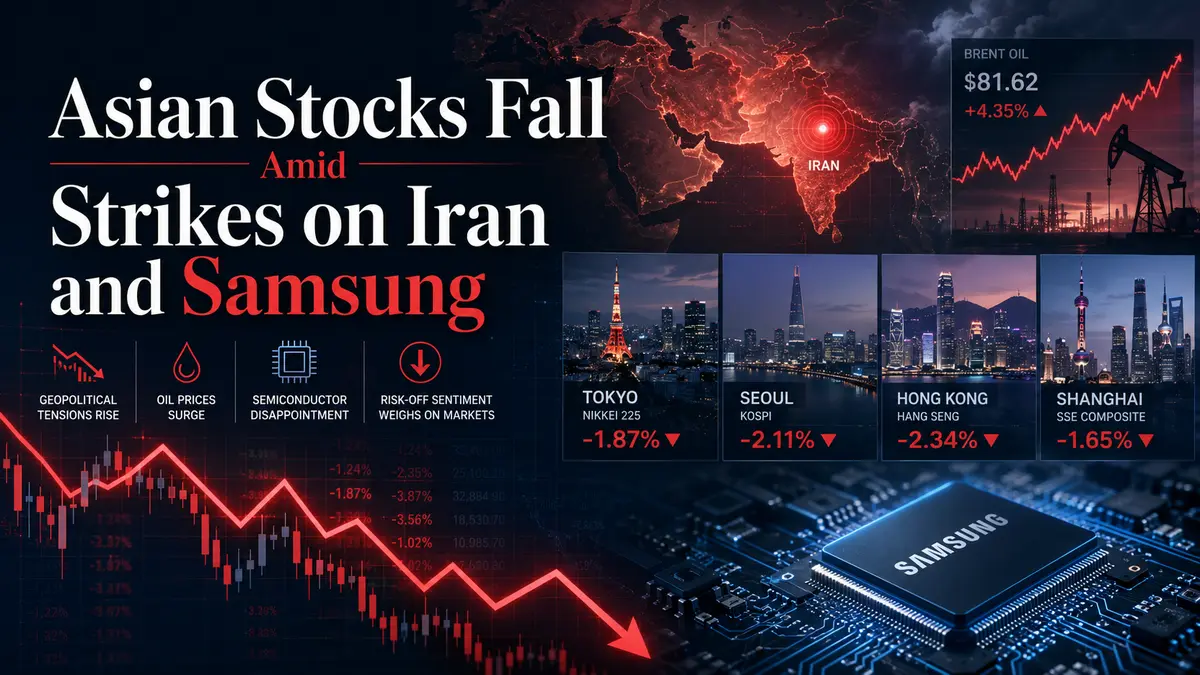
New U.S. strikes on missile positions and vessels in southern Iran, revealed on Monday, hit the markets like a bucket of cold water poured over the smoldering embers of optimism. Just on Sunday, markets were celebrating hopes for peace. As recently as Monday morning, oil had fallen below $100 a barrel, Asian indices were climbing, and traders were pricing in a swift reopening of the Strait of Hormuz. Today, everything looks different. Brent is back near $98, while WTI hovers around $92. Oil prices have bounced back, reminding everyone that the war is not over — it has merely paused.

Washington describes the strikes as defensive. The wording matters: it leaves room for diplomacy. Had the attacks been labeled offensive, markets would have interpreted them as escalation and reacted far more aggressively. But even “defensive” bombings during ongoing negotiations in Doha send a message. A message that diplomacy is stalling, that the sides cannot reach an agreement, and that military force remains the primary argument. And although Trump continues to say the talks are “going well,” markets have learned to...

Continue reading...
0
0
Navigation menu