

Asian Markets Plunge: AI Bubble Bursts, Iran Strikes, and KOSPI Bleeds
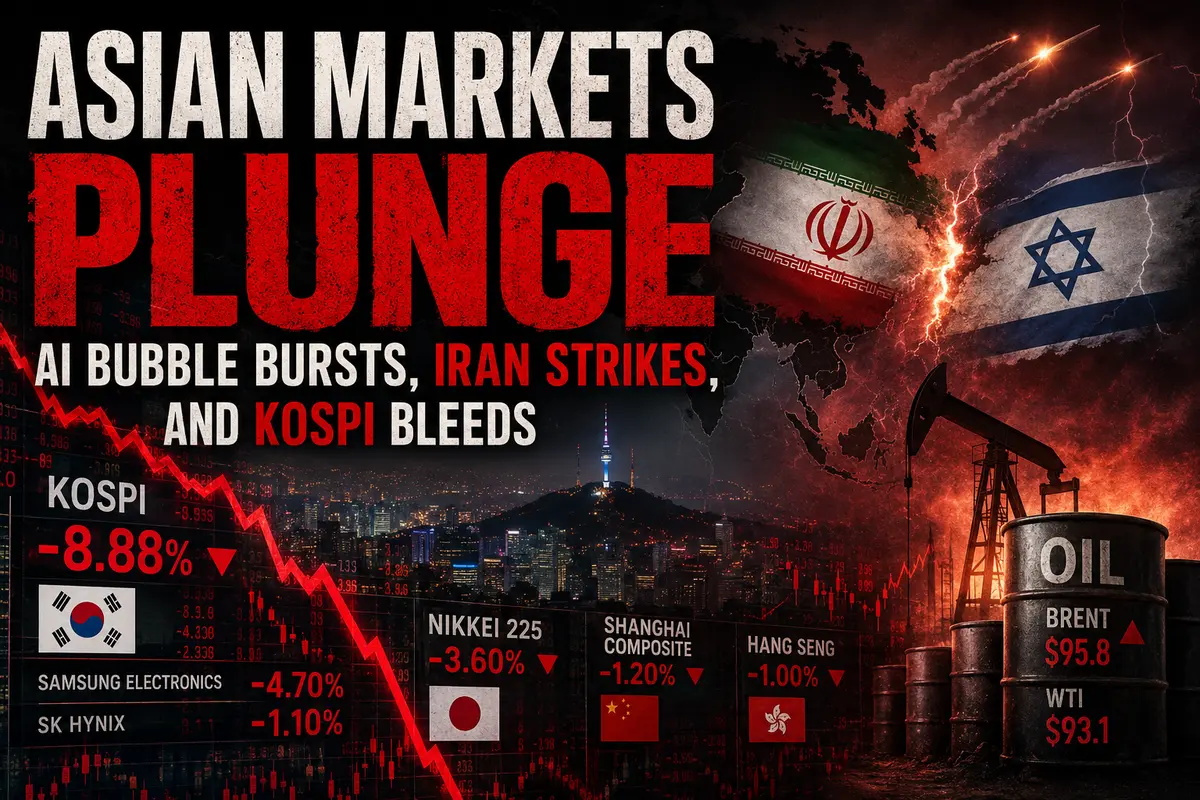
If you opened your brokerage app on Monday morning and couldn’t believe your eyes, you weren’t alone. Asian stock markets experienced a genuine bloodbath. And no, this wasn’t just another minor correction that investors could shrug off and move on from. This looked much more like a full-scale selloff, fueled by a toxic mix of an overheated artificial intelligence sector, military strikes in the Middle East, nervous investors finally taking profits, and fresh U.S. economic data that crushed hopes for imminent rate cuts.
South Korea’s KOSPI became the undisputed antihero of the day. The index collapsed by nearly 9%. An 8.8% decline isn’t just a drop—it’s a meltdown. To put it into perspective, KOSPI erased virtually all the gains accumulated during the previous six months of explosive growth in a single trading session. The reason? The Korean market’s biggest stars—semiconductor manufacturers—suddenly lost their untouchable status.
KOSPI: When Champions Fall the HardestSamsung Electronics—a name spoken with reverence in South Korea—saw its shares tumble 4.7%. For a company of Samsung’s size and stature, that’s a devastating move. Given its enormous weighting in the index, when Samsung falls, the entire market feels the impact.
Yet Samsung wasn’t even the biggest story. SK Hynix, the world’s second-largest memory chip manufacturer, lost “only” 1.1%. And the reason it held up better was simple: on Friday, the company made a brilliant strategic move by announcing a partnership with NVIDIA—the undisputed leader of the AI revolution. SK Hynix will supply advanced memory chips to NVIDIA, and that announcement became a lifeline amid a sea of red.
Still, why were losses so severe? Just weeks ago, investors were celebrating Korean chipmakers. Analysts were raising price targets, investors were buying shares aggressively, and KOSPI was outperforming nearly every major stock market in the...
