Bar Pipa
We pay for a post of 10$

TSMC

Korean-Style Acceleration: Samsung Brings Forward the Launch of Its Yongin Plant to 2029

Korean-Style Acceleration: Samsung Brings Forward the Launch of Its Yongin Plant to 2029

Introduction: The Race for Semiconductor Leadership

In the semiconductor industry, time is not merely money. It is the very essence of survival. Every day of delay means lost revenue, surrendered market share, and an advantage handed to competitors. Samsung Electronics, the world’s largest memory chip manufacturer, understands this perfectly. That is why the news that the company plans to begin operating its first plant in the Yongin cluster as early as 2029 sounds like a warning signal to its rivals.

The original plans were more conservative: the plant was expected to open one or two years later. However, the South Korean government decided to accelerate the development of the Yongin National Industrial Complex, a strategic project of national importance. Samsung, as the primary beneficiary of this decision, is adjusting its schedule accordingly.

What is driving this acceleration? What plans does Samsung have for Yongin? And how will this change affect the global semiconductor landscape? Let us take a closer look.

Yongin: The New Capital of South Korean Microelectronics

Strategic Location

Yongin is located south of Seoul, close to several of South Korea’s other major industrial clusters. This location was not chosen by chance. Its geographical proximity to existing manufacturing facilities in Pyeongtaek, research centers, and major transportation routes creates synergies that make Yongin an ideal location for a new semiconductor powerhouse.

The South Korean government sees Yongin not simply as another industrial complex, but as the country’s primary center for next-generation semiconductor production. It is a strategic project of national importance intended to strengthen South Korea’s position in the global semiconductor race.

The First of Six

The plant scheduled to begin operations in 2029 will be only the first of six semiconductor facilities planned for construction within the Yongin industrial complex. This means Samsung is not merely building a single...

Continue reading...
0
0

Bloody Sunday for Kioxia: Why the Memory Maker’s Shares Plunged 9%

Bloody Sunday for Kioxia: Why the Memory Maker’s Shares Plunged 9%

Introduction: The Day Investors Rushed for the Exit

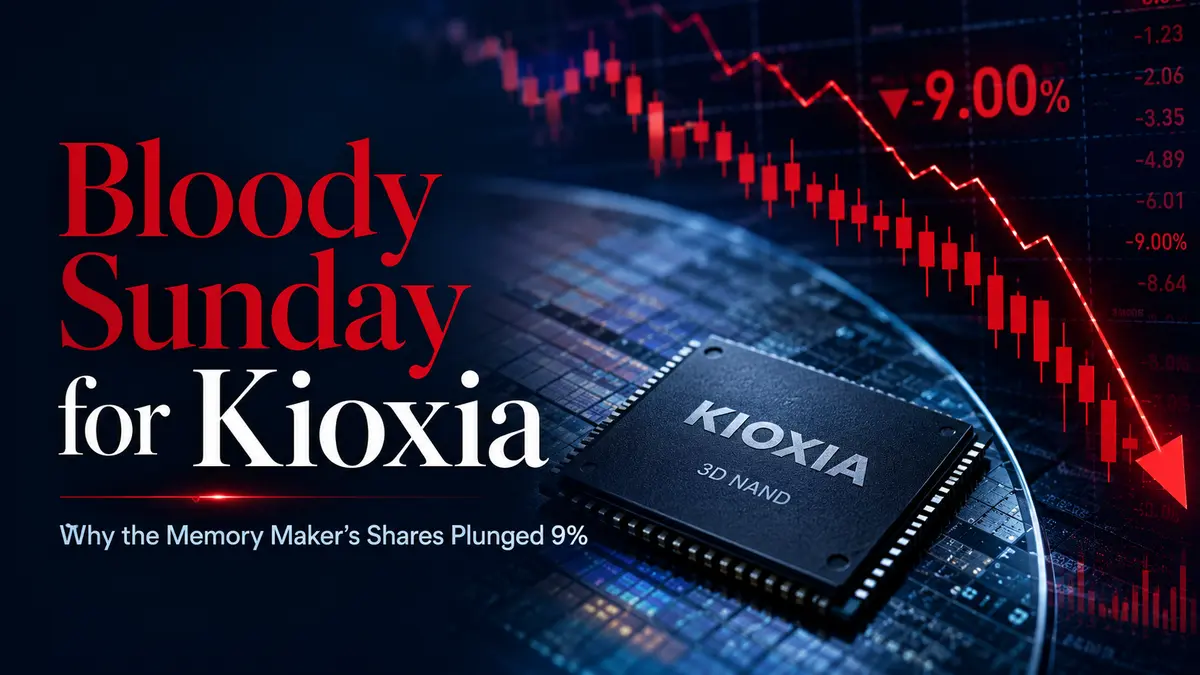
Monday was a difficult day for Kioxia shareholders. Shares of the Japanese NAND memory giant fell by 9.3%, dropping to ¥69,850 per share. For a company that completed one of Japan’s largest IPOs in recent years only a few months ago, such a decline looks particularly painful.

So, what happened? There was no corporate news—no financial reports, scandals, or management changes. The reason for the decline lies elsewhere. Investors became cautious ahead of a crucial week for the global semiconductor sector. Quarterly results from key industry players ASML and TSMC are expected to provide signals regarding capital expenditure on artificial intelligence, demand for memory, and the outlook for semiconductor spending in the second half of the year.

However, this is only part of the story. Kioxia shares are also under pressure from Bernstein’s bearish stance. Last month, the brokerage reaffirmed its “Sell” rating with a target price of ¥40,000. This comes despite the fact that most analysts remain optimistic about the company. The gap between expectations and reality created the perfect storm for the share-price decline.

ASML and TSMC: Key Signals for the Entire Industry

Why ASML’s Results Matter to Kioxia

ASML is not merely a manufacturer of chipmaking equipment. It is a barometer for the entire semiconductor industry. The company produces lithography machines without which modern processors and memory chips cannot be manufactured. Its financial results show how much customers are prepared to invest in new production capacity.

If ASML reports an increase in orders, it will signal that semiconductor demand continues to grow and manufacturers are expanding production. If orders decline, however, this could point to an industry slowdown.

For Kioxia, which produces NAND memory, signals from ASML are critically important. If chipmakers reduce capital expenditure, it may mean they...

Continue reading...
0
0
Tim Drening

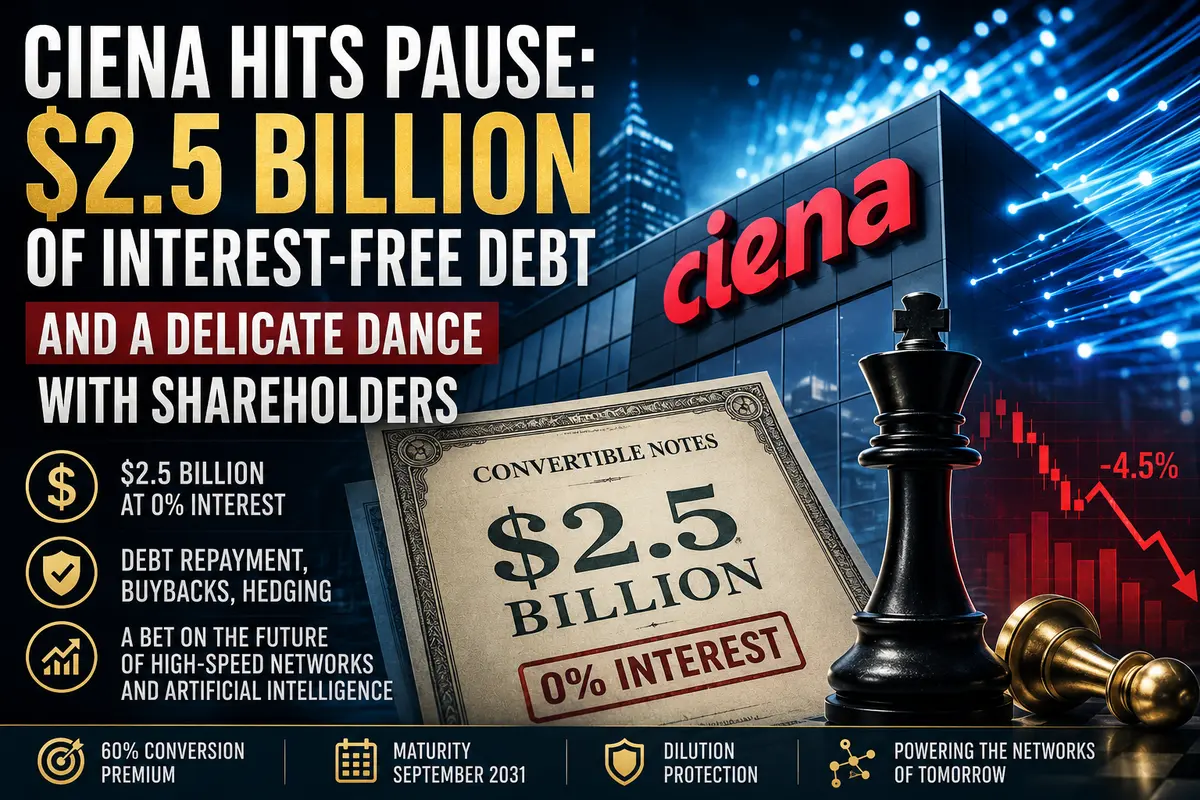
Ciena Hits Pause: $2.5 Billion of Interest-Free Debt and a Delicate Dance with Shareholders

Ciena Hits Pause: $2.5 Billion of Interest-Free Debt and a Delicate Dance with Shareholders

Silence in the Telecom Market: Why Everyone Is Watching Ciena

On Monday, while the financial world was focused on missiles in the Middle East and a falling Bitcoin, a Maryland-based company quietly executed a move that left many investors scratching their heads. Ciena Corporation, a global leader in high-speed optical networking, announced a $2.5 billion offering of convertible notes.

With a zero coupon.

That means no interest payments. Investors are lending the company nearly two and a half billion dollars and receiving no regular income in return. Zero.

Would you lend someone $2.5 billion at 0% interest?

Apparently, the answer is yes—if you're a large institutional investor who sees this as more than just a loan. Demand was so strong that Ciena increased the offering from the originally planned $2 billion to $2.5 billion and added an option for initial purchasers to acquire another $375 million of notes within 13 days of issuance.

So what kind of financial magic is this? How can a company whose stock has fallen 25.6% over the past week raise billions of dollars at zero interest?

Let's take a closer look.

The Deal: The Mechanics of an Almost Perfect Financial Crime

Let's start with the numbers, because in finance, the devil is always in the details.

Ciena is issuing $2.5 billion of senior convertible notes due in September 2031.

The key word is convertible.

This means noteholders have the right to exchange their bonds for Ciena common stock at a predetermined conversion price.

What price?

$746.66 per share.

At the time of the announcement, Ciena stock was trading at $466.67 per share. That represents a 60% conversion premium.

Investors are willing to wait nearly five years—until the conversion period begins in June 2031—and bet that Ciena's stock will rise...

Continue reading...
0
0
Tim Drening

Taipei Monday: Down Ten Percent in a Single Session

Taipei Monday: Down Ten Percent in a Single Session

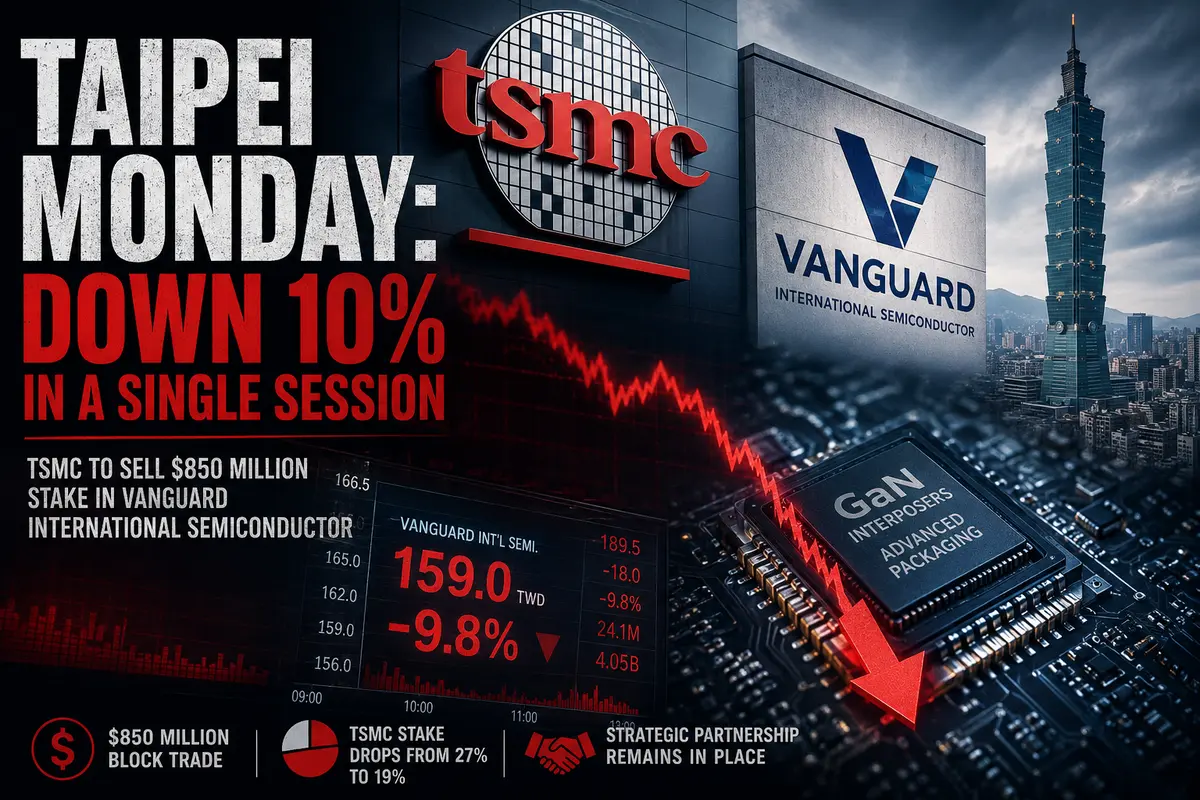
Monday morning on the Taipei exchange began with a steep dive for Vanguard International Semiconductor. The company’s shares plunged nearly ten percent, falling to 159 New Taiwan dollars apiece. For a stock that had seemed relatively stable as recently as Friday evening, the move came as a real shock. A ten-percent drop in a single trading session is not a routine correction, not a technical pullback, and not a reaction to general market noise. It is a verdict delivered by investors after learning about the decision of the company’s largest shareholder.

And that shareholder is none other than TSMC, the world’s largest contract chipmaker — a company whose very name makes competitors from Silicon Valley to Shenzhen nervous. On Friday, the giant announced plans to sell up to 152 million Vanguard shares to institutional investors through a block trade. Not gradually, not through the open market, and not with careful regard for short-term market conditions — but all at once, in a large, deliberate transaction executed with corporate precision.

The Math of the Deal: From 27% to 19%

The numbers behind the transaction are substantial. Once completed, TSMC’s stake in Vanguard will shrink from just over 27 percent to exactly 19 percent. The stake changing hands is valued at roughly NT$26.8 billion — about US$850 million at current exchange rates. Nearly a billion dollars’ worth of Vanguard shares will move to new institutional owners, while TSMC will either lock in a sizable profit or free up capital for other purposes.

Why did the market react with a selloff rather than indifference? The answer lies in investor psychology. When the company’s largest and best-informed shareholder decides to reduce its stake by nearly a third, investors inevitably interpret it as a signal. A signal that the company which knows Vanguard better than...

Continue reading...
0
0
Navigation menu
instaforex banner