Nvidia Tightens the Screws: How the American Chip Giant Is Fighting Sanctions Evasion
Introduction: A Whitelist Instead of Gray-Market Schemes
In the world of advanced technology, where artificial intelligence chips have become a strategic resource, the struggle to control their distribution is entering a new phase. Nvidia ( NVDA ... ) , the leading manufacturer of graphics processors used for AI, has reduced by more than half the number of Asian customers authorized to purchase its products. The decision is part of stricter compliance procedures designed to prevent the circumvention of export restrictions.
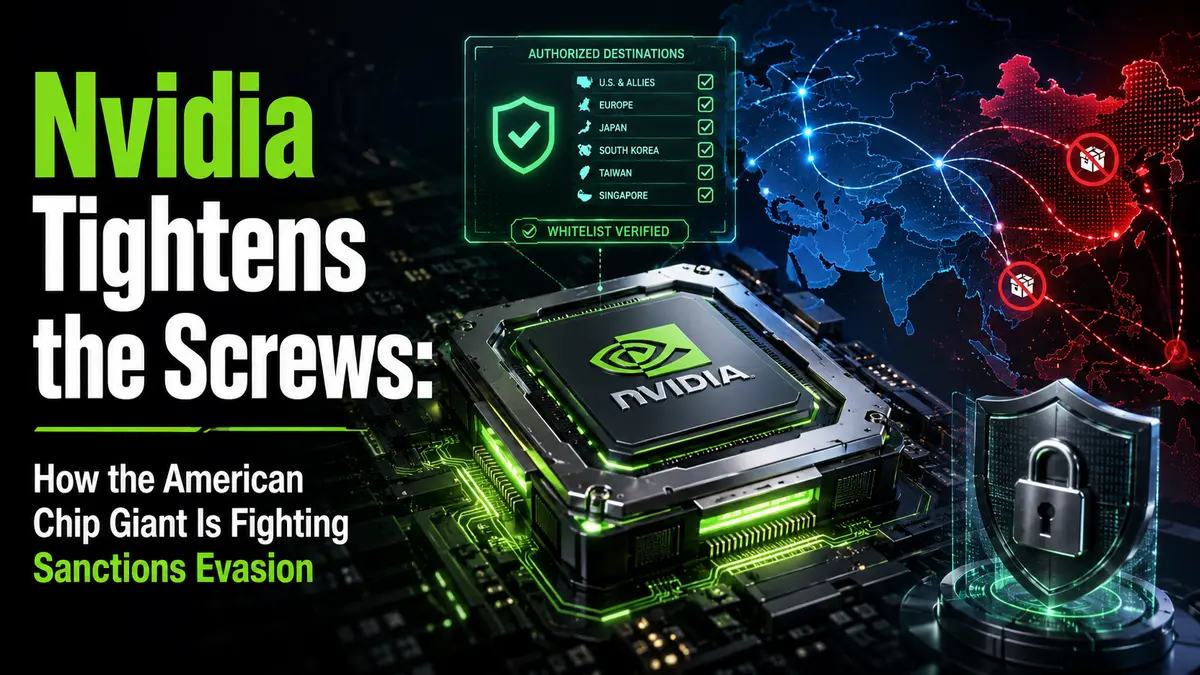
The company has created a new whitelist of approved Asian buyers and strengthened its customer due diligence procedures in Singapore, Malaysia, and Japan. According to the Financial Times, the new screening process excluded more than half of Nvidia’s previous customers. However, companies may reapply after addressing the identified compliance issues.
These measures come amid broader US efforts to close loopholes that allow Chinese companies to gain access to Nvidia’s advanced chips despite strict export restrictions. This article examines the reasons behind the tighter rules, assesses their impact on the market, and considers what may lie ahead for the industry.
Reasons for the Crackdown: Pressure from Washington and the Fight Against Smuggling
Export Restrictions on AI Chips
Washington has imposed strict export restrictions on the sale of AI chips to China since at least 2021. These measures are intended to prevent China from gaining access to advanced technologies that could be used for military purposes and to strengthen the country’s economic capabilities.
As a key manufacturer of AI chips, Nvidia is under close scrutiny from US authorities. The company must balance compliance with US legislation against its desire to retain access to the profitable Chinese market.
Allegations of $2.5 Billion in Chip Smuggling
In March, US prosecutors charged one of Supermicro’s co-founders and two company employees with allegedly organizing the smuggling of...