

Rand Falls to One-Week Low Amid Tensions Around Iran
Introduction: The Wednesday When Geopolitics Turned Markets Around
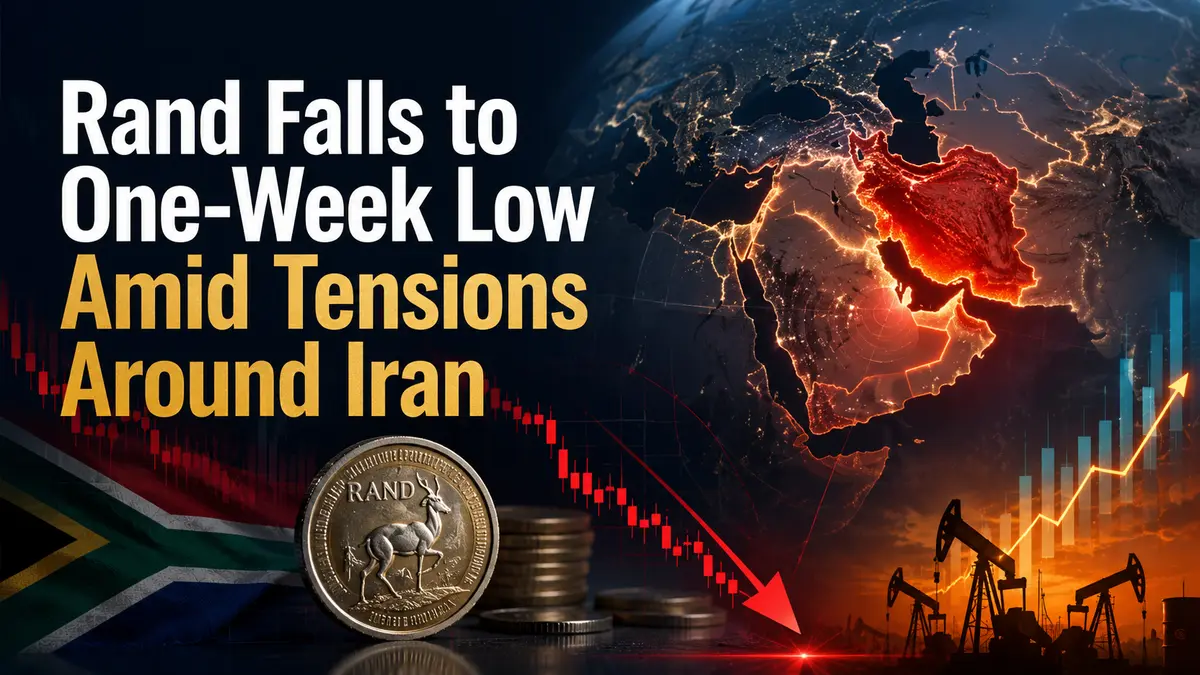
Wednesday. Johannesburg, the JSE stock exchange. Traders who had hoped for a calm day in the morning saw their screens turn red. The South African rand, the country’s main currency, fell to its lowest level in a week. 16.3850 per dollar — a loss of about 0.5% compared with the previous close. This is not a collapse, but it is a serious decline that reflects global fear.
What happened? U.S. President Donald Trump announced the breakdown of a temporary peace agreement with Iran. And that changed everything. Iran’s Revolutionary Guards launched strikes on U.S. military facilities in Bahrain and Kuwait. The U.S. response was immediate. Geopolitical tensions in the Middle East erupted with renewed force.
For markets, this means the return of fear. Investors who had only just begun to believe in stabilization are once again fleeing into safe-haven assets. Emerging market currencies, including the rand, are coming under pressure. The dollar, by contrast, remains stable, while oil prices jump by more than 5%, reaching a two-week high.
The rand, as a typical emerging market currency, is sensitive to global risks. When geopolitical tensions rise, investors pull capital out of developing countries and move it into safer assets. This leads to currency weakness.
What comes next? Analysts expect the rand’s short-term dynamics to remain closely tied to developments in the Middle East, as well as to the release of the Federal Reserve meeting minutes scheduled for the same day. If the conflict escalates, the rand may fall even further. If the situation calms down, it may recover.
Let’s break down what is really happening, why Iran has once again become the main topic for markets, and how this affects the South African currency.
Breakdown of the Peace Agreement: What Happened
Trump Breaks the Agreement
U.S. President Donald Trump announced the collapse of the temporary peace agreement with Iran. This statement shocked markets, which had been hoping for stabilization in the Middle East.
The peace agreement between the United States and Iran, signed last month, had been met with cautious optimism. It reduced geopolitical risks and led to a decline in oil prices. Investors began to believe that the conflict could be resolved through diplomacy.
But Trump decided otherwise. He said that Iran had violated the terms of the agreement and that the United States would no longer comply with it. This statement became the trigger for a new escalation.
Iran Responds: Strikes on U.S. Facilities
Iran’s Revolutionary Guards did not wait long. They announced that they had launched strikes on U.S. military facilities in Bahrain and Kuwait. This was a direct response to U.S. actions.
The attacks on tankers in the Strait of Hormuz, which had occurred earlier, had already created tension. Now the conflict has moved to a new level — U.S. military facilities have become targets.
This means the conflict is no longer limited to maritime incidents. It has entered a phase of direct military confrontation. This is a serious escalation that may have far-reaching consequences.
U.S. Response: Military Strikes on Iran
The United States responded to Iran’s strikes with military strikes on Iranian facilities. Trump warned that Washington could destroy Iranian power plants “within hours.”
This means the conflict could turn into a full-scale war. Markets are reacting with panic. Investors are fleeing into safe-haven assets such as the dollar, gold, and Treasury bonds.
For emerging markets, including South Africa, this means capital outflows and currency weakness.
The Rand: Why It Is Falling
Sensitivity to Global Risks
The South African rand is a classic emerging market currency. It is sensitive to global risks and changes in investors’ appetite for risk.
When geopolitical tensions rise, investors withdraw capital from developing countries and move it into safer assets. This leads to currency weakness.
The rand often follows the movement of global markets. When investors flee from risk, the rand falls. When they return to risk, the rand rises.
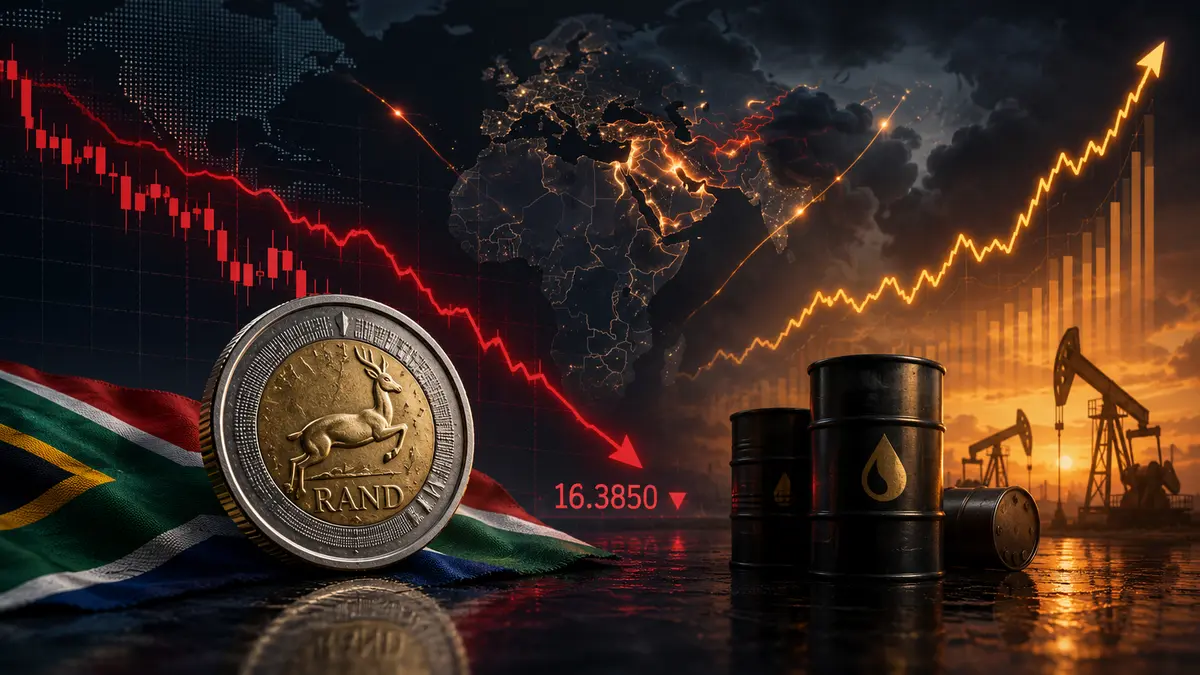
On Wednesday, the rand fell to 16.3850 per dollar, losing about 0.5%. This reflects the broader weakening of emerging market currencies amid the escalation of the conflict in the Middle East.
The Impact of Oil Prices
Oil prices rose by more than 5% on Wednesday, reaching a two-week high. This happened because of fears of supply disruptions from the region.
For South Africa, which is a net importer of oil, rising oil prices create additional pressure. More expensive oil increases import costs and worsens the trade balance, weakening the rand.
In addition, rising oil prices may increase inflationary pressure, forcing the central bank to raise interest rates. However, in the short term, this does not offset the pressure on the currency.
The Dollar: Stability in Times of Crisis
The Dollar as a Safe-Haven Asset
In conditions of geopolitical uncertainty, the dollar remains the main safe-haven asset. Investors move into the dollar because it is considered the most stable and liquid currency.
On Wednesday, the dollar remained almost unchanged against a basket of currencies. This reflects demand for the U.S. currency during a crisis.
When the dollar rises or remains stable, emerging market currencies, including the rand, come under pressure. This is a classic pattern that appears during periods of global uncertainty.
Waiting for the Fed Minutes
The release of the minutes from the Federal Reserve’s June meeting is also scheduled for Wednesday. Investors are waiting for signals about the future path of interest rates.
If the minutes are hawkish, the dollar may strengthen, putting additional pressure on the rand. If they are dovish, the dollar may weaken, giving the rand some breathing room.
For now, markets are in wait-and-see mode, and the rand remains under pressure.
What Comes Next: Scenarios for the Rand
Escalation of the Conflict
If the conflict between the United States and Iran continues to escalate, the rand may fall even further. Investors will pull capital out of emerging markets, and the rand could reach levels of 16.50 or even 17.00.
In this scenario, oil prices may rise even more, increasing pressure on the rand. South Africa, as a net importer of oil, would suffer from higher import costs.
De-escalation of the Conflict
If the situation stabilizes, the rand may recover. The peace agreement may be restored, or the parties may agree to a ceasefire.
In this scenario, investors would return to risky assets, and the rand could strengthen to levels of 16.00 or even 15.80.
Fed Minutes as a Catalyst
The Fed minutes may become an additional catalyst for the rand. If they are hawkish, the dollar will strengthen and the rand may fall. If they are dovish, the dollar will weaken and the rand may rise.
Investors will carefully analyze the minutes in search of signals about future monetary policy.
Conclusion: The Rand at a Crossroads
The South African rand fell to its lowest level in a week amid the escalation of the conflict between the United States and Iran. U.S. President Donald Trump announced the breakdown of the peace agreement, and Iran launched strikes on U.S. military facilities.
Oil prices rose by more than 5%, reaching a two-week high. The dollar remained stable as a safe-haven asset.
The rand, as an emerging market currency, is sensitive to global risks. In conditions of geopolitical uncertainty, investors pull capital out of developing countries, weakening their currencies.
In the short term, the rand’s dynamics will remain closely tied to developments in the Middle East and the release of the Fed minutes. If the conflict escalates, the rand may fall even further. If the situation calms down, it may recover.
The rand is at a crossroads. Geopolitical uncertainty and macroeconomic signals will determine its fate in the coming days and weeks. Investors will closely watch every new headline from the region, understanding that the situation can change at any moment.

Comments
No comments yet. Be the first to share your thoughts!
Authentication Required
You must be logged in to post a comment.