
Bar Pipa
We pay for a post of 10$

RSI

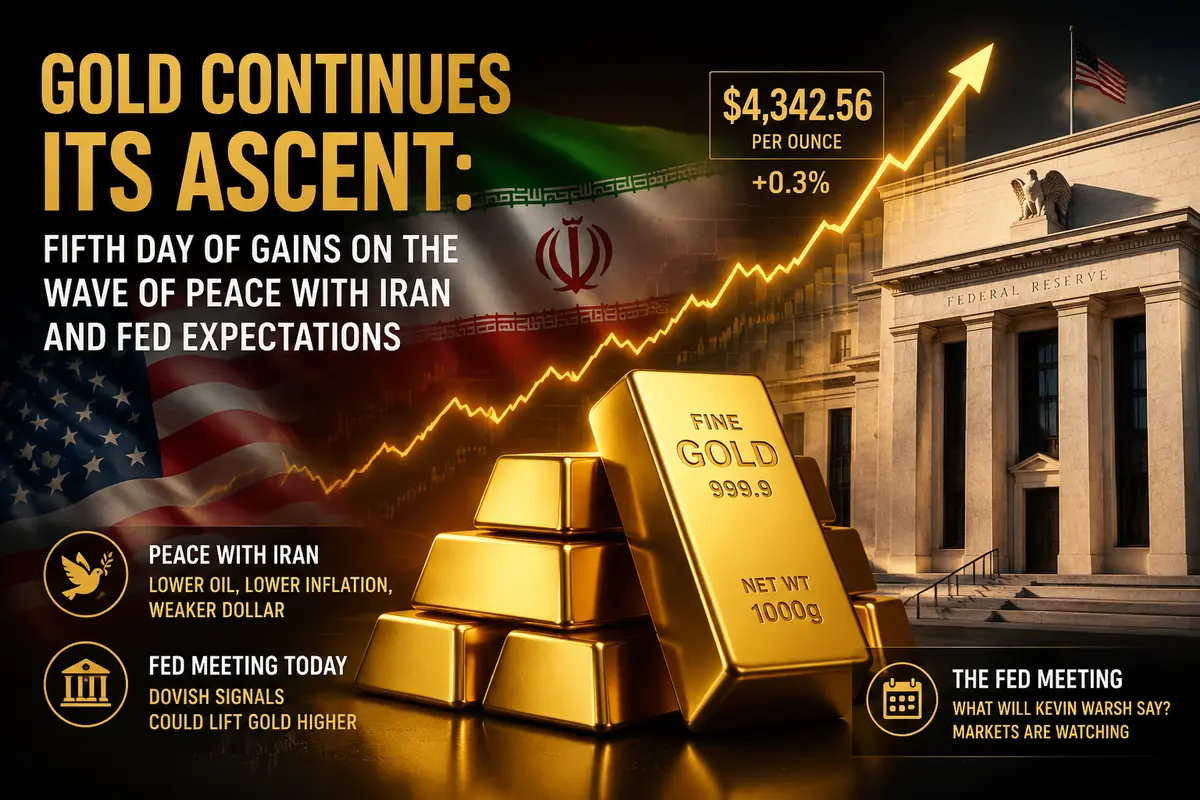
Gold continues its ascent: fifth day of gains on the wave of peace with Iran and Fed expectations
Gold continues its ascent: fifth day of gains on the wave of peace with Iran and Fed expectations

Wednesday — a day when the yellow metal refuses to give up

Wednesday in the gold market began with the continuation of the rally — the fifth consecutive session. The spot price rose by 0.3% to $4,342.56 per ounce. Futures gained 0.3% to $4,368.40. It may seem minor, but this is the fifth straight day of gains. After four weeks of continuous decline, when gold was balancing near the $4,000 level, this looks like a real comeback.

What is driving gold higher? Two things. First — the peace agreement between the United States and Iran. Second — expectations around the Federal Reserve meeting.

Peace with Iran continues to influence markets. Oil has fallen, inflation expectations have eased, and the dollar has weakened. A weaker dollar is a classic driver of gold growth. Investors who were panic-selling gold a week ago are now returning, buying the metal as a hedge against uncertainty.

But the main factor is the Fed. Today’s Federal Reserve meeting, led by new Chairman Kevin Warsh, is a major test. It is his first serious challenge in the role. The future of the dollar — and therefore gold — depends on his words.

Investors are waiting for “dovish” signals. They hope Warsh will confirm the Fed’s willingness to ease policy if inflation continues to decline. If that happens, the dollar will fall and gold will surge.

But there is also risk. If Warsh turns out “hawkish,” the dollar could strengthen and gold may reverse downward.

For now — five days of gains. And that is already a trend.

Let’s break down what is behind this rally, what to expect from the Fed, and how long gold’s rise can continue.

Iran peace: why it is good for gold

On Monday, we wrote that peace with Iran triggered a sharp...
Continue reading...
0
0

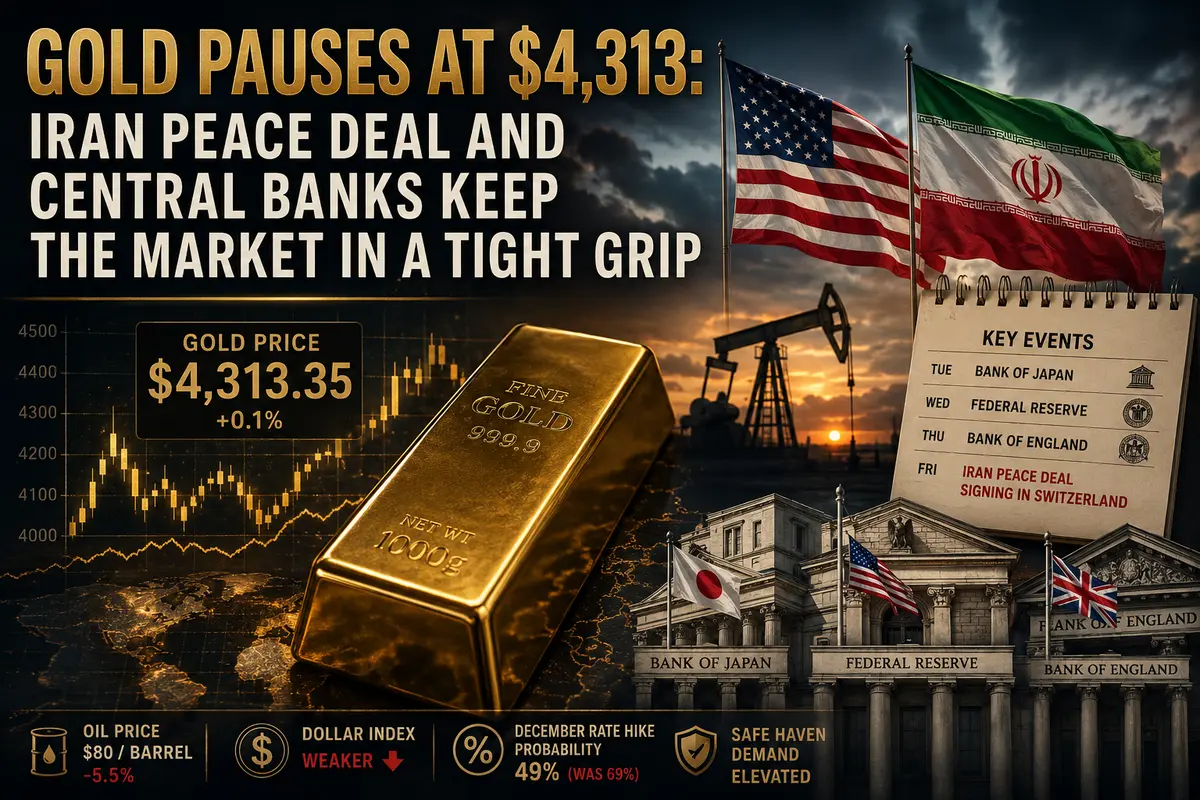
Gold Pauses at $4,313: Iran Peace Deal and Central Banks Keep the Market in a Tight Grip

Gold Pauses at $4,313: Iran Peace Deal and Central Banks Keep the Market in a Tight Grip

Tuesday: A Breather After the Rally

On Monday, gold put on quite a show. It surged more than 2% after news broke of a preliminary agreement between the United States and Iran. The metal, which had been under pressure for weeks, finally caught a breath. Investors who had been selling in panic just a week earlier suddenly rushed back into the market. The reasons were clear: cheaper oil, a more dovish Federal Reserve, and a weaker U.S. dollar. The same chain of factors that had weighed on gold during the conflict was now working in its favor.

But on Tuesday, gold calmed down. Spot prices edged up just 0.1% to $4,313.35 per ounce, while futures slipped 0.4% to $4,333.90. There was no euphoria—just cautious, almost hesitant movement.

Why? Because the market realized that peace has not yet been officially secured. The formal signing ceremony in Switzerland is scheduled for Friday. Between now and then, anything can happen. Iranian hardliners, Israeli hawks, or American lawmakers could still attempt to derail the deal. If that happens, hopes for lower oil prices and a more accommodative Fed could quickly evaporate—and gold could fall along with them.

Adding to the uncertainty is a packed week for central banks. Today, the Bank of Japan is expected to raise rates to their highest level in 31 years. Tomorrow, the Federal Reserve will meet, and its guidance will shape the future direction of the dollar. The Bank of England is also expected to leave rates unchanged.

Traders are reluctant to take large positions ahead of so many potentially market-moving events. They are waiting. And gold is waiting with them.

Iran Peace Deal: Temporary Boost or Sustainable Trend?

Gold jumped 2% on Monday because markets interpreted the peace news as a significant step toward easing inflation pressures. Oil...

Continue reading...
0
0

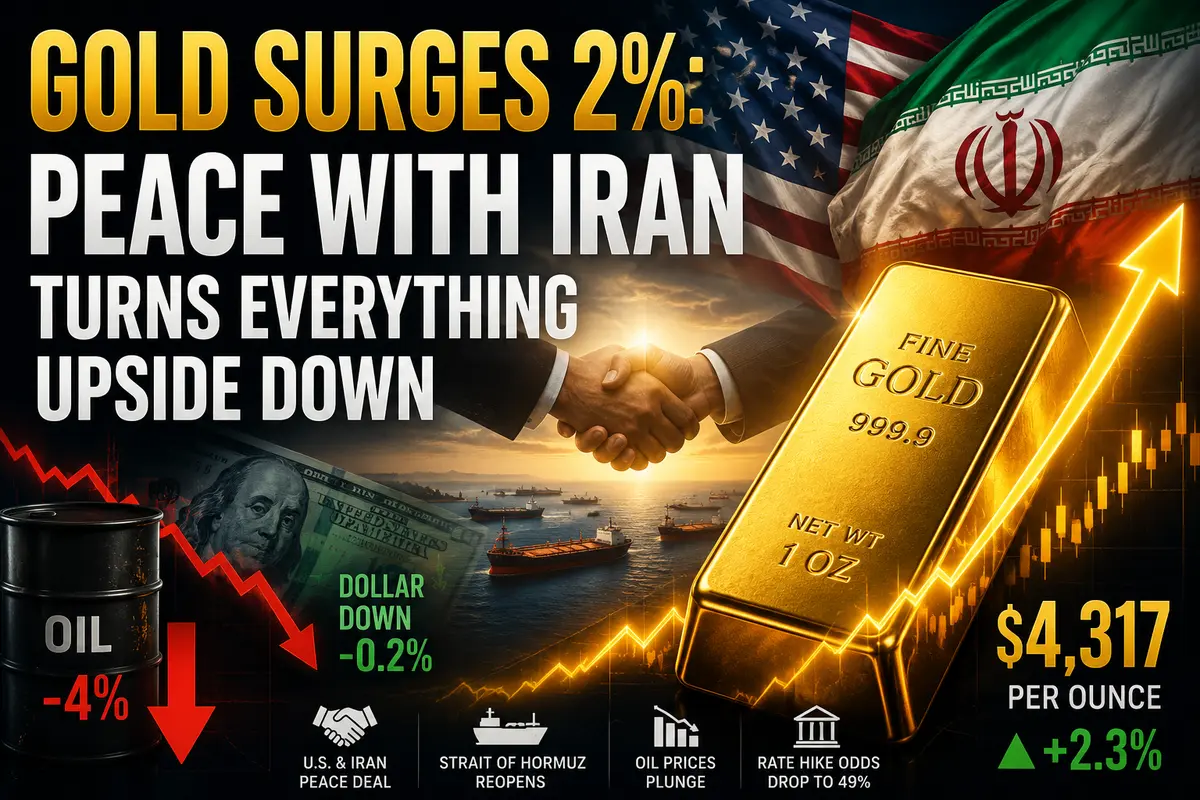
Gold Surges 2%: Peace with Iran Turns Everything Upside Down

Gold Surges 2%: Peace with Iran Turns Everything Upside Down

Monday: The Day Everyone Was Waiting For

When Asian markets opened on Monday morning after the weekend, traders saw something that made them rub their eyes in disbelief. Gold, which had been hovering near 11-week lows around $4,000 just a week ago, suddenly surged higher.

Within a few hours, gold jumped 2.3%. Spot prices climbed to $4,317 per ounce, while futures rose to $4,338.

What happened? Isn't gold supposed to fall on news of peace?

After all, gold is traditionally considered a safe-haven asset. When peace breaks out and risks decline, investors usually sell gold and move into riskier assets. That's how it has worked during wars and crises for the past 50 years.

But this conflict was different.

Throughout months of fighting in the Middle East, gold behaved paradoxically. It didn't rise when missiles were flying—it fell. Markets weren't focused on the war itself, but on its consequences for inflation and interest rates.

Expensive oil = higher inflation = higher Federal Reserve rates = weaker gold.

A simple, albeit twisted, logic.

Now that the United States and Iran have reportedly reached a temporary peace agreement, that logic has reversed:

Peace = cheaper oil = lower inflation = lower interest rates = stronger gold.

Gold is finally pricing in what it failed to reflect during months of conflict.

A Framework Peace Agreement Changes the Narrative

On Sunday, U.S. and Iranian officials reportedly announced that they had reached a framework peace agreement.

Not a complete settlement. Not a permanent solution. Not a comprehensive accord.

But enough to halt military operations.

The agreement reportedly includes:

  • A ceasefire

  • The lifting of the U.S. blockade on Iran

  • Most importantly, the reopening of the Strait of Hormuz to commercial shipping

Pakistani Prime Minister Shehbaz Sharif, apparently involved as a mediator or close observer, stated that...

Continue reading...
0
0

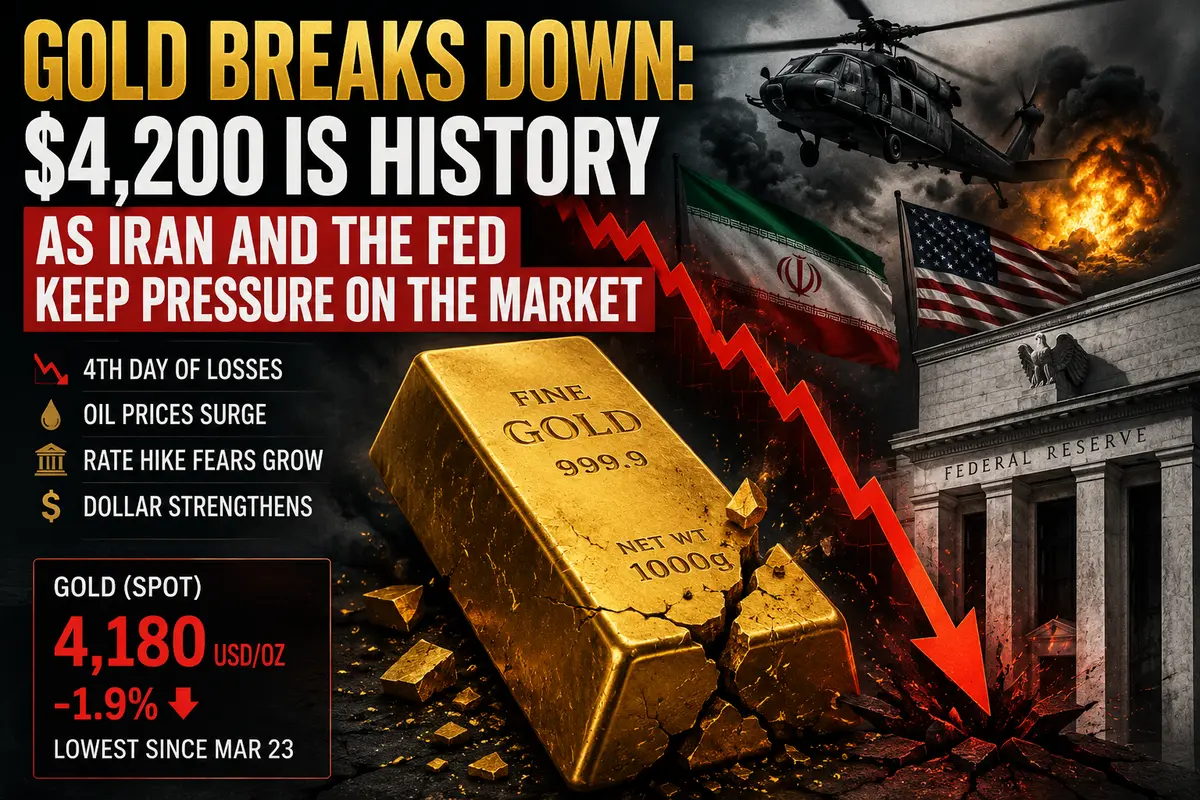
Gold Breaks Down: $4,200 Is History as Iran and the Fed Keep Pressure on the Market

Gold Breaks Down: $4,200 Is History as Iran and the Fed Keep Pressure on the Market

The fourth day of pain: not even a helicopter incident could save the yellow metal

Wednesday morning. You open the gold chart and can hardly believe what you see. Spot gold is trading at $4,180 per ounce, down 1.9% overnight. Four consecutive trading sessions in the red. Four. The last time that happened was last year, when the Federal Reserve was just beginning its aggressive rate-hiking cycle.

Gold has broken below the psychological $4,200 level and never looked back. It keeps falling, and nobody knows where the bottom is. U.S. gold futures are at $4,204.75, also down 1.9%, their lowest level since March 23. Three months ago, the world looked very different: the Middle East ceasefire was still holding, U.S. inflation was easing, and the Fed was signaling rate cuts. Those promises have now all but disappeared.

What Happened?

The same story that has plagued gold for weeks continues. The dollar is strong. Interest rates remain high. Inflation refuses to retreat. And the Middle East—which would normally support gold prices—has instead become another source of pressure.

Now a new and dangerous twist has emerged. On Tuesday, Washington reportedly launched fresh strikes against Iranian targets following the downing of a U.S. military helicopter near the Strait of Hormuz.

Think about what that means. The United States and Iran are no longer exchanging blows through intermediaries or proxy forces in Lebanon or Yemen. These are direct strikes. A helicopter has been shot down. Airstrikes are underway. The Strait of Hormuz—the artery through which roughly one-fifth of the world's oil flows—is increasingly becoming a conflict zone.

And do you know how gold is reacting?

It’s falling.

Not rising—falling.

Because markets are looking three steps ahead. Strikes on Iran lead to higher oil prices (which rose another 1% on Wednesday),...

Continue reading...
0
0
Tom Maffin

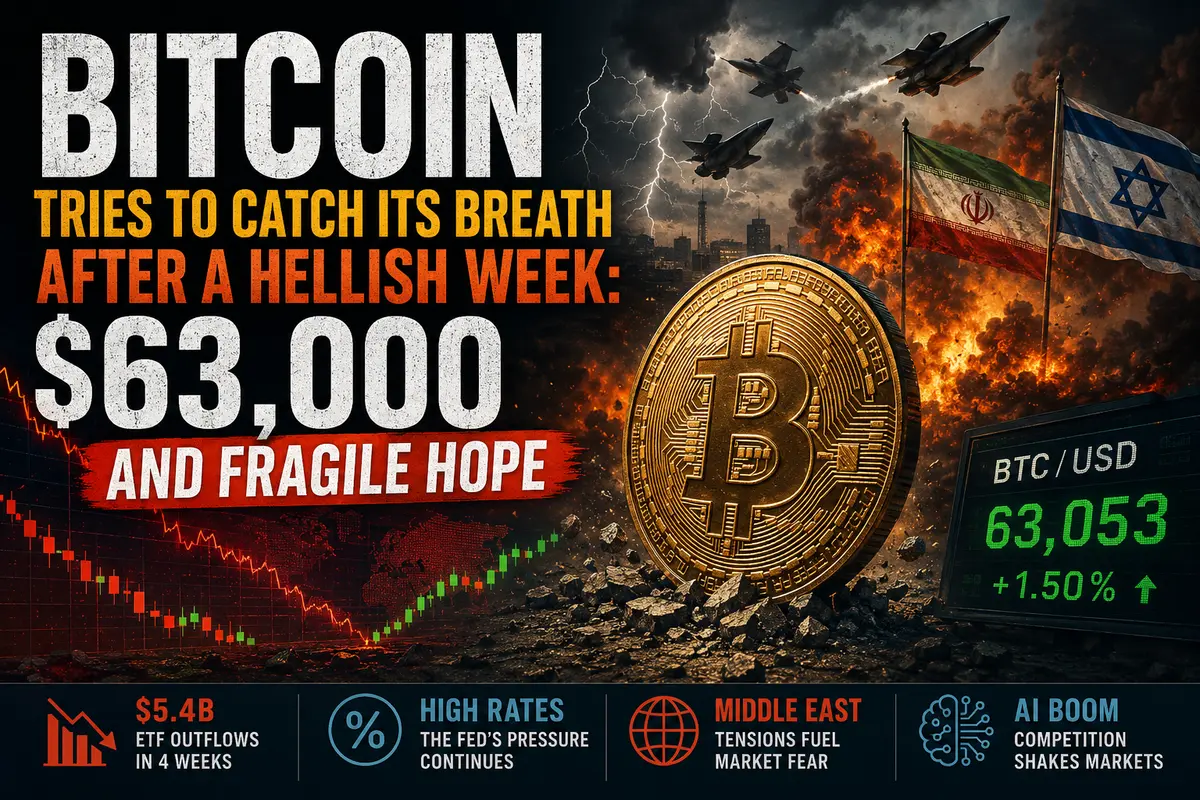
Bitcoin Tries to Catch Its Breath After a Hellish Week: $63,000 and Fragile Hope

Bitcoin Tries to Catch Its Breath After a Hellish Week: $63,000 and Fragile Hope

Monday: A Hint of Green Through the Red Haze

After seven days of nonstop nightmare, after the cryptocurrency market lost nearly $400 billion in market capitalization, after $7 billion in liquidations and panic not seen since the collapse of FTX, Monday finally arrived. It did not bring relief, but at least it offered a brief pause.

Bitcoin rose by 1.5%, reaching $63,053.

Sounds insignificant? Perhaps. After an 18% decline in a single week, one and a half percent is just a drop in the ocean. But in the crypto world, where fortunes are made and lost in a matter of hours, any green candle feels like a gift from fate.

Yet the optimism is cautious, tinged with anxiety about both the past and the future. The fundamental problems that triggered the selloff have not disappeared. Institutional investors continue pulling money out of spot Bitcoin ETFs. The conflict between Iran and Israel has not been resolved—it has merely frozen under a fragile ceasefire that could collapse at any moment. And the Federal Reserve continues to rattle markets with the prospect of persistently high interest rates.

Still, Bitcoin is up 1.5%.

The cryptocurrency managed to hold above the psychologically important $60,000 level, which it briefly fell below on Friday. Altcoins are showing signs of life as well: Ether gained 3.4%, while Solana and XRP each rose 1.3%. Even memecoins, which typically suffer the most during panic-driven selloffs, posted modest gains.

The market is trying to find a bottom.

The only question is whether it has actually found one—or whether this is simply another pause on the way down.

Institutional Exodus: $5.4 Billion Gone in Four Weeks

The biggest story of the past month is not missiles in the Middle East or even Federal Reserve policy.

The biggest story is spot Bitcoin ETFs.

...

Continue reading...
0
0
John Madnes

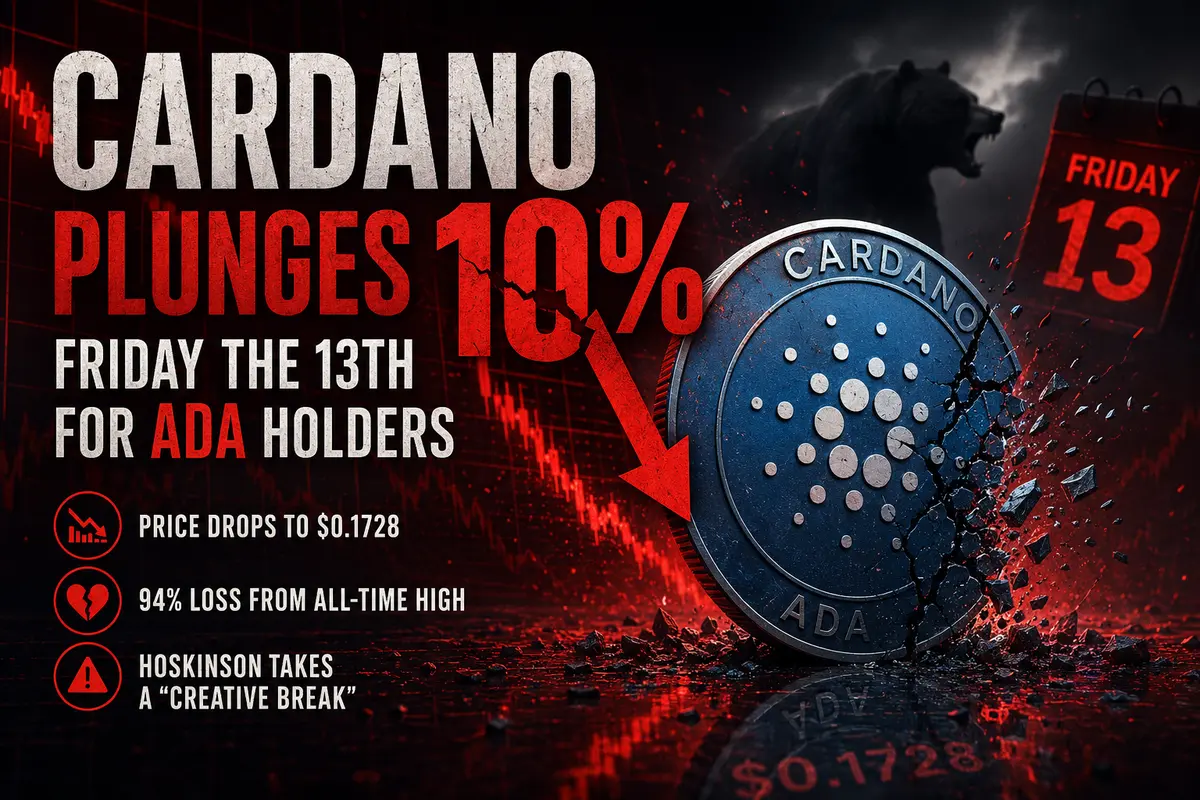
Cardano Cryptocurrency Plunges 10% in a Bearish Market Pullback

Cardano Cryptocurrency Plunges 10% in a Bearish Market Pullback

Friday the 13th for ADA Holders

Friday turned into a bloodbath for Cardano supporters. Cardano, once among the world's top three cryptocurrencies and a contender for the throne, fell 10.17% in a single day. The price dropped to $0.1728, marking its sharpest decline since June 4 and coming at a time when the broader market was already on edge.

The numbers confronting ADA holders are enough to break the heart of even the most resilient crypto enthusiast. Cardano’s market capitalization shrank to $6.28 billion. That sounds enormous until you remember that at its peak in 2021, Cardano was worth nearly $95 billion. Since then, its value has evaporated like morning mist. The token has lost 94% of its value from its all-time high of $3.10 reached on September 2, 2021.

Over the past week, Cardano has fallen 26%. Twenty-six percent in seven days is not a correction—it is a collapse. Trading volume over the last 24 hours reached nearly $937 million, accounting for 0.69% of the entire cryptocurrency market's turnover. People are selling in panic. Some are cutting their losses; others are simply leaving and may never return to the asset.

At the time of writing, Cardano ranks 15th among all cryptocurrencies by market capitalization. It was once third. That decline in ranking is perhaps the clearest indication of how much has gone wrong.

But the most frightening aspect for holders is not the numbers themselves. It is the news accompanying them. Project founder and spiritual leader Charles Hoskinson announced that he is taking a “creative break.” Just four words posted on X: “I'm taking a break. TTYL.” The market heard those words—and collapsed.

Four Words That Wiped Out Billions

It is difficult to overstate Hoskinson’s influence on Cardano. He is not merely the founder; he is the face, voice,...

Continue reading...
0
0
Navigation menu
instaforex banner