Bar Pipa
We pay for a post of 10$

Metals

Golden Reversal: Why Hopes for Peace with Iran Sent Gold Prices Soaring
Golden Reversal: Why Hopes for Peace with Iran Sent Gold Prices Soaring

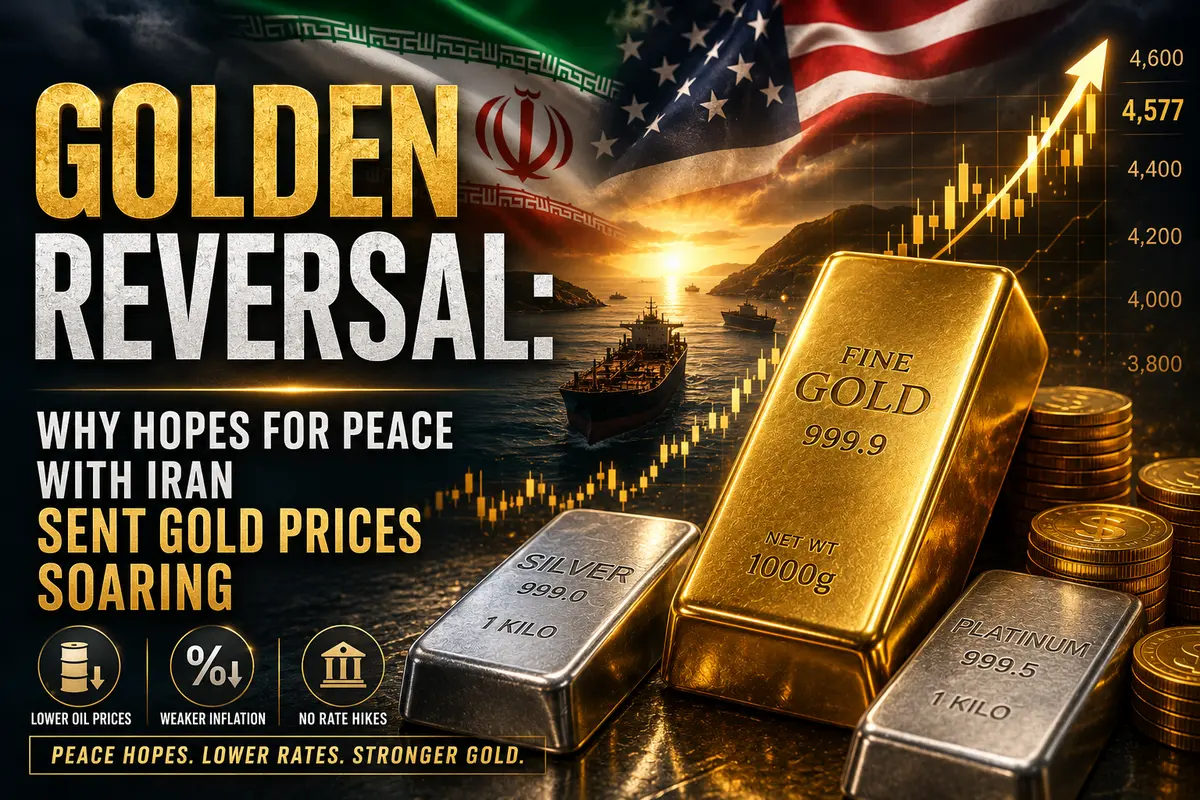
Monday’s Asian trading session delivered a surprise that many gold traders did not expect. Spot gold jumped by one and a half percent, reaching $4,577 per ounce. Futures followed, gaining 1.2% and climbing above $4,600. Silver posted an even more explosive move — up 3.8% in a single session. Platinum added 2%. The entire precious metals sector seemed to awaken from hibernation and surge higher. And the reason behind this rally was not fear or panic, but something entirely opposite — hopes for peace.

At first glance, this seems paradoxical. Gold is traditionally viewed as a safe-haven asset, a refuge during wars and crises. When the world descends into chaos, the yellow metal usually rises, and when peace appears on the horizon, it tends to fall. But today we are witnessing the opposite. The explanation lies in how the conflict with Iran has affected gold over recent months — not directly, but through a complex chain of macroeconomic consequences.

How War Suppressed Gold — and Why Peace Is Setting It Free

The war with Iran triggered an energy crisis. The disruption of shipping through the Strait of Hormuz pushed oil prices above $110 per barrel. Rising energy costs accelerated inflation worldwide. Higher inflation, in turn, forced the Federal Reserve and other major central banks to discuss raising interest rates. And it was this final link in the chain — the threat of higher rates — that became gold’s biggest enemy.

Gold does not generate income. It pays no dividends, no coupons, no interest. When interest rates rise, the opportunity cost of holding gold becomes enormous. Why hold bullion sitting in a vault when you can buy Treasury bonds and earn a guaranteed return? That logic has pressured gold for months. The war was raging, geopolitical risks were extreme, yet gold...

Continue reading...
0
0

Oil Raises Its Head: WTI Climbs Back Toward $100 as the World Speculates About War

Oil Raises Its Head: WTI Climbs Back Toward $100 as the World Speculates About War

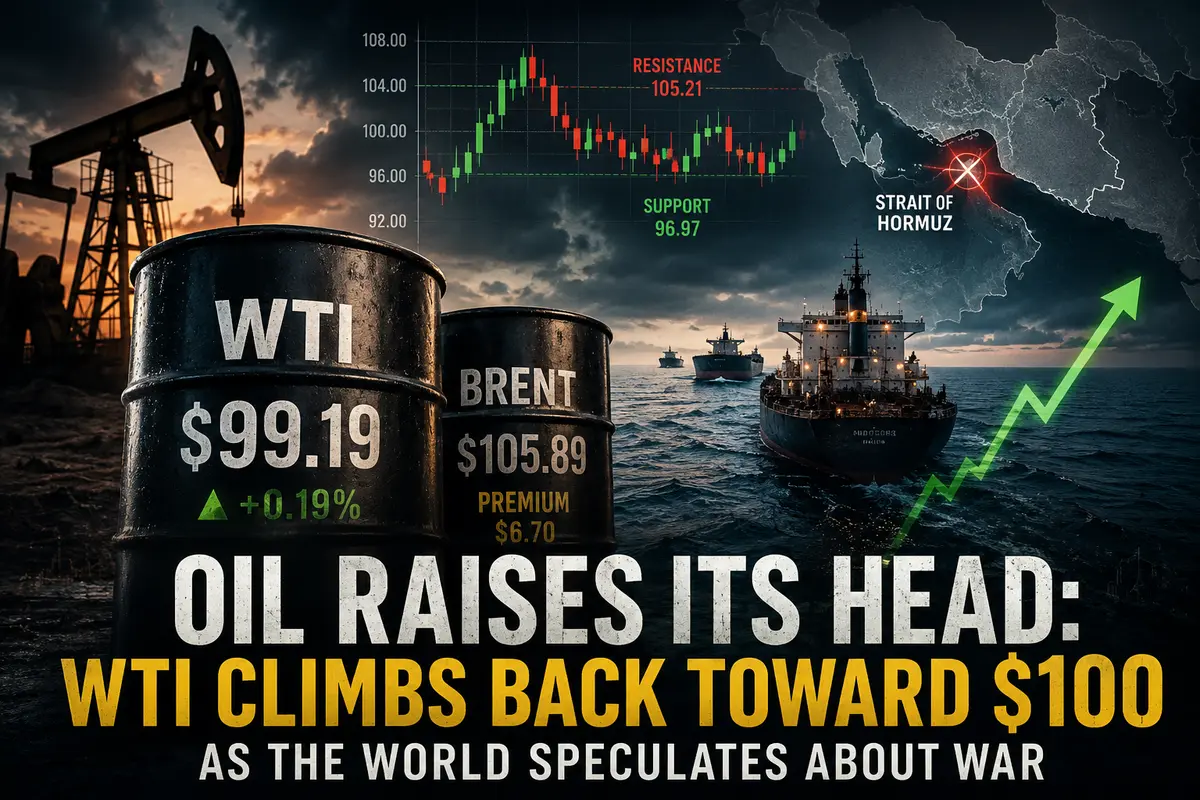
Thursday’s Asian trading session brought a cautious but steady revival to oil markets. July WTI crude futures rose to $99.19 per barrel, gaining a modest 0.19%. In ordinary times, such a move would barely make headlines. But now, when every cent of price movement translates into billions of dollars in budget fluctuations for entire nations, even this small green candle on the chart tells a much larger story. It is the story of oil trying to find a bottom after the collapse triggered by hopes for peace — and of that bottom potentially settling far higher than consumers from Tokyo to London would like.

Between Support and Resistance: Oil Searches for Balance

The technical picture painted by WTI quotes resembles a boxing match in which both opponents are exhausted, yet neither is willing to give ground. The support level at $96.97 marks the line below which the market refuses to let sellers pass. Every time prices approach this level, buyers step in, as though an invisible hand is catching the market before it falls further. Resistance at $105.21 serves the opposite role — a ceiling that has crushed every rally attempt over recent weeks.

This range between $97 and $105 is no accident. It contains all the conflicting information the market is digesting right now. On one hand, hopes for peace with Iran — repeatedly promoted throughout the week by Donald Trump — are pushing prices lower. If the conflict truly is in its “final stage,” as the U.S. president claims, then sooner or later the Strait of Hormuz will reopen, supplies will normalize, and oil prices will return to pre-crisis levels. On the other hand, reality stubbornly resists optimism. The strait remains largely blocked, tankers are forced to seek alternative routes or wait for passage, insurance premiums for shipping...

Continue reading...
0
0

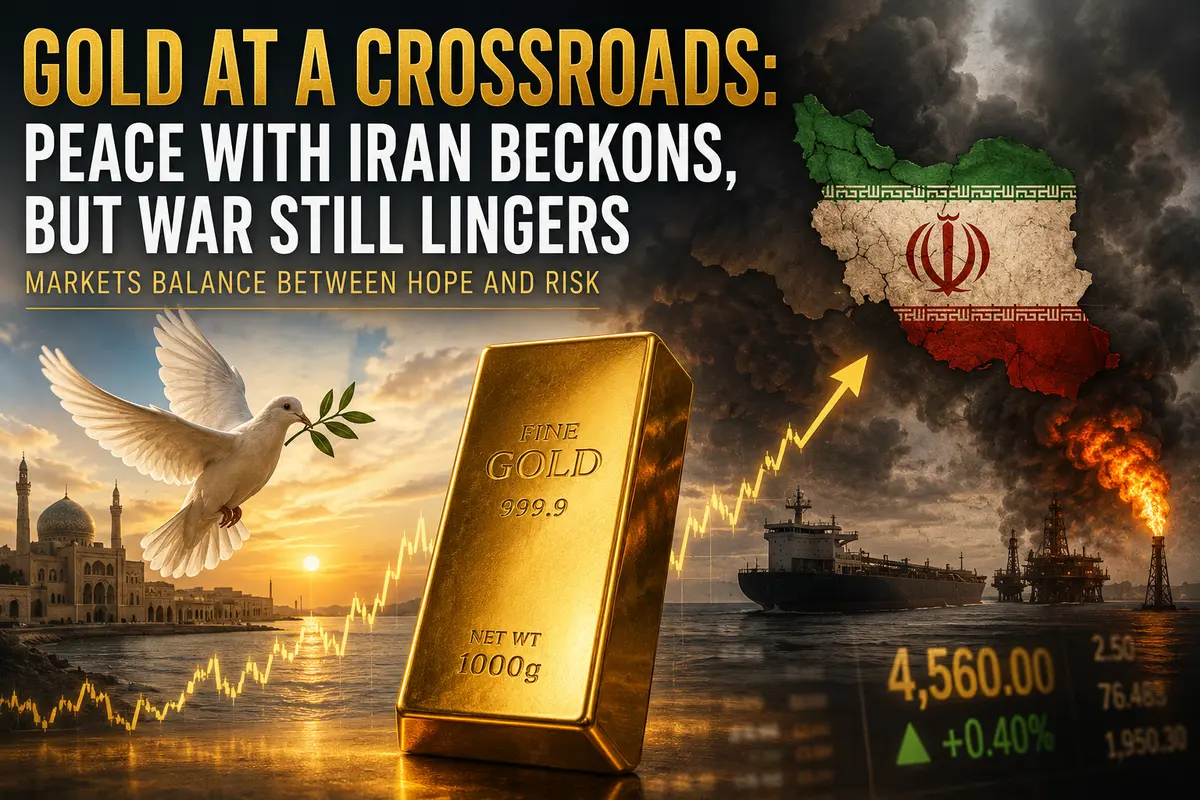
Gold at a Crossroads: Peace With Iran Beckons, but War Still Lingers

Gold at a Crossroads: Peace With Iran Beckons, but War Still Lingers

Gold is climbing again. During Thursday’s Asian trading session, prices turned green, extending a rally that seemed to begin against all logic. Spot gold rose to $4,560 per ounce, while futures reached $4,562. A gain of four-tenths of a percent for the session marked a confident recovery after recent losses. But the real mystery behind this move lies not in the numbers — it’s in what caused it. Gold, which for weeks had been suffocating under the pressure of rising rates and a strong dollar, suddenly found support where few expected it: in hopes for peace with Iran. And that paradox reflects the complex, multilayered logic of a market that no longer reacts to headlines in a straightforward way.

Peace as a Catalyst: An Unexpected Twist

At first glance, everything should have played out differently. Gold is the classic safe-haven asset. It rises when the world descends into chaos — when guns fire and diplomats throw up their hands. A war with Iran, a blocked Strait of Hormuz, oil prices soaring into the stratosphere — all of that should have sent gold flying higher. Instead, the yellow metal hovered near recent lows, unable to break resistance. And now, just as Trump speaks of the conflict entering its “final stage” and negotiations progressing successfully, gold suddenly comes alive. How can that be explained?

The answer lies in the transmission mechanism — the invisible conduit linking geopolitics to monetary policy. The conflict with Iran created an inflationary shock. Disruptions to oil supplies drove energy prices sharply higher, which in turn fueled inflation worldwide. Central banks, especially the Federal Reserve, responded with more hawkish rhetoric and threats of higher rates. High interest rates are gold’s deadliest enemy because they increase the opportunity cost of holding a non-yielding asset. That mechanism has been choking...

Continue reading...
0
0

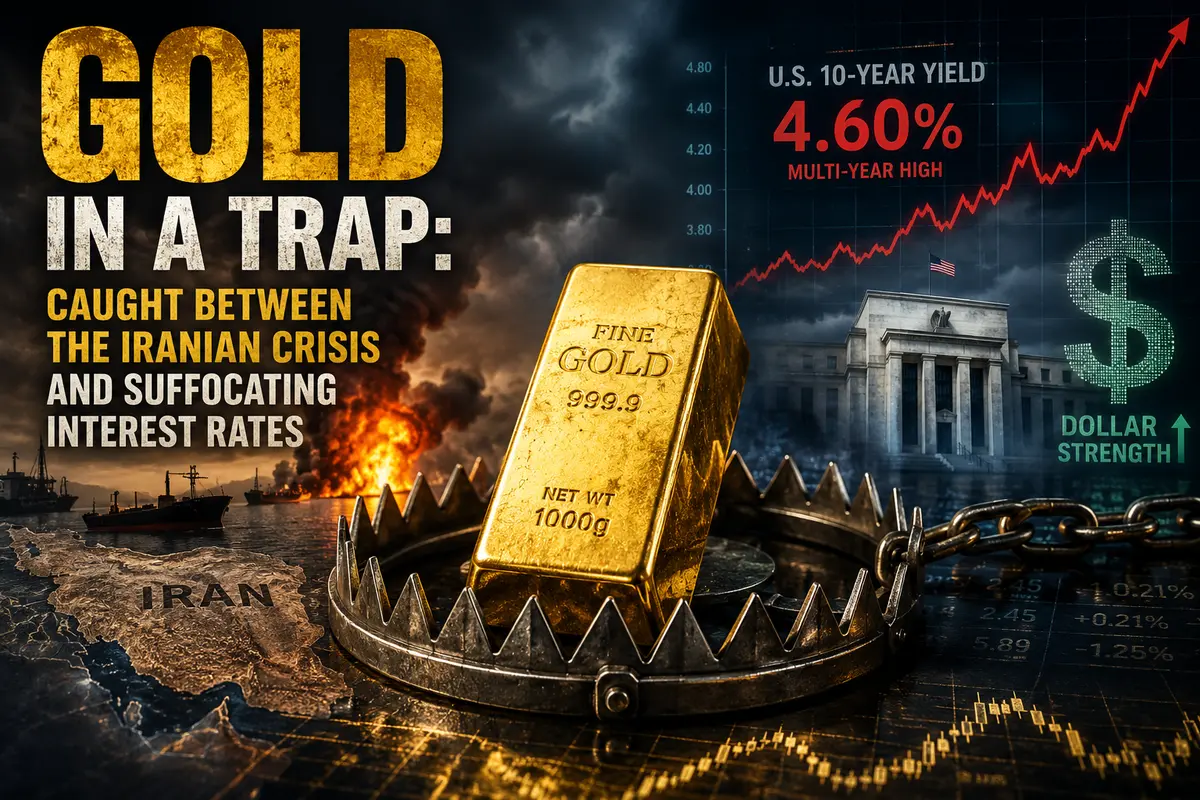
Gold in a Trap: Caught Between the Iranian Crisis and Suffocating Interest Rates

Gold in a Trap: Caught Between the Iranian Crisis and Suffocating Interest Rates

Gold has frozen. It’s a strange, almost unnatural state for an asset that for centuries symbolized movement — either a panicked flight to safety or a violent collapse driven by profit-taking. But Wednesday’s Asian session showed a market that seemed paralyzed. Spot gold hovered around $4,488 per ounce, futures near $4,490 — neither rising nor falling, but holding its breath. Gold, which by all logic should be soaring amid a war disrupting oil supplies and fueling geopolitical chaos, instead lingers near its lowest levels since early April. And within this paradox lies perhaps the most important story of today’s financial world — the story of how timeless truths stop working when monetary policy and inflation fears enter a deadly collision.

Why War Hasn’t Sent Gold Prices Soaring

To understand the drama surrounding the yellow metal, one must rewind the tape and remember how gold behaved during previous geopolitical crises. Escalation in the Middle East, the closure of the Strait of Hormuz, warships facing each other at close range — any one of these headlines would once have triggered a massive gold rally. Investors would have rushed into bars and coins, driving prices toward historic highs. But now, when President Trump and Vice President Vance report progress in peace negotiations and gold barely reacts, it becomes clear: the market no longer dances to the tune of geopolitics the way it once did.

The reason is that the current conflict with Iran is not just a war — it is a war that generates inflation. And inflation, once an old friend of gold, has returned wearing a more dangerous face. Traditionally, rising prices benefited gold because people bought it to protect themselves against the erosion of paper currencies. But today’s inflation is not the result of loose monetary policy. It is a...

Continue reading...
0
0
Luis Silva

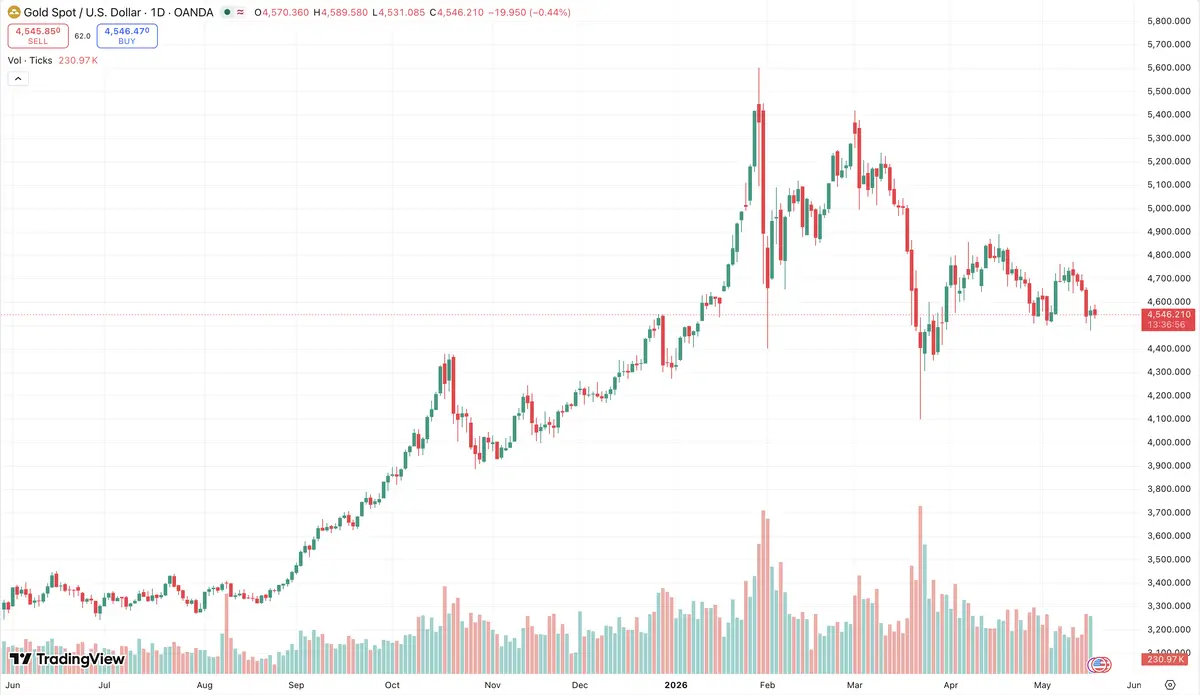
The Forex Gold Standard: Analysis and Forecast for XAU/USD on May 19, 2026

The Forex Gold Standard: Analysis and Forecast for XAU/USD on May 19, 2026

Trading gold (XAU/USD) on the Forex market has always been considered the "major league" of trading. In 2026, this asset has not lost its status as the ultimate safe-haven mechanism; however, the nature of its movements has become even more dependent on a complex web of geopolitics and the new monetary reality.

Today, May 19, 2026, the gold market is in a phase of sharp correction following a tumultuous rally in the first quarter. Let’s break down the forces driving the quotes of the "sunny metal" right now.

Fundamental Background: Oil, the Dollar, and the Shadow of Conflict

The fundamental picture today is defined by a paradoxical link between energy resources and US monetary policy.

1. The Oil and Inflation Factor

The situation surrounding Iran and potential sanctions remains the main driver. High oil prices (holding around $96–$100 per barrel) are creating sticky inflationary pressure in the US. For gold, this is a double-edged sword: on one hand, gold is a hedge against inflation; on the other hand, high inflation forces the Fed to keep interest rates at a restrictive level (3.50–3.75%).

2. A Hawkish Fed and the Dollar Index (DXY)

At the moment, the market is reassessing expectations: instead of rate cuts, investors are beginning to price in a "high for longer" scenario. This supports US Treasury yields and makes non-yielding assets (like gold), which do not bear coupon income, less attractive. The Dollar Index (DXY) is trading around 97.80, exerting moderate pressure on gold.

Technical Analysis: The Battle for the $4500 Level

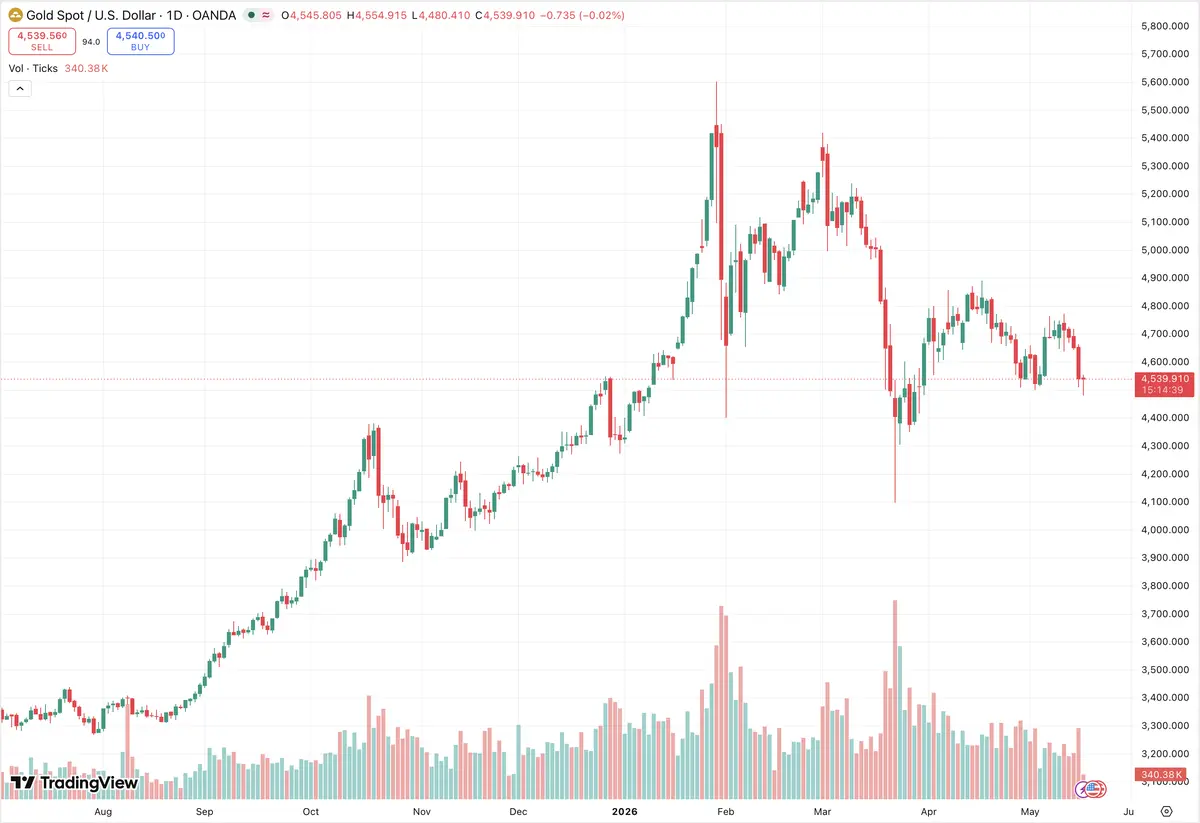
The technical picture for May 19 points to the dominance of bears in the short term. After gold lost about 3.7% of its value last week, the price has approached a psychologically vital milestone.

Key Levels for Today:

Support at $4500: This is the main bastion...

Continue reading...
0
0
Lin Brings

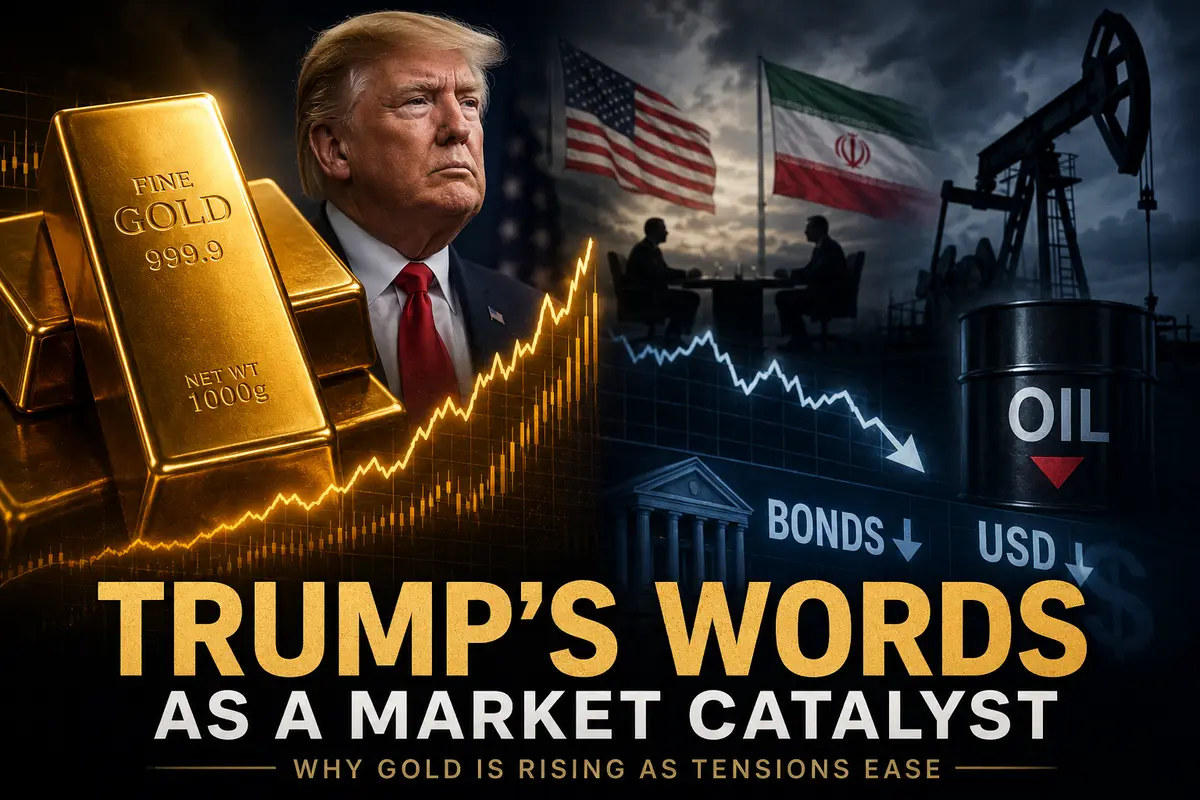
Trump’s Words as a Market Catalyst

Trump’s Words as a Market Catalyst

Tuesday began with a cautious but confident rise in the precious metals market. Spot gold gained one tenth of a percent and settled around $4,570 per ounce, while futures climbed three tenths of a percent to $4,574. At first glance, the move looked modest. But behind these numbers stood an event that changed the mood of the entire financial world the previous evening: Donald Trump announced a postponement of the planned strike on Iran and confirmed that negotiations were ongoing.

Markets, which for weeks had been pricing in the possibility of a major war in the Middle East, interpreted these remarks as the first real signal of de-escalation in a long time. The reaction was multifaceted: oil moved lower, bonds stopped falling, the dollar weakened, and gold — contrary to the usual logic linking its rise to heightened geopolitical fears — also moved higher. To understand this apparent paradox, it is necessary to look at the mechanics currently driving the precious metals market.

Oil Down, Gold Up: Breaking the Pattern

Normally, gold and oil move in the same direction when geopolitics is the main driver. War sends oil higher and gold higher. Peace pushes both lower. But Tuesday morning broke this familiar pattern. Oil prices fell sharply after Trump’s comments, while gold rose.

The explanation lies in the fact that gold is currently far more sensitive to the bond market than to geopolitical risk itself. Recent weeks have shown that the metal’s main enemy was not hope for peace, but rising yields. When investors sold bonds on fears that a war with Iran would fuel inflation and force central banks to tighten policy further, yields surged and gold declined. Now that dynamic is beginning to reverse.

Trump’s announcement that the strike was postponed and that serious negotiations were underway sparked...

Continue reading...
0
0
NorthRay

Gold Said “Yes.” My First XAU/USD Trade Made Me $42.70. And Now — Apple and an Index.

Gold Said “Yes.” My First XAU/USD Trade Made Me $42.70. And Now — Apple and an Index.

Hi, this is NorthRay.

Remember how last time I said I wanted to try commodities and stocks?

Well, I didn’t waste any time.

I opened my very first gold trade (XAU/USD).

And you know what? It didn’t bite me. Quite the opposite — it gave me the biggest profit of my entire demo trading journey so far.

$42.70.

From a single trade.

For someone who was celebrating 24 cents not long ago — this feels like a holiday.


How It Happened

I spent a long time staring at the gold chart.

Honestly? At first, it scared me.

The price moves like crazy. Long candles. Swings of $10–20 within an hour.

I kept thinking:
“This isn’t for beginners. You could lose everything in five minutes here.”

But then I remembered my rule: small steps.

I didn’t use 1 lot. Not even 0.50.

I opened just 0.10 lot.

Ten times smaller than my last EUR/USD trade.

Why?

Because gold is a different beast. You don’t dive headfirst into an unfamiliar river. First, you test the water with your finger.


The Numbers That Surprised Me

Lot size: 0.10 XAU/USD
Take-profit: set at a reasonable distance
Stop-loss: mandatory (I no longer trade without one)

A few hours later, I checked the terminal.

The trade was closed.

Take-profit hit.

Profit: $42.70.

I rubbed my eyes.

Sure, it’s demo money. But the number still looks serious.

For comparison:
My best EUR/USD trade on a 1-lot position made me $23.50.

Here?
0.10 lot — and $42.70.

Gold is incredibly volatile. It covers huge distances in a short amount of time.

That’s both good and bad.

The good:
You can make more money.

The bad:
You can lose money much faster too.

But this time, I was in profit. And it felt good.


What I...
Continue reading...
0
0

A Month and a Half Down: Gold Falls Back to March Levels

A Month and a Half Down: Gold Falls Back to March Levels

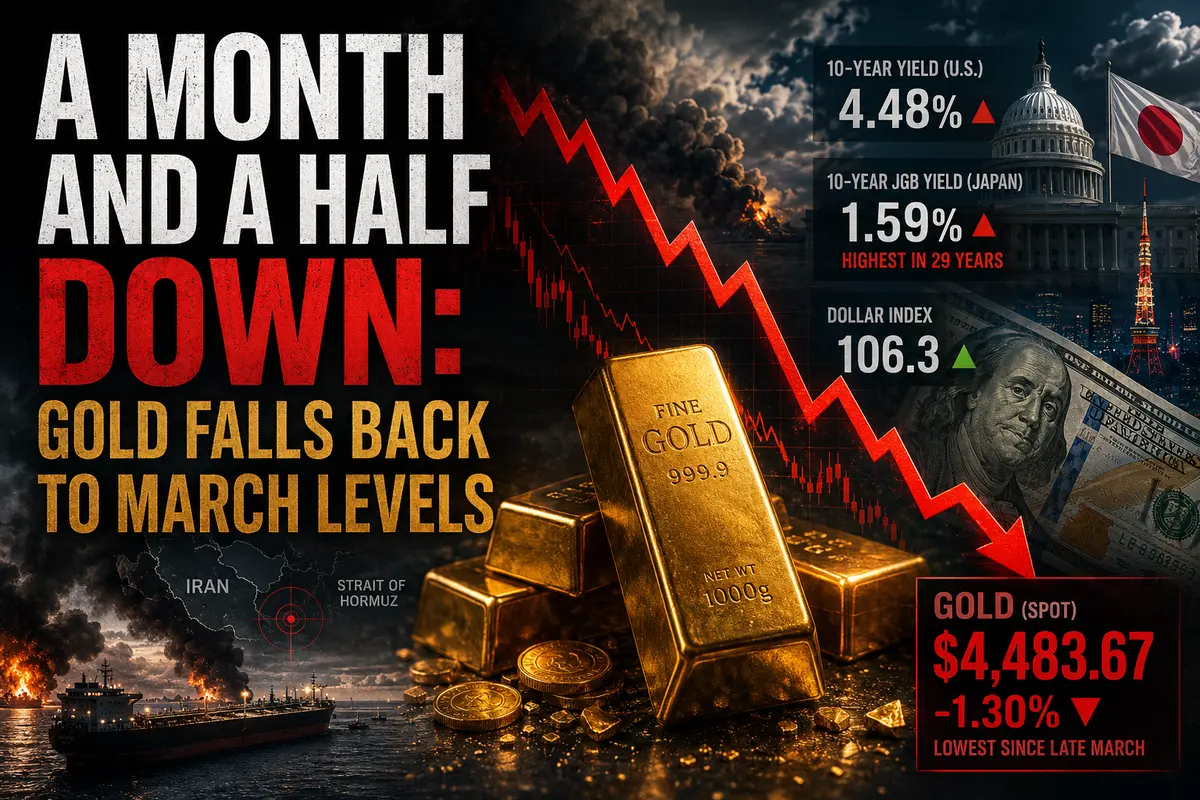
Monday began with a heavy blow for the precious metals market. During Asian trading, spot gold plunged 1.3%, falling to $4,483.67 per ounce. This marks the lowest level since late March — a month and a half of gains and optimism erased in a single trading session. Futures performed even worse, dropping 1.7% and settling near $4,484. For those accustomed to viewing gold as an unshakable fortress during turbulent times, what is happening now feels almost like betrayal: the world is burning, yet the safe-haven asset is failing to provide safety.

But the gold market has never been a simple mechanism reacting solely to geopolitics. It has its own rules, its own internal logic — and right now, that logic is working against the metal with the same force that political crises usually work in its favor. To understand what is happening, one must step away from war headlines and look at the bond market — because that is where the main drama is unfolding, casting its shadow over precious metals prices.

Yields Not Seen in Decades

The main killer of gold on Monday was the global rise in bond yields. Not in one country or one region, but almost everywhere simultaneously, as if an invisible conductor had waved a baton and forced the world’s bond markets to move in unison.

In the United States, yields on 10-year Treasury bonds climbed to a monthly high. This is the benchmark that guides nearly every other debt market in the world, and when it rises, the consequences ripple through the entire financial system. But an even more striking signal came from Japan. Yields on Japanese 10-year government bonds reached their highest level in 29 years on Monday. Nearly three decades — longer than the careers of many traders currently sitting at their...

Continue reading...
0
0
Luis Silva

Forex Gold Trading: Strategy, Psychology, and Market Realities (XAU/USD)

Forex Gold Trading: Strategy, Psychology, and Market Realities (XAU/USD)

The Forex market provides investors with a multitude of instruments, but gold (ticker XAU/USD) traditionally holds a special place on this list. Operating simultaneously as a commodity and the world's oldest currency, gold combines the properties of a highly liquid speculative asset and a safe-haven tool during periods of global instability. Trading the "yellow metal" requires a trader to do more than just blindly follow technical indicators; it demands a deep understanding of macroeconomics, geopolitics, and the specifics of how the margin market operates.

In this article, we will break down the features of XAU/USD trading in detail, study key fundamental and technical factors, and finally, conduct an express analysis of the current market situation.

Specifics of XAU/USD as a Trading Instrument

Unlike classic currency pairs (e.g., EUR/USD or USD/JPY), gold possesses a unique intrinsic value. It cannot be printed by a Central Bank decision, and its global production is limited by natural factors. This makes gold the primary historical hedge against inflation.

On the Forex market, gold is traded against the US dollar. This means that the contract price reflects how many US dollars must be paid for one troy ounce (31.1 grams). For successful trading, a trader must consider the key characteristics of this instrument:

High Volatility: Gold is capable of moving dozens of dollars (thousands of pips) within a single trading day. This opens up huge opportunities for short-term trading (scalping, intraday) but comes with increased risks.

Global Liquidity: XAU/USD trading runs almost around the clock. The highest activity and sharpest movements occur during the American session when the New York exchanges open (specifically COMEX), as well as at the crossover of the European and American sessions.

Dependence on the US Currency: Because gold is quoted in dollars, there is a long-term inverse correlation between the...

Continue reading...
0
0
NorthRay

My First Full Lot Made Me $23.50. And Now I’m Looking at Oil, Gold, and Apple.

My First Full Lot Made Me $23.50. And Now I’m Looking at Oil, Gold, and Apple.

Yes, I’m Expanding My Horizons.

Hi, this is NorthRay.

Remember when I said I wanted to try opening a trade with one full lot?

Well, I did it.

And you know what? I didn’t blow up my account. My trade hit take profit.

Profit: $23.50.

So far, this is my biggest “win” on demo.

But instead of sitting back and celebrating, I’m already looking in a new direction. Because currency pairs are only the beginning.


How the 1-Lot Trade Ended

I opened a EUR/USD trade. Lot size — 1.0. Stop-loss and take-profit were mandatory (thanks to previous lessons).

Honestly? It was scary.

Every time the price moved 10–15 pips, my brain instantly calculated:
“That’s already plus or minus $100–150.”

I literally had to sit on my hands to avoid closing the trade too early. I trusted my plan.

And the market rewarded me.

Price reached my take-profit level. The trade closed automatically. That green $23.50 number appeared on my terminal.

I exhaled.

It’s not life-changing money. But for me, it was a signal:
“You’re growing. You’re learning. You’re moving in the right direction.”


But Something Started to Bother Me

After that trade, I sat down and started thinking.

I only trade EUR/USD. Just one currency pair. I already feel like I can “read” it. I’m beginning to understand its personality.

But trading is much bigger than just the euro and the dollar.

There’s also:
— Oil (Brent, WTI)
— Gold (XAU/USD)
— Silver
— Company stocks: Apple, Tesla, Amazon, Google, Microsoft

And honestly? I know almost nothing about them.

What if there are opportunities there too?
What if my strategy works outside of forex?
What if I’m missing something important?

So I decided: it’s time to expand.


What Commodities Are — And Why They Attract Me

For...

Continue reading...
0
0
Navigation menu
instaforex banner