

Trump’s Words as a Market Catalyst
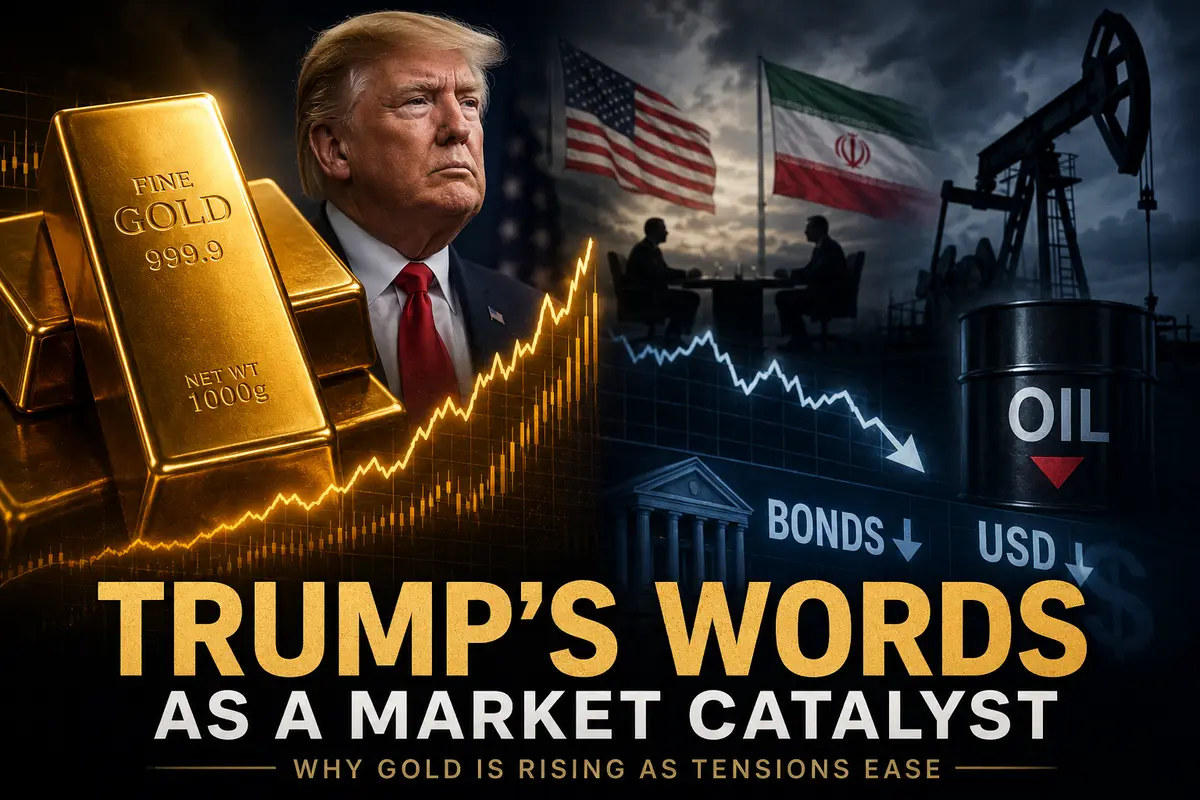
Tuesday began with a cautious but confident rise in the precious metals market. Spot gold gained one tenth of a percent and settled around $4,570 per ounce, while futures climbed three tenths of a percent to $4,574. At first glance, the move looked modest. But behind these numbers stood an event that changed the mood of the entire financial world the previous evening: Donald Trump announced a postponement of the planned strike on Iran and confirmed that negotiations were ongoing.
Markets, which for weeks had been pricing in the possibility of a major war in the Middle East, interpreted these remarks as the first real signal of de-escalation in a long time. The reaction was multifaceted: oil moved lower, bonds stopped falling, the dollar weakened, and gold — contrary to the usual logic linking its rise to heightened geopolitical fears — also moved higher. To understand this apparent paradox, it is necessary to look at the mechanics currently driving the precious metals market.
Oil Down, Gold Up: Breaking the Pattern
Normally, gold and oil move in the same direction when geopolitics is the main driver. War sends oil higher and gold higher. Peace pushes both lower. But Tuesday morning broke this familiar pattern. Oil prices fell sharply after Trump’s comments, while gold rose.
The explanation lies in the fact that gold is currently far more sensitive to the bond market than to geopolitical risk itself. Recent weeks have shown that the metal’s main enemy was not hope for peace, but rising yields. When investors sold bonds on fears that a war with Iran would fuel inflation and force central banks to tighten policy further, yields surged and gold declined. Now that dynamic is beginning to reverse.
Trump’s announcement that the strike was postponed and that serious negotiations were underway sparked hopes that the conflict could be resolved faster than previously feared. If the war ends, markets reason, inflationary pressure from expensive oil will ease, and central banks may not need to tighten policy as aggressively as expected. And if rates do not rise as sharply, gold — a non-yielding asset — becomes more attractive.
Bonds Catch Their Breath: Relief for Gold
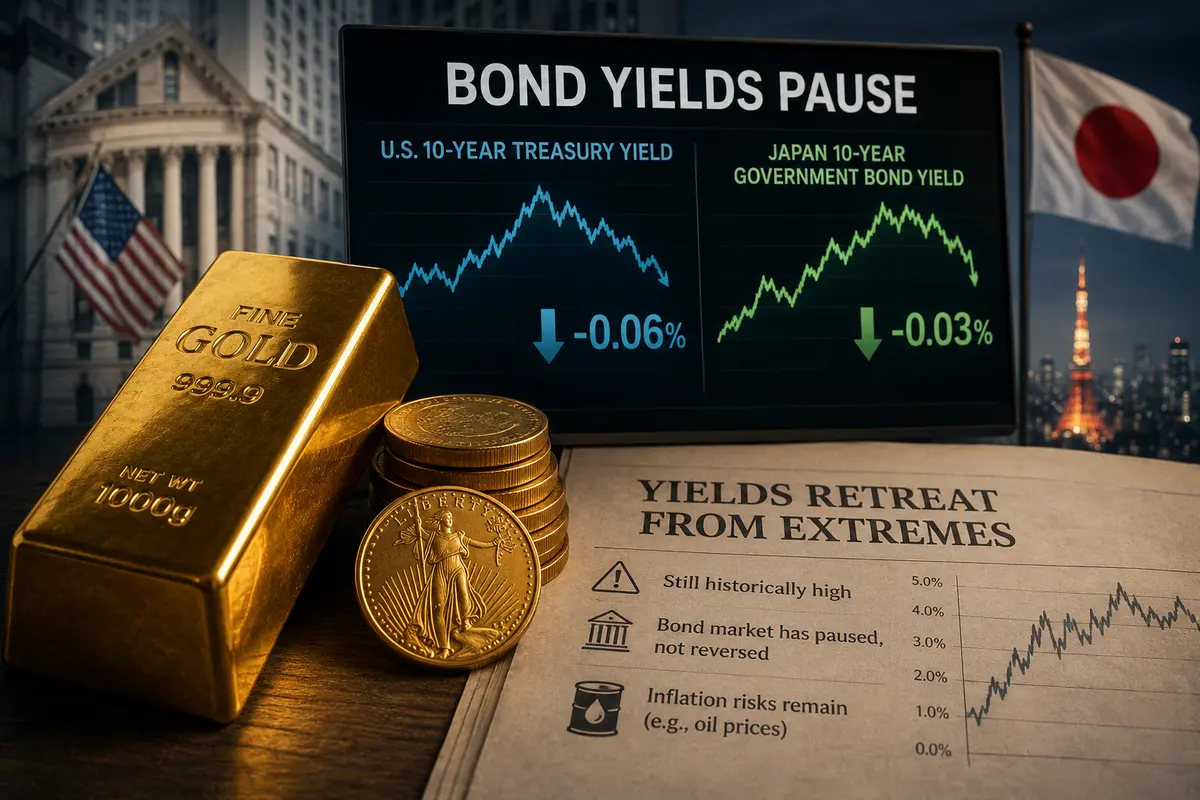
The main mechanism pushing gold higher on Tuesday was the easing in yields. The prolonged selloff in debt markets, which last week drove U.S. 10-year Treasury yields to yearly highs and Japanese government bond yields to levels unseen in nearly three decades, finally paused. U.S. 10-year yields fell by six tenths of a percent Monday evening, while Japanese yields retreated slightly from their historic peaks.
Why does this matter so much for gold? Because every basis point decline in yields reduces the opportunity cost of holding the metal. When bonds yield less, gold — which yields nothing — looks relatively less unattractive. Institutional investors who only a week ago were rotating out of gold and into Treasuries in search of yield may now begin reversing that trade.
Still, caution is warranted. Yields have retreated from extreme levels, but they remain historically high. U.S. Treasuries still offer returns that would have seemed unimaginable just six months ago. Japanese bond yields remain near levels that unsettle veterans of Tokyo’s financial district. The bond market has paused, not reversed. And if new signs of inflationary pressure emerge — for example, if negotiations with Iran stall and oil rises again — yields could resume climbing and gold could come under pressure once more.
The Dollar Weakens: A Tailwind for Precious Metals
Another factor supporting gold on Tuesday was the weakening of the U.S. dollar. The currency, which had strengthened last week amid rising yields and a flight to safety, lost ground after Trump’s remarks. The logic is straightforward: if geopolitical tensions ease, demand for the dollar as a safe haven declines.
For gold, this creates a double benefit. First, the metal is priced in dollars, so a weaker dollar makes gold cheaper for holders of other currencies, increasing demand from European, Asian, and Middle Eastern buyers. Second, dollar weakness signals that the global flight from risk has paused, making investors more willing to consider alternative assets, including precious metals.
Silver, which usually follows gold but with greater volatility, rose six tenths of a percent to $78.11 per ounce. Platinum gained one tenth of a percent, stabilizing around $1,987.50. Precious metals as a whole received a reprieve — not a triumphant rally, but a solid recovery after a difficult week.
Oil Fell, But Did Not Collapse: Why It Matters for Gold
The behavior of the oil market deserves separate attention. Prices dropped sharply after Trump’s comments, but overall remain elevated. The Strait of Hormuz is still operating at only a fraction of its prewar capacity, meaning the physical supply deficit has not disappeared. Oil may correct lower on hopes for peace, but as long as the strait remains partially closed, prices are unlikely to return to levels considered normal before the conflict began.
This nuance is important for gold. If oil remains expensive, inflationary pressure does not disappear entirely — it simply stops accelerating. That means central banks may refrain from further rate hikes, but they are also unlikely to cut rates. In such an environment, gold remains suspended between opposing forces: it is no longer falling under the weight of rising yields, but it also lacks sufficient catalysts for a major rally. The current rise looks more like a correction of the previous decline than the start of a new bullish trend.
Negotiations That Could Change Everything
The key factor now being watched across all markets, including gold, is the progress of negotiations between the United States and Iran. Trump referred to “serious negotiations,” and the wording was carefully chosen. When an American president uses the word “serious,” it suggests the sides are discussing concrete terms rather than merely exchanging ritual statements about peace.
If negotiations lead to a ceasefire or even a stable truce, the effect on gold could be twofold. On one hand, lower geopolitical risk is usually negative for safe-haven assets. On the other hand, peace would mean cheaper oil, lower inflation, softer monetary policy, and a weaker dollar — all factors supportive of gold. Which of these effects proves stronger remains to be seen, but Tuesday morning’s market action suggests investors are leaning toward the second scenario.
If negotiations collapse and Trump returns to threatening military action, gold could receive another boost — this time through fear rather than through the yield channel. Either way, the precious metal currently occupies a unique position in which both bad and good geopolitical news can be positive for prices. Bad news increases safe-haven demand. Good news relieves pressure on bonds and weakens the dollar.
A Morning of Relief, Not Reversal
Gold is rising on Tuesday, delivering the rebound the market had been waiting for all last week as yields and the dollar steadily drained strength from the metal. But it is still too early to call this a trend reversal. This is more a moment of relief — a pause during which several headwinds weakened simultaneously: the dollar stopped climbing, yields retreated from their peaks, and geopolitical fears eased somewhat.
For gold to enter a sustained rally, something more than a single statement from Trump is required. Markets need either genuine signs of de-escalation that would allow central banks to begin easing policy, or — paradoxically — a renewed escalation of conflict that would force investors back into safe-haven assets. For now, neither condition is fully in place, meaning gold is likely to remain range-bound, reacting to every new headline without gaining enough momentum for a decisive breakout.
Nevertheless, Tuesday morning gave gold holders something they had lacked for weeks: hope. Hope that the bond-market storm is calming, that peace in the Middle East remains possible, and that the yellow metal may once again remind investors of its role as a safe-haven asset not necessarily doomed by rising yields. And for a market accustomed to relentless pressure, even such a pause is already a reason for cautious optimism.

Comments
No comments yet. Be the first to share your thoughts!
Authentication Required
You must be logged in to post a comment.