Bar Pipa
We pay for a post of 10$

Spot

Bitcoin Under Fire: How Iranian Bombs and ETF Flight Crushed Crypto
Bitcoin Under Fire: How Iranian Bombs and ETF Flight Crushed Crypto

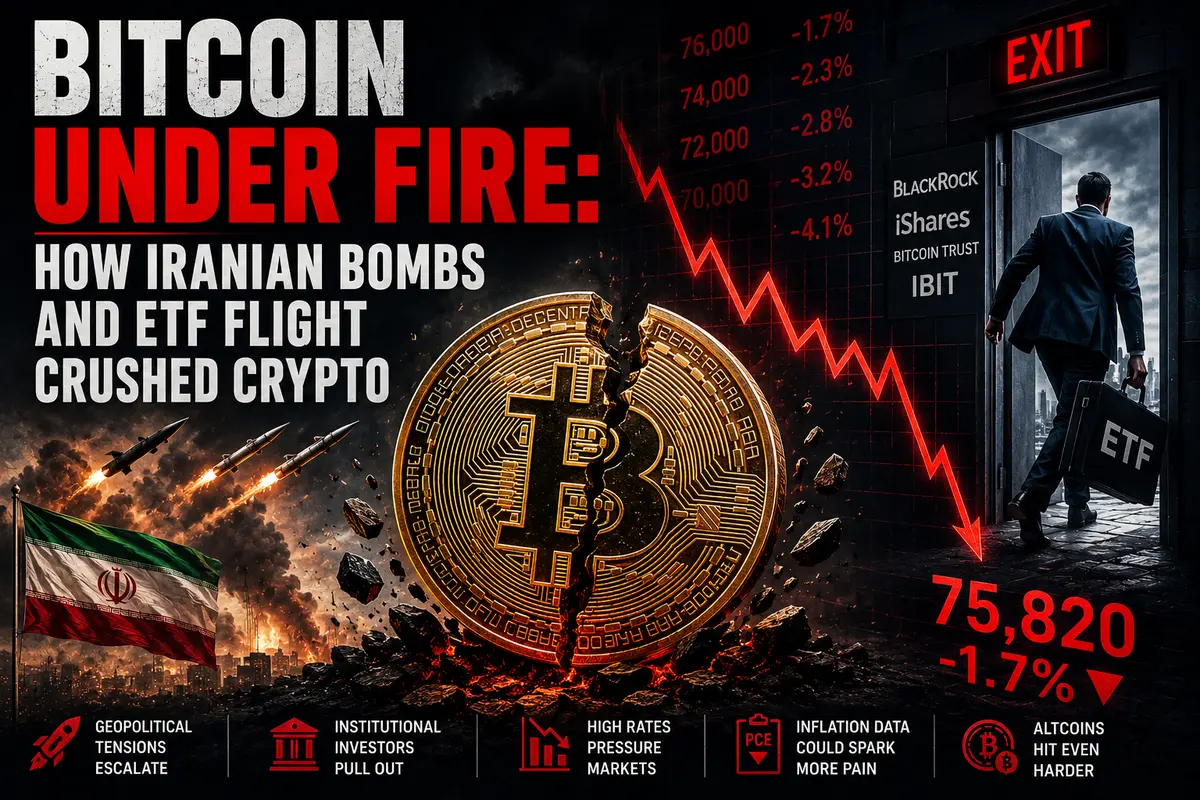
Wednesday became the kind of day Bitcoin investors would rather forget as quickly as possible. The world’s leading cryptocurrency plunged below seventy-six thousand dollars, touching 75,820 dollars and losing one point seven percent during the session. But the percentages are not even the main story. The real issue is the context.

While tech stocks on Wall Street and across Asia were climbing to fresh highs, Bitcoin moved sharply in the opposite direction. This divergence — with the NASDAQ and S&P 500 hitting record levels while crypto trades in the red — suggests something specific is happening inside the crypto market, unrelated to the broader appetite for risk. And the name of that “something” is a combination of geopolitical fear and institutional flight.

The Iranian Front: Bombs That Hit Bitcoin

New U.S. strikes on Iranian targets earlier this week continue to poison sentiment across the crypto market. Iran called the attacks a violation of the ceasefire agreement. U.S. officials responded by describing the strikes as defensive in nature. But for traders, the legal wording means little. What matters is that the conflict is not cooling down — it is escalating again.

Moreover, the geopolitical fire has begun spreading beyond the direct U.S.-Iran confrontation. Reports emerged of Israeli strikes in southern Lebanon. This is no longer merely a bilateral conflict; it is beginning to resemble the expansion of a regional war. And for cryptocurrencies, which are still widely viewed as risk assets, such escalation is a direct hit.

The logic here, however, is more complicated than it first appears. Normally, periods of geopolitical tension should support Bitcoin as a defensive asset — digital gold. But what we are witnessing is the opposite. Why? Because the current conflict hurts Bitcoin indirectly through the monetary channel.

War drives oil prices higher. Higher oil prices...

Continue reading...
0
0
Lin Brings

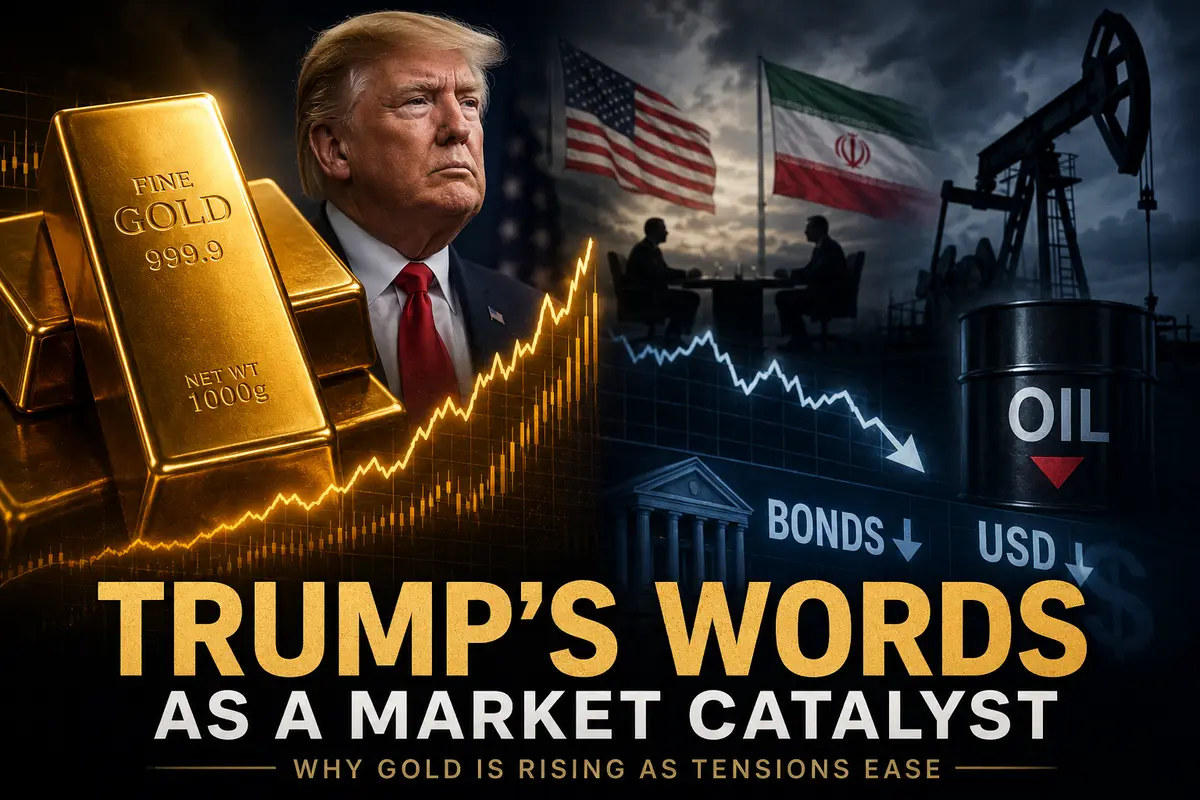
Trump’s Words as a Market Catalyst

Trump’s Words as a Market Catalyst

Tuesday began with a cautious but confident rise in the precious metals market. Spot gold gained one tenth of a percent and settled around $4,570 per ounce, while futures climbed three tenths of a percent to $4,574. At first glance, the move looked modest. But behind these numbers stood an event that changed the mood of the entire financial world the previous evening: Donald Trump announced a postponement of the planned strike on Iran and confirmed that negotiations were ongoing.

Markets, which for weeks had been pricing in the possibility of a major war in the Middle East, interpreted these remarks as the first real signal of de-escalation in a long time. The reaction was multifaceted: oil moved lower, bonds stopped falling, the dollar weakened, and gold — contrary to the usual logic linking its rise to heightened geopolitical fears — also moved higher. To understand this apparent paradox, it is necessary to look at the mechanics currently driving the precious metals market.

Oil Down, Gold Up: Breaking the Pattern

Normally, gold and oil move in the same direction when geopolitics is the main driver. War sends oil higher and gold higher. Peace pushes both lower. But Tuesday morning broke this familiar pattern. Oil prices fell sharply after Trump’s comments, while gold rose.

The explanation lies in the fact that gold is currently far more sensitive to the bond market than to geopolitical risk itself. Recent weeks have shown that the metal’s main enemy was not hope for peace, but rising yields. When investors sold bonds on fears that a war with Iran would fuel inflation and force central banks to tighten policy further, yields surged and gold declined. Now that dynamic is beginning to reverse.

Trump’s announcement that the strike was postponed and that serious negotiations were underway sparked...

Continue reading...
0
0
Navigation menu