Bar Pipa
We pay for a post of 10$

XAUUSD

XAUUSD Technical Outlook – 4 June 2026

XAUUSD Technical Outlook – 4 June 2026


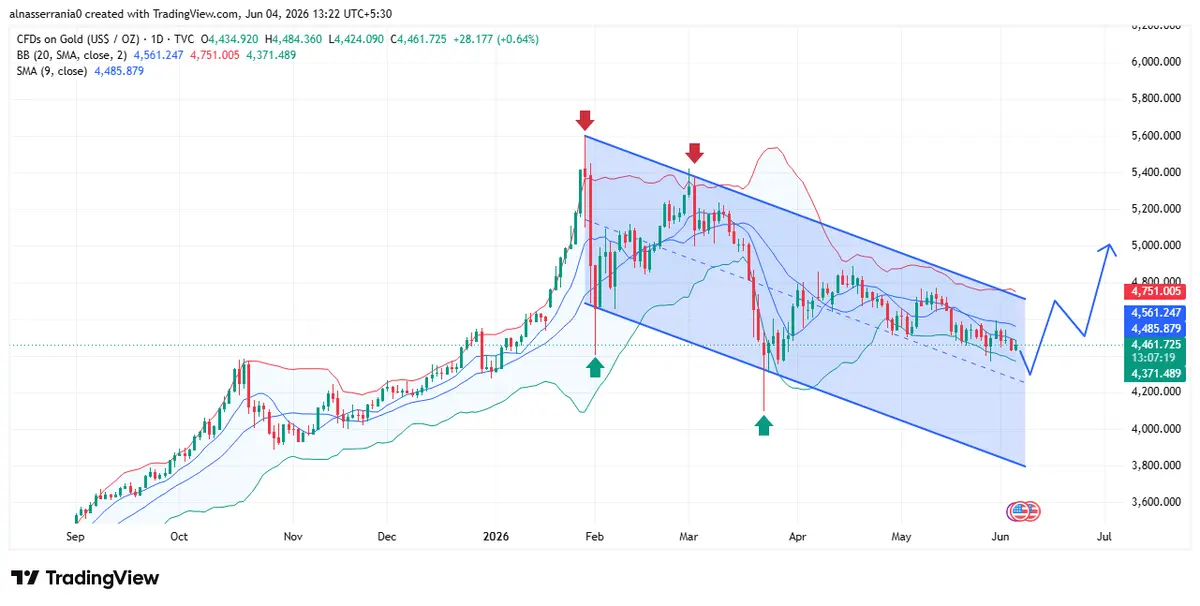
Descending channel, the dominant structure since February peak

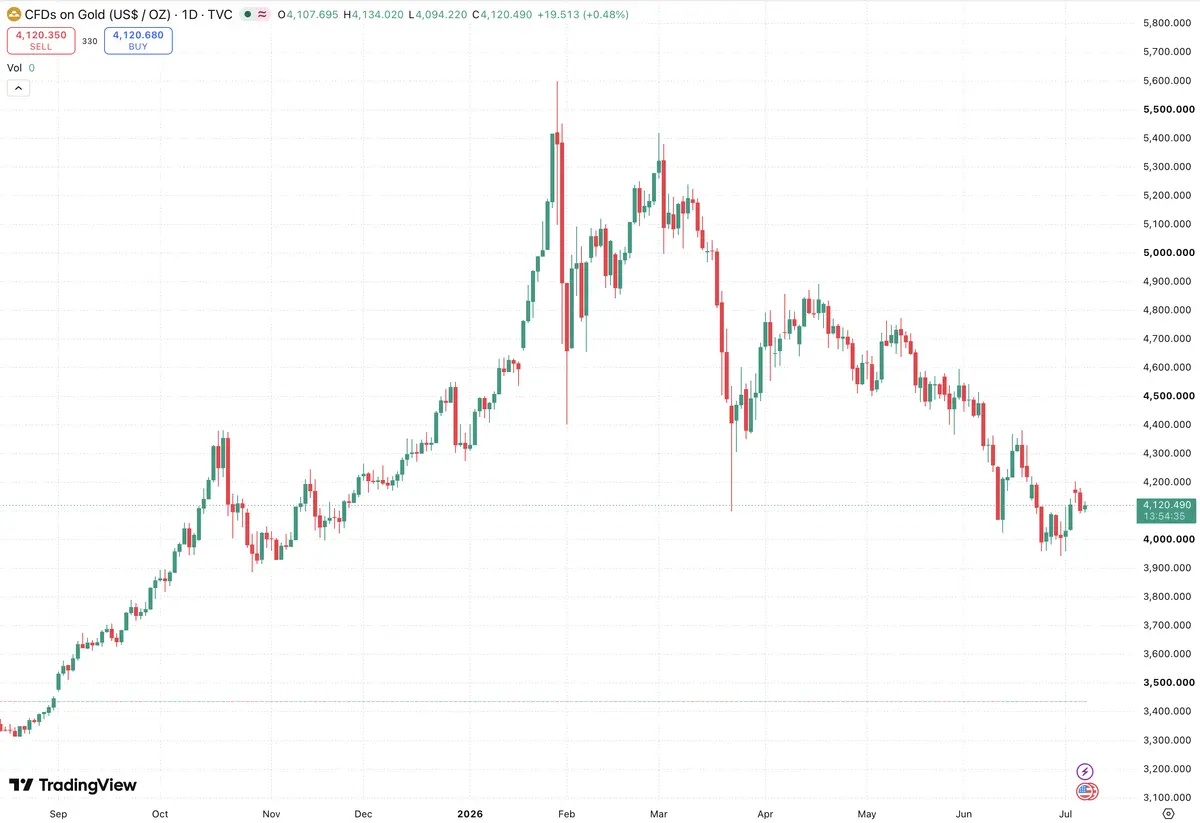
Gold peaked sharply near $5,500+ in early February 2026 and has been carving a clear descending channel (drawn in blue on the chart) ever since. Both the upper and lower channel lines are well-respected, price has tested both boundaries multiple times. The channel is sloping down from top-right to bottom-left, which tells you the sellers have been in control for 4+ months

Price is sandwiched, squeezed between channel support and SMA9

At $4,461, price is sitting right at the lower boundary of the descending channel a historically significant bounce zone. Both prior green arrows on the chart (February and March) marked rebounds from this exact region. The SMA9 ($4,485) is overhead acting as immediate dynamic resistance. Price needs to close above SMA9 on a daily basis to even hint at recovery. Until that happens, this is a range-bound squeeze with downside risk still alive.

Key Levels to watch

Channel top / BB upper - $4,751 Major resistance — unlikely near-term

SMA20 midline - $4,561 Bears defend this level

SMA9 dynamic resistance - $4,485 Immediate ceiling today

Current price - $4,461 At channel lower support

BB lower / channel floor - $4,371 Critical support — bounce or break

Breakdown target - $3,800 If $4,371 fails decisively

Continue reading...
0
0

Double Trouble Today: BOE’s Bailey Speaks & JOLTS Job Openings! (+ Gold Strategy)

Double Trouble Today: BOE’s Bailey Speaks & JOLTS Job Openings! (+ Gold Strategy)

Hey Traders,

Today is packing some serious macroeconomic heat. If you're trading the Pound, the Dollar, or Gold, you need to have your alerts set and your risk management dialed in. Here is the no-nonsense breakdown of what to expect today and how to position yourself.

🇬🇧 BOE Gov Bailey Speaks: Is the Pound Losing its Edge?

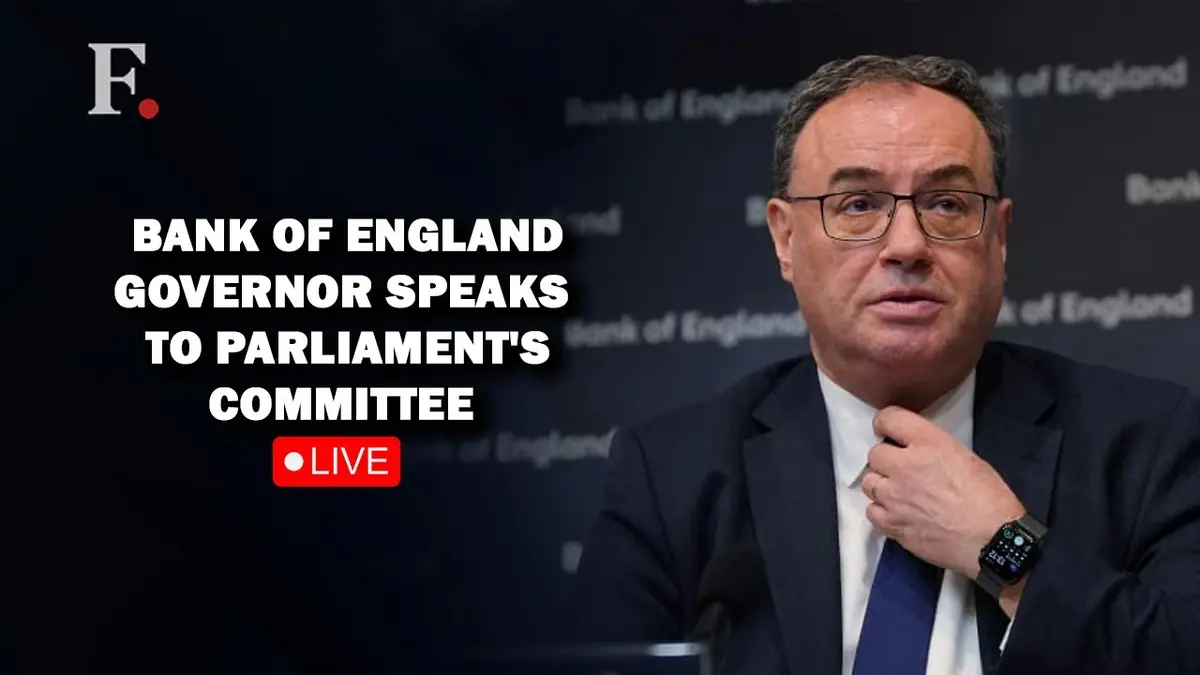
The Context: Governor Andrew Bailey has recently shifted to a surprisingly dovish stance. He explicitly noted that the Bank of England (BoE) might tolerate inflation staying above their 2% target temporarily to support the weak real economy, especially given the ongoing uncertainties and supply shocks from the conflict in the Middle East.

What to Watch: He is in the spotlight again today. If he doubles down on this dovish rhetoric and signals that the BoE is in "no rush" to tighten policy or hike rates despite sticky prices, expect the Pound to face selling pressure.

Key Pairs: Watch $GBPUSD and $EURGBP. If Bailey sounds cautious about UK growth and confirms that summer rate hikes are effectively off the table, $GBPUSD could aggressively test immediate support levels.

🇺🇸 USD JOLTS Job Openings: The Prelude to NFP

The Numbers: Dropping exactly at 10:00 AM ET / 14:00 GMT. The forecast is sitting around 6.82M to 6.87M openings, which is slightly below or roughly in line with March's print of 6.866M.

Why it Matters: The Federal Reserve is laser-focused on the labor market right now to determine its next monetary policy move. This report is our first major clue of the week, setting the stage before Friday’s massive Nonfarm Payrolls (NFP) release.

The Play:

Hot Print (>6.87M): A higher-than-expected number means the labor market is still too tight, reinforcing the "higher for longer" interest rate narrative. This is bullish for the USD.

Cold Print...

Continue reading...
0
0
Luis Silva

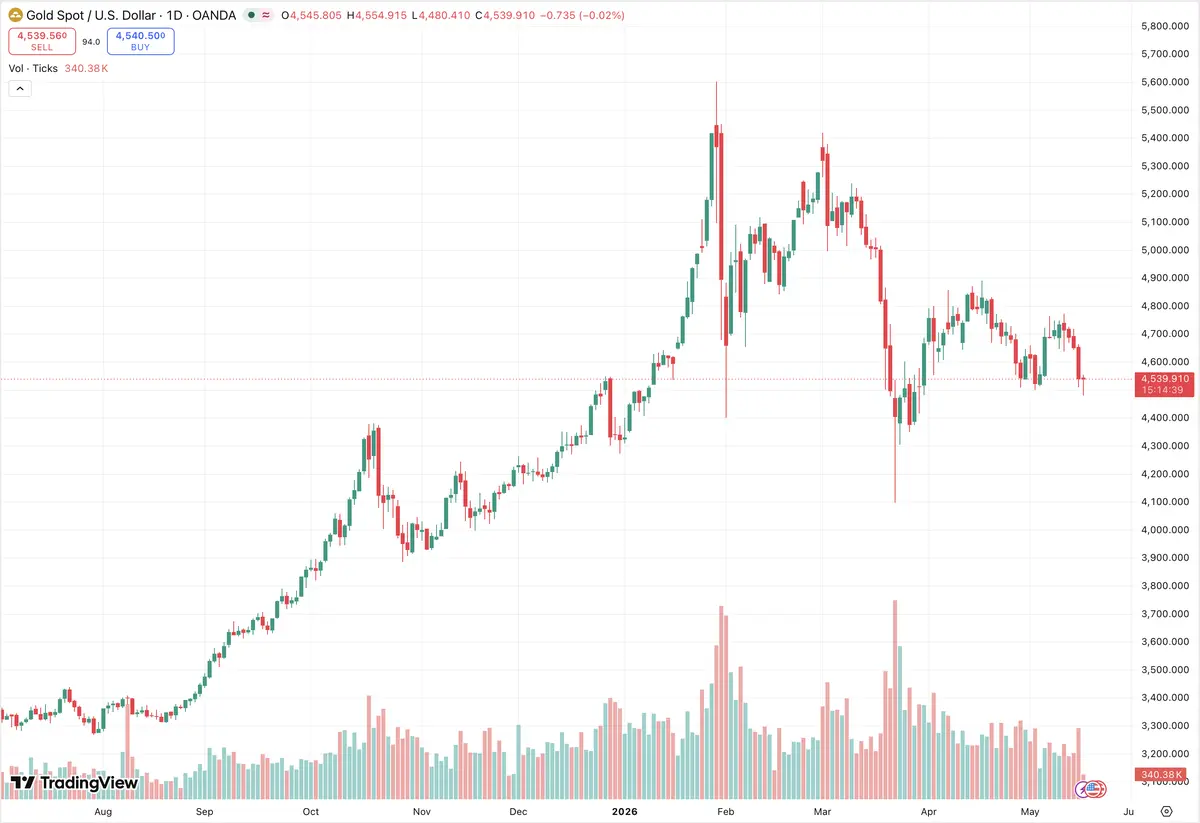
The Forex Gold Standard: Analysis and Forecast for XAU/USD on May 19, 2026

The Forex Gold Standard: Analysis and Forecast for XAU/USD on May 19, 2026

Trading gold (XAU/USD) on the Forex market has always been considered the "major league" of trading. In 2026, this asset has not lost its status as the ultimate safe-haven mechanism; however, the nature of its movements has become even more dependent on a complex web of geopolitics and the new monetary reality.

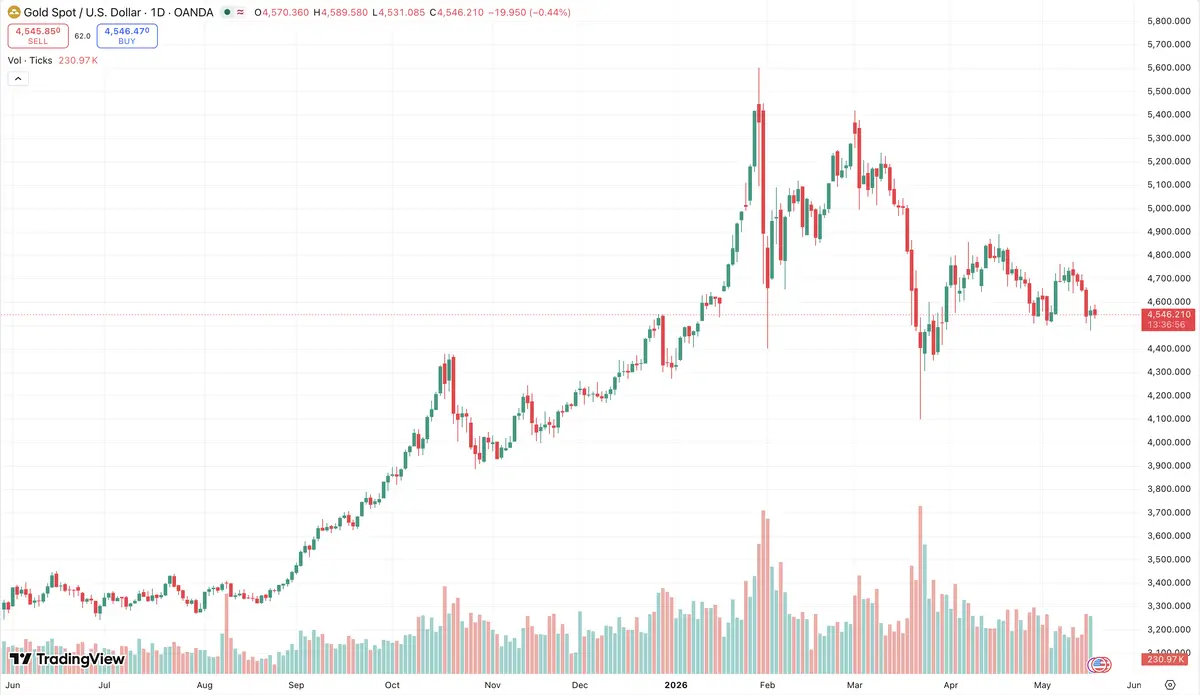
Today, May 19, 2026, the gold market is in a phase of sharp correction following a tumultuous rally in the first quarter. Let’s break down the forces driving the quotes of the "sunny metal" right now.

Fundamental Background: Oil, the Dollar, and the Shadow of Conflict

The fundamental picture today is defined by a paradoxical link between energy resources and US monetary policy.

1. The Oil and Inflation Factor

The situation surrounding Iran and potential sanctions remains the main driver. High oil prices (holding around $96–$100 per barrel) are creating sticky inflationary pressure in the US. For gold, this is a double-edged sword: on one hand, gold is a hedge against inflation; on the other hand, high inflation forces the Fed to keep interest rates at a restrictive level (3.50–3.75%).

2. A Hawkish Fed and the Dollar Index (DXY)

At the moment, the market is reassessing expectations: instead of rate cuts, investors are beginning to price in a "high for longer" scenario. This supports US Treasury yields and makes non-yielding assets (like gold), which do not bear coupon income, less attractive. The Dollar Index (DXY) is trading around 97.80, exerting moderate pressure on gold.

Technical Analysis: The Battle for the $4500 Level

The technical picture for May 19 points to the dominance of bears in the short term. After gold lost about 3.7% of its value last week, the price has approached a psychologically vital milestone.

Key Levels for Today:

Support at $4500: This is the main bastion...

Continue reading...
0
0
Anton Algo

Momentum Hunting: How Trading Bots Exploit the European Morning Breakout

Momentum Hunting: How Trading Bots Exploit the European Morning Breakout

The Forex market operates 24 hours a day, but its activity is distributed highly unevenly. The most powerful, directional, and profitable movements (momentum) occur when the trading hours of the world's largest financial hubs overlap. Traditionally, the opening of the European session—when exchanges in London, Frankfurt, and Paris come into play—is considered the main daily trigger.

For a retail trader, the morning chaos of Europe’s first hours is a high-risk zone. For trading bots, however, it is the perfect time for "momentum hunting." The Opening Range Breakout (ORB) strategy has existed for decades, but automation has transformed it from an exhausting routine into a highly efficient algorithmic business.

Strategy Philosophy: Why Does It Work?

The logic behind the morning breakout is rooted in how market phases transition. The Asian session (Tokyo, Sydney, Singapore) winds down just before Europe opens. For most currency pairs (excluding the JPY and AUD), Asian trading is characterized by low volume and narrow price amplitude. The price is essentially compressed like a spring, forming a consolidation or a flat market.

When European exchanges open, institutional liquidity floods the market in an avalanche: large banks, funds, and market makers begin placing their orders. The energy accumulated during the Asian flat is released. The price sharply breaks through the boundaries of the overnight range, triggering a powerful directional movement—momentum.

The robot's task is to mathematically pin down the boundaries of the overnight channel, wait for its breakout, and instantly enter a trade in the direction of the emerging trend, capturing the bulk of the morning move.

How the Algorithm Works: Step-by-Step Bot Logic

t is difficult for a human to objectively assess flat boundaries, especially in the rush of the morning open. A robot, however, operates on a rigid mathematical algorithm that can be divided into four key...

Continue reading...
0
0
Luis Silva

Forex Gold Trading: Strategy, Psychology, and Market Realities (XAU/USD)

Forex Gold Trading: Strategy, Psychology, and Market Realities (XAU/USD)

The Forex market provides investors with a multitude of instruments, but gold (ticker XAU/USD) traditionally holds a special place on this list. Operating simultaneously as a commodity and the world's oldest currency, gold combines the properties of a highly liquid speculative asset and a safe-haven tool during periods of global instability. Trading the "yellow metal" requires a trader to do more than just blindly follow technical indicators; it demands a deep understanding of macroeconomics, geopolitics, and the specifics of how the margin market operates.

In this article, we will break down the features of XAU/USD trading in detail, study key fundamental and technical factors, and finally, conduct an express analysis of the current market situation.

Specifics of XAU/USD as a Trading Instrument

Unlike classic currency pairs (e.g., EUR/USD or USD/JPY), gold possesses a unique intrinsic value. It cannot be printed by a Central Bank decision, and its global production is limited by natural factors. This makes gold the primary historical hedge against inflation.

On the Forex market, gold is traded against the US dollar. This means that the contract price reflects how many US dollars must be paid for one troy ounce (31.1 grams). For successful trading, a trader must consider the key characteristics of this instrument:

High Volatility: Gold is capable of moving dozens of dollars (thousands of pips) within a single trading day. This opens up huge opportunities for short-term trading (scalping, intraday) but comes with increased risks.

Global Liquidity: XAU/USD trading runs almost around the clock. The highest activity and sharpest movements occur during the American session when the New York exchanges open (specifically COMEX), as well as at the crossover of the European and American sessions.

Dependence on the US Currency: Because gold is quoted in dollars, there is a long-term inverse correlation between the...

Continue reading...
0
0
Anton Algo

Mean Reversion in the Forex Market

Mean Reversion in the Forex Market
Trading Bollinger Bands and Overbought/Oversold Zones

The mean reversion strategy exploits a statistical regularity: after a strong deviation, the price tends to revert to its mean value. In the forex market, this idea appeals to traders due to its apparent simplicity—buy "cheap," sell "expensive." However, behind this apparent ease lie strict mathematical conditions, the violation of which turns a profitable system into a loss generator. Let’s examine which pairs are truly prone to reversion, how to confirm it statistically, and why the absence of a stop-loss is deadly dangerous.

Which Pairs Are Prone to Mean Reversion

orex instruments are heterogeneous in nature. Majors such as EURUSD, USDJPY, and GBPUSD exhibit pronounced trending movements, especially during periods of monetary policy divergence. Mean reversion works on them only fragmentarily—mainly during the Asian session or in periods of low volatility when the market is consolidating. Non-dollar cross rates (EURGBP, EURCHF, AUDNZD) have historically shown a stronger tendency toward stationarity, as their dynamics are driven by the difference between two non-dollar economies, not subject to global capital flows with the same intensity. Pairs involving the Swiss franc, particularly EURCHF, deserve special attention: the Swiss National Bank long maintained a currency ceiling, and even after its removal, the pair still exhibits periods of sustained reversal. Exotic pairs like USDSGD or USDHKD often have managed exchange rates, making them attractive for mean-reversion systems, but low liquidity and wide spreads eat away potential profits.

Instrument selection is a critical step. Do not apply reversal logic to a pair in a long-term fundamental trend. For example, USDTRY has shown a sustained upward trend in recent years due to the Turkish central bank’s inflationary policies, and any attempt to catch reversals is doomed.

Statistical Tests for Stationarity: ADF and the Dickey-Fuller Test

Stationarity is a property of a time...

Continue reading...
0
0
Anton Algo

Your 24/7 Personal Risk Manager: Why Trading Safety Starts with an Algorithm

Your 24/7 Personal Risk Manager: Why Trading Safety Starts with an Algorithm
Many novice traders view a trading robot as a "profit generator" — a sort of money-printing machine designed to run non-stop. However, in today’s market conditions, the true value of automation lies elsewhere. A robot is, first and foremost, your most loyal, impartial, and vigilant risk manager, working 24 hours a day, 5 days a week. In this article, we will break down why automated systems are not a risk factor, but rather the primary tool for protecting your deposit. Emotions: The Main Enemy of Capital Statistics are relentless: more than 90% of traders lose funds not because of poor strategies, but because of an inability to follow their own rules. The human psyche is poorly adapted to the stress of financial markets. Hope: When a position goes into the red, hope kicks in: "The price is about to turn around; I just need to wait a little longer." Excitement/Greed: When the price moves against us, a gambling instinct awakes: "I'll add another position to break even faster." This is where the trading robot reveals its superpower. It has no hope, no fear, and no desire to "get revenge" on the market. It simply executes code. Built-in Protection Algorithms: The Fence You Can't Jump Over The main advantage of a high-quality trading advisor is its built-in system of checks and balances. While a trader might increase their lot size in a fit of emotion, a robot operates within strictly defined mathematical parameters. Automatic Lot Calculation: The robot calculates the volume of each trade based on the current balance. If your deposit decreases, the robot automatically reduces the risk. Humans often do the opposite, trying to "win back" losses with larger bets. Drawdown Protection: A critical drawdown level is hardcoded into the algorithm. As soon as the total loss on open...
Continue reading...
0
0
Luis Silva

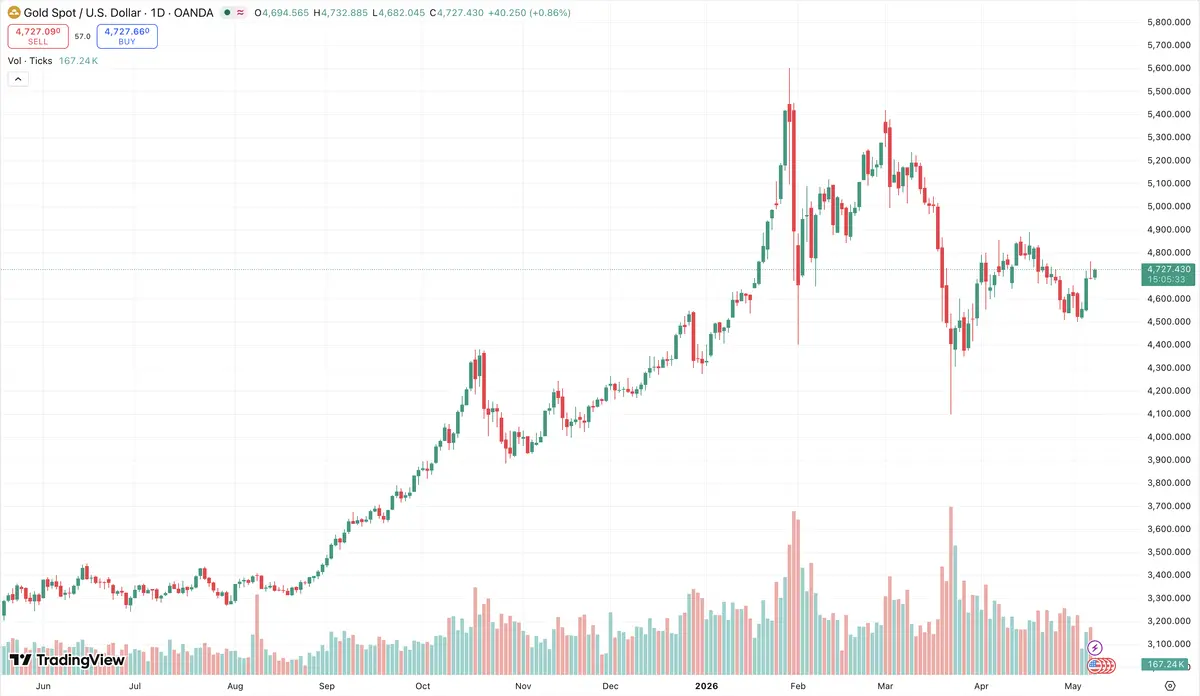
Forex Gold Standard 2026: XAUUSD Analysis for May 08

Forex Gold Standard 2026: XAUUSD Analysis for May 08
Gold trading on the Forex market (ticker XAUUSD) has fully cemented its status as the most volatile and strategically important instrument by 2026. For a trader, gold is not just a metal — it is a "fear barometer" and simultaneously an indicator of the US dollar's real value. The date May 8, 2026, is marked in red on the trading calendar because it combines the end of the spring asset reallocation cycle with the release of key US macroeconomic data. Global Context and Expectations for May 8, 2026 The expected price range for the current trading day is 4,509 – 4,509 – 4,821 per troy ounce. The central price pivot point stands at $4,665. Why these numbers? By mid-2026, the global financial system has entered a phase of "new normalcy," where gold is worth twice as much as at the beginning of the decade due to chronic fiat currency devaluation. May 8 is a Friday — the day of the Non-Farm Payrolls (NFP) report. In 2026, the impact of this report on XAUUSD has intensified: because of automation and changes in the US economic structure, any deviations in employment figures trigger instantaneous price spikes of 500 – 800 pips. We expect the market to remain in a narrow range until 15:30 Moscow time, followed by a powerful breakout of one of the range boundaries. Fundamental Analysis: Macroeconomics and Geopolitics Fed Monetary Policy: By this point, the US Federal Reserve is facing a dilemma: service sector inflation remains stuck at 4.5%, while economic growth is slowing. The market is waiting for a signal of a rate cut. If the May 8 employment data shows figures below 60,000 new jobs, the dollar will begin a sharp decline, pushing XAUUSD toward its all-time high of $4,850. Central Bank De-dollarization: During the first quarter...
Continue reading...
0
0
Luis Silva

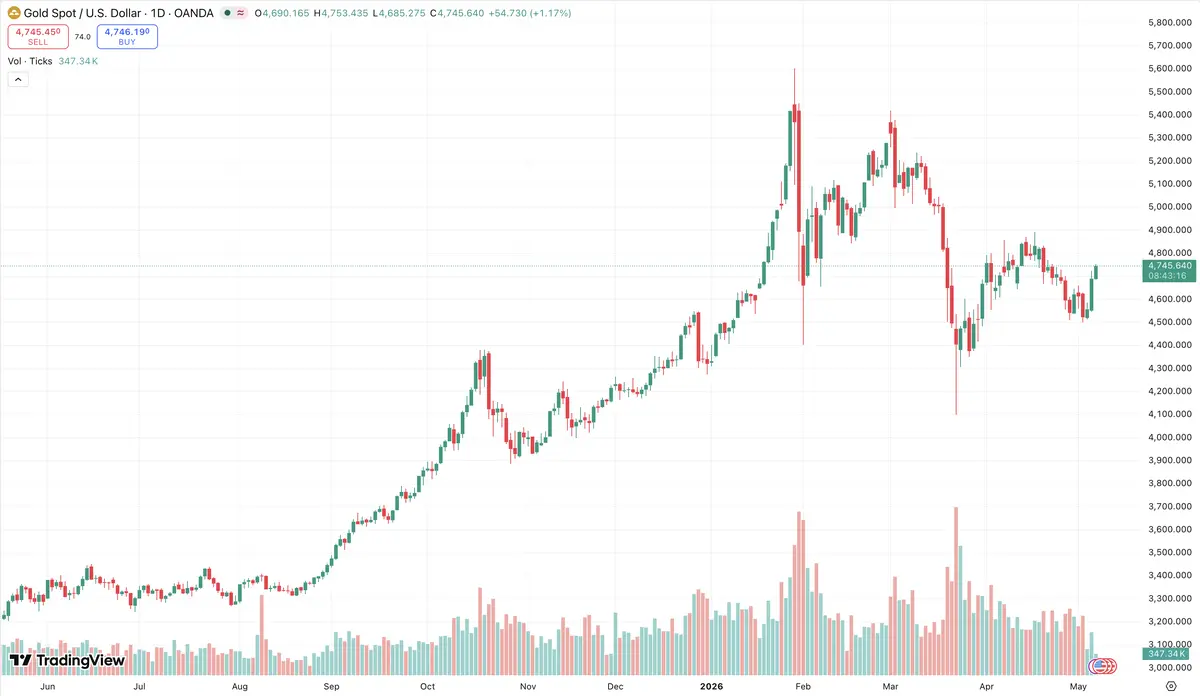
Trading Session: May 7, 2026

Trading Session: May 7, 2026
This forecast is based on futures market data, fundamental shifts, and the technical outlook. Additionally, it addresses key macroeconomic drivers expected to shape the dynamics of XAU/USD over the next 24 hours. Market Drivers: Geopolitics vs. Macroeconomics The pivotal event shaping gold's (XAU/USD) trajectory leading up to May 7 has been a shift in market drivers. While earlier in 2026 the metal rallied as a classic safe-haven asset against the backdrop of the military conflict between the U.S. and Iran, market focus has now shifted toward the Federal Reserve's monetary policy. Investors are currently pricing in news regarding the potential imminent cessation of hostilities. Reports circulating in the media — detailing a 14-point Memorandum of Understanding between Washington and Tehran that includes a suspension of uranium enrichment and the restoration of shipping through the Strait of Hormuz — have triggered a sharp plunge in oil prices. The decline in energy prices has instantly dampened inflationary expectations. The market now perceives that the Federal Reserve's need to keep interest rates at their peak for an extended period is diminishing. According to recent data, the probability of a rate hike by year end previously estimated at around 35% — has dropped sharply, giving way to expectations of at least one round of monetary policy easing. The U.S. dollar has begun to lose ground, retreating toward pre-conflict levels, thereby creating a favorable environment for dollar-denominated gold. At the same time, strategists at MS warn that this current euphoria could soon give way to disappointment. Should the conflict drag on — and if the Federal Reserve maintains its hawkish rhetoric — gold could once again face downward pressure from rising bond yields. The real yield on 10-year U.S. Treasury Inflation-Protected Securities (TIPS) remains above the key 1.85% threshold, thereby limiting the appeal of non-yielding...
Continue reading...
0
0
Anton Algo

Why an Advisor Saves Your Deposit When the Market Crashes: A Black Swan Analysis

Why an Advisor Saves Your Deposit When the Market Crashes: A Black Swan Analysis
The market loves to lull you to sleep. Months of steady growth, familiar patterns, analysts whispering about a "new era of stability" — and suddenly your deposit seems like an impregnable fortress. But Nassim Taleb's Black Swan theory is relentless: the very thing no one believes in sweeps everything in its path. COVID-19 in 2020, oil prices crashing into negative territory in 2021, sudden major bank defaults in 2023. In these moments, traders don't lose because they have bad strategies. They lose because they are human. And that's when the machine steps onto the stage. Impartial, fast, and governed by mathematics. In this article, we will dissect the main paradox of trading: why, during the hours of disaster, your greatest asset is a properly configured advisor — not your intuition. The Anatomy of Panic: Why Humans Lose to the Black Swan To understand the value of a robot, you must honestly acknowledge your own weaknesses. In a market crash, the human brain is, unfortunately, not your ally. Evolution gave us a "fight or flight" response but forgot to program a playbook for a market meltdown. When the chart moves two to three percent per minute, adrenaline surges through a trader's blood, followed by cortisol. Fear hormones paralyze your will. A scenario familiar to every live trader: Stop-loss postponed "for a second." You see price pierce your level. Instead of taking the loss, you tell yourself: "It'll reverse now." The market doesn't reverse. It accelerates. The Ostrich Effect. The trader closes the terminal, hoping everything will resolve by tomorrow. This is psychological defense that guarantees a blow-up. False averaging. Wanting to win back losses, the trader doubles down on a falling market, trying to "catch the bottom." There is no bottom. Only a margin call. A human in a crisis is...
Continue reading...
0
0
Navigation menu