Bar Pipa
We pay for a post of 10$

Metals

Lin Brings

Oil Calm Before the Storm: WTI Pulls Back, but Tensions Remain High
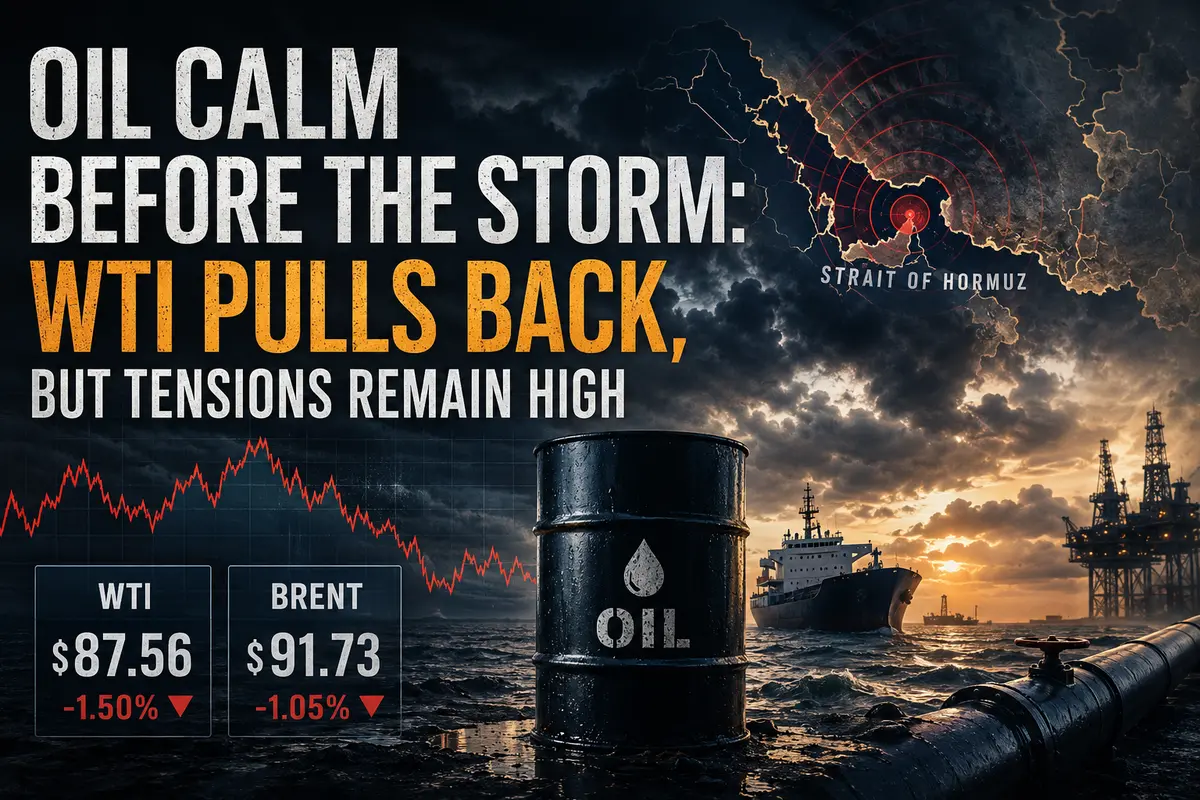
Oil Calm Before the Storm: WTI Pulls Back, but Tensions Remain High

Friday’s Asian trading session brought a brief respite to the oil market. July WTI futures fell by 1.5%, dropping to $87.56 per barrel. Brent followed its U.S. counterpart lower, losing just over 1% and settling at $91.73 per barrel. At first glance, this looks like a routine correction after the sharp rally triggered by the latest strikes on Iran. But a closer look at the numbers suggests otherwise: this is not merely a pullback—it is a market holding its breath before the next move. Too much explosive risk has accumulated beneath the surface, too many unresolved questions remain, and too much depends on what unfolds over the weekend.

Down 1.5%: Profit-Taking or a Trend Reversal?

Friday’s decline in WTI fits a classic pattern. After Thursday’s surge of more than 3%, fueled by reports of strikes on Bandar Abbas and a retaliatory attack by Iran’s Islamic Revolutionary Guard Corps (IRGC), traders chose to lock in profits ahead of the weekend. Few are willing to hold long positions through Saturday and Sunday when anything could happen—from fresh military strikes to an unexpected diplomatic breakthrough. This fear of the “geopolitical weekend” is a familiar feature of every major Middle Eastern crisis.

Support at $87.27 remains intact. Prices bounced from that level, preventing bears from gaining momentum. This suggests that the underlying fundamentals have not changed: the Strait of Hormuz remains effectively disrupted, supply chains are impaired, and the global oil market remains undersupplied. A decline of 1.5% is not a trend reversal—it is simply a pause after a short sprint.

Resistance at $99.43 looms overhead, separating the current range from the triple-digit prices seen during the hottest phase of the conflict. If tensions continue to escalate, that level could be tested as early as next week. If, against all expectations, there...

Continue reading...
0
0

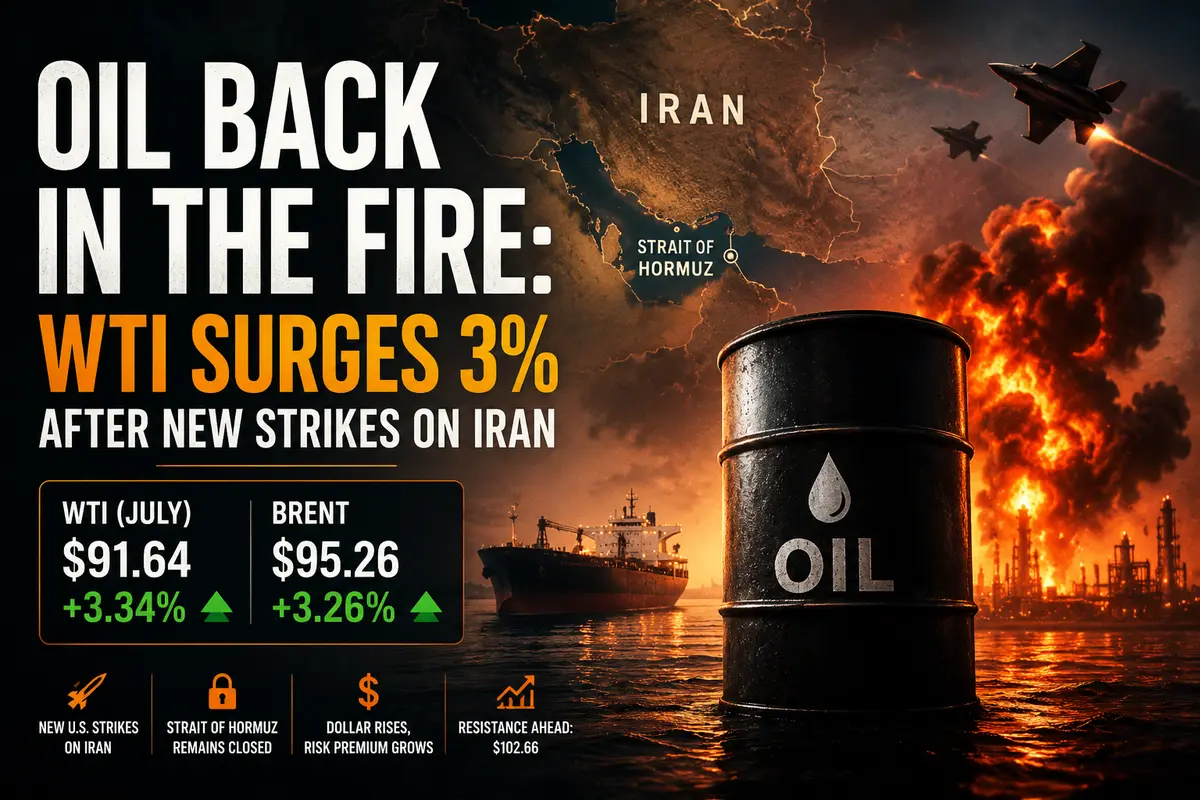
Oil Back in the Fire: WTI Surges 3% After New Strikes on Iran

Oil Back in the Fire: WTI Surges 3% After New Strikes on Iran

Thursday’s Asian session opened with a powerful rally in oil prices. July WTI futures jumped 3.34%, reaching $91.64 per barrel. Brent crude followed closely behind, gaining 3.26% to settle at $95.26. This is not just another price increase — it is a strong, confident move driven by a very specific catalyst. The reason has a name: new U.S. strikes on Iranian targets, the second round in a single week. A market that was still hoping for peace earlier this week is once again pricing in a geopolitical risk premium.

Three Percent Higher: Anatomy of the Spike

A 3.3% move in a single session is not ordinary volatility — it is a major event. To understand the scale, imagine the oil market repricing the global supply-demand balance within hours by an amount comparable to what would normally take months in calmer conditions. So what happened?

In the early hours of Thursday, U.S. forces carried out strikes against targets in southern Iran. This was already the second such operation in a week, following the first strike on Monday. Washington officially describes the actions as defensive, but the market is not interested in legal wording. What matters is that bombs are still falling, which means the conflict is far from over.

Moreover, President Trump personally dismissed reports on Wednesday about the imminent reopening of the Strait of Hormuz, stating that there is no thirty-day agreement and that neither Iran nor Oman will control the passage. That statement shattered fragile hopes for de-escalation and forced traders to reassess their positions.

Oil reacted instantly. WTI, which had tested support around $87.80 earlier in the week, exploded higher. Brent broke above $95 and, judging by the momentum, does not appear ready to stop. The market is once again pricing in the risk of prolonged supply disruptions...

Continue reading...
0
0
Lin Brings

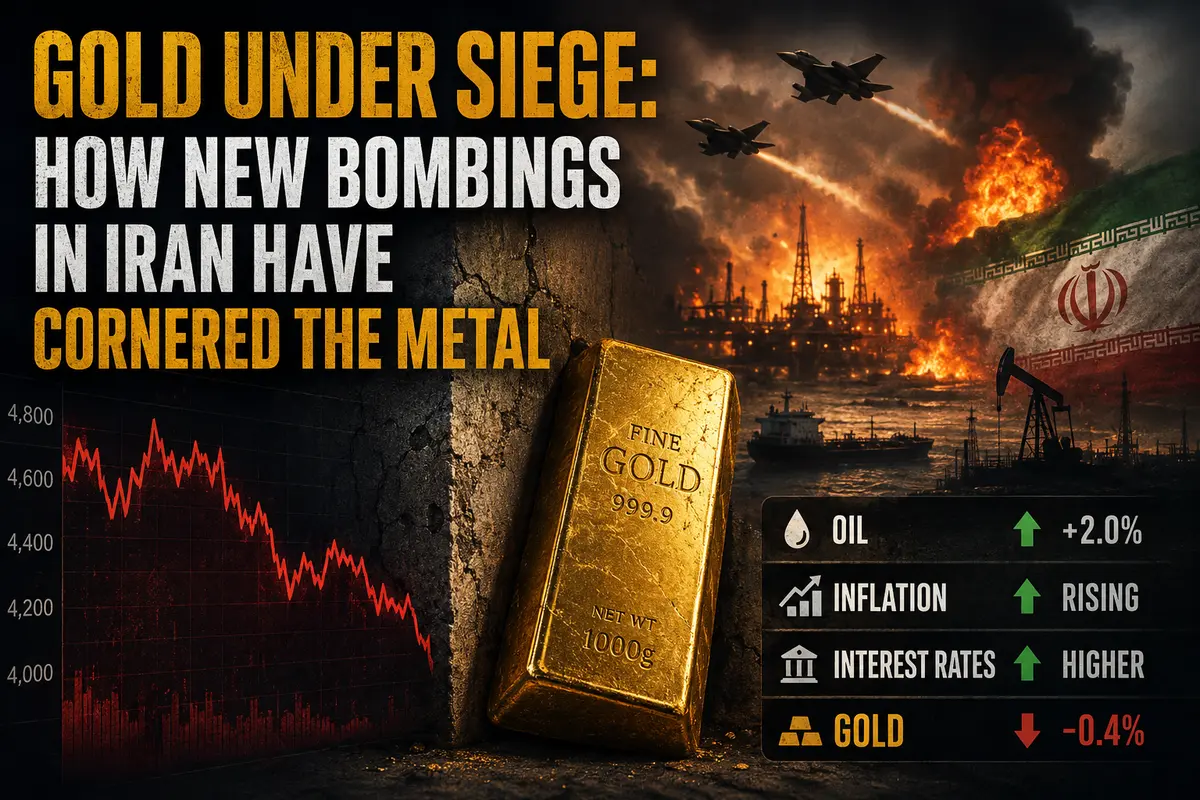
Gold Under Siege: How New Bombings in Iran Have Cornered the Metal

Gold Under Siege: How New Bombings in Iran Have Cornered the Metal

Thursday’s Asian trading session brought another wave of pain for gold. Spot prices slipped 0.4% to $4,438 per ounce, while futures followed, falling to $4,467. Silver plunged nearly 1%, and platinum lost 0.7%. Precious metals are under pressure once again, and the culprit is an old familiar force — war. Not the war itself, but its economic consequences, which the market has learned to price in with ruthless precision. New U.S. strikes on Iran — the second this week — once again triggered the chain reaction: “oil rises → inflation rises → interest rates rise → gold falls.” And as long as that chain remains intact, gold will stay trapped.

Ten Days in a Box: Gold Cannot Break the Walls

Since mid-May, spot gold has been stuck in a range between $4,400 and $4,600 per ounce. Ten days. For an asset capable of moving hundreds of dollars in a single session, that is an eternity. Gold keeps crashing into invisible walls like a fly against glass, unable to break either higher or lower.

The reason for this paralysis is both simple and painful. The market is being torn between two opposing forces. On one side, geopolitical uncertainty — war, strikes on Iran, the blocked Strait of Hormuz — should push gold higher as a safe-haven asset. On the other side, the inflationary consequences of that same war — expensive oil, rising prices, and the threat of higher rates — should push gold lower, because high interest rates make holding a non-yielding metal unattractive.

On Thursday, the second force prevailed. New U.S. strikes on Iranian targets pushed oil prices roughly 2% higher. Oil climbed again, and inflation expectations climbed with it. Rising inflation expectations strengthen the belief that the Federal Reserve will not cut rates — and may even raise them...

Continue reading...
0
0
Lin Brings

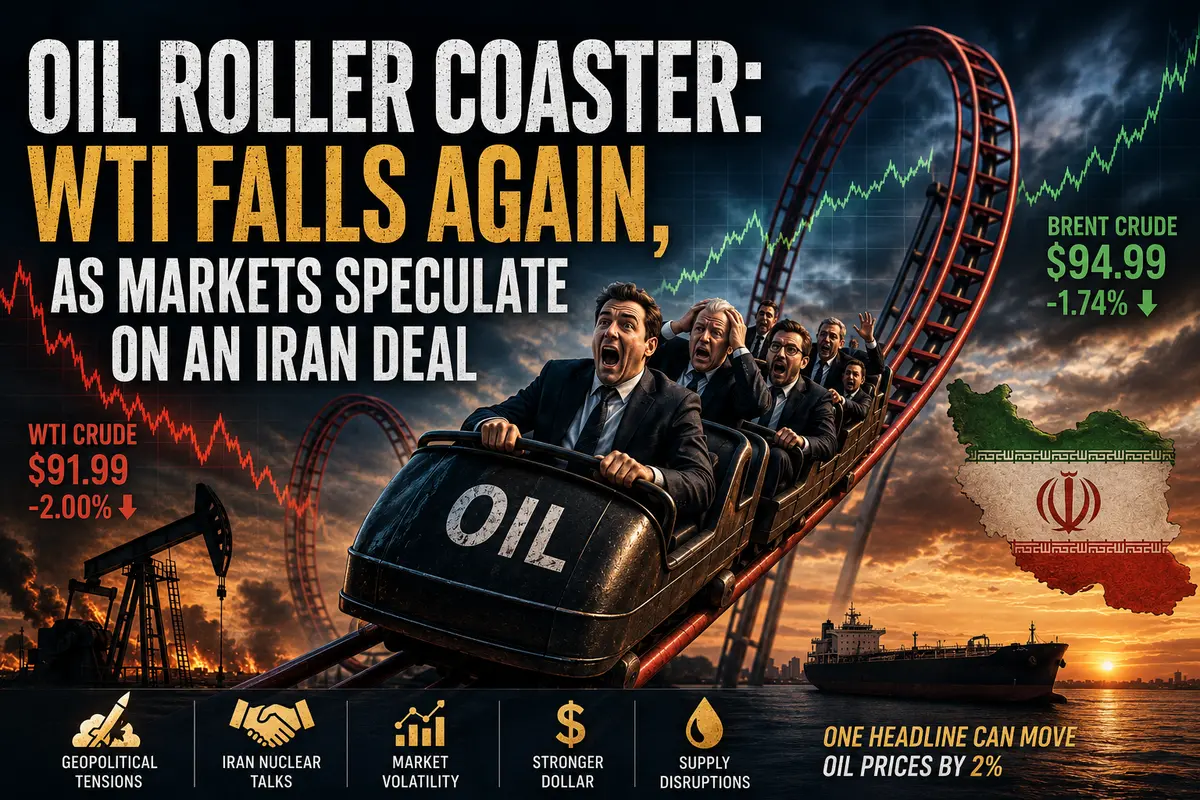
Oil Roller Coaster: WTI Falls Again as Markets Speculate on an Iran Deal

Oil Roller Coaster: WTI Falls Again as Markets Speculate on an Iran Deal

Wednesday’s Asian oil trading session opened in negative territory. July WTI futures dropped by as much as two percent, falling to $91.99 per barrel. Brent followed the U.S. benchmark lower, declining 1.74% to $94.99. After several days of nervous swings between fear and hope, the market appears ready to believe in a positive outcome again — at least for the duration of one Asian session. Yet this decline, much like the previous rally, lacks conviction. It resembles another turn on a roller coaster where every rise is followed by a drop, and every drop by another rise. And one man seems to be operating the ride — Donald Trump, whose statements about negotiations with Iran continue to keep oil traders in a state of permanent uncertainty.

Two Percent Down: Why Oil Is Falling Today

A two-percent drop in WTI during a single session is a move worth noticing. But to understand it, context matters. The day before, oil prices climbed on reports of U.S. strikes in southern Iran, which undermined hopes for a quick peace agreement. Today prices are falling. Why? Because despite the strikes, negotiations are still ongoing. Diplomats remain at the table. Trump says progress is being made. Iranian officials, while denying that a deal is close, have not walked away from talks. And the market, which panicked over bombs on Monday, is slowly regaining faith in diplomacy on Tuesday and Wednesday.

This is largely a psychological move. Fundamentally, nothing has changed. The Strait of Hormuz remains partially closed to normal shipping. Oil supplies from the region are still disrupted. Freight insurance premiums remain elevated. But the market is tired of being afraid. Traders are looking for any excuse to justify profit-taking after the previous rally, and continued negotiations provide exactly that excuse.

It is also important that...

Continue reading...
0
0

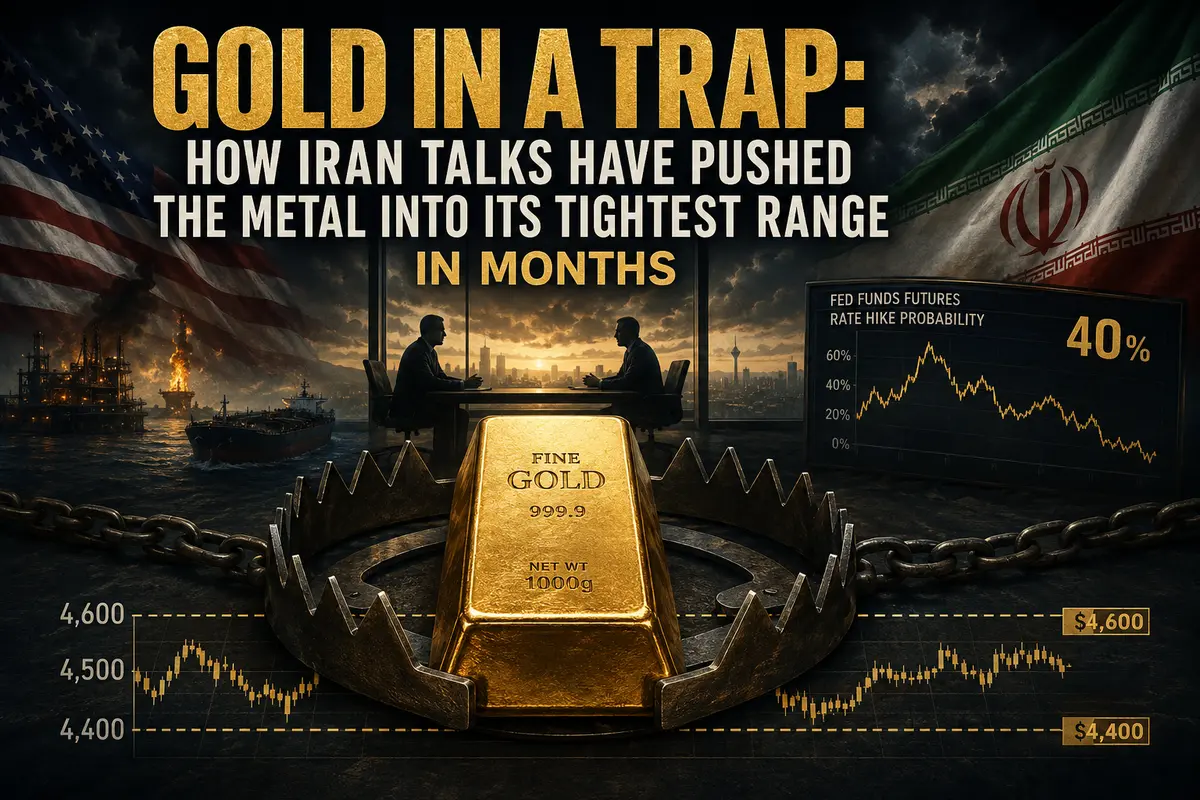
Gold in a Trap: How Iran Talks Have Pushed the Metal Into Its Tightest Range in Months

Gold in a Trap: How Iran Talks Have Pushed the Metal Into Its Tightest Range in Months

Ten days. Ten long days that spot gold has been unable to break out of the range between $4,400 and $4,600 per ounce. For an asset accustomed to swinging hundreds of dollars in a single session, this is an agonizingly narrow corridor. Gold is stuck as if trapped in a vise, with neither bulls nor bears able to move it from dead center.

On Wednesday morning, spot prices edged up a symbolic 0.2% to $4,518. Futures added 0.3%, reaching $4,550. The move is so modest it almost feels embarrassing to call it a rally. Yet beneath this apparent stillness lies a fierce battle between two opposing forces, each pulling gold in its own direction. And the name of those forces is Iran.

Negotiations That Suffocate and Save at the Same Time

The main reason gold cannot decide on a direction is the stream of contradictory signals coming from the peace negotiations between the United States and Iran.

On Monday, U.S. forces struck targets in southern Iran. Gold, as expected, fell. Why did it fall instead of rise? Because the logic of the current conflict has turned traditional market relationships upside down.

Normally, war is fuel for gold. Investors flee risk, buy safe-haven assets, and the yellow metal rises. But this war is different. It has created an energy crisis that accelerated inflation. Inflation, in turn, has forced central banks to threaten higher interest rates. And the threat of higher rates is deadly poison for gold, which yields no interest income.

That is why the bombing of Iran is not pushing gold higher — it is dragging it lower instead. The market fears not the war itself, but its monetary consequences.

At the same time, however, negotiations continue. Diplomats remain at the table, discussing terms and exchanging draft agreements. Every headline...

Continue reading...
0
0
Tom Maffin

Korean Record Amid the Ashes of War: How Asian Markets Live Between Bombs and Chips

Korean Record Amid the Ashes of War: How Asian Markets Live Between Bombs and Chips

Asian stock markets on Tuesday looked like a chessboard where the black and white squares had been mixed together without any logic. Japan declined, China fell, Australia and Singapore slipped into the red. But in the middle of this sea of red indices, like an iceberg rising above the waves, stood the KOSPI — South Korea’s benchmark index hit a new all-time high, surging above 8,131 points. Hong Kong, lifted by a rally in chipmakers, also closed higher. This market schizophrenia perfectly reflects the current moment: geopolitics is pulling markets down, technology is pushing them up, and investors are swinging between fear of Iranian bombs and greed for artificial intelligence.

Strikes on Iran: Markets Back in “Run or Freeze” Mode

New U.S. strikes on missile positions and vessels in southern Iran, revealed on Monday, hit the markets like a bucket of cold water poured over the smoldering embers of optimism. Just on Sunday, markets were celebrating hopes for peace. As recently as Monday morning, oil had fallen below $100 a barrel, Asian indices were climbing, and traders were pricing in a swift reopening of the Strait of Hormuz. Today, everything looks different. Brent is back near $98, while WTI hovers around $92. Oil prices have bounced back, reminding everyone that the war is not over — it has merely paused.

Washington describes the strikes as defensive. The wording matters: it leaves room for diplomacy. Had the attacks been labeled offensive, markets would have interpreted them as escalation and reacted far more aggressively. But even “defensive” bombings during ongoing negotiations in Doha send a message. A message that diplomacy is stalling, that the sides cannot reach an agreement, and that military force remains the primary argument. And although Trump continues to say the talks are “going well,” markets have learned to...

Continue reading...
0
0

The Pharaohs’ Treasure Hunt: How Egypt Plans to Redraw the Map of Its Subsoil Wealth

The Pharaohs’ Treasure Hunt: How Egypt Plans to Redraw the Map of Its Subsoil Wealth

Forty-two years is not just a number. It is more than half a human lifetime. In that span, the world moved from rotary phones to smartphones, from typewriters to artificial intelligence, from the Cold War to war with Iran. Yet in Egypt, one crucial sector remained frozen in time throughout all those decades. A country whose gold mines supplied precious metal for the tombs of pharaohs, whose quarries produced copper and turquoise for queens’ jewelry, whose stone pits provided material for the pyramids, had not carried out a single comprehensive airborne survey of its mineral wealth for more than four decades. Now, that paradox is coming to an end. Egypt has announced a large-scale mineral exploration initiative, a decision that could transform not only the country’s economy but also the entire geological map of North Africa.

Xcalibur and Drones Over the Desert: How the Treasure Hunt Will Work

Egypt’s Minister of Petroleum and Mineral Resources, Karim Badawi, personally attended the signing ceremony — and this was far more than a ceremonial gesture. For Cairo, the project carries strategic importance. The contractor selected for the mission is Xcalibur Smart Mapping, one of the world’s leading companies in airborne geophysical surveying, with experience across every continent. The company will work alongside Egypt’s Nuclear Materials Authority and the local firm Drone Tech. The consortium is carefully balanced: global expertise, state oversight of nuclear materials, and domestic technological capability.

The technologies involved have advanced dramatically since the early 1980s, when Egypt last conducted anything comparable. Modern airborne geophysical exploration is far more than aerial photography. It is a sophisticated combination of magnetic surveys, gravimetry, electromagnetic sounding, and gamma spectrometry. Aircraft or drones equipped with this technology fly over targeted areas while instruments detect even the slightest anomalies in Earth’s magnetic field, gravity, and rock...

Continue reading...
0
0

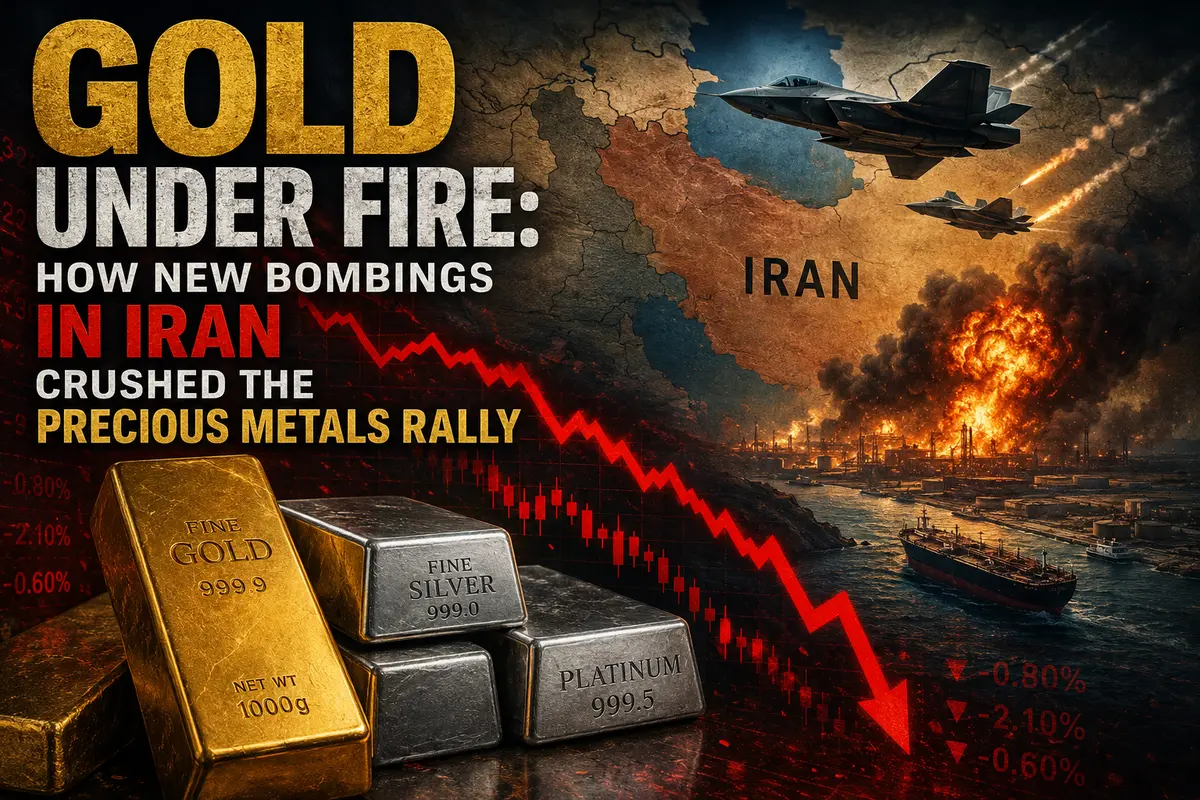
Gold Under Fire: How New Bombings in Iran Crushed the Precious Metals Rally

Gold Under Fire: How New Bombings in Iran Crushed the Precious Metals Rally

Tuesday’s Asian trading session delivered a brutal reality check to gold traders. Just yesterday, spot gold prices were confidently climbing higher amid hopes for peace with Iran, while futures painted bullish charts suggesting the rally would continue. Today, everything reversed.

Spot gold plunged 0.8% to $4,535 per ounce. Futures followed, falling by the same margin. Silver collapsed by more than 2%, while platinum lost 0.6%. Precious metals, which had celebrated a return to life on Monday, came under attack on Tuesday — both literally and figuratively. And the reason for this reversal was the very bombs the United States dropped on southern Iran.

The Paradox of War and Gold: Why Bombs Are Sinking Prices

At first glance, this seems backward. Gold is the classic safe-haven asset. When guns fire, investors usually run into gold. This rule has worked for decades and entire investment strategies are built around it.

But the current conflict with Iran has rewritten those rules. To understand why, we need to look at how this war affects gold — not directly, but through a complex chain of macroeconomic consequences.

The conflict with Iran triggered an energy crisis. The closure of the Strait of Hormuz sent oil prices soaring. Rising energy prices fueled inflation worldwide. And accelerating inflation forced the Federal Reserve and other central banks to start talking about higher interest rates.

This is where the mechanism becomes deadly for gold.

Gold generates no yield. When rates rise — or even when there is merely a threat of higher rates — holding gold becomes an expensive luxury. Investors look at a gold bar sitting idle in a vault, then compare it with Treasury bonds offering guaranteed dollar returns, and make the rational choice in favor of bonds.

That is why gold fell during the hottest phases of...

Continue reading...
0
0
Lin Brings

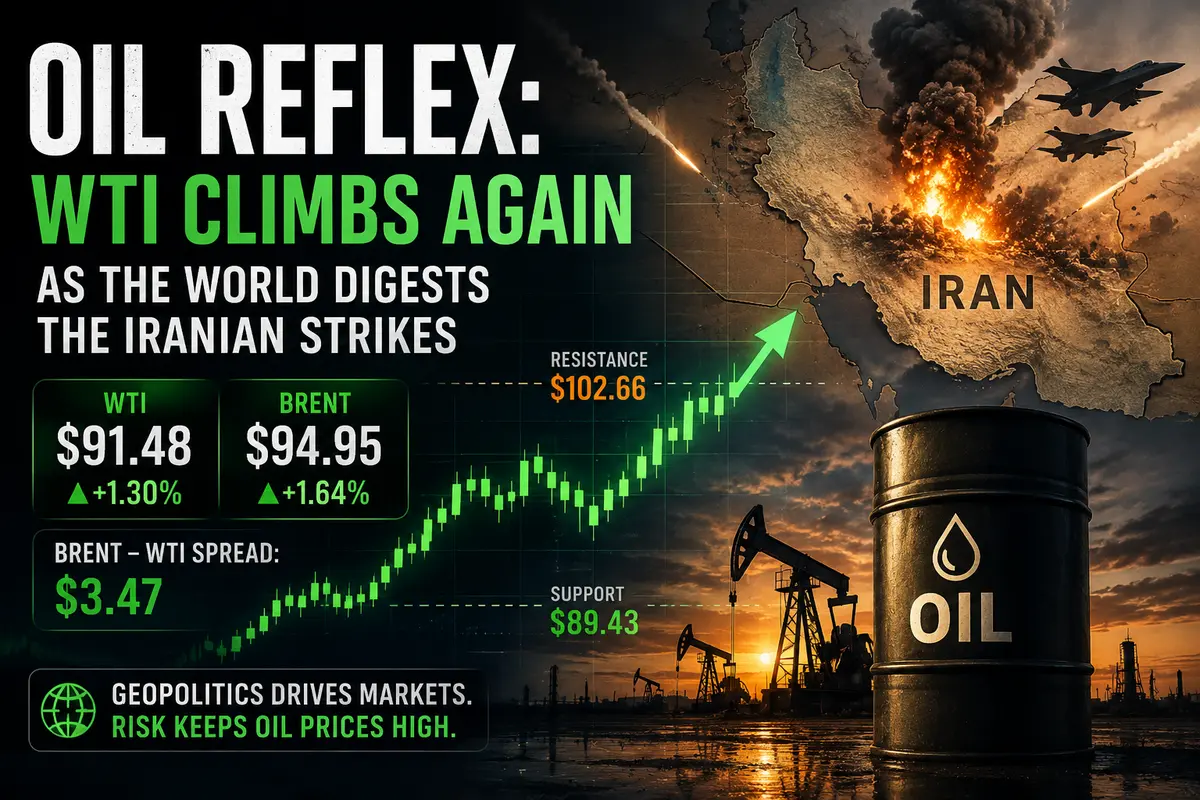
Oil Reflex: WTI Climbs Again as the World Digests the Iranian Strikes

Oil Reflex: WTI Climbs Again as the World Digests the Iranian Strikes

Tuesday’s Asian session painted oil prices firmly green. July WTI futures rose 1.3%, reaching $91.48 per barrel. The move was not explosive, but the direction was unmistakable. After Sunday’s hopes for peace and Monday’s collapse in oil below $100, the market has once again switched into “buy the fear” mode. The reason is obvious: renewed U.S. strikes on Iran on Monday forced traders to reassess their recent optimism and restore the geopolitical premium they had so eagerly removed from the price of a barrel.

Between $89 and $103: Oil Searches for Balance

The technical picture drawn by Tuesday’s WTI quotes resembles a classic rebound from support. The $89.43 level became the point where sellers ran out of momentum. Oil, which had plunged on Monday amid hopes for a peace agreement, hit that floor and bounced higher. Resistance near $102.66 looms overhead, separating the current range from the territory oil occupied during the hottest days of the conflict. This corridor — between $89 and $103 — is the zone of uncertainty in which the market will remain until the situation around Iran becomes clearer.

A 1.3% rise during the session is not panic buying. It is more a cautious digestion of the news. Traders are not rushing to buy barrels at any price as they did in the first days of the war. Instead, they are methodically pricing in higher risk. The strikes on southern Iran reported on Monday are not the beginning of a full-scale ground operation. They are targeted actions that, despite their seriousness, still leave room for diplomacy. But they also serve as a reminder that diplomacy is not a substitute for war — it is often its continuation by other means. And as long as bombs are falling, even while negotiations continue in parallel, the oil market...

Continue reading...
0
0

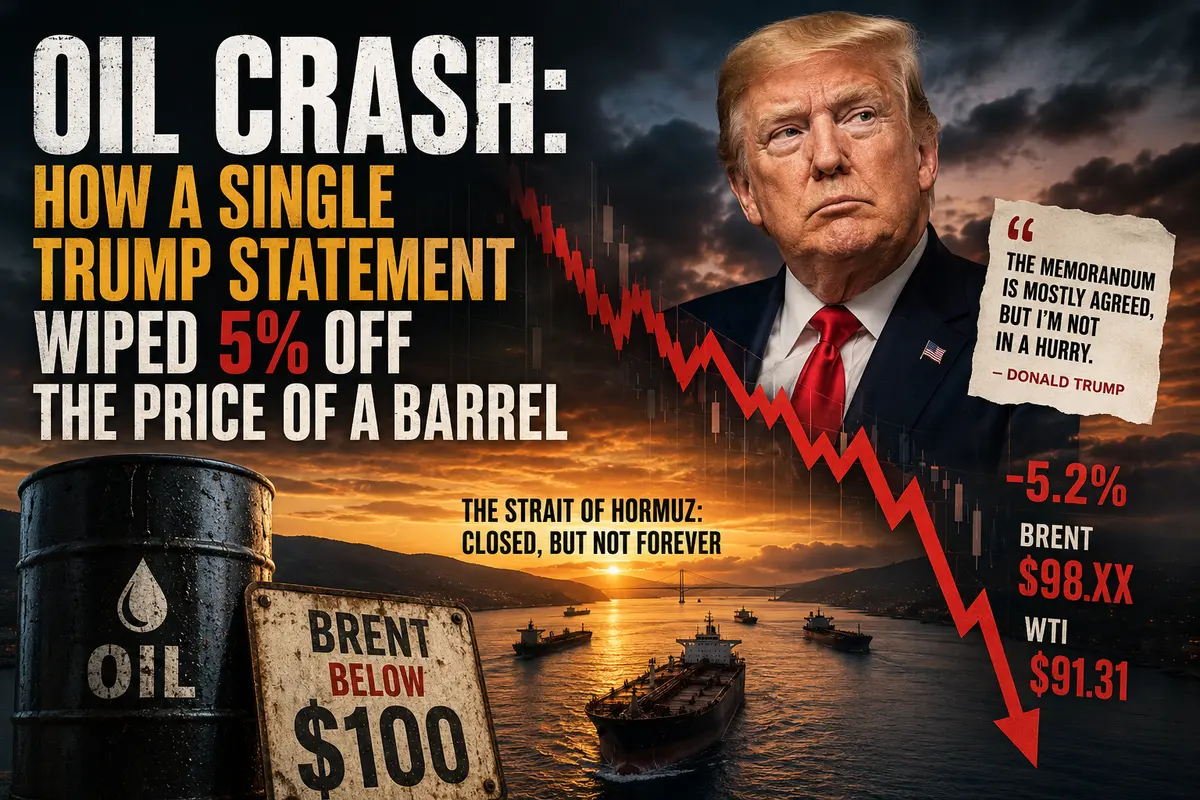
Oil Crash: How a Single Trump Statement Wiped 5% Off the Price of a Barrel

Oil Crash: How a Single Trump Statement Wiped 5% Off the Price of a Barrel

Monday morning on the oil markets began with a thunderclap out of a clear sky. But not the kind the world has grown used to over recent months — not explosions in the Strait of Hormuz, not missile strikes on tankers, not Trump’s threats to wipe Iran off the map. Quite the opposite. The thunder came from the prospect of peace. And that thunder hit oil prices with a force that neither diplomatic efforts nor market interventions had managed to achieve. Brent crude plunged below $100 per barrel, WTI broke through the $92 mark, and all of it happened within a single trading session. A five-percent drop — the kind of move usually associated with the start of a recession or the collapse of a cartel. But this time, the reason was different: hopes for the end of the most destructive oil crisis in decades.

The Psychological Threshold: $100 Falls

The $100-per-barrel mark for Brent is not just a round number. It is a psychological barrier separating “expensive but manageable oil” from “oil that kills economic growth.” The entire global infrastructure — from airlines to chemical plants, from farmers to taxi drivers — is built on the assumption that oil costs far less than $100. Once crude breaks above that level and stays there, business models begin to crack, inflation spirals accelerate, and central banks reach for loaded weapons.

Brent’s drop below $100 on Monday was not just another move on a chart. It was a signal to the market that the worst may be over. That the insane days when oil stormed past $110, $120, even $130 per barrel could be behind us. That the Strait of Hormuz, blocked by war, might reopen. That tankers stranded off the Iranian coast may finally begin moving again. That peace — fragile,...

Continue reading...
0
0
Navigation menu
instaforex banner