Bar Pipa
We pay for a post of 10$

Metals

Oil Pulls Back After Rally: Middle East and U.S. Inventories in Focus
Oil Pulls Back After Rally: Middle East and U.S. Inventories in Focus
The Three-Day Holiday Is Over

Thursday began with a reality check for the oil market. After three straight days of gains—delighting bulls, frustrating bears, and forcing traders to revise their models—the market finally saw a correction. A modest one. A measured one. Almost a polite one. But a correction nonetheless.

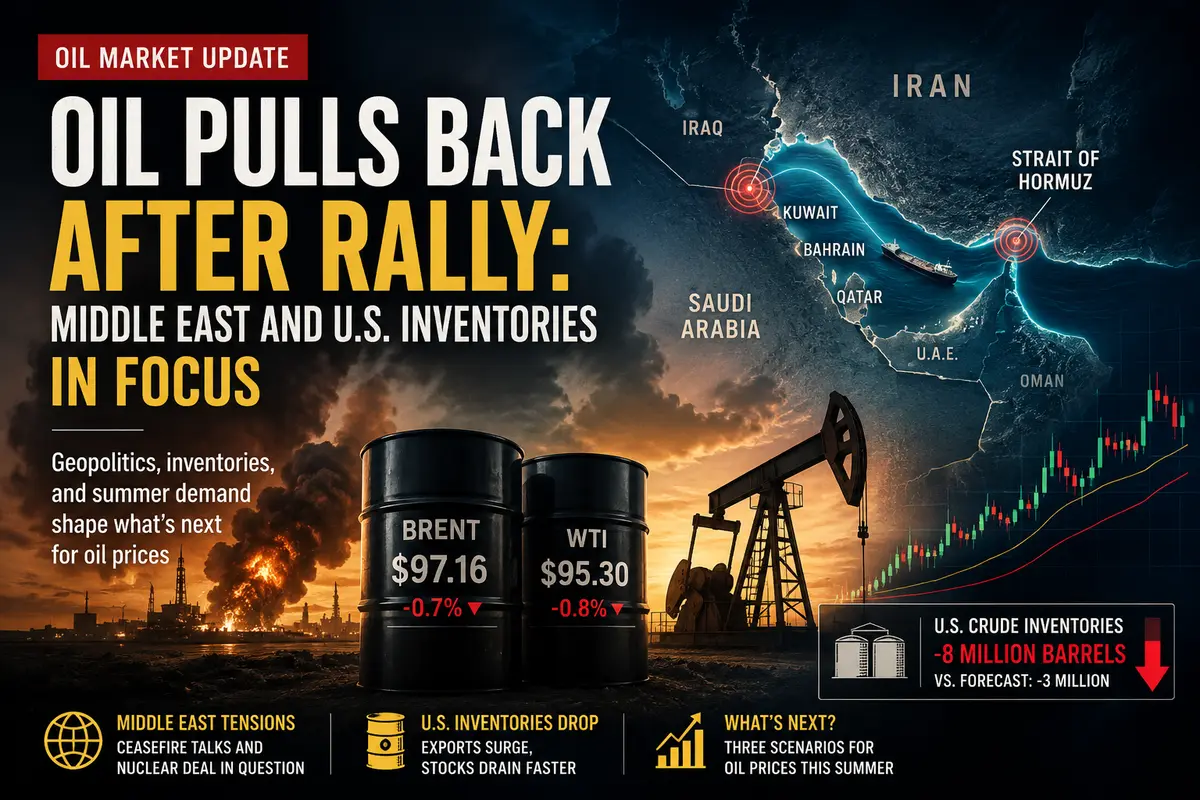
Brent crude futures, the European benchmark, were down 0.7% on Thursday morning, trading at $97.16 per barrel. Its American counterpart, WTI, slipped slightly more, losing 0.8% to $95.30 per barrel. Prices that would have seemed extraordinary just a week ago now look like business as usual.

Still, this decline is hardly dramatic. It is simply profit-taking. Investors who entered the market last week when prices were 5–7% lower have decided it is time to take some money off the table. They sell, prices fall. Nothing personal—just business.

Yet beneath this routine profit-taking lies something more interesting: risk assessment.

The oil market today resembles a tightrope walker balancing above a canyon. On one side is geopolitical turmoil in the Middle East; on the other are the hard numbers coming from U.S. crude inventories. Both factors are pushing prices higher. But there are forces pulling in the opposite direction as well. More on those shortly.

The Middle East: War, Ceasefire, and a Nuclear Deal

Let's begin with the biggest source of oil market volatility in recent weeks: the Middle East—a region that gave the world agriculture, writing, and seemingly an endless supply of conflict.

Events unfolded at cinematic speed this week.

First came Iranian missile strikes against Kuwait and Bahrain. These small but wealthy Gulf monarchies, accustomed to life under the American security umbrella, suddenly found themselves on the front line. The missiles came from Iran—the United States' primary regional adversary, Hezbollah's main backer, and a perennial source of instability.

Then came...

Continue reading...
0
0
BCR

Daily Analysis 4 June 2026 | Dollar Climbs to Two-Month High as Oil Extends Gains and Markets Eye Rate Hikes

Daily Analysis 4 June 2026 | Dollar Climbs to Two-Month High as Oil Extends Gains and Markets Eye Rate Hikes

Currency & Commodity Analysis:


US Dollar Index


The US dollar index rose further to 99.50 on Wednesday, reaching its highest level in nearly two months, after an ADP report showed that the private sector added 122,000 jobs in May, exceeding expectations and reaching a new high since January 2025. The data shows a continued strengthening labor market, further solidifying market expectations that the Fed may raise interest rates later this year. Earlier this week, Jolts data showed that job openings in April rose to their highest level since November 2024, further highlighting the resilience of labor demand. The dollar has been supported by escalating tensions in the Middle East, and oil prices rose for the third consecutive trading day, exacerbating concerns about inflationary pressures. The market currently estimates an 85% probability of the Federal Reserve raising interest rates by 25 basis points before the end of the year, up from 60% a week ago.


The US dollar index is trending slightly higher on the daily chart, currently trading above 99.30 and holding above all moving averages. Short-term resistance is seen at the previous high of 99.55, with medium-term resistance at 100.00 (a psychological level). Support lies at the 20-day and 50-day moving averages and the previous low of 97.63. The MACD remains above the zero line, with the DIFF above the DEA, indicating a slight continuation of bullish momentum. The RSI is between 55 and 60, above the 50 level, suggesting bulls are in control but not yet overbought. The moving average system is bullish, with the medium-term center of gravity steadily rising. Short-term consolidation is seen due to resistance at the previous high. The market is trending slightly higher, supported by moving averages. Key levels to watch are the 99.55-100.00 (psychological resistance) level and the 99.00-98.58...

Continue reading...
0
0
Lin Brings

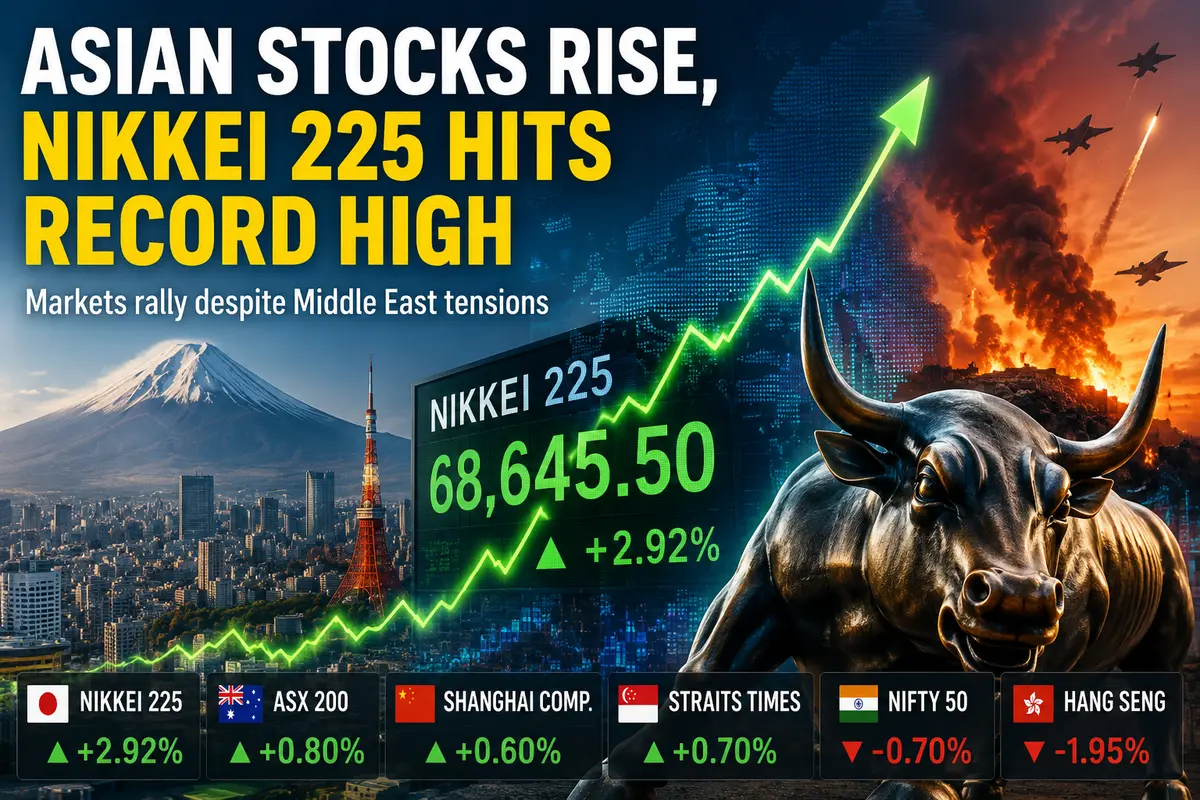
Asian Stocks Rise as Nikkei 225 Hits a Record High

Asian Stocks Rise as Nikkei 225 Hits a Record High
A Morning That Began With a Surge

Asian stock markets delivered a pleasant surprise on Wednesday, staging a remarkable rally despite a global backdrop that offered little reason for optimism. The Middle East remained engulfed in conflict. Iran and the United States exchanged airstrikes for the third time in a week. Oil prices climbed. Diplomatic negotiations stalled. Diplomats stayed silent while military forces took action.

Under such circumstances, most markets would be expected to fall—or at least pause in anxious anticipation. But Asian markets ignored the script. They rose. And not just modestly: Japan’s Nikkei 225 surged to an all-time record high, surpassing a milestone many believed was unattainable after three decades of economic stagnation.

What happened? Have investors stopped worrying? Or are they seeing something that analysts obsessed with geopolitics are missing?

As is often the case, the answer is more complicated. On Wednesday, Asia demonstrated a remarkable ability to tune out negative headlines and focus on the factors working in its favor. And there are plenty of them: a technology boom, government stimulus measures, and weak economic data that paradoxically reinforce expectations for accommodative monetary policy. Together, these factors created a cocktail strong enough to outweigh fears of escalating military conflict.

Japan: Thirty Years Later

The star of the day was Japan’s Nikkei 225. The index climbed nearly 3% to reach 68,645.5 points—an all-time high in its history dating back to 1950.

To appreciate the significance of this achievement, it helps to remember where Japan stood three decades ago. In 1990, the Nikkei collapsed following the bursting of the country’s asset bubble. Since then, despite periods of recovery and decline, the peak reached in 1989 had seemed permanently out of reach.

Now, a new record has been set.

The Nikkei was not alone in its triumph. The broader...

Continue reading...
0
0
Tom Maffin

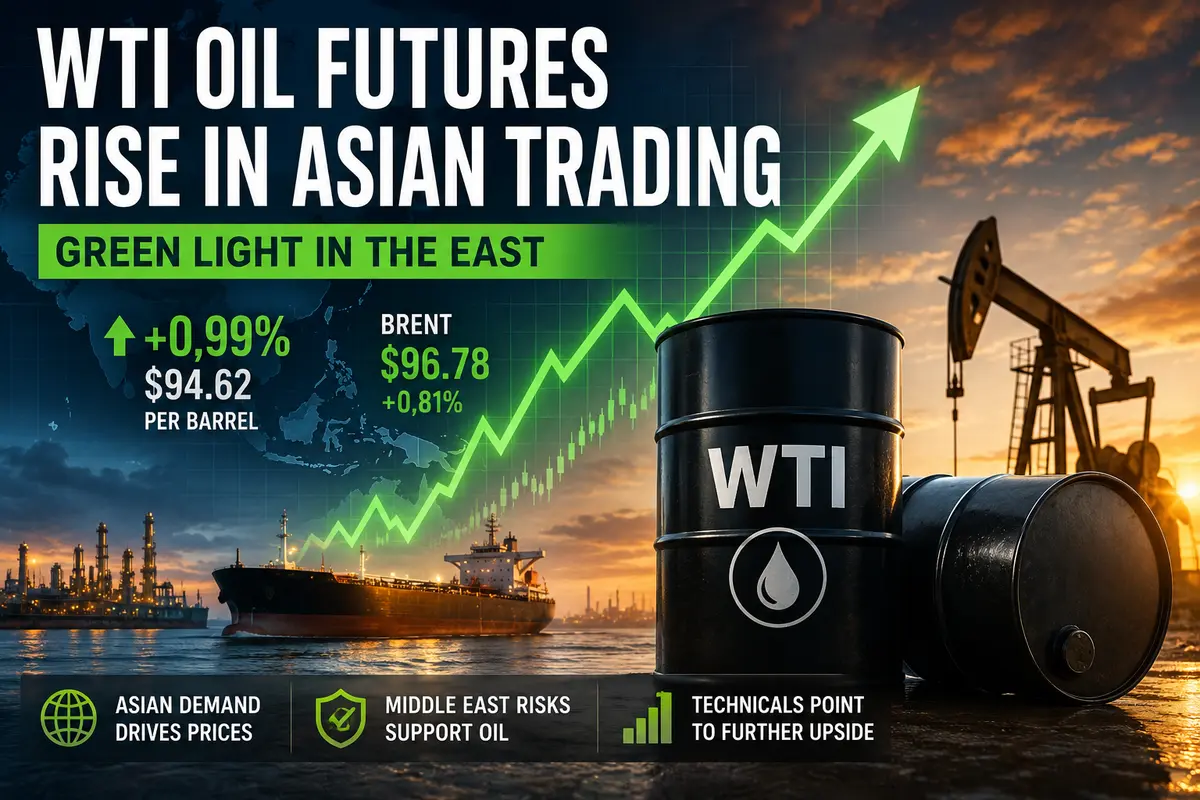
WTI Crude Oil Futures Rise in Asian Trading

WTI Crude Oil Futures Rise in Asian Trading
Green Light in the East

Oil traders came into Wednesday with more questions than answers. The previous few weeks had been anything but straightforward. Prices jumped on geopolitical headlines, slipped on weak economic data, then bounced back again when supply concerns resurfaced. Every trading session seemed to bring a new narrative.

But when Asian markets opened on Wednesday, the message was surprisingly clear.

WTI crude futures moved higher almost from the start of trading. The gains were not spectacular, but they were steady and broad-based. By the middle of the session, prices had climbed close to 1%, reaching $94.62 per barrel. In a market that has spent much of the year struggling to find direction, that kind of move attracts attention.

What matters most isn't the size of the gain. It's the fact that buyers are once again willing to step in.

Markets rarely move in a straight line. Oil, perhaps more than any other major commodity, is driven by a constant tug-of-war between fear and optimism. On one side are concerns about economic growth, consumer demand, and industrial activity. On the other are supply disruptions, geopolitical risks, and tightening inventories.

This week, the balance appears to be shifting in favor of the bulls.

Adding support was a slightly weaker U.S. dollar. The Dollar Index slipped to around 99.21, a modest decline that would barely register in many markets. For oil, however, currency moves matter. Crude is priced globally in dollars, so when the dollar weakens, oil becomes cheaper for buyers using euros, yen, yuan, or other currencies. That often encourages demand and provides a tailwind for prices.

Brent crude followed the same path. The global benchmark rose to $96.78 per barrel, outperforming WTI by a small margin. The spread between the two contracts widened to roughly ...

Continue reading...
0
0
Lin Brings

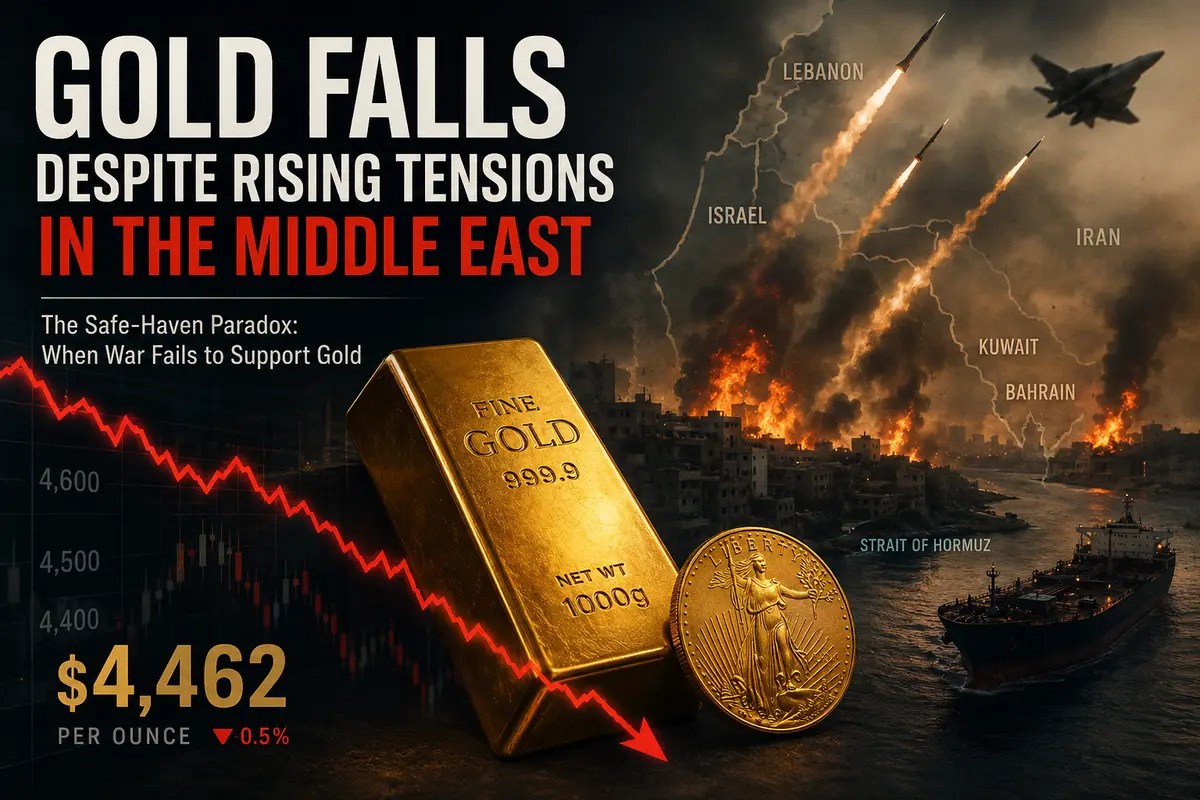
Gold Falls Despite Rising Tensions in the Middle East

Gold Falls Despite Rising Tensions in the Middle East
The Safe-Haven Paradox: When War Fails to Support Gold

In finance, there are a few principles that rarely get questioned. One of them is simple: geopolitical tensions push gold prices higher. Wars, conflicts, and threats typically drive investors away from fragile paper currencies and toward the timeless, yellow, dependable metal. Gold is a safe haven. And safe havens are supposed to rise in value when bullets start flying.

Wednesday's Asian trading session politely—but firmly—challenged that assumption.

Because the Middle East was on fire. Not figuratively, but literally. Missiles were flying. Troops were moving. Negotiations were starting and stalling in equal measure. Yet against this backdrop, gold actually fell. Only slightly—about half a percent—but it fell nonetheless. Spot gold slipped to around $4,462 per ounce, while futures mirrored the move.

Was this a market mistake? A temporary lapse of judgment among traders? Or has the old safe-haven rule stopped working in today's increasingly chaotic world?

Neither.

The reality is that the world has become more complicated. A single conflict can now push gold both higher and lower at the same time. Every coin has two sides—and in the Middle East, it often has ten.

What's Happening in the Middle East?

To understand gold's behavior, we first need to understand the situation in a region that gave humanity writing but has yet to discover lasting peace.

On Wednesday, the picture was far from calm.

Israel, which in recent months has operated under the principle that "the best defense is a strong offense," continued military operations in southern Lebanon. This is an area where Hezbollah traditionally maintains significant influence—a place Israeli forces often describe as a hornet's nest, where every move provokes a response. These were not isolated retaliatory strikes but a systematic campaign aimed at degrading hostile infrastructure.

Meanwhile, Iran—widely regarded as...

Continue reading...
0
0
BCR

Daily Analysis 3 June 2026 | Markets Brace for NFP as Geopolitical Risks Drive Volatility

Daily Analysis 3 June 2026 | Markets Brace for NFP as Geopolitical Risks Drive Volatility

Currency & Commodity Analysis:


US Dollar Index


The US dollar index remained above 99 on Tuesday, after rising in the previous session, as stalled US-Iran peace talks increased safe-haven demand, while inflation risks and interest rate expectations came into focus. On Monday, Iranian media reported that Tehran had suspended communication with Washington in response to Israeli attacks in Lebanon. Meanwhile, President Trump stated that discussions are ongoing and hinted that a memorandum of understanding with Iran on reopening the Strait of Hormuz could be reached next week. However, rising energy-driven inflation has led markets to anticipate a possible Federal Reserve rate hike before the end of the year. Investors are now awaiting Tuesday's Jolts job openings report, followed by Friday's closely watched US monthly employment data, for further insight into the Fed's policy outlook.


The US dollar index will be under pressure. The dollar index faces greater downside risk, with 98.79 (the Bollinger Band middle line) and 98.58 (the 200-day moving average) serving as key short-term support levels. A break below these levels could lead to a move towards 97.62 for support. From a cross-market technical perspective, the dollar index and US Treasury yields are currently showing some divergence. On the 240-minute chart of the dollar index, the price has fallen from the mid-May high of 99.55, currently trading at 99.20. The MACD histogram is -0.0169, with both the DIFF and DEA lines below the zero line and in a bearish divergence, indicating the downtrend has not yet reversed. Support levels to watch are the psychological level of 99.00 and the previous pullback low of 98.75; a break below these levels would target the next support zone at the recent low of 97.62.


Consider shorting the US Dollar Index at 99.30 today, with a stop-loss at...

Continue reading...
0
0

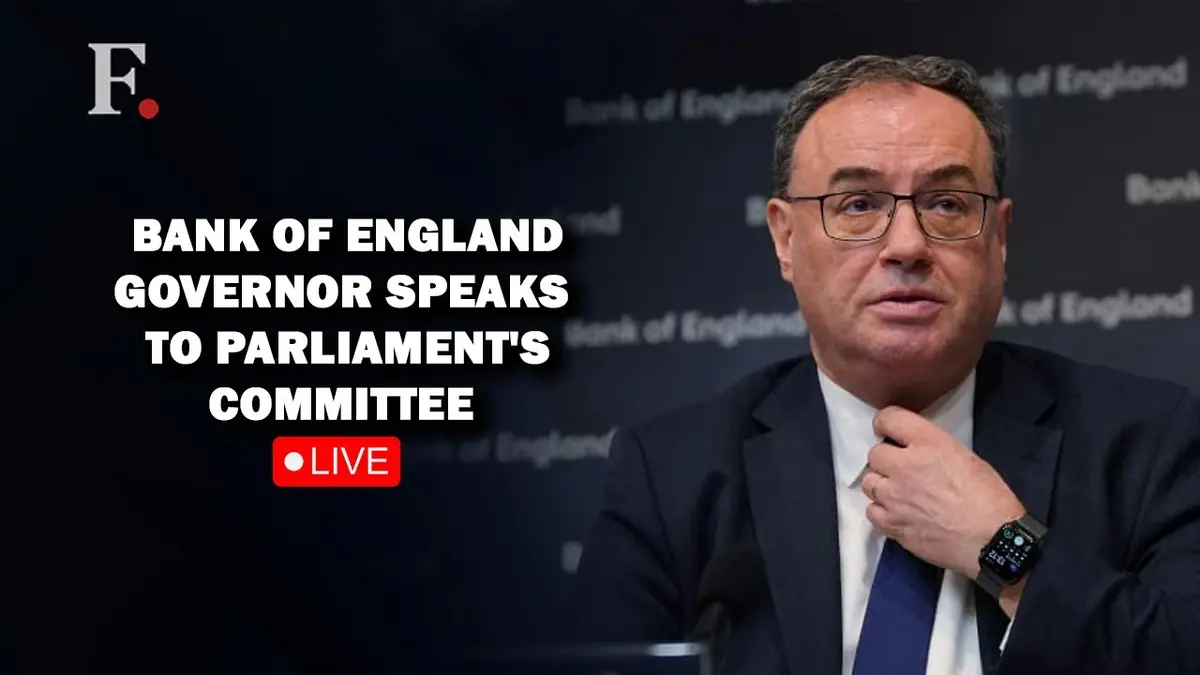
Double Trouble Today: BOE’s Bailey Speaks & JOLTS Job Openings! (+ Gold Strategy)

Double Trouble Today: BOE’s Bailey Speaks & JOLTS Job Openings! (+ Gold Strategy)

Hey Traders,

Today is packing some serious macroeconomic heat. If you're trading the Pound, the Dollar, or Gold, you need to have your alerts set and your risk management dialed in. Here is the no-nonsense breakdown of what to expect today and how to position yourself.

🇬🇧 BOE Gov Bailey Speaks: Is the Pound Losing its Edge?

The Context: Governor Andrew Bailey has recently shifted to a surprisingly dovish stance. He explicitly noted that the Bank of England (BoE) might tolerate inflation staying above their 2% target temporarily to support the weak real economy, especially given the ongoing uncertainties and supply shocks from the conflict in the Middle East.

What to Watch: He is in the spotlight again today. If he doubles down on this dovish rhetoric and signals that the BoE is in "no rush" to tighten policy or hike rates despite sticky prices, expect the Pound to face selling pressure.

Key Pairs: Watch $GBPUSD and $EURGBP. If Bailey sounds cautious about UK growth and confirms that summer rate hikes are effectively off the table, $GBPUSD could aggressively test immediate support levels.

🇺🇸 USD JOLTS Job Openings: The Prelude to NFP

The Numbers: Dropping exactly at 10:00 AM ET / 14:00 GMT. The forecast is sitting around 6.82M to 6.87M openings, which is slightly below or roughly in line with March's print of 6.866M.

Why it Matters: The Federal Reserve is laser-focused on the labor market right now to determine its next monetary policy move. This report is our first major clue of the week, setting the stage before Friday’s massive Nonfarm Payrolls (NFP) release.

The Play:

Hot Print (>6.87M): A higher-than-expected number means the labor market is still too tight, reinforcing the "higher for longer" interest rate narrative. This is bullish for the USD.

Cold Print...

Continue reading...
0
0
Lin Brings

Oil Between Peace and War: WTI Stalls as the Market Awaits the Outcome of the Iranian Drama

Oil Between Peace and War: WTI Stalls as the Market Awaits the Outcome of the Iranian Drama

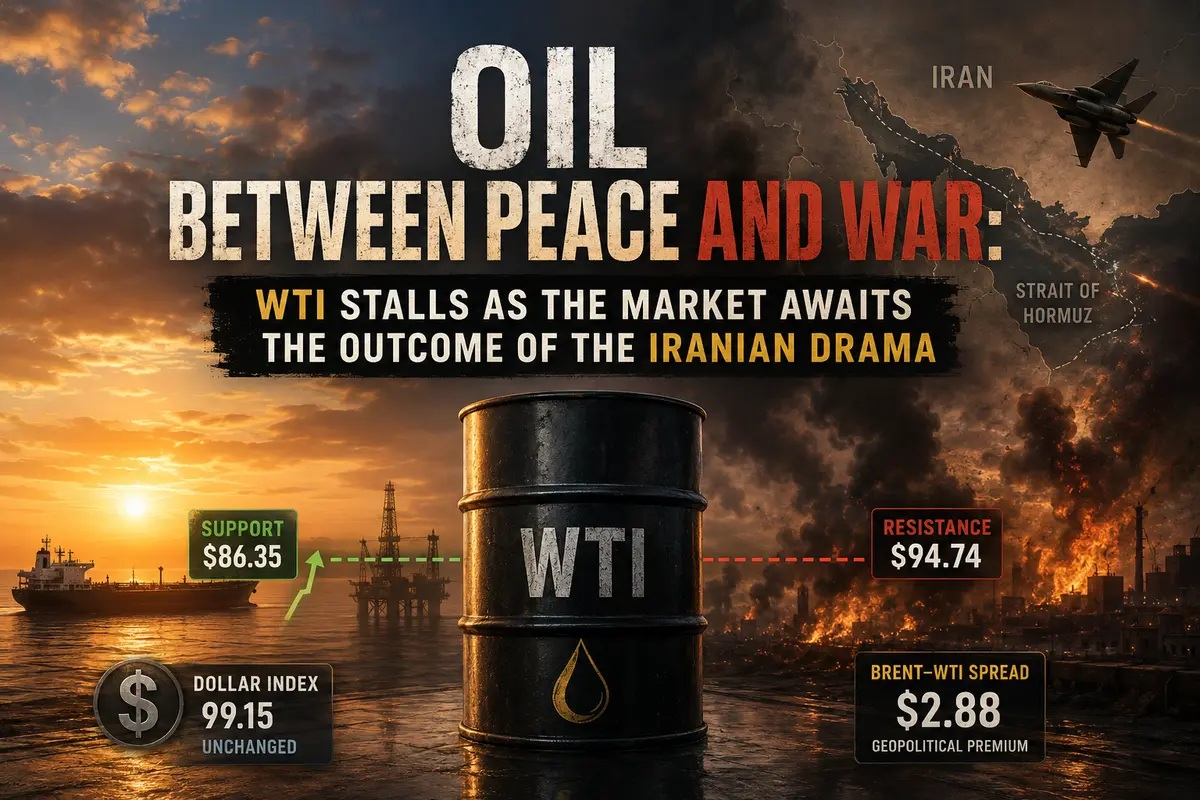
Tuesday’s Asian trading session brought another pause to the oil market. July WTI crude futures slipped by a modest 0.5% to $91.65 per barrel. Brent followed its American counterpart, falling 0.47% to $94.53 per barrel. The moves were minimal—almost statistical noise. Yet beneath this apparent calm lies a market holding its breath. Too many unresolved questions remain in the air. Too much depends on what happens in the coming days. And traders, having learned hard lessons over recent months, are reluctant to make any aggressive moves.

Between Support and Resistance: Oil Searches for Equilibrium

The technical picture for WTI resembles a classic trading range. Support at $86.35 has proven resilient during recent declines. Each time prices approached this level, buyers stepped in, preventing bears from pushing the market lower. This suggests that the underlying supply deficit in the oil market remains intact. The Strait of Hormuz is still operating under restrictions, supply chains remain disrupted, and prices have been unable to fall significantly.

Resistance at $94.74 has become the ceiling that recent rallies have failed to break. Every attempt to move higher has been met with heavy selling pressure. This indicates that the market does not believe in an unchecked upward move. Hopes for a ceasefire with Iran, however fragile, continue to cap prices from above. Few traders want to be caught in long positions if a ceasefire is announced tomorrow and the Strait reopens.

As a result, oil remains trapped in a corridor between roughly $86 and $95 per barrel for WTI. It has traded within this range for several weeks, and neither bulls nor bears have been able to force a breakout.

Brent-WTI Spread: Three Dollars of Geopolitical Premium

The price difference between Brent and WTI currently stands at $2.88 per barrel. This moderate spread reflects the remaining...

Continue reading...
0
0
Lin Brings

Gold Under Crossfire: Why Bombing Raids on Iran Are Sinking the Precious Metal Again

Gold Under Crossfire: Why Bombing Raids on Iran Are Sinking the Precious Metal Again

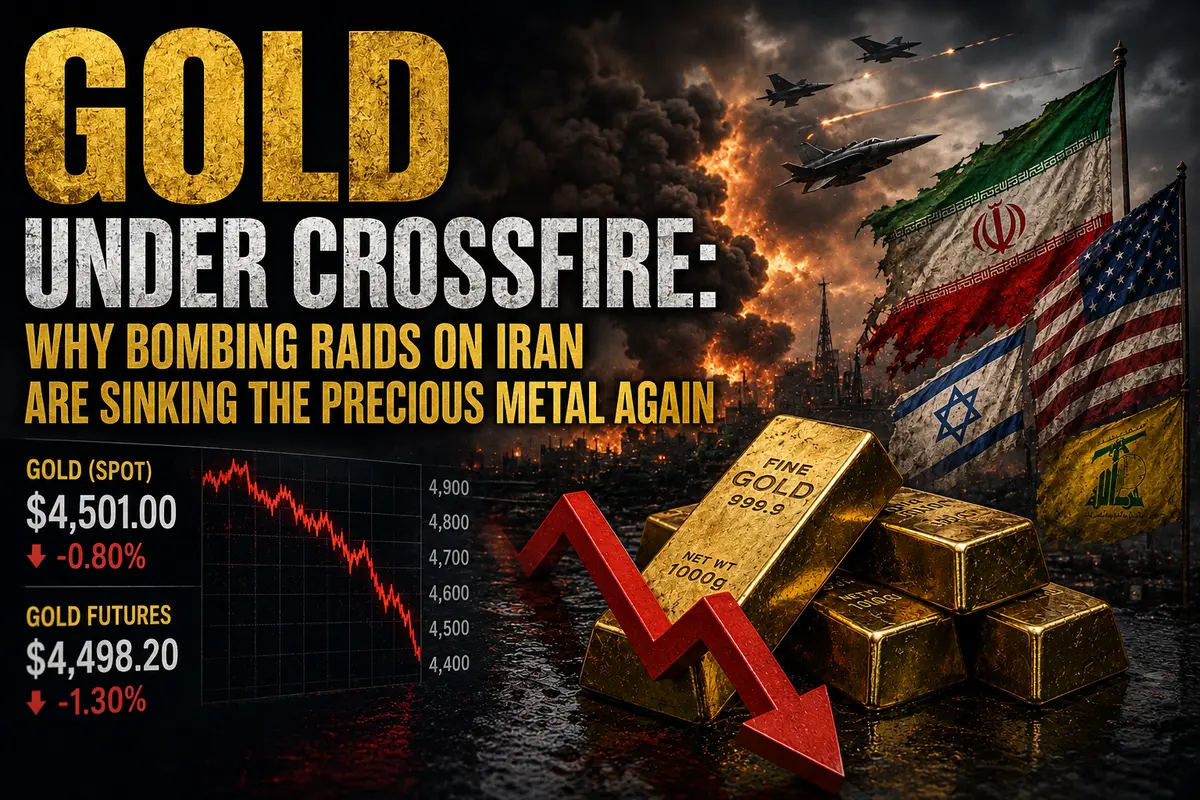
Monday began with headlines that have become an alarming routine in recent weeks. U.S. forces launched new strikes against Iranian targets—this time focusing on air defense positions and drone infrastructure. Iran responded with an attack on an airbase used by U.S. forces. Meanwhile, Israel pushed troops deeper into southern Lebanon, where fighting with Hezbollah has intensified once again. The Middle East is burning, and gold, which in the past would have been the first asset to rally on such news, is now falling.

Spot gold dropped 0.8% to $4,501 per ounce, while futures plunged an even steeper 1.3%. At first glance, this seems to defy all logic. Yet within this contradiction lies the most important story in today’s precious metals market.

The War Paradox: Why Bombs Are Hurting Gold

Traditional finance textbooks teach that when guns fire, investors rush into gold. This defensive reflex worked for decades. Vietnam, Iraq, Afghanistan, Crimea—every major military crisis sent the yellow metal higher.

But the current conflict involving Iran has rewritten the rules.

The reason is simple: the market has learned to focus not on the war itself, but on its economic consequences. And those consequences are proving devastating for gold.

The chain reaction looks like this:

Strikes on Iran and retaliatory attacks suggest a prolonged conflict. A prolonged conflict increases the likelihood that the Strait of Hormuz will remain closed or partially restricted. A restricted strait means disruptions to global oil supplies. Supply disruptions keep energy prices elevated. Higher energy prices fuel inflation. Inflation forces the Federal Reserve to keep interest rates higher for longer—or even consider raising them further.

And high interest rates are toxic for gold, an asset that generates no yield.

That is precisely the logic that pushed gold lower on Monday. The market saw fresh bombings and concluded that...

Continue reading...
0
0
Tom Maffin

Gold at a Crossroads: An Iran Ceasefire Beckons, but Inflation Keeps a Tight Grip

Gold at a Crossroads: An Iran Ceasefire Beckons, but Inflation Keeps a Tight Grip

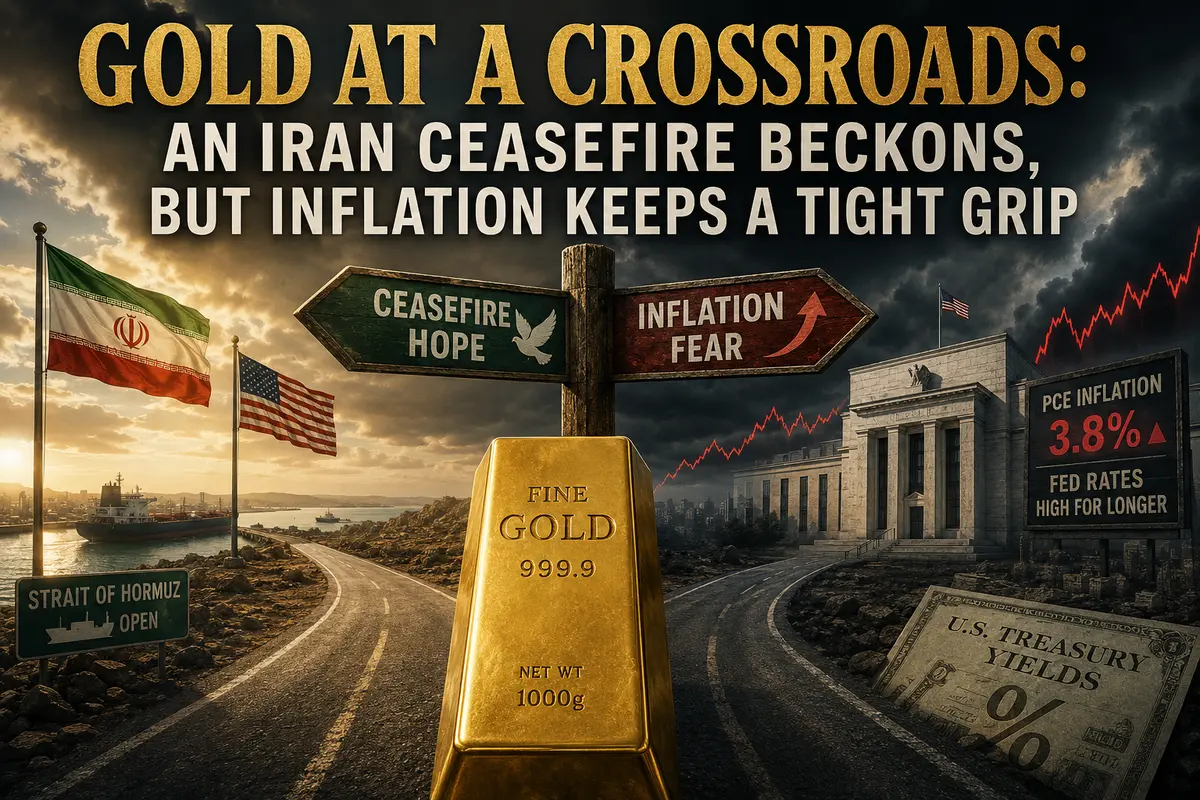
Friday’s gold market was defined by painful uncertainty. Spot gold held steady at $4,495.90 per ounce, virtually unchanged, while futures edged slightly lower to $4,526. Beneath this calm surface lies a market being pulled in opposite directions. On one side is hope for peace, which pushed prices higher on Thursday. On the other is persistent inflation, preventing gold from gaining real momentum. Caught between these forces, the yellow metal remains stuck, unable to choose a clear direction.

Ceasefire on the Table: What Changed Overnight

The main development driving markets on Thursday and continuing to influence sentiment on Friday is reports that the United States and Iran are close to extending a ceasefire agreement. According to sources, the preliminary arrangement includes a 60-day truce and, critically, the reopening of the Strait of Hormuz to maritime traffic.

This is precisely the breakthrough markets have been waiting for over the past several months. Since the conflict began, the closure of the Strait of Hormuz has been a major source of oil market disruption, inflationary pressure, and monetary policy concerns. Now, with renewed hopes that the waterway could reopen, markets reacted immediately.

Gold initially fell to a two-month low on Thursday as investors feared that de-escalation would reduce demand for safe-haven assets. However, as the implications of the news became clearer, the metal reversed course and finished the day up 0.8%. This turnaround is key to understanding how the market currently operates.

Investors realized that a ceasefire would mean not only a reduction in geopolitical risk premiums but also lower oil prices. Lower oil prices would ease inflationary pressures. Lower inflation would reduce the need for the Federal Reserve to raise interest rates. And a pause in rate hikes is exactly what gold needs.

However, the agreement is not yet final....

Continue reading...
0
0
Navigation menu
instaforex banner