Bar Pipa
We pay for a post of 10$

GDP

Asian Stocks Rise as Nikkei 225 Hits a Record High
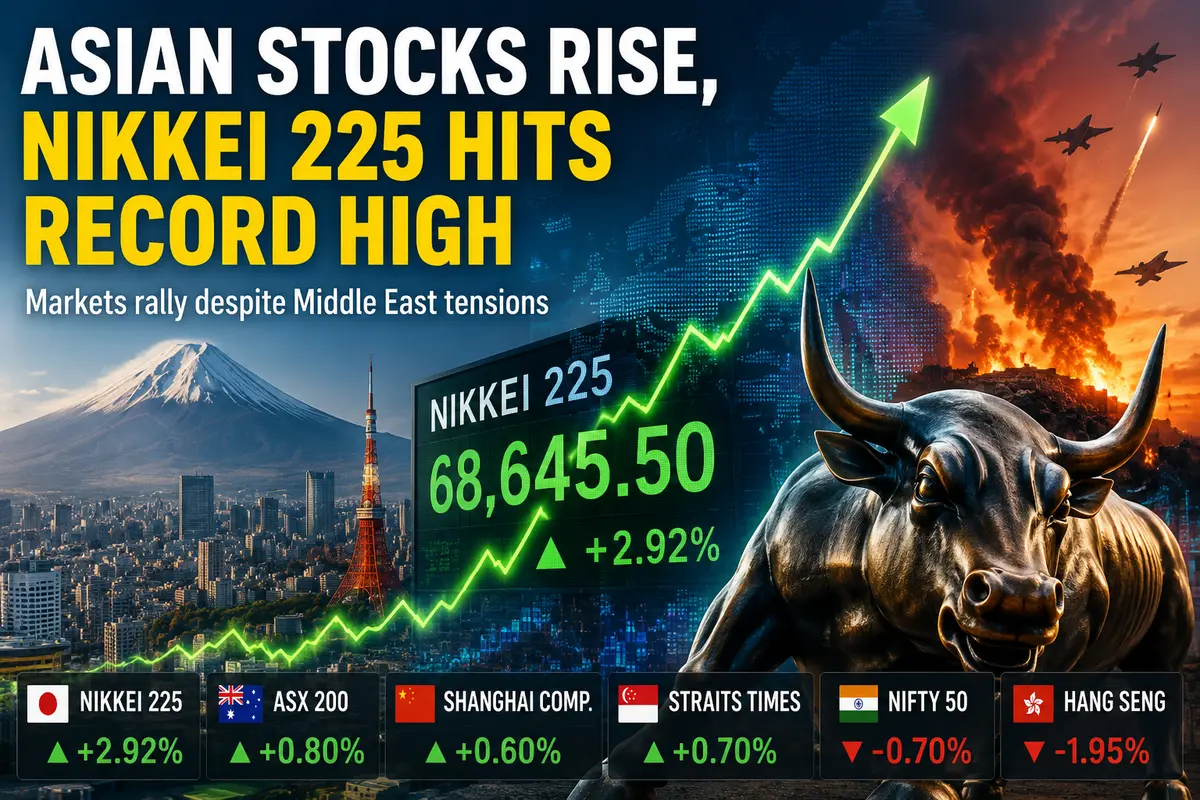
Asian Stocks Rise as Nikkei 225 Hits a Record High
A Morning That Began With a Surge

Asian stock markets delivered a pleasant surprise on Wednesday, staging a remarkable rally despite a global backdrop that offered little reason for optimism. The Middle East remained engulfed in conflict. Iran and the United States exchanged airstrikes for the third time in a week. Oil prices climbed. Diplomatic negotiations stalled. Diplomats stayed silent while military forces took action.

Under such circumstances, most markets would be expected to fall—or at least pause in anxious anticipation. But Asian markets ignored the script. They rose. And not just modestly: Japan’s Nikkei 225 surged to an all-time record high, surpassing a milestone many believed was unattainable after three decades of economic stagnation.

What happened? Have investors stopped worrying? Or are they seeing something that analysts obsessed with geopolitics are missing?

As is often the case, the answer is more complicated. On Wednesday, Asia demonstrated a remarkable ability to tune out negative headlines and focus on the factors working in its favor. And there are plenty of them: a technology boom, government stimulus measures, and weak economic data that paradoxically reinforce expectations for accommodative monetary policy. Together, these factors created a cocktail strong enough to outweigh fears of escalating military conflict.

Japan: Thirty Years Later

The star of the day was Japan’s Nikkei 225. The index climbed nearly 3% to reach 68,645.5 points—an all-time high in its history dating back to 1950.

To appreciate the significance of this achievement, it helps to remember where Japan stood three decades ago. In 1990, the Nikkei collapsed following the bursting of the country’s asset bubble. Since then, despite periods of recovery and decline, the peak reached in 1989 had seemed permanently out of reach.

Now, a new record has been set.

The Nikkei was not alone in its triumph. The broader...

Continue reading...
0
0

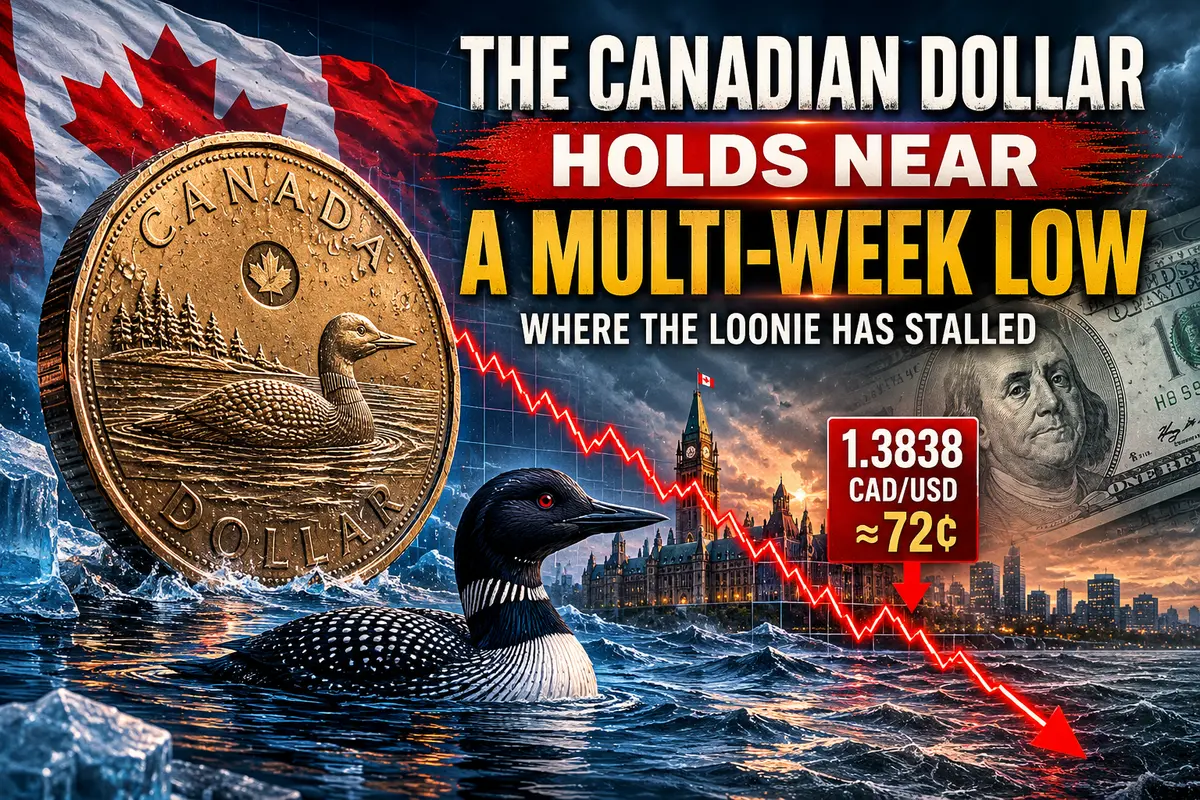
The Canadian Dollar Holds Near a Multi-Week Low

The Canadian Dollar Holds Near a Multi-Week Low
Where the Loonie Has Stalled

Wednesday was not a particularly good day for the Canadian currency. Then again, neither were the previous several weeks. The Canadian dollar, affectionately known as the “loonie” after the solitary loon depicted on the one-dollar coin, remained dangerously close to its multi-month lows against its American counterpart.

It did not plunge. It did not collapse. It did not crash. It simply stood still. And that stillness — that stubborn pause at a level that pleases no one — speaks more loudly about the challenges facing the currency than any dramatic selloff could.

During trading, the Canadian dollar was virtually unchanged at 1.3838 per U.S. dollar. Converted into U.S. cents, that works out to roughly 72¼ cents for one Canadian dollar — a level that would have seemed insultingly low to many Canadians just a few years ago. Today, it has become an uncomfortable reality to which people are gradually adapting.

Throughout the session, the currency traded within a narrow range between 1.3816 and 1.3854. By foreign-exchange standards, that range is almost laughably small. This is not volatility; it is indecision. Traders do not know which direction to run, so they remain frozen in place, clinging tightly to their positions.

The most troubling moment came last Thursday, when the Canadian dollar slipped to a six-week low of 1.3869. Since then, conditions have not improved, but at least they have not deteriorated dramatically. Whether this calm is the quiet before a storm or merely the beginning of a long and tedious period of stagnation remains to be seen.

What Is Pressuring the Loonie?

Trying to explain the Canadian dollar’s weakness with a single factor would be impossible. As always, it is a cocktail of problems — a bitter blend that financial markets swallow reluctantly because they have...

Continue reading...
0
0

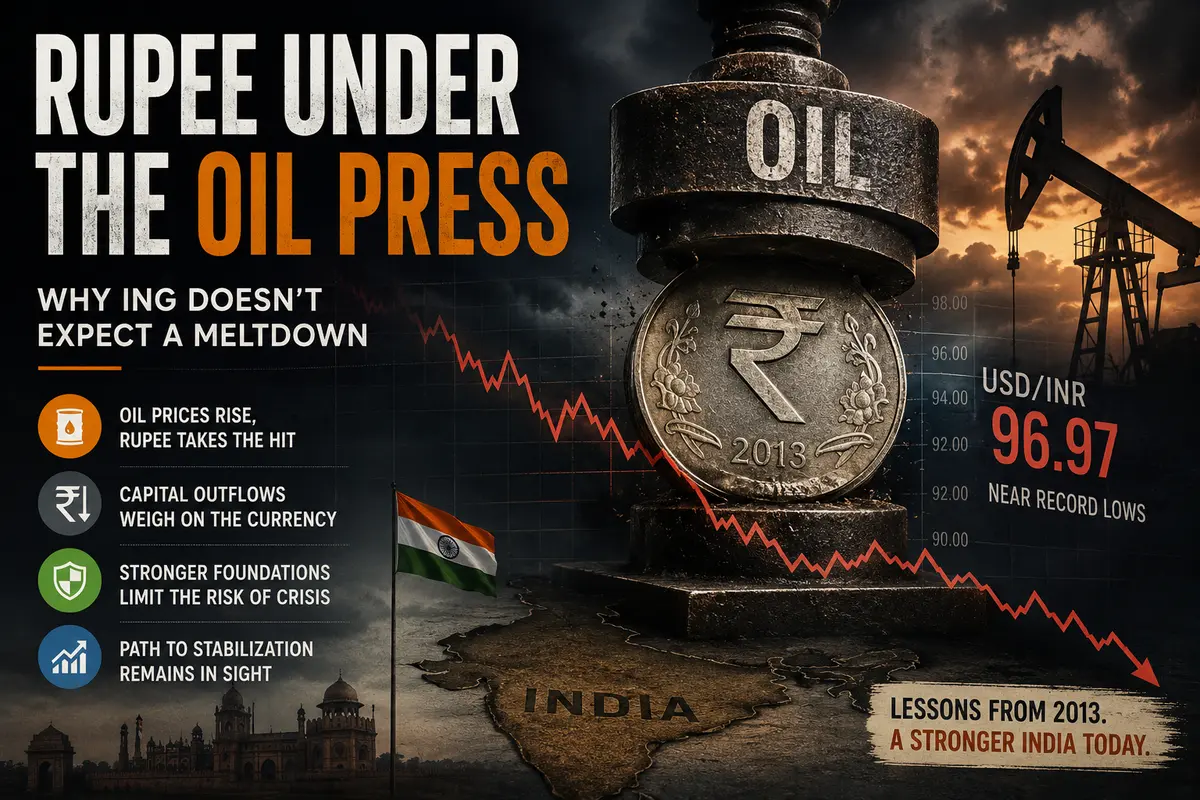
Rupee Under the Oil Press: Why ING Doesn’t Expect a Meltdown

Rupee Under the Oil Press: Why ING Doesn’t Expect a Meltdown

In recent weeks, the Indian rupee has looked like a punching bag—hitting seven consecutive record lows, slipping close to 97 per dollar, and triggering waves of panic headlines in the local press. But if we step back from the day-to-day volatility and look at the broader picture, a more nuanced—and surprisingly less alarming—reality emerges.

ING analysts have examined the rupee's situation under a microscope and reached a clear conclusion: yes, the currency is likely to remain under pressure as long as oil prices stay elevated. However, the risk of a disorderly collapse—the kind that forces central banks into emergency rate hikes and sends the IMF scrambling to prepare rescue packages—appears limited. India has come a long way since 2013 and now stands on a much stronger foundation.

Oil Shock: Why It Hurts Less Than Before

Back in 2013, when the Federal Reserve merely hinted at reducing monetary stimulus, the rupee plunged and India found itself on the brink of a balance-of-payments crisis. At the time, the current account deficit had reached nearly 5% of GDP, foreign exchange reserves were thin, and the country's dependence on oil imports seemed like a structural vulnerability.

Today, the picture is very different. ING expects India's current account deficit to widen to around 2.1% of GDP in 2026. For comparison, it was roughly 0.5% last year. The increase is driven almost entirely by higher oil prices. India still imports more than 80% of the crude oil it consumes, and when oil becomes more expensive, the import bill inevitably swells.

But a deficit of just over 2% of GDP is not the same as 5%. It remains a manageable level that does not threaten macroeconomic stability. Why? Because India has diversified its sources of energy supply. Whereas the country once depended heavily on a small group...

Continue reading...
0
0
Navigation menu