Bar Pipa
We pay for a post of 10$

S&P 500

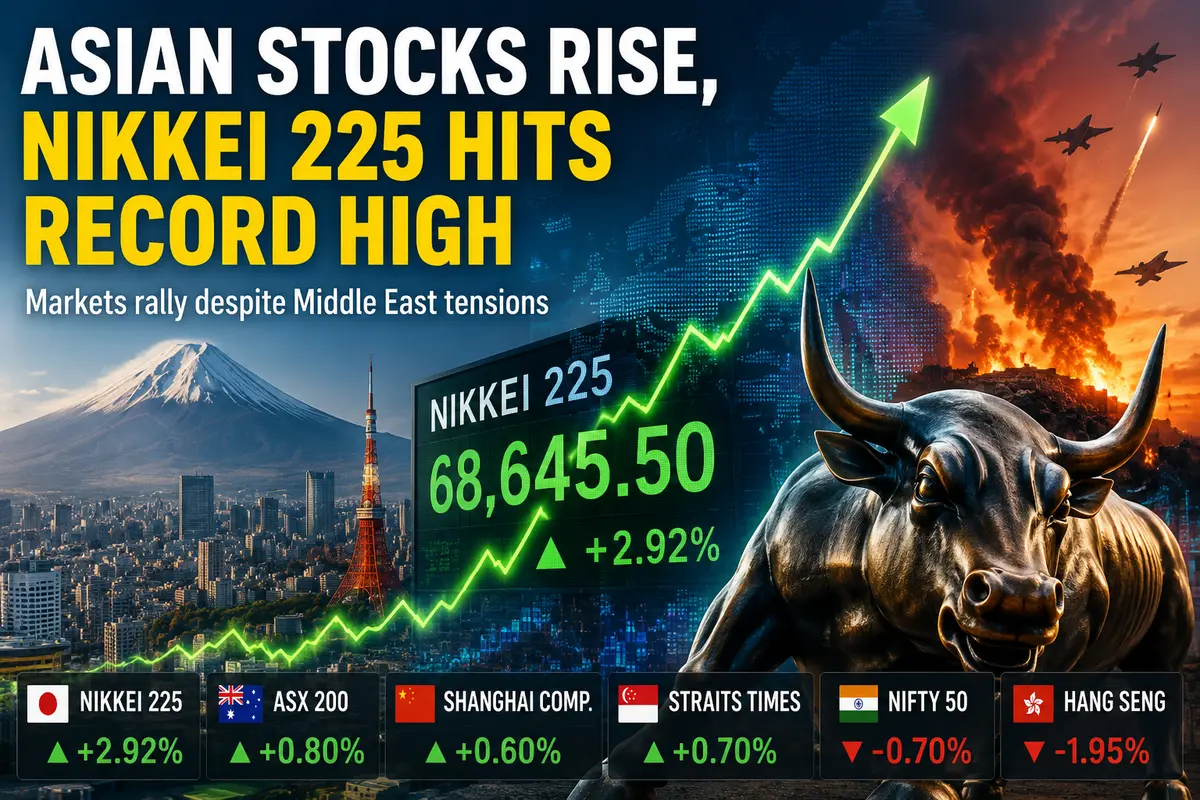
Asian Stocks Rise as Nikkei 225 Hits a Record High
Asian Stocks Rise as Nikkei 225 Hits a Record High
A Morning That Began With a Surge

Asian stock markets delivered a pleasant surprise on Wednesday, staging a remarkable rally despite a global backdrop that offered little reason for optimism. The Middle East remained engulfed in conflict. Iran and the United States exchanged airstrikes for the third time in a week. Oil prices climbed. Diplomatic negotiations stalled. Diplomats stayed silent while military forces took action.

Under such circumstances, most markets would be expected to fall—or at least pause in anxious anticipation. But Asian markets ignored the script. They rose. And not just modestly: Japan’s Nikkei 225 surged to an all-time record high, surpassing a milestone many believed was unattainable after three decades of economic stagnation.

What happened? Have investors stopped worrying? Or are they seeing something that analysts obsessed with geopolitics are missing?

As is often the case, the answer is more complicated. On Wednesday, Asia demonstrated a remarkable ability to tune out negative headlines and focus on the factors working in its favor. And there are plenty of them: a technology boom, government stimulus measures, and weak economic data that paradoxically reinforce expectations for accommodative monetary policy. Together, these factors created a cocktail strong enough to outweigh fears of escalating military conflict.

Japan: Thirty Years Later

The star of the day was Japan’s Nikkei 225. The index climbed nearly 3% to reach 68,645.5 points—an all-time high in its history dating back to 1950.

To appreciate the significance of this achievement, it helps to remember where Japan stood three decades ago. In 1990, the Nikkei collapsed following the bursting of the country’s asset bubble. Since then, despite periods of recovery and decline, the peak reached in 1989 had seemed permanently out of reach.

Now, a new record has been set.

The Nikkei was not alone in its triumph. The broader...

Continue reading...
0
0

U.S. Futures Hold Steady After Record Highs Amid Rising Tensions With Iran

U.S. Futures Hold Steady After Record Highs Amid Rising Tensions With Iran
When Records Meet Rockets

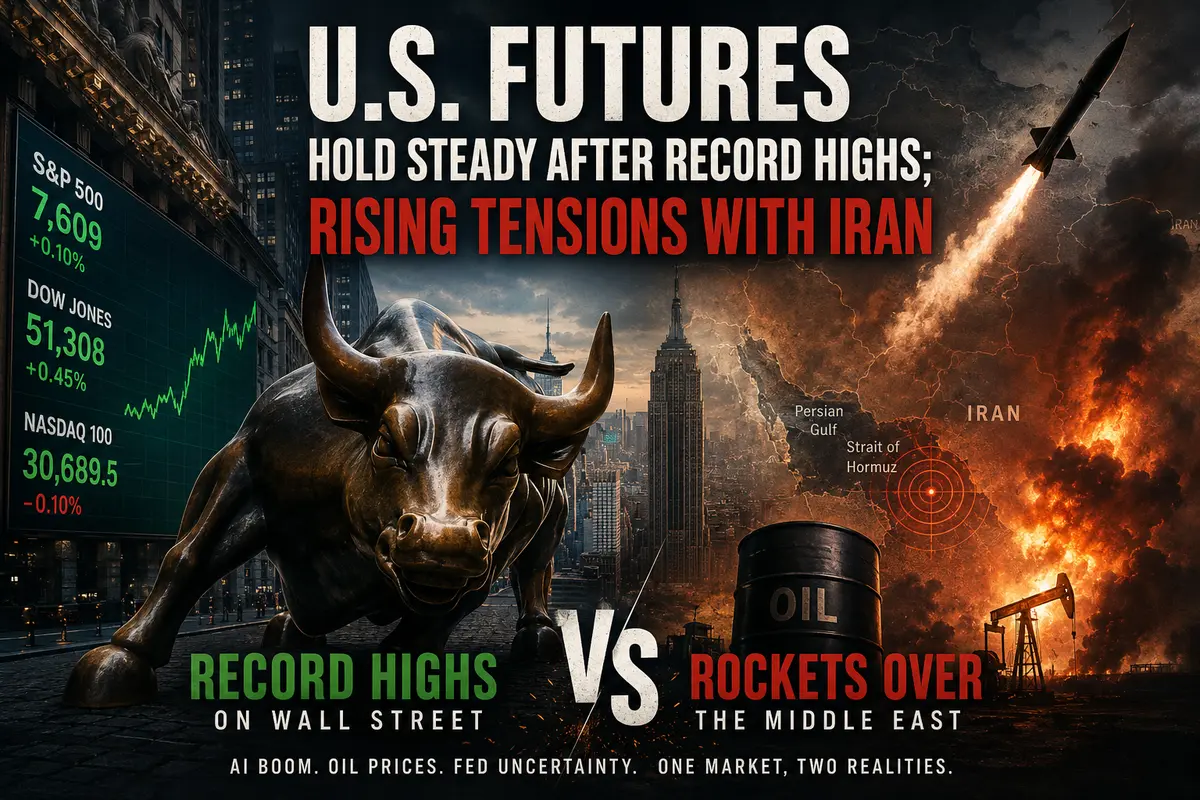
Tuesday evening brought a nervous mood to the U.S. market. Not because investors were panicking. Quite the opposite — everyone seemed frozen in place. Futures on the major Wall Street indexes settled into a strange state of calm: the S&P 500 was virtually unchanged, the Dow Jones Industrial Average stood still, and the Nasdaq 100 edged slightly lower, slipping by just one-tenth of a percent. At 30,689.5 points, Nasdaq futures looked impressive on paper — but the number carried an undertone of unease.

That unease has a name: Iran.

A country that has dominated global headlines in recent weeks once again commanded attention — not through words, but through actions. New airstrikes against neighboring targets marked the third such incident in a week. The United States responded, and now the financial world is holding its breath, watching the Middle East and asking a crucial question: is this merely another chapter in a long-running confrontation, or the beginning of something far larger and more dangerous?

The paradox of the day is that only hours before these developments, Wall Street was celebrating. Major indexes had reached fresh all-time highs. The S&P 500 climbed to 7,609 points. The Dow Jones crossed the 51,000 mark. The Nasdaq advanced as well. Technology stocks — especially semiconductor manufacturers — staged a remarkable rally. Against that backdrop of optimism came news of missile strikes and stalled negotiations.

The market suddenly found itself caught between two powerful forces. On one side stood enthusiasm for artificial intelligence, record profits from technology giants, and the belief that a prosperous future has already arrived. On the other stood geopolitical turmoil, the threat of disruptions in the Strait of Hormuz, rising oil prices, and the prospect of renewed inflation that few had anticipated.

In the face of these...

Continue reading...
0
0
NorthRay

Indices: How I Bought 500 Companies with One Click (and Why I Liked It)

Indices: How I Bought 500 Companies with One Click (and Why I Liked It)

Hi, this is NorthRay.🆕

Remember when I told you I wanted to buy Apple but couldn't because the market was closed?

Then I opened a trade on the SPX (the S&P 500 index). It closed with a small profit.

And that got me hooked.

Because there's something almost magical about indices. You buy one thing—and instantly get exposure to hundreds of companies. You don't have to guess whether Apple will soar or Tesla will fall. You're simply betting on the entire U.S. economy.

Spoiler: I liked it.

Today I'll explain what indices are, how they work, and why I now watch them almost as often as EUR/USD.

What Is an Index? (The Simple Explanation)

An index is a basket of stocks.

Instead of buying 500 individual stocks, you buy one instrument—the index—and it moves according to the average performance of the companies inside it.

Here's a simple analogy:

Imagine you're a teacher. You don't need to know how every student performed on an exam. You only need to know the class average.

If the average score is high, the class did well. If it's low, the class struggled.

An index is basically the average score of a group of companies.

Some companies inside the index may be rising while others are falling. The index shows the overall result.📉

The Most Important Indices in the World

There aren't that many. I learned five of them, and that's enough to get started.

Why Indices Are More Convenient Than Individual Stocks

I've traded both individual stocks (Apple) and indices (S&P 500). Here's what I've learned.

1. Less Stress

A single company can drop 10–20% because of one bad news story: a management scandal, a failed product launch, or a lawsuit.

An index made up of 500 companies is less likely to suffer such...

Continue reading...
0
0

Silence at the Summit: Wall Street Pauses Between Peace and Inflation

Silence at the Summit: Wall Street Pauses Between Peace and Inflation

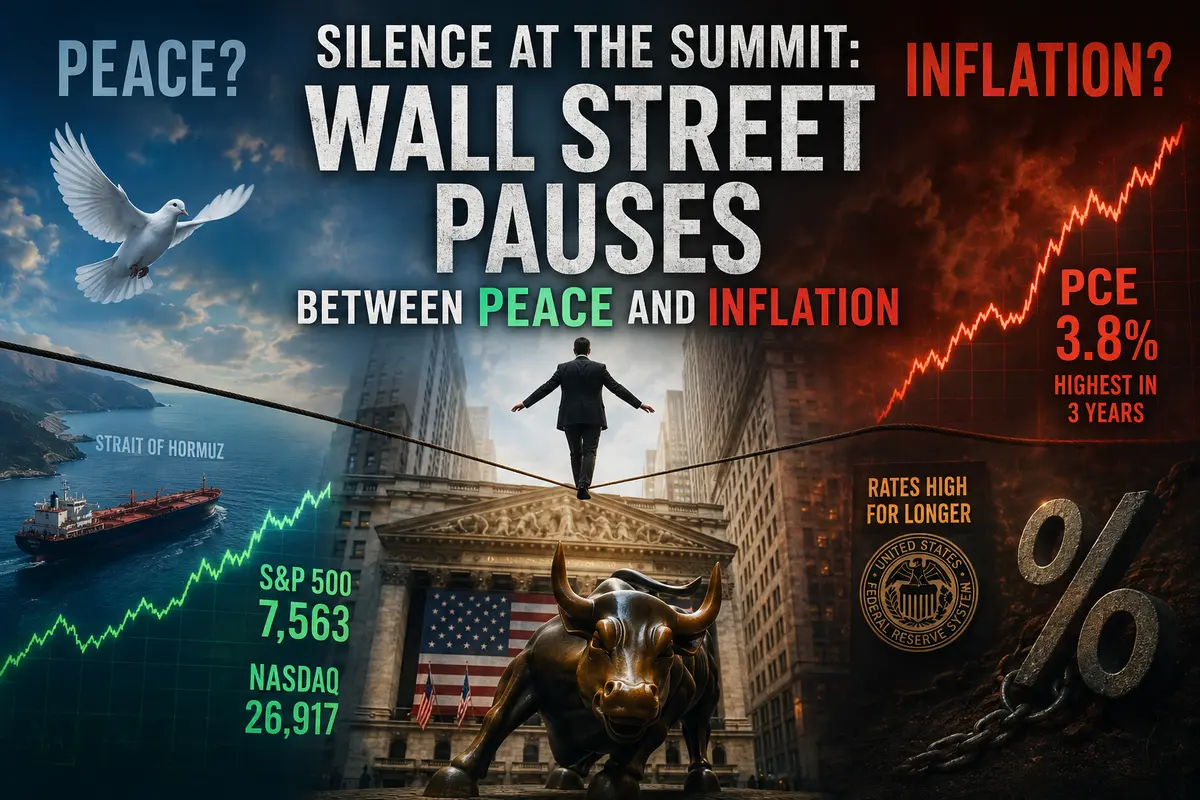
Thursday evening on the U.S. stock market was marked by a wait-and-see mood. S&P 500 futures gained a symbolic 0.1%, while the Nasdaq and Dow Jones remained virtually unchanged. This stillness may seem dull on the surface, but it conceals enormous tension. The market has just closed at record highs for the second consecutive session. The S&P 500 reached 7,563 points, while the NASDAQ Composite surged to 26,917. Such milestones are usually celebrated, yet traders are in no hurry to pop champagne today. They are waiting. Waiting to see whether the ceasefire with Iran holds. Waiting for what Trump will say. Waiting for inflation to finally begin easing. And in that waiting lies the essence of the current market environment.

Ceasefire on the Horizon: The Market Wants to Believe

The main catalyst behind the rally that pushed indexes to record highs was reports that the United States and Iran had reached a preliminary agreement to extend the ceasefire for sixty days. Axios reported that the deal includes reopening the Strait of Hormuz, which would represent a major breakthrough after months of conflict. The market reacted immediately and enthusiastically. Oil prices moved lower, while equities moved higher.

The logic behind the move is straightforward. Reopening the strait means restoring oil supplies. Restored supplies mean lower energy prices. Lower energy prices mean reduced inflationary pressure. Reduced inflation means the Federal Reserve may not need to continue tightening policy—or could even begin considering easing. And easier monetary policy is a favorable environment for equities, especially technology stocks, whose future earnings are discounted at lower rates.

Yet the market is experienced enough to understand that a wide gap exists between a preliminary agreement and lasting peace. The proposed deal still requires President Trump’s approval. Trump is known for unexpected policy shifts. Meanwhile, Iranian media...

Continue reading...
0
0

Bulls Refuse to Surrender: Morgan Stanley Raises the Bar Again

Bulls Refuse to Surrender: Morgan Stanley Raises the Bar Again

While a large part of the market remains nervous about geopolitics, oil prices, and endless recession talk, Morgan Stanley continues to stick to its narrative. The bank views the U.S. stock market with a level of optimism that many may consider excessive, yet the logic behind it is remarkably coherent. The core thesis is that two powerful engines — strong corporate earnings and a resilient economy — are capable of driving the bull market forward without losing momentum.

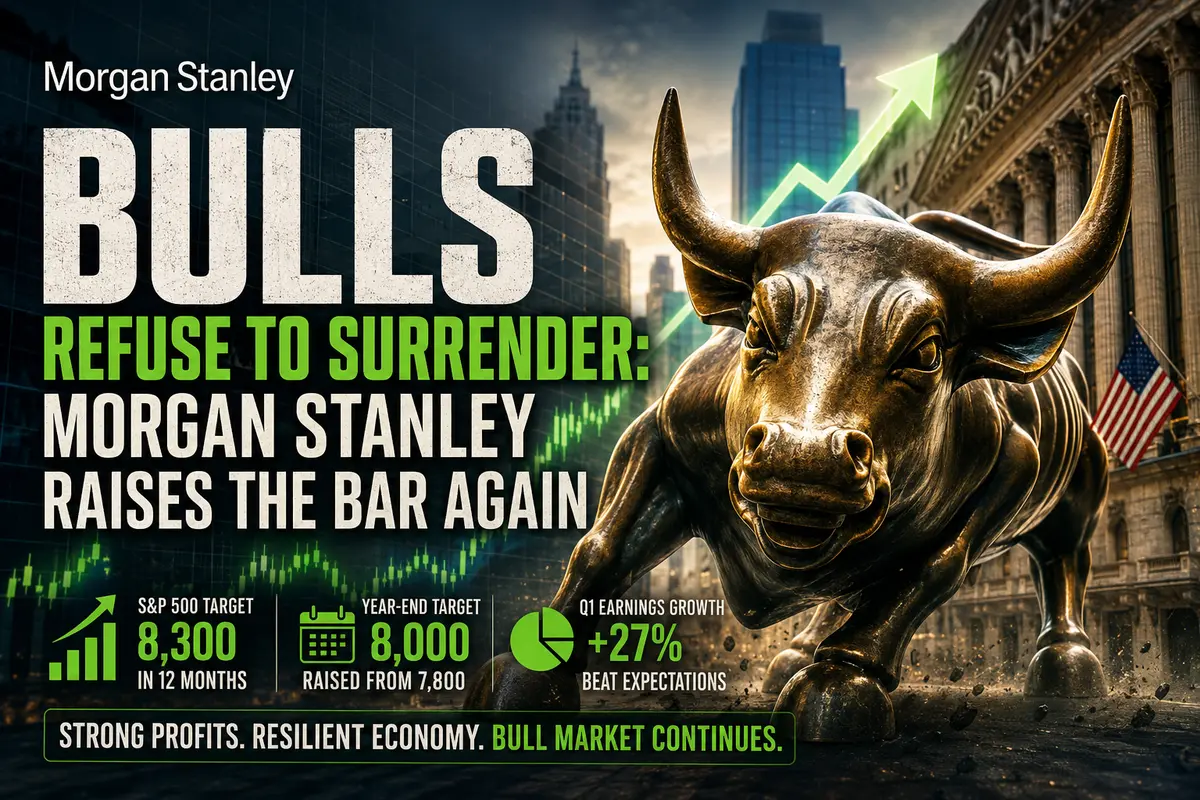
Bloomberg, citing the bank’s latest projections, reported some striking numbers. Over the next year, Morgan Stanley analysts believe the S&P 500 could climb to 8,300 points. From current levels, that implies roughly a twelve percent gain. Not bad for a market that already appears historically elevated. Even more interesting, however, is that Mike Wilson’s team simultaneously raised its year-end target from 7,800 to 8,000 points. In other words, the bank expects a meaningful acceleration in the coming months, not sometime in the distant future.

Earnings Season That Caught Everyone Off Guard

Why such confidence? The answer lies in what just happened during the latest U.S. earnings season. The first quarter turned out to be so strong that even hardened skeptics were forced to revise their expectations. Earnings for companies in the S&P 500 surged by twenty-seven percent. That is not merely a good result — it is more than double the modest twelve percent growth analysts had originally built into their models at the start of the reporting season.

A twenty-seven percent jump in profits is difficult to dismiss. It suggests that American businesses, despite all the noise surrounding trade wars, geopolitical crises, and expensive oil, continue to generate money with astonishing efficiency. Companies are not merely staying afloat — they are accelerating. And when that happens, the market gains a fundamental...

Continue reading...
0
0
Navigation menu