

Bar Pipa
We pay for a post of 10$
Microsoft Corporation

Microsoft Corporation

MSFT NASDAQ

$390.34
-1.86%

Key Statistics

Market Cap
$2.90 T
Volume
27,810,955
Open
$399.58
Day Range
386.97 - 401.00
52W Range
349.20 - 555.45
Price AVG 50
$400.32

About Microsoft Corporation

Microsoft Corporation is a prominent global technology firm that invents, markets, and provides ongoing assistance for a diverse range of software, digital services, computing devices, and comprehensive solutions. Its operations are organized into three primary divisions: Productivity and Business Processes, Intelligent Cloud, and More Personal Computing. The Productivity and Business Processes segment delivers crucial tools for both enterprises and individual users. This includes the extensive Office suite (comprising Exchange, SharePoint, Microsoft Teams, Office 365 Security and Compliance, Microsoft Viva, and Skype for Business), along with popular consumer offerings like Skype, Outlook.com, OneDrive, and LinkedIn. It also features Dynamics 365, a suite of integrated cloud and on-premises business applications tailored for organizations. The Intelligent Cloud division focuses on sophisticated infrastructure and platform services. Here, Microsoft licenses key products such as SQL Server, Windows Servers, Visual Studio, System Center, and associated Client Access Licenses. It also includes GitHub, a leading platform for developer collaboration and code hosting; Nuance, offering advanced AI solutions for healthcare and businesses; and Azure, its expansive cloud computing platform. This segment further encompasses enterprise support, Microsoft consulting services, and Nuance professional services, assisting clients with the development, deployment, and management of Microsoft's server and desktop technologies, alongside offering product training and certification. Finally, the More Personal Computing segment covers a broad spectrum of consumer and commercial computing experiences. It generates revenue through Windows operating system licensing, including agreements with original equipment manufacturers (OEMs), non-volume licensing, and various Windows Commercial offerings (such as volume licensing and cloud services), as well as patent licensing and Windows Internet of Things (IoT). This division also supplies its own hardware, including Surface devices, PC accessories, and gaming/entertainment consoles. Its Gaming portfolio features Xbox hardware, content, and subscription services, in addition to video games and royalties from third-party titles. Furthermore, it manages search services like Bing and Microsoft's advertising platforms. Microsoft distributes its extensive product line via numerous channels, including original equipment manufacturers, wholesale distributors, and various resellers, complementing direct sales through digital marketplaces, its own online storefronts, and physical retail outlets. The company, established in 1975, maintains its headquarters in Redmond, Washington.

Asset Type: Common Stock
Sector: Technology
Industry: Software - Infrastructure

Discussion

Authentication Required

You must be logged in to post a comment.

Lin Brings

The Vera Era: How Nvidia Is Rewriting the Rules of Performance and Cooling
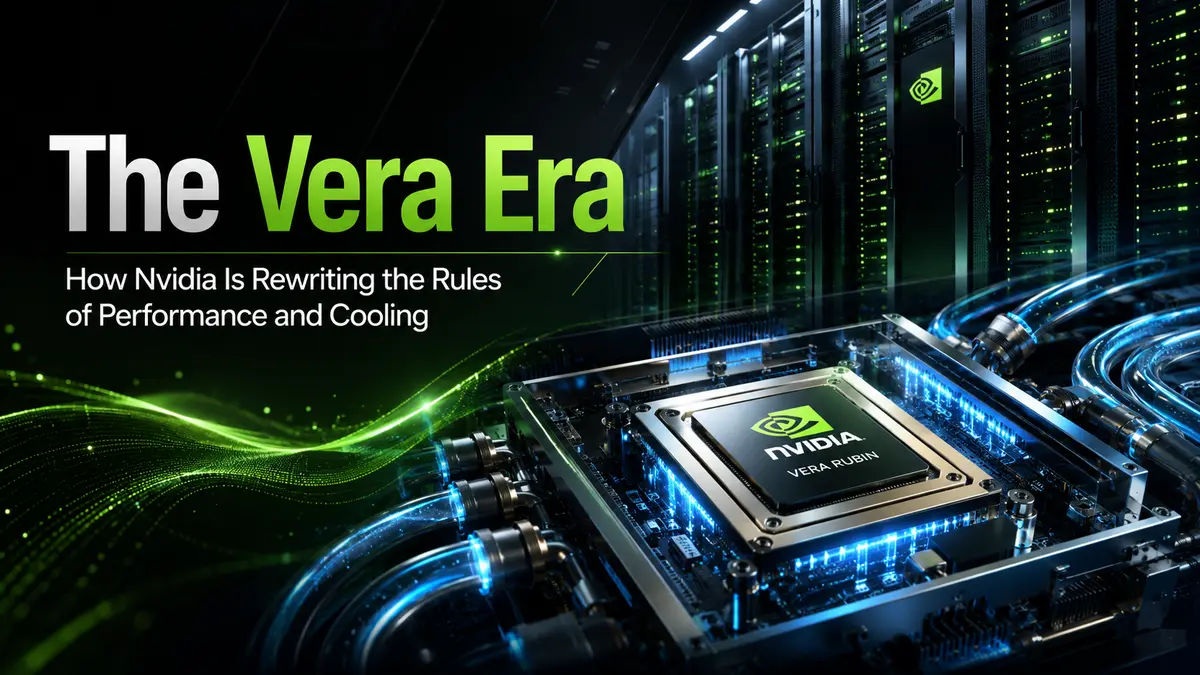
The Vera Era: How Nvidia Is Rewriting the Rules of Performance and Cooling

Numbers That Make You Think: 10X Performance per Megawatt

Whenever Nvidia announces a new platform, the world holds its breath. But when the company claims a tenfold increase in performance per megawatt, even the most seasoned analysts take off their glasses and clean them twice. On Tuesday, Nvidia did exactly that, officially unveiling the Vera Rubin platform, which is entering production with the support of more than 300 global partners operating across 350 manufacturing facilities in 30 countries. The scale is impressive, but the numbers are what truly make investors and engineers’ hearts beat faster.

Nvidia’s central claim sounds almost like science fiction: Vera Rubin NVL72 delivers ten times greater performance per megawatt than Grace Blackwell NVL72 when running one of the most demanding artificial intelligence models, DeepSeek-R1. These are not theoretical calculations or marketing slides, but real-world benchmark results published by CoreWeave, one of Nvidia’s key partners. When a company of this caliber confirms the figures, they deserve serious attention.

What does this mean in practice? It means that data centers, which now cost as much as small cities and consume as much electricity as mid-sized countries, could reduce their energy consumption by 90% while maintaining the same level of computing output. More importantly, they could increase computing capacity tenfold without upgrading their power supply or cooling infrastructure. In an era when every watt counts and electricity is becoming an increasingly scarce resource, this is not merely an improvement—it is a revolution.

Nvidia shares responded by rising 2%, closing Tuesday in positive territory amid a broader recovery in the semiconductor sector. That may appear modest, but after the recent sell-off, during which chipmakers’ shares fell sharply across the board, even a 2% gain looks like a confident step forward. The market is beginning to understand that Nvidia is not...


Continue reading...
0
0

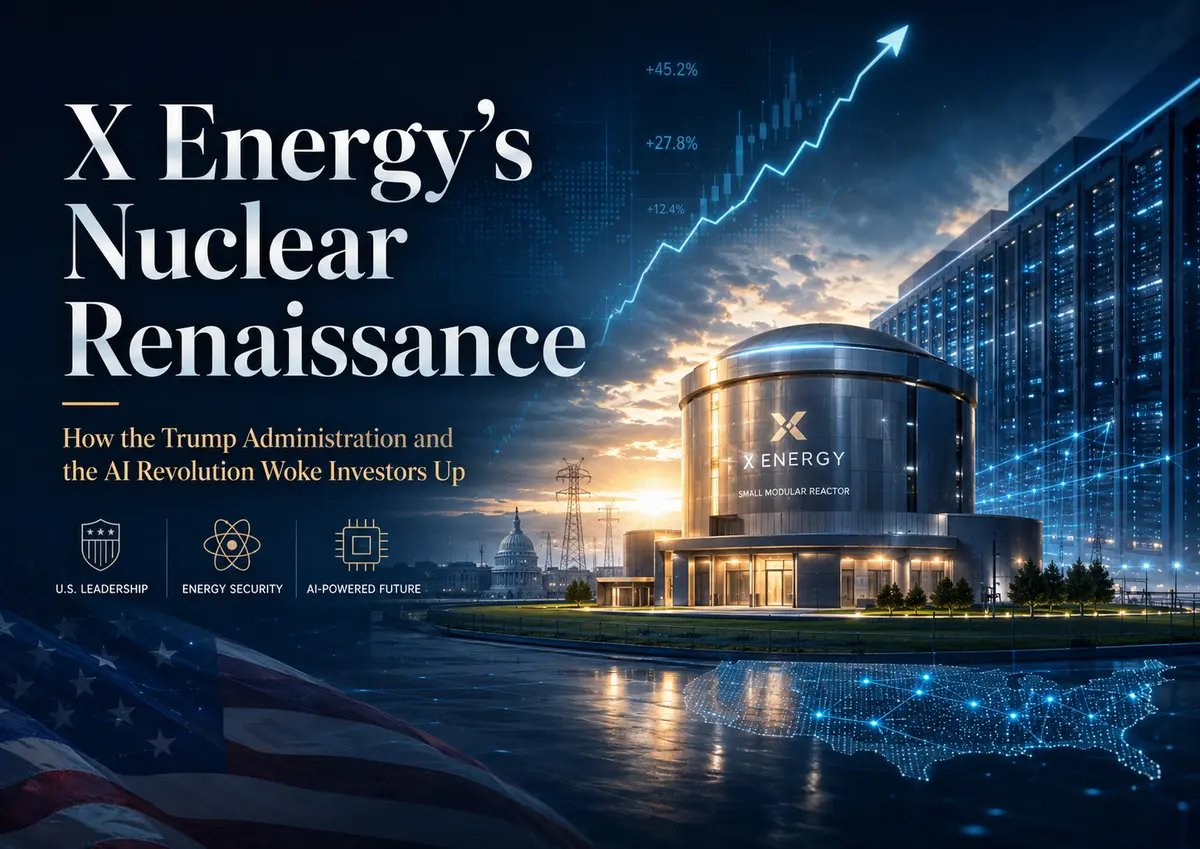
X Energy’s Nuclear Renaissance: How the Trump Administration and the AI Revolution Woke Investors Up

X Energy’s Nuclear Renaissance: How the Trump Administration and the AI Revolution Woke Investors Up

After-Hours Momentum: A 4.8% Gain in Just a Few Hours of Trading

When the closing bell rang on Wall Street on Tuesday evening, most investors had already turned their attention to the next day’s coffee and market charts. For X Energy shareholders, however, the evening marked the beginning of a genuine celebration. The company’s shares surged 4.8% in after-hours trading, and the move was far from a random spike. It was driven by news that could reshape the future not only of the company itself but of the entire US energy industry.

Citing people familiar with the matter, Bloomberg reported that X Energy had become part of a major $200 million federal initiative personally backed by the Trump administration. The program, which the US Department of Energy was preparing to officially unveil, is designed to dramatically accelerate the development of next-generation nuclear reactors.

The purpose of this race is not simply to produce environmentally friendly electricity and satisfy green-energy targets. The reality is both more practical and more ambitious: nuclear reactors are needed to power artificial intelligence data centers, which consume electricity like hungry monsters.

The development came as a complete surprise to many analysts. Although X Energy had long appeared on lists of promising developers of small modular reactors, its shares had not recorded significant growth in recent months. Now, however, the situation has changed dramatically. The government is extending a helping hand, while Microsoft and Nvidia are reportedly among the initiative’s participants.

X Energy is no longer merely an ambitious technology startup. It is becoming a key component of the United States’ national strategy for artificial intelligence and energy security.

Why Artificial Intelligence Needs Nuclear Energy More Than Ever

To understand why the news generated so much excitement, it is necessary to look at the heart of the...

Continue reading...
0
0
Anton Algo
Anton Algo 2 days ago
MSFT WOOOW 💹
Big Pip

Understanding the Role of a Financial Trader

Understanding the Role of a Financial Trader

A trader is a highly specialized market participant who actively buys and sells financial instruments within the global financial markets to generate a profit. Unlike passive market participants, traders thrive on movement, capitalizing on the constant price fluctuations that occur every second across international exchanges.

Operating at the very heart of the global economy, traders can work independently from a home office as retail traders, or they can be employed by massive financial institutions — such as Wall Street investment banks (e.g., Goldman Sachs, Morgan Stanley), global hedge funds (like Citadel or Bridgewater Associates), and proprietary trading firms.

By constantly executing buy and sell orders, traders provide the essential liquidity that keeps global markets functioning smoothly. They ensure that when a pension fund wants to offload a massive block of shares, or a multinational corporation needs to hedge its currency exposure, there is someone on the other side of the trade willing to take the risk.

The Arsenal of a Modern Trader: Instruments and Strategies

Traders do not limit themselves to simply buying stocks. The global market offers a vast array of complex financial instruments, allowing traders to profit whether the broader economy is booming or crashing.

  • Equities (Stocks): Trading shares of global powerhouses like Apple AAPL ... , Tesla TSLA ... , or LVMH LVMHF ... , often attempting to capture intraday price movements driven by earnings reports or global news.

  • Derivatives (Options and Futures): These contracts allow traders to speculate on the future price of an asset without owning it. A trader might buy crude oil futures (like the West Texas Intermediate benchmark) or S&P 500 options to leverage their capital and amplify potential returns.

  • Foreign Exchange (Forex): The largest and most liquid market in the world, where traders speculate on currency pairs like the EUR/USD EURUSD ... or GBP/JPY GBPJPY ... ,...

Continue reading...
0
0
Big Pip

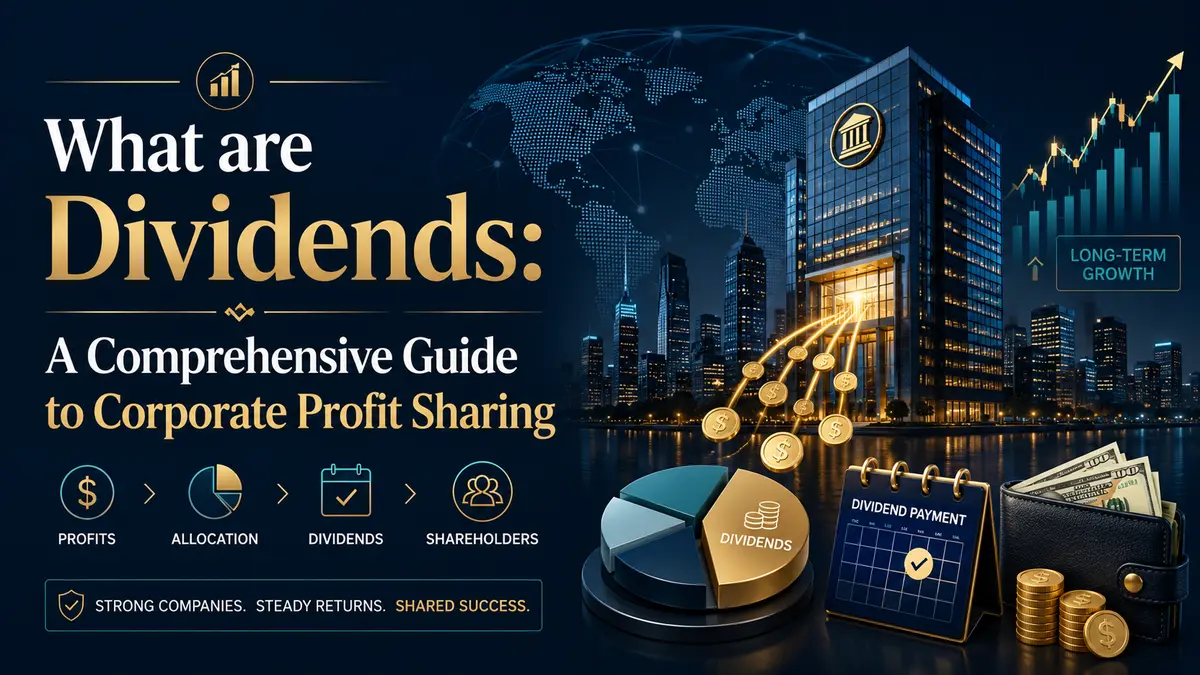
What are Dividends: A Comprehensive Guide to Corporate Profit Sharing

What are Dividends: A Comprehensive Guide to Corporate Profit Sharing

At its core, a dividend is a tangible reward for your financial trust. It is the portion of a company's net profit distributed to its shareholders as a return on their investment. When you buy shares in a publicly traded company, you become a fractional owner. If that company generates surplus cash, the board of directors must decide whether to reinvest that money back into the business or return a portion of it directly to you. When they choose the latter, they issue a dividend.

Understanding how dividends work, the different forms they take, and what they signal about a company’s financial health is essential for navigating the global stock market.

Types of Dividends: How Companies Reward Shareholders

Not all dividends are created equal. Depending on a company’s cash flow, strategic goals, and capital structure, it may choose to distribute wealth in several different ways.

Cash Dividends: The Traditional Payout

This is the most common and universally recognized form of profit sharing. The company simply deposits cash directly into shareholders' brokerage accounts.

Cash dividends provide a predictable stream of passive income, making them highly attractive to long-term investors and retirees. For example, global consumer giants like Coca-Cola COLA.NE ... and Johnson & Johnson JNJ ... have built their reputations on paying reliable, consistently growing cash dividends every quarter, regardless of broader economic volatility.

Stock Dividends: Growing Your Share Count

Instead of paying cash, a company may issue additional shares to its existing investors, distributed proportionally based on their current holdings. Also known as a "scrip dividend," this method allows a company to reward its shareholders while conserving its cash reserves for internal projects or debt reduction. While a stock dividend increases your total number of shares, it does not immediately increase the overall value of your investment, as the company’s total market...

Continue reading...

0
0
Big Pip

The Engine of Capital Markets: Understanding the Role of the Issuer

The Engine of Capital Markets: Understanding the Role of the Issuer

In the architecture of global finance, if capital is the lifeblood of the economy, the issuer is the beating heart that puts that capital to work. An issuer is a legal entity — which can range from a multinational corporation to a sovereign national government — that develops, registers, and sells securities to finance its operations.

Whether they are issuing equity (shares) to invite new co-owners or issuing debt (bonds and commercial paper) to borrow funds, the primary objective remains the same: raising capital. This influx of capital allows the issuer to execute ambitious business expansions, fund cutting-edge technological research, modernize infrastructure, or bridge national budget deficits. Without issuers, investors would have nowhere to deploy their wealth, and global economic growth would grind to a halt.

The Primary Categories of Global Issuers

The global financial market is vast, and the entities seeking capital are incredibly diverse. Depending on their legal structure and ultimate goals, issuers are generally classified into five distinct categories.

1. Corporate Issuers: Fueling Business Innovation

Corporate issuers are private and public companies that turn to the financial markets to fund their strategic objectives. When a private startup reaches a massive scale, it may issue shares to the public through an Initial Public Offering (IPO) on exchanges like the Nasdaq or the London Stock Exchange (LSE). By giving up a percentage of ownership, they secure billions in equity capital without the burden of paying interest. Alternatively, mature companies often issue corporate bonds. For example, even highly profitable companies like Apple AAPL ... or Microsoft MSFT ... regularly issue billions of dollars in corporate bonds. They do this because borrowing money at low institutional interest rates is often more tax-efficient and strategically advantageous than draining their own cash reserves to fund stock buybacks or global expansions.

2. Sovereign Issuers: Funding Nations

...

Continue reading...
0
0
Big Pip

Who is a Shareholder: Fundamentals of Corporate Ownership in the Global Economy

Who is a Shareholder: Fundamentals of Corporate Ownership in the Global Economy

When you purchase a stock in a company — whether it is a single share of a tech giant like Apple AAPL ... or a massive block of a consumer staple like Nestlé NSRGF ... — you are doing something much deeper than placing a financial bet. You are legally step-typing into the role of a co-owner.

A shareholder (often referred to as a stockholder) is an individual, corporation, or institution that legally owns at least one share of a company’s capital stock.

Collectively, shareholders are the bedrock of the modern capitalist economy. They provide the equity capital that businesses need to innovate, scale, and navigate global markets, and in return, they receive a claim on the company’s future prosperity.

Understanding the delicate balance of power, rights, and duties that define a shareholder is key to understanding how global corporations are governed and how wealth is generated on the world stage.

1. Shares: The Mechanics of Fractional Ownership

To fully appreciate what a shareholder is, we must first look at the financial instrument that binds them to the corporation: the share.

What Do Shares Actually Represent?

A share is a financial security that represents a fraction of ownership in a corporation. When a business incorporates, its total value is partitioned into millions — or sometimes billions — of tiny, equal pieces.

For instance, a company like Microsoft MSFT ... has billions of outstanding shares traded on the Nasdaq. When an investor buys Microsoft shares, they do not own the actual physical desks, servers, or patents of the company directly. Instead, they own a slice of the legal corporation itself, which in turn owns those assets.

This distinction is crucial because of limited liability — one of the most revolutionary concepts in economic history.

What is Limited Liability? If a public corporation goes bankrupt...

Continue reading...
0
0
Big Pip

Understanding the Investor: Roles, Strategies, Rights, and Responsibilities in Global Markets

Understanding the Investor: Roles, Strategies, Rights, and Responsibilities in Global Markets

An investor is an individual or an entity that allocates financial capital with the primary expectation of generating a future financial return. In essence, investors act as the lifeblood of the global capitalist economy. By committing funds to various assets, they provide the necessary liquidity and capital that businesses, startups, and governments need to innovate, scale, and build infrastructure.

The landscape of modern investing spans a massive spectrum of asset classes, from traditional equities and fixed-income securities to global real estate, venture capital, and digital assets. Regardless of their scale, all investors operate under a fundamental economic principle: balancing risk against potential reward.

1. The Spectrum of Investors: From Retail to Institutional Giants

Not all investors are created equal. The global financial markets are shaped by a diverse array of participants, each possessing distinct capital structures, regulatory boundaries, and investment objectives.

Retail Investors: The Power of the Individual

Retail investors are individual, non-professional market participants who invest their personal savings. Historically, retail investors were limited by high brokerage fees and information asymmetry. However, the digital revolution and the rise of zero-commission platforms like Charles Schwab, Robinhood, and eToro have democratized access to Wall Street, London, and Tokyo exchanges.

Retail investors often invest for personal milestones — such as retirement planning through accounts like a 404(b) or an IRA, funding education, or buying property.

While individual retail accounts may be small, their collective power can influence market sentiment and drive significant liquidity into popular consumer brands like Apple AAPL ... , Microsoft MSFT ... , or Nvidia NVDA ... .

Institutional Investors: The Heavyweights of Wall Street

Institutional investors are highly specialized organizations that pool massive amounts of capital from millions of individual clients or taxpayers to invest on a grand scale. Because they execute trades worth hundreds of millions of dollars, their market...

Continue reading...
0
0
Big Pip

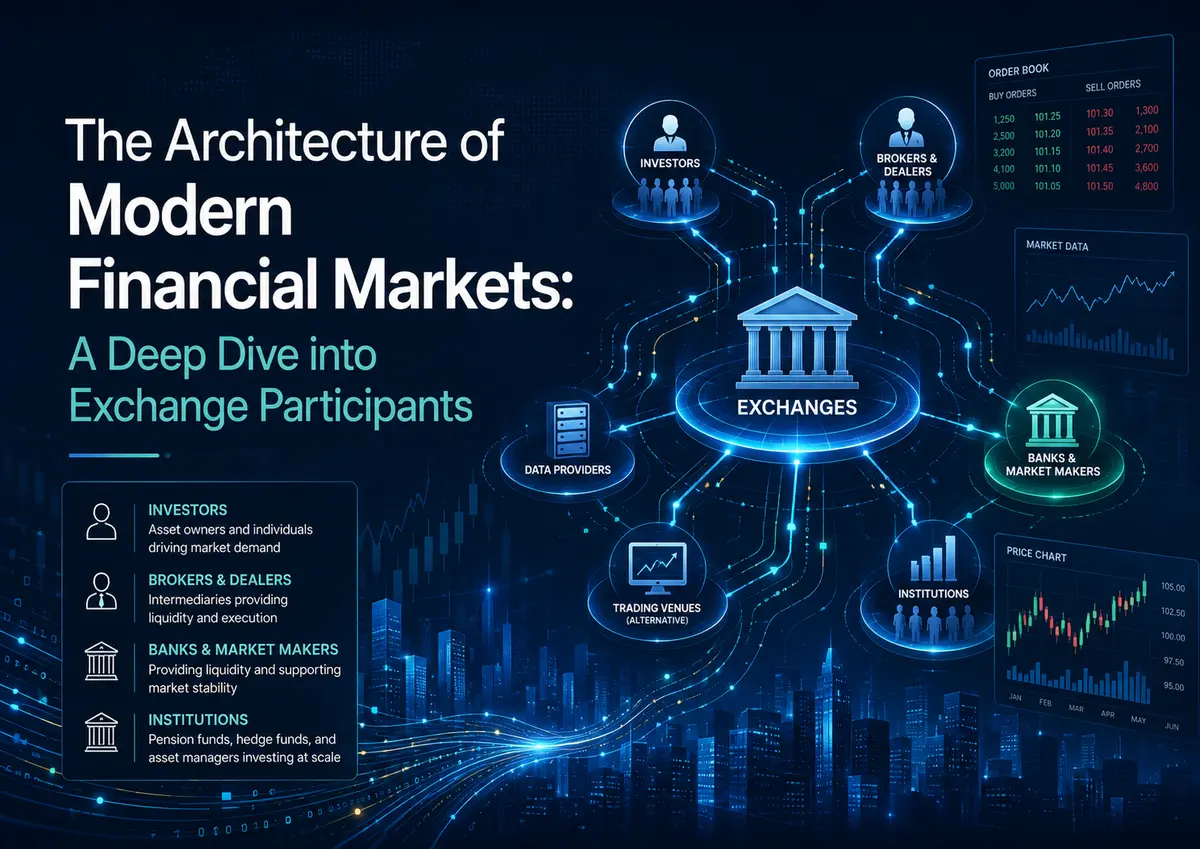
The Architecture of Modern Financial Markets: A Deep Dive into Exchange Participants

The Architecture of Modern Financial Markets: A Deep Dive into Exchange Participants

In its simplest terms, a financial exchange is not just a digital platform or a physical building in New York, London, or Tokyo. It is a highly regulated, living ecosystem where trillions of dollars change hands daily. For this ecosystem to function seamlessly, several distinct groups of participants must interact with one another.

Each player — from the individual trading on their smartphone to massive sovereign wealth funds — has a unique role, risk tolerance, and objective.

Understanding who these participants are and how they collaborate is the first step to understanding how the global economy allocates resources and prices risk.

1. Investors: The Providers of Capital

At the very heart of any exchange are the investors. These are the individuals and entities who supply the capital that fuels global business. Their primary objective is simple: to preserve and grow their wealth over time. However, their strategies, timelines, and scale vary drastically.

Retail Investors: The Democratization of Finance

Retail investors are individual, everyday people investing their personal savings. In the past, high brokerage fees and complex systems kept retail investors on the sidelines of global markets. Today, the rise of digital trading platforms like Robinhood in the US, eToro in Europe, and Tiger Brokers in Asia has democratized access to the markets.

Retail investors often focus on long-term wealth accumulation — such as saving for retirement or a child's education — though a subset engages in active daily trading. They typically invest in familiar global brands like AAPL ... , MSFT ... , or TSLA ... , and use user-friendly instruments like fractional shares (buying a portion of a high-priced stock).

Institutional Investors: The Market Heavyweights

Institutional investors are the massive organizations that pool money from millions of people to invest on a grand scale. Because of the sheer volume of capital they...

Continue reading...
0
0
Navigation menu
instaforex banner