

The Architecture of Modern Financial Markets: A Deep Dive into Exchange Participants
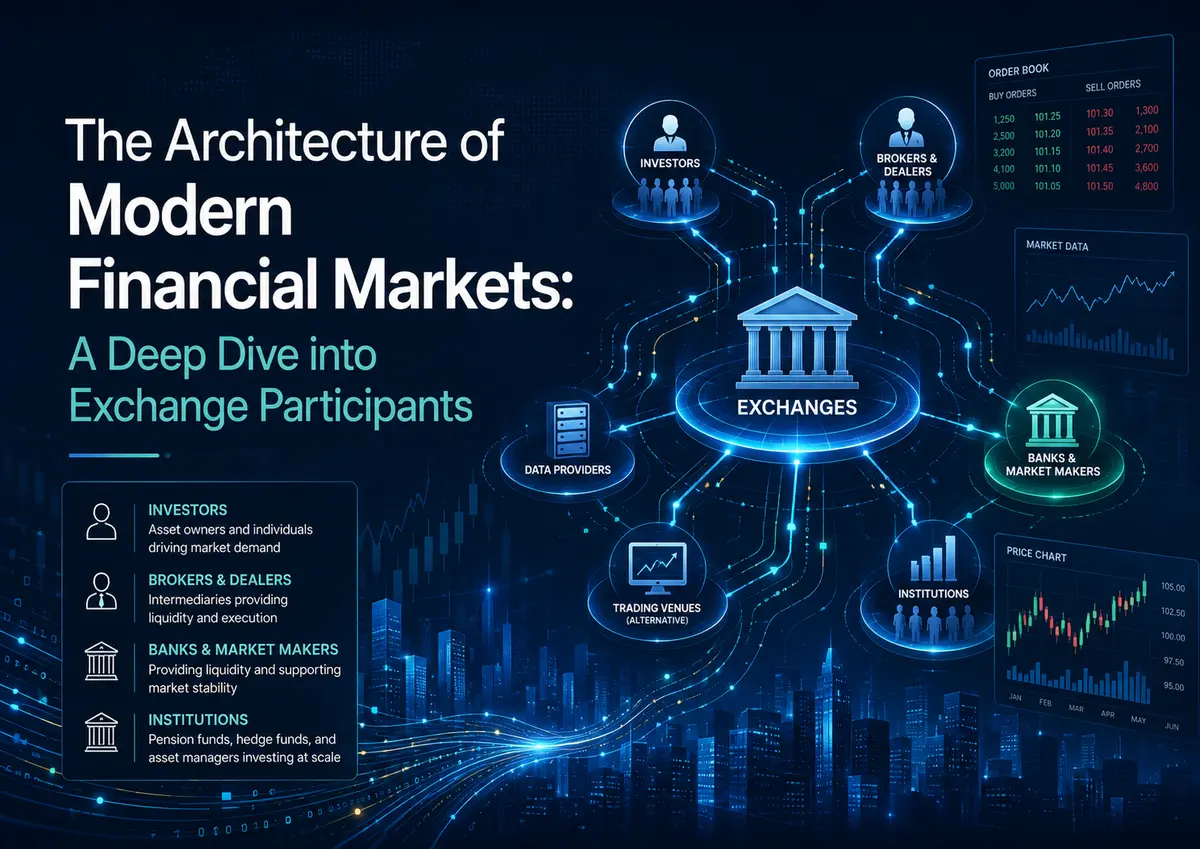
In its simplest terms, a financial exchange is not just a digital platform or a physical building in New York, London, or Tokyo. It is a highly regulated, living ecosystem where trillions of dollars change hands daily. For this ecosystem to function seamlessly, several distinct groups of participants must interact with one another.
Each player — from the individual trading on their smartphone to massive sovereign wealth funds — has a unique role, risk tolerance, and objective.
Understanding who these participants are and how they collaborate is the first step to understanding how the global economy allocates resources and prices risk.
1. Investors: The Providers of Capital
At the very heart of any exchange are the investors. These are the individuals and entities who supply the capital that fuels global business. Their primary objective is simple: to preserve and grow their wealth over time. However, their strategies, timelines, and scale vary drastically.
Retail Investors: The Democratization of Finance
Retail investors are individual, everyday people investing their personal savings. In the past, high brokerage fees and complex systems kept retail investors on the sidelines of global markets. Today, the rise of digital trading platforms like Robinhood in the US, eToro in Europe, and Tiger Brokers in Asia has democratized access to the markets.
Retail investors often focus on long-term wealth accumulation — such as saving for retirement or a child's education — though a subset engages in active daily trading. They typically invest in familiar global brands like AAPL ... , MSFT ... , or TSLA ... , and use user-friendly instruments like fractional shares (buying a portion of a high-priced stock).
Institutional Investors: The Market Heavyweights
Institutional investors are the massive organizations that pool money from millions of people to invest on a grand scale. Because of the sheer volume of capital they...