Bar Pipa
We pay for a post of 10$

Investors

X Energy’s Nuclear Renaissance: How the Trump Administration and the AI Revolution Woke Investors Up

X Energy’s Nuclear Renaissance: How the Trump Administration and the AI Revolution Woke Investors Up

After-Hours Momentum: A 4.8% Gain in Just a Few Hours of Trading

When the closing bell rang on Wall Street on Tuesday evening, most investors had already turned their attention to the next day’s coffee and market charts. For X Energy shareholders, however, the evening marked the beginning of a genuine celebration. The company’s shares surged 4.8% in after-hours trading, and the move was far from a random spike. It was driven by news that could reshape the future not only of the company itself but of the entire US energy industry.

Citing people familiar with the matter, Bloomberg reported that X Energy had become part of a major $200 million federal initiative personally backed by the Trump administration. The program, which the US Department of Energy was preparing to officially unveil, is designed to dramatically accelerate the development of next-generation nuclear reactors.

The purpose of this race is not simply to produce environmentally friendly electricity and satisfy green-energy targets. The reality is both more practical and more ambitious: nuclear reactors are needed to power artificial intelligence data centers, which consume electricity like hungry monsters.

The development came as a complete surprise to many analysts. Although X Energy had long appeared on lists of promising developers of small modular reactors, its shares had not recorded significant growth in recent months. Now, however, the situation has changed dramatically. The government is extending a helping hand, while Microsoft and Nvidia are reportedly among the initiative’s participants.

X Energy is no longer merely an ambitious technology startup. It is becoming a key component of the United States’ national strategy for artificial intelligence and energy security.

Why Artificial Intelligence Needs Nuclear Energy More Than Ever

To understand why the news generated so much excitement, it is necessary to look at the heart of the...


Continue reading...
0
0

Swedbank Reports: Profit Falls, but the Market Is Not Disappointed

Swedbank Reports: Profit Falls, but the Market Is Not Disappointed

Friday’s Report: The Numbers That Surprised Investors

Swedish banking giant Swedbank SWDBF ... released its second-quarter results on Friday, presenting a classic case of “good bad news.” Net profit fell by 9% compared with the previous year, reaching SEK 7.20 billion, equivalent to approximately $750 million.

At first glance, the decline may appear concerning. However, as is often the case, the market looked beyond the headline figure—and investors liked what they saw.

The bank exceeded analysts’ expectations. The Visible Alpha consensus forecast cited by Jefferies analysts had anticipated slightly weaker results. Swedbank’s net profit came in 1% above expectations, while its pre-provision operating profit also exceeded the forecast by 1%. In banking analysis, where every tenth of a percentage point matters, such results are considered a success.

Profit before tax declined by 9% to SEK 9.15 billion. Once again, this was a decrease, but it had been expected. What mattered more was how the bank generated its revenue rather than how much it spent—and its revenue performance was relatively strong.

Revenue Is Growing, but Expenses Disappointed

Swedbank’s total revenue increased by 7% year over year, reaching SEK 18.10 billion. This represents solid growth, particularly at a time when many European banks are struggling with stagnation. What helped the bank increase its revenue?

The main contributor was fee and commission income. The bank earned more from customer services, advisory activities, and asset management. Another important factor was income from trading operations. Market volatility, which often worries investors, became an additional source of revenue for Swedbank’s trading divisions.

Net interest income also increased, although only moderately. This means that the bank earned slightly more from the difference between the interest charged on loans and the interest paid on deposits. However, growth in this area was less impressive than the increase in fee and...

Continue reading...
0
0

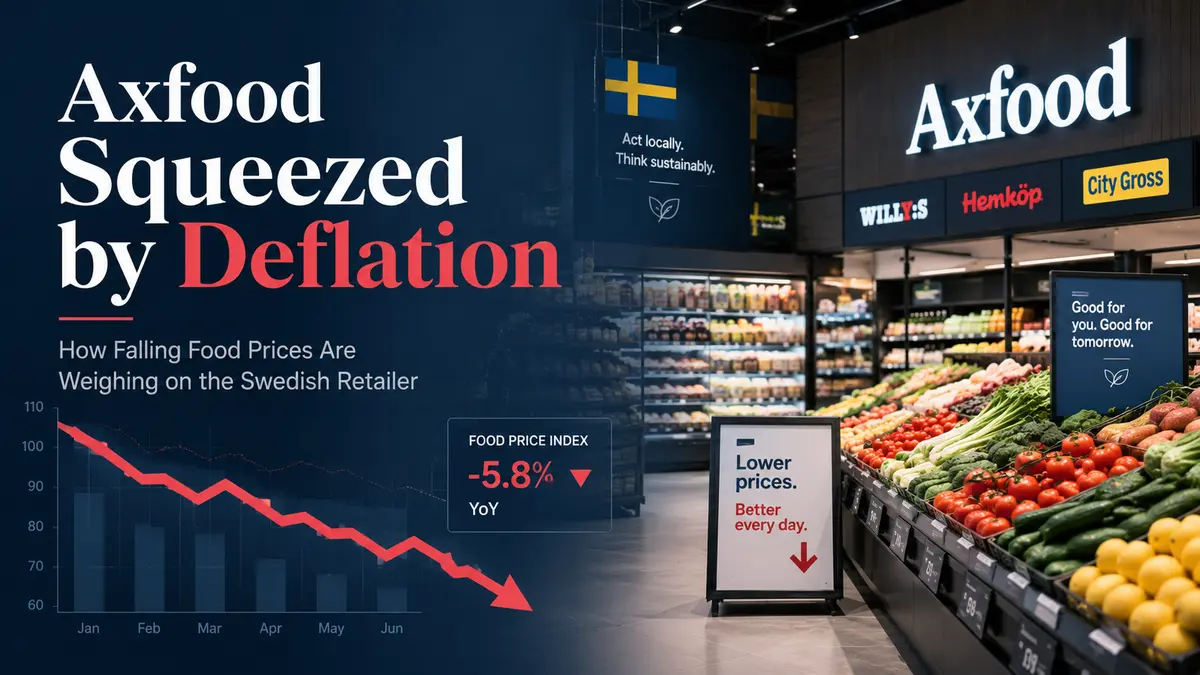
Axfood Squeezed by Deflation: How Falling Food Prices Are Weighing on the Swedish Retailer

Axfood Squeezed by Deflation: How Falling Food Prices Are Weighing on the Swedish Retailer

Introduction: When Deflation Becomes a Problem

The second quarter of 2026 was a disappointing period for Swedish grocery retailer Axfood AXFOF ... . The company reported revenue of SEK 23.2 billion SEKUSD ... , an increase of 0.9% compared with the previous year, but below analysts’ expectations. Operating profit also fell short of forecasts, reaching SEK 964 million.

The main reason was food price deflation, which put pressure on the company’s growth. While many businesses struggle with inflation, Axfood has encountered the opposite problem: falling food prices are reducing revenue and profit margins. Calendar effects also played a role, creating additional pressure.

However, the situation is not entirely negative. The Hemköp supermarket chain recorded growth of 7.4% and increased its market share. The company also reaffirmed its intention to bring the City Gross chain to profitability in the second half of 2026. In this article, we will examine the key factors affecting Axfood, assess its prospects, and explore how the company plans to address these challenges.

Financial Performance: Disappointing Figures

Revenue Below Forecasts

Axfood’s revenue for the second quarter amounted to SEK 23.2 billion, representing an increase of 0.9% compared with the previous year. However, analysts had expected SEK 23.67 billion, and the SEK 470 million shortfall was a significant disappointment.

Revenue growth of only 0.9% is minimal and indicates that the company is experiencing difficulties in expanding its sales.

Operating Profit Falls Short of Expectations

Operating profit amounted to SEK 964 million, below the analysts’ forecast of SEK 1.008 billion. The EBIT margin stood at 4.20%, which was also lower than expected.

The decline in operating profit reflects pressure from deflation and rising costs.

Net Profit and Earnings per Share

Net profit for the quarter amounted to SEK 647 million, while adjusted earnings per share came to SEK 2.94. Both figures...

Continue reading...
0
0
Tom Maffin

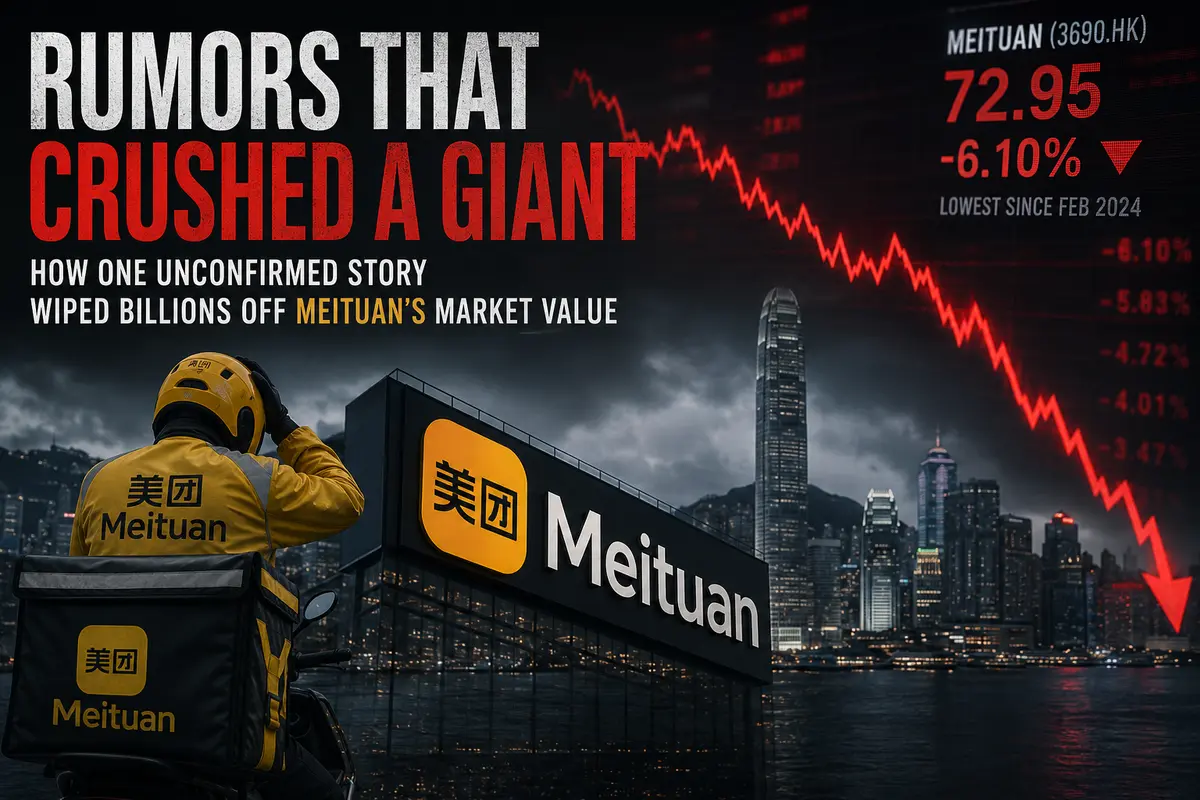
Rumors That Crushed a Giant: How One Unconfirmed Story Wiped Billions Off Meituan’s Market Value

Rumors That Crushed a Giant: How One Unconfirmed Story Wiped Billions Off Meituan’s Market Value

Hong Kong’s stock market witnessed a classic example on Thursday of how fear and uncertainty can outweigh fundamentals. Shares of Meituan, the Chinese food delivery giant, plunged 6.1%, falling to HK$72.95 — the company’s lowest level since February 2024. A business once considered one of the pillars of China’s tech sector lost billions of dollars in market capitalization in a single trading session. And all because of rumors. Rumors that were officially denied, yet still caused damage comparable to a real corporate crisis.

Anatomy of the Panic: What Happened

On Thursday morning, reports began circulating across Chinese social media and among market participants claiming that Meituan was planning massive layoffs. According to the rumors, up to 50% of employees in certain product-related positions could be cut. For a company aggressively expanding its grocery delivery operations and competing with giants like JD.com and Alibaba, the news hit the market like a bolt from the blue.

Meituan employees quickly denied the reports. They called the information false and pointed out that the company’s 2026 campus recruitment program was continuing as planned. Moreover, the company is still actively hiring specialists in technology, product development, and operations. In theory, the denial should have calmed investors. It did not. The stock continued to slide.

Why? Because in today’s atmosphere surrounding China’s tech sector, investors prefer to sell first and ask questions later. Over the past few years, they have repeatedly been burned by sudden regulatory crackdowns, abrupt strategy shifts, and real layoffs that initially appeared as “just rumors.” The market has developed a defensive reflex: if there are reports of trouble, dump the stock immediately before it’s too late.

Competition Is Suffocating the Industry

Still, it would be unfair to blame Meituan’s decline entirely on rumors. The rumors were merely the spark; the powder keg...

Continue reading...
0
0
John Madnes

Metals Market Today: Investors Move Into Gold While Industrial Metals Wait for Signals From China

Metals Market Today: Investors Move Into Gold While Industrial Metals Wait for Signals From China

The global metals market is entering the middle of May with investors still unsure about where the economy goes next. After months of sharp swings across commodities and financial markets, traders are becoming more selective. Money is flowing back into safer assets like gold, while industrial metals are struggling to regain momentum.

Right now, everything comes down to a few major questions: Will the Federal Reserve finally start cutting interest rates? Can China revive demand in construction and manufacturing? And is the global economy slowing down more than expected?

Those questions are driving nearly every move across the metals market — from gold and silver to copper, aluminum, and nickel.

Gold Keeps Winning the Attention

Gold continues to trade near historic highs and remains the strongest part of the metals market. Investors are still looking for protection against economic uncertainty, stubborn inflation, and geopolitical risks.

There’s also growing belief that the US Federal Reserve may eventually ease interest rates later this year. That matters because lower rates usually weaken bond yields and make gold more attractive.

What’s interesting this time is that gold has stayed strong even while the dollar remains relatively expensive. In previous years, a stronger dollar would normally push gold lower. But the market mood has changed. Investors are less focused on short-term currency moves and more focused on preserving capital.

Central banks are also helping support prices. Several countries continue adding gold to reserves as governments try to reduce dependence on the US dollar and protect themselves from financial instability.

At the same time, geopolitical tensions continue to keep traders nervous. Every new headline involving conflicts, trade disputes, or political uncertainty quickly sends buyers back into safe-haven assets.

Silver Is Moving With Gold — But More Carefully

Silver is benefiting from the same safe-haven demand supporting...

Continue reading...
0
0
Navigation menu
instaforex banner