Bar Pipa
We pay for a post of 10$

SpaceX

Lin Brings

The Vera Era: How Nvidia Is Rewriting the Rules of Performance and Cooling
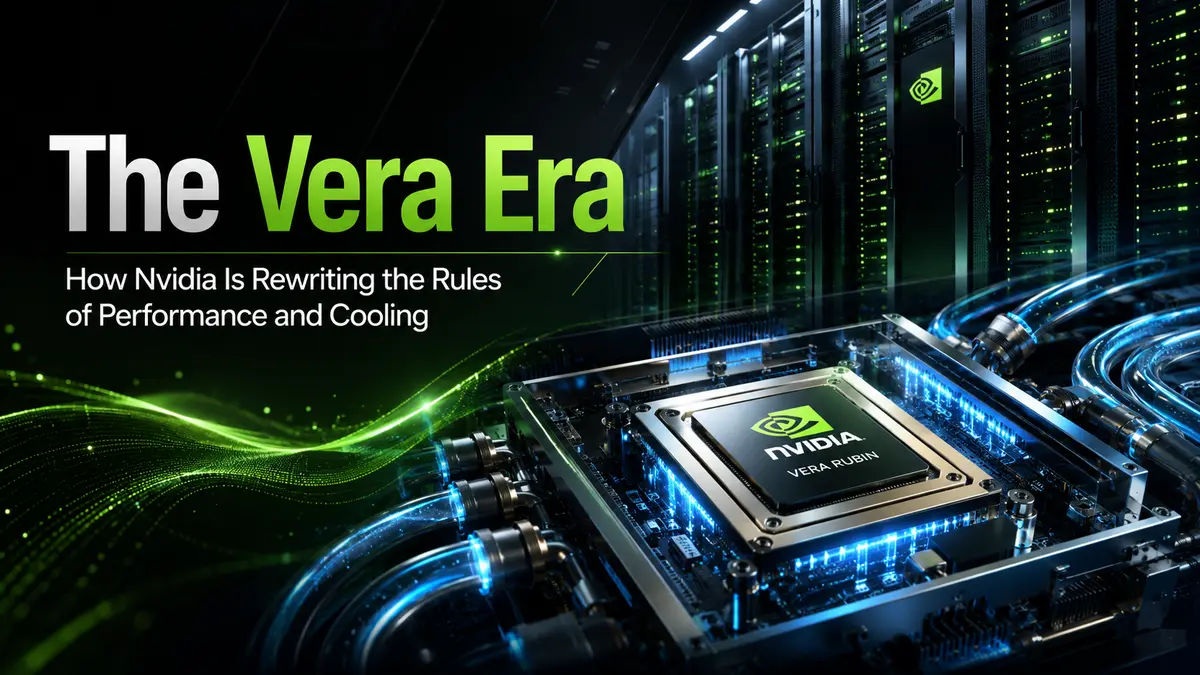
The Vera Era: How Nvidia Is Rewriting the Rules of Performance and Cooling

Numbers That Make You Think: 10X Performance per Megawatt

Whenever Nvidia announces a new platform, the world holds its breath. But when the company claims a tenfold increase in performance per megawatt, even the most seasoned analysts take off their glasses and clean them twice. On Tuesday, Nvidia did exactly that, officially unveiling the Vera Rubin platform, which is entering production with the support of more than 300 global partners operating across 350 manufacturing facilities in 30 countries. The scale is impressive, but the numbers are what truly make investors and engineers’ hearts beat faster.

Nvidia’s central claim sounds almost like science fiction: Vera Rubin NVL72 delivers ten times greater performance per megawatt than Grace Blackwell NVL72 when running one of the most demanding artificial intelligence models, DeepSeek-R1. These are not theoretical calculations or marketing slides, but real-world benchmark results published by CoreWeave, one of Nvidia’s key partners. When a company of this caliber confirms the figures, they deserve serious attention.

What does this mean in practice? It means that data centers, which now cost as much as small cities and consume as much electricity as mid-sized countries, could reduce their energy consumption by 90% while maintaining the same level of computing output. More importantly, they could increase computing capacity tenfold without upgrading their power supply or cooling infrastructure. In an era when every watt counts and electricity is becoming an increasingly scarce resource, this is not merely an improvement—it is a revolution.

Nvidia shares responded by rising 2%, closing Tuesday in positive territory amid a broader recovery in the semiconductor sector. That may appear modest, but after the recent sell-off, during which chipmakers’ shares fell sharply across the board, even a 2% gain looks like a confident step forward. The market is beginning to understand that Nvidia is not...


Continue reading...
0
0

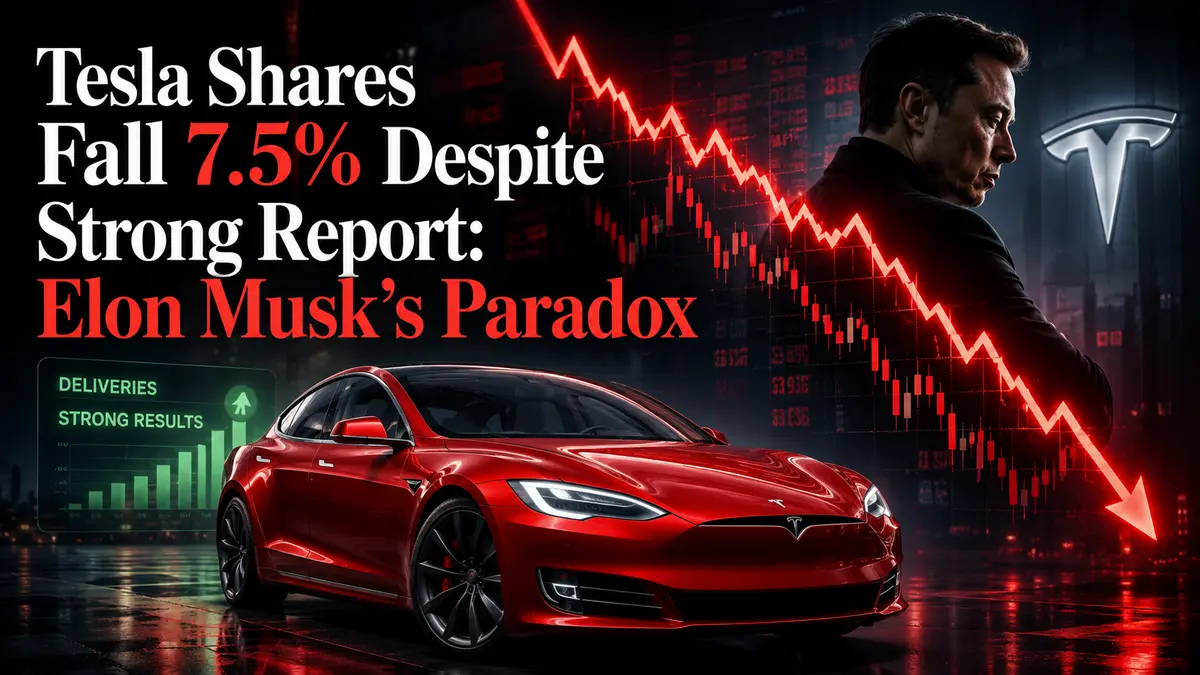
Tesla Shares Fall 7.5% Despite Strong Report: Elon Musk’s Paradox

Tesla Shares Fall 7.5% Despite Strong Report: Elon Musk’s Paradox

Introduction: When Good News Becomes a Bad Signal

Thursday should have been a triumph for Tesla. The company reported its second-quarter delivery numbers, and the figures exceeded analysts’ expectations by a wide margin. 480,126 vehicles delivered, 451,758 produced — growth of 25% year over year and 34% compared with the first quarter. The market had expected roughly 406,000 deliveries, while Tesla delivered almost 20% more. It seemed like a reason to celebrate.

But the market decided otherwise. Tesla shares plunged 7.49% — their worst day in almost a year. This was not a coincidence. It was a trend: the stock has fallen after each of the last three quarterly delivery reports. This time was no exception. Investors voted with their wallets against a company that had done everything it could to please them.

So what is happening? Why is Tesla, which seemingly met and exceeded its targets, being punished by the market? The answer does not lie in the numbers themselves, but behind them: in Elon Musk’s political rhetoric, in competitive pressure from Chinese manufacturers, in growing consumer fatigue with electric vehicles in the United States, and in the fact that even the best delivery numbers in the world cannot compensate for fundamental problems that have been building up for years.

Let’s break down why Tesla has found itself in this paradoxical situation, where a strong report turns into a stock decline, and what it means for the company’s future.

Delivery Report: Numbers That Should Have Encouraged Investors

Record Deliveries and Their Structure

Let’s start with the good news. Tesla delivered 480,126 vehicles in the second quarter. This was not just a good result — it marked a return to growth after several disappointing quarters. A year ago, the company reported 384,000 deliveries, while in the first quarter of 2026...

Continue reading...
0
0
Tom Maffin

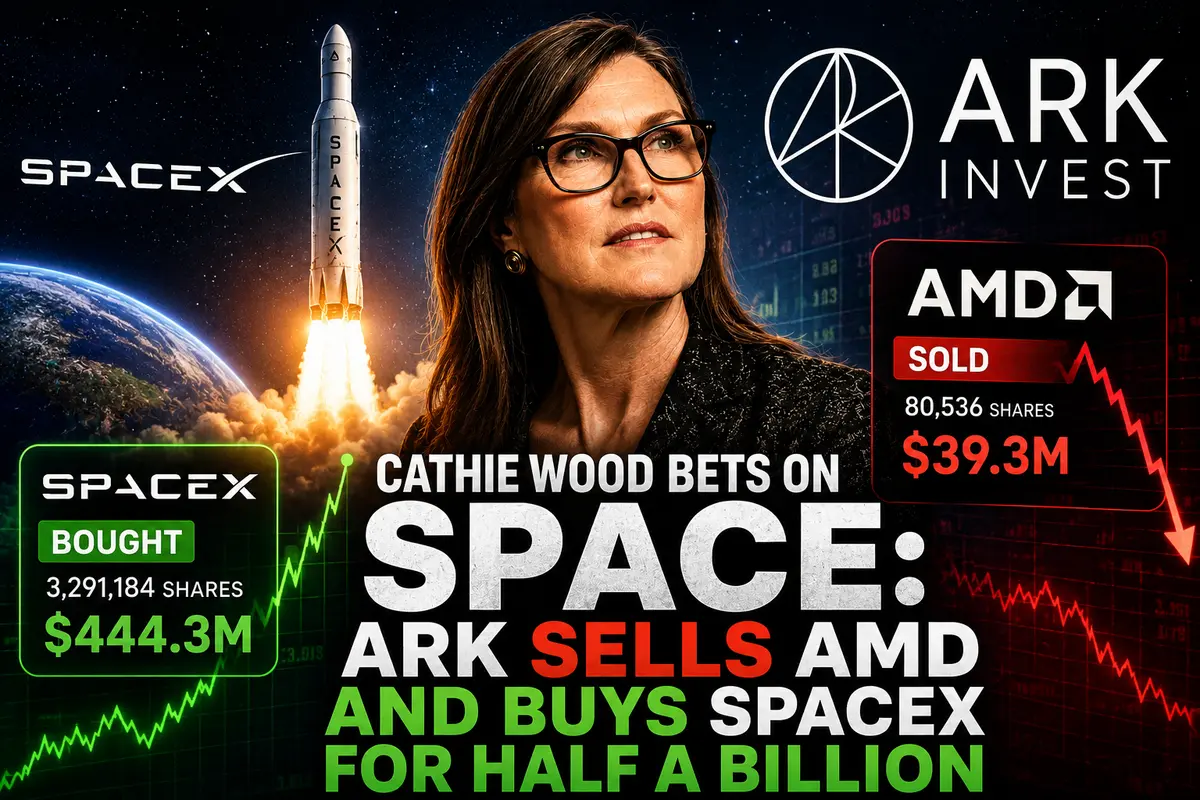
Cathie Wood Bets on Space: ARK Sells AMD and Buys $500 Million Worth of SpaceX

Cathie Wood Bets on Space: ARK Sells AMD and Buys $500 Million Worth of SpaceX

Sunday Brings Major Changes to the Portfolio of a Legendary Investor

While most investors spent Sunday digesting news from the Middle East and the latest swings in Bitcoin, Cathie Wood and her team at ARK Invest were hard at work. The firm released its daily trading report, and it immediately caught Wall Street’s attention.

The headline-grabbing move: ARK purchased 3,291,184 shares of SpaceX worth approximately $444.3 million. Nearly half a billion dollars invested in a single company—a company that had only recently become publicly available through an IPO after being inaccessible to most investors for years.

At the same time, ARK sold 80,536 shares of AMD worth $39.3 million. Nearly $40 million was raised by trimming a position in a chipmaker that had long been one of ARK’s favorite holdings.

What does this mean? A strategic shift. Cathie Wood, famous for her bets on disruptive innovators such as Tesla, Zoom, and Roku, appears to be making a new major wager: space. More specifically, SpaceX. And, once again, Elon Musk.

Let’s take a closer look at what may be behind these trades.

SpaceX: Why Cathie Wood Bought $444 Million Worth of Shares

Space Exploration Technologies Corp.—better known as SpaceX—is Elon Musk’s aerospace company responsible for launching rockets, delivering cargo to the International Space Station, building the Starlink satellite internet network, and pursuing the long-term goal of sending humans to Mars.

Until recently, SpaceX was a private company. Its shares were available primarily to venture capital firms, institutional investors, and employees through specialized programs. Retail investors had little or no access.

Last week, however, SpaceX reportedly completed an initial public offering (IPO), listing under the ticker SPCX with a valuation of roughly $250 billion. That valuation would make it one of the most valuable publicly traded companies in the...

Continue reading...
0
0
Lin Brings

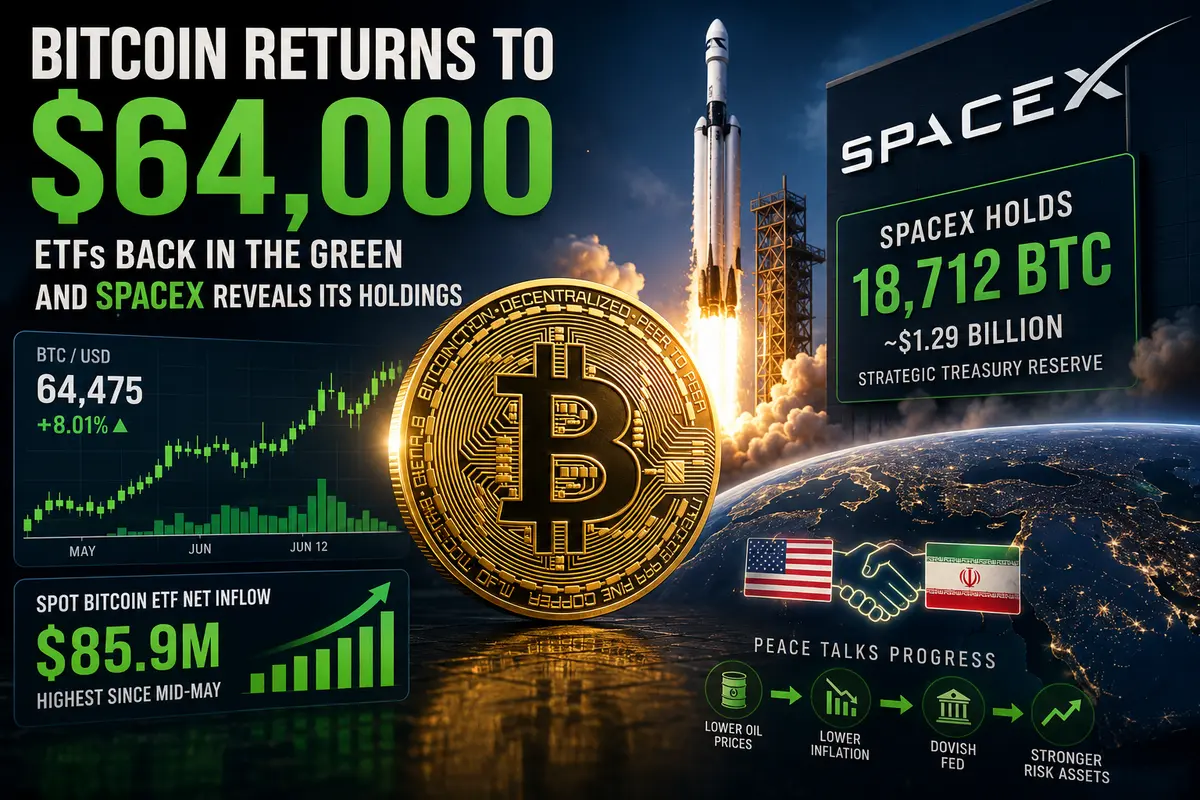
Bitcoin Returns to $64,000: ETFs Back in the Green and SpaceX Reveals Its Holdings

Bitcoin Returns to $64,000: ETFs Back in the Green and SpaceX Reveals Its Holdings

Sunday: A Day of Hope and Green Candles

While most people were enjoying a well-earned Sunday after a long workweek, the cryptocurrency market was wide awake. Bitcoin climbed back above $64,000 and managed to hold the level. The cryptocurrency reached a peak of $64,475, about 8% above its June lows, when fear and panic pushed the price below $60,000. Who would have imagined just a week ago, when Bitcoin was teetering on the edge of a psychological cliff, that the recovery would be this swift?

Several factors contributed to the rally.

First, geopolitics. Peace in the Middle East, which seemed like a distant dream only days ago, suddenly became a realistic possibility. The United States and Iran reportedly moved closer to an agreement, oil prices fell sharply, and inflation expectations dropped along with them. This raised hopes that the Federal Reserve may not need to remain as hawkish. A more accommodative Fed is generally positive for risk assets, including Bitcoin.

Second, ETFs. Spot Bitcoin ETFs, which had experienced persistent outflows in recent weeks, suddenly began attracting capital again. On Friday, net inflows reached $85.9 million, marking the strongest single-day inflow since mid-May. Institutional investors who had previously fled the market may be starting to return.

Third, SpaceX. Yes, Elon Musk’s space company. In its IPO filing, SpaceX revealed that it holds 18,712 BTC. At current prices, that position is worth approximately $1.29 billion. The company does not trade cryptocurrencies, mine Bitcoin, or accept it as payment for trips to the Moon. It simply holds Bitcoin as a strategic treasury reserve alongside its corporate cash holdings in dollars and euros.

And that is a powerful signal for the market. If one of the world’s most innovative and successful companies considers Bitcoin worthy of a place in its treasury, perhaps other corporations...

Continue reading...
0
0
Lin Brings

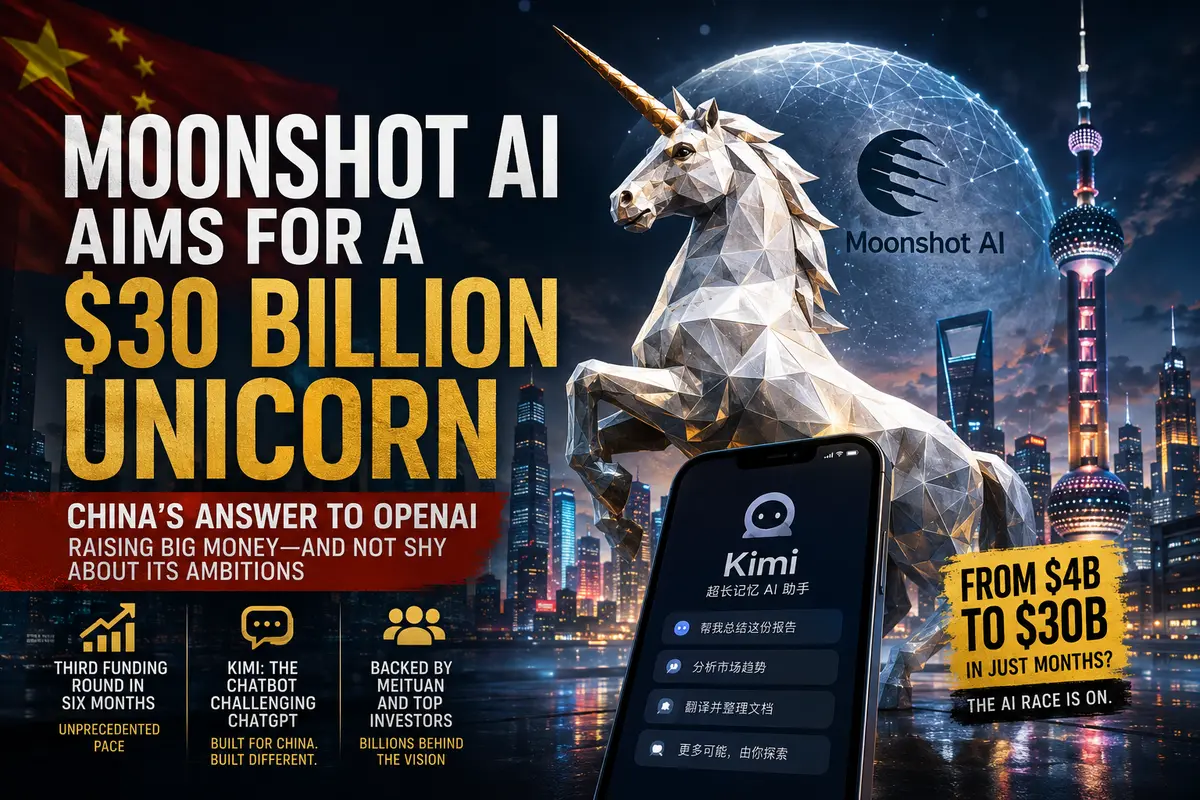
Moonshot AI Wants to Become a $30 Billion Unicorn: China’s Answer to OpenAI Is Raising More Cash—and Isn’t Shy About Its Ambitions

Moonshot AI Wants to Become a $30 Billion Unicorn: China’s Answer to OpenAI Is Raising More Cash—and Isn’t Shy About Its Ambitions

A Third Funding Round in Six Months—Something We’ve Never Seen Before

The artificial intelligence industry is in the middle of a full-blown gold rush. Yet even against this backdrop, the latest news from China is making traders and venture capitalists around the world raise their eyebrows. Moonshot AI—a company that, until recently, was barely known outside Beijing and Shenzhen—is reportedly in talks to raise up to $2 billion in a new funding round. What makes this remarkable is that the startup has already secured funding in two previous rounds... within the last six months.

Just think about the numbers. Moonshot AI wants investors to value the company at $30 billion. Thirty billion dollars. That’s more than the market capitalization of many public companies that have been operating profitably for decades. Moonshot, meanwhile, is still a startup. It has a chatbot called Kimi, a team of talented engineers, and plenty of ambition. But a $30 billion valuation is a serious statement.

And that’s only part of the story. According to Bloomberg, citing sources familiar with the matter, Moonshot is already close to completing another funding round led by Meituan, China’s delivery and services giant. That round is expected to value the company at around $20 billion after the deal closes. The subsequent round now under discussion would push the valuation even higher—to $30 billion.

In other words, Moonshot’s valuation could increase sevenfold in just a matter of months compared to last December, when the startup was valued at slightly over $4 billion. A sevenfold increase in half a year would have looked extreme even during the dot-com bubble. Yet in today’s AI market, almost nothing seems impossible.

Kimi: The Chinese Chatbot That Knows More Than You Think

Behind all this money stands a product. Moonshot AI’s flagship offering is a chatbot...

Continue reading...
0
0
Tom Maffin

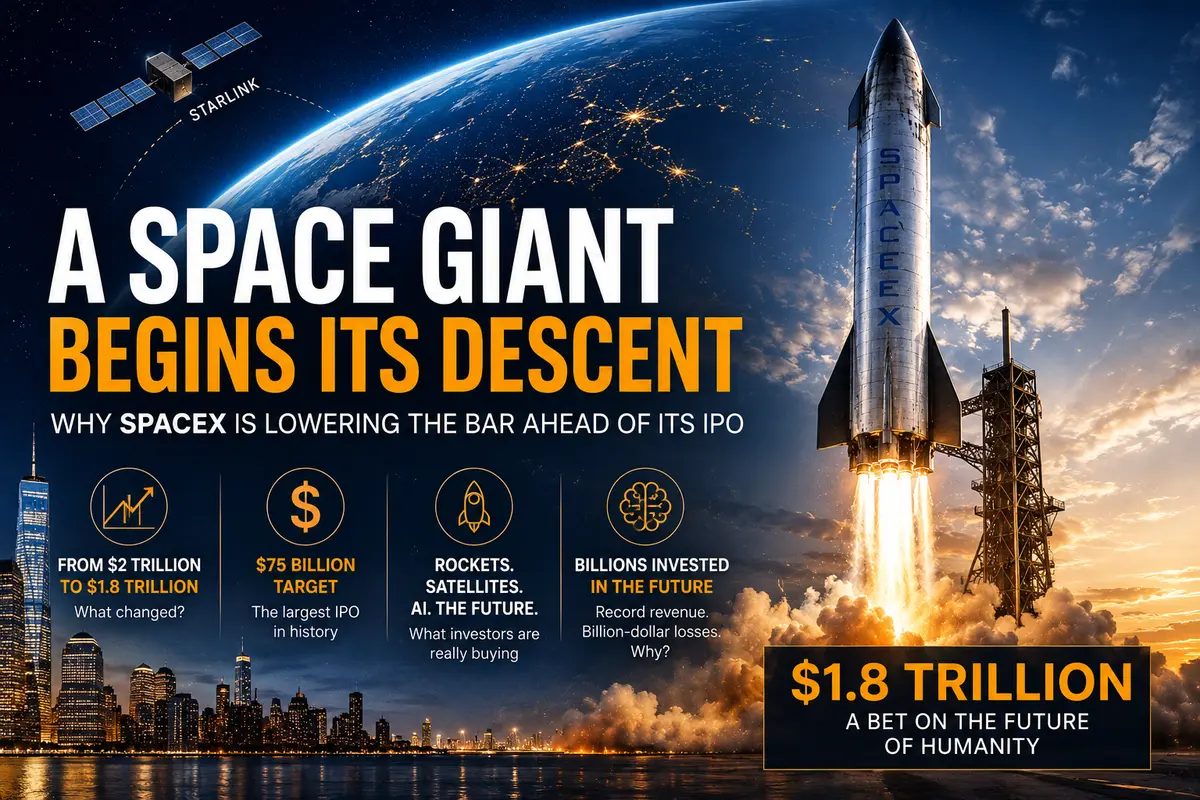
A Space Giant Begins Its Descent: Why SpaceX Is Lowering the Bar Ahead of Its IPO

A Space Giant Begins Its Descent: Why SpaceX Is Lowering the Bar Ahead of Its IPO

In a world where technology companies are accustomed to inflating valuations to astronomical heights, news that SpaceX is lowering its target valuation ahead of its initial public offering sounds almost like an admission of defeat. But it is not defeat. It is a sober calculation.

According to Bloomberg, Elon Musk and his advisers have revised expectations from $2 trillion down to $1.8 trillion. The difference—$200 billion—is larger than the market capitalization of most Fortune 500 companies. Yet even after lowering the target, SpaceX is still positioning itself for what could become the largest IPO in human history. And that story deserves a closer look.

From $2 Trillion to $1.8 Trillion: Why the Target Is Coming Down

In April, Bloomberg reported that SpaceX was aiming for a valuation exceeding $2 trillion. It was a breathtaking figure. For comparison, Apple, the world’s most valuable public company, is worth around $3 trillion. Microsoft is valued at roughly $2.5 trillion. In other words, before even going public, SpaceX sought to stand shoulder to shoulder with the most powerful corporations of the modern era, surpassing giants such as Saudi Aramco, Alphabet, and Amazon. It was a bold statement reflecting Musk’s belief that SpaceX is not merely a launch provider, but something far greater.

Now the target has been lowered. As is often the case, the reason lies in discussions with advisers and investors. Investment banks tasked with marketing SpaceX shares to the public have conducted preliminary demand assessments. Apparently, investor appetite was not quite as limitless as initially expected. A market that has learned hard lessons from overvalued IPOs in recent years has become more demanding. Investors want not only a grand vision but also numbers that support it. And when it comes to the numbers, the SpaceX story is more nuanced.

A valuation of...

Continue reading...
0
0
Navigation menu
instaforex banner