

Silence at the Summit: Wall Street Pauses Between Peace and Inflation
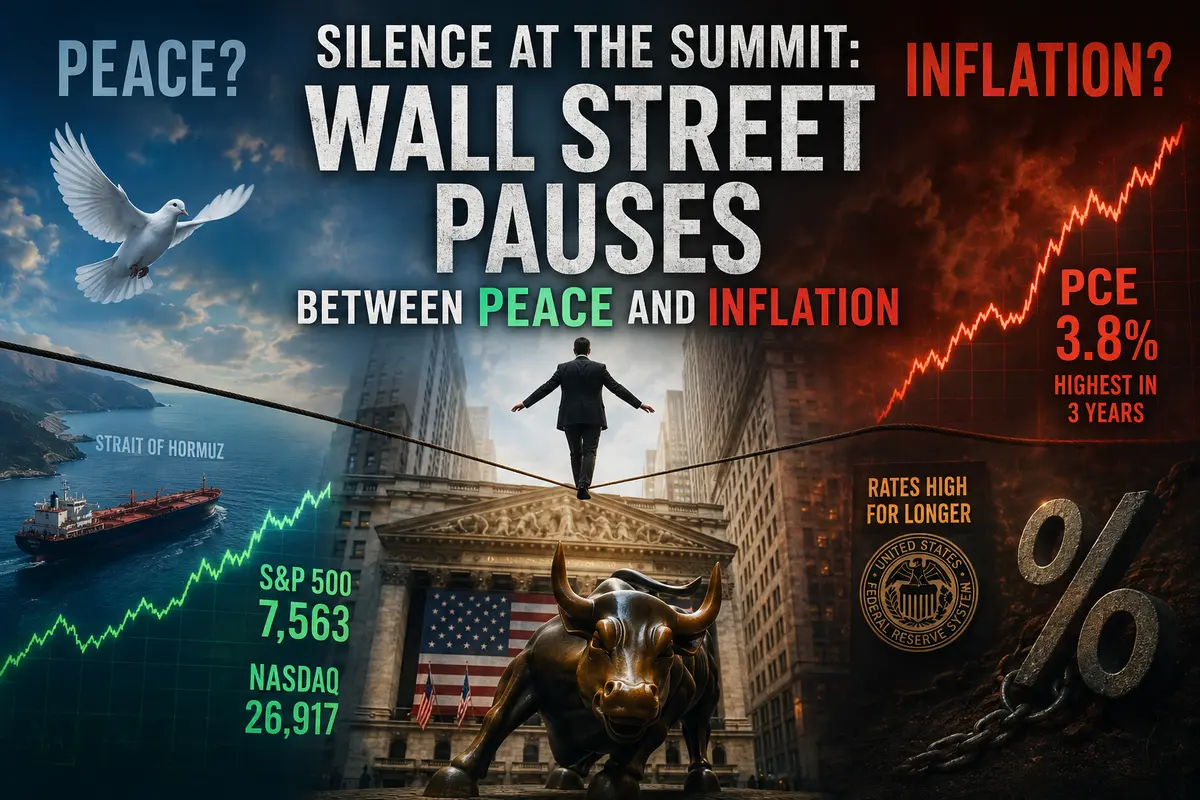
Thursday evening on the U.S. stock market was marked by a wait-and-see mood. S&P 500 futures gained a symbolic 0.1%, while the Nasdaq and Dow Jones remained virtually unchanged. This stillness may seem dull on the surface, but it conceals enormous tension. The market has just closed at record highs for the second consecutive session. The S&P 500 reached 7,563 points, while the NASDAQ Composite surged to 26,917. Such milestones are usually celebrated, yet traders are in no hurry to pop champagne today. They are waiting. Waiting to see whether the ceasefire with Iran holds. Waiting for what Trump will say. Waiting for inflation to finally begin easing. And in that waiting lies the essence of the current market environment.
Ceasefire on the Horizon: The Market Wants to Believe
The main catalyst behind the rally that pushed indexes to record highs was reports that the United States and Iran had reached a preliminary agreement to extend the ceasefire for sixty days. Axios reported that the deal includes reopening the Strait of Hormuz, which would represent a major breakthrough after months of conflict. The market reacted immediately and enthusiastically. Oil prices moved lower, while equities moved higher.
The logic behind the move is straightforward. Reopening the strait means restoring oil supplies. Restored supplies mean lower energy prices. Lower energy prices mean reduced inflationary pressure. Reduced inflation means the Federal Reserve may not need to continue tightening policy—or could even begin considering easing. And easier monetary policy is a favorable environment for equities, especially technology stocks, whose future earnings are discounted at lower rates.
Yet the market is experienced enough to understand that a wide gap exists between a preliminary agreement and lasting peace. The proposed deal still requires President Trump’s approval. Trump is known for unexpected policy shifts. Meanwhile, Iranian media have reported that the agreement has not yet been finalized. Investors remember how previous hopes for a ceasefire were shattered by renewed military action. As a result, the current reaction is not euphoria but cautious optimism. Traders are buying, but they are keeping a finger on the sell button. One tweet, one hawkish statement, or one new military strike could reverse sentiment completely.
The Inflation Brake: PCE Challenges Market Optimism
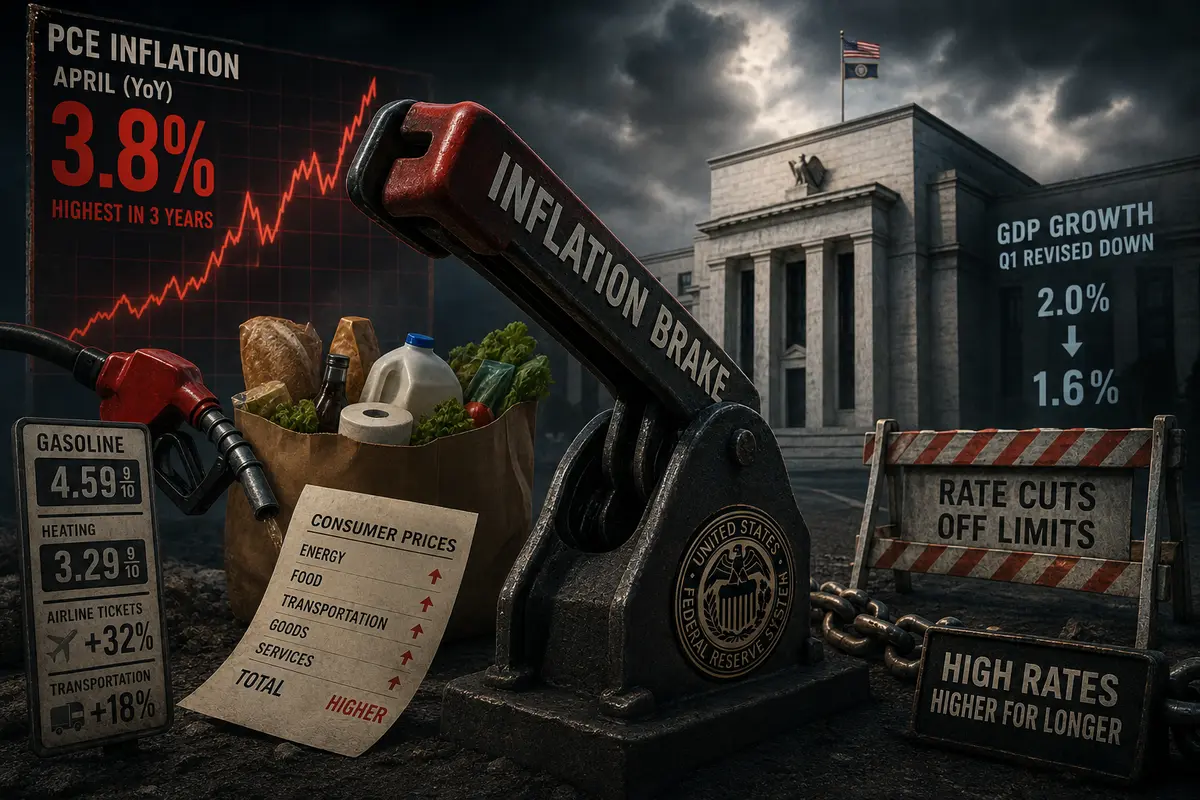
Even if the ceasefire holds, the market faces a problem that no diplomatic agreement can solve overnight. On Thursday, the Personal Consumption Expenditures (PCE) index—the Federal Reserve’s preferred inflation gauge—was released. The figures were sobering. PCE rose 3.8% year-over-year, the fastest pace in three years.
A 3.8% reading is nearly double the Fed’s inflation target. Moreover, these figures reflect April, when the oil shock linked to the Iran conflict was already affecting markets. Higher energy costs filtered through to consumers, increasing prices for gasoline, heating, airline tickets, and goods with significant transportation costs. Inflation is accelerating rather than slowing. This places the Federal Reserve in an extremely uncomfortable position.
The central bank would prefer to ease policy, especially as economic growth slows—first-quarter U.S. GDP was revised down from 2.0% to 1.6%. However, accelerating inflation limits the Fed’s flexibility. It cannot cut rates while prices are rising at their fastest pace in three years. It cannot even strongly hint at easing without risking its credibility. The Fed remains locked into a hawkish stance, and escaping it will not be easy.
The market understands this. That is why the ceasefire-driven rally failed to evolve into something more powerful. Inflation data acted as a cold shower. Peace is welcome, but even if it materializes, interest rates are likely to remain elevated for an extended period. High rates continue to weigh on equities, particularly the most richly valued segments of the market.
Technology Stocks: The Engine That Keeps Running
Despite inflation concerns, technology stocks continue to drive the market higher. The NASDAQ Composite gained 0.9% during the regular session. This sector is fueled by a narrative that is largely independent of Iran, oil prices, or PCE data. That narrative is artificial intelligence.
Optimism surrounding AI remains strong. Nvidia continues setting records. SK Hynix has entered the trillion-dollar company club. Samsung is reaching new all-time highs. Every earnings report, product launch, and forecast from industry leaders reinforces the same message: spending on artificial intelligence is likely to grow at double-digit rates for years to come. As long as this story remains intact, technology stocks will continue attracting capital regardless of developments in oil markets or monetary policy.
Yet even the technology sector has its limits. Higher interest rates mean higher discount rates for future earnings. If Treasury yields continue rising and the Fed ultimately tightens policy further, technology companies with lofty valuations could come under significant pressure. For now, investors prefer to focus on positive developments, but the risk has not disappeared.
Slowing Growth: Another Reason for Concern
GDP data added another dark shade to the picture. U.S. economic growth in the first quarter was revised down from 2.0% to 1.6%, weaker than expected. The economy is slowing, even as inflation remains elevated.
The combination of slowing growth and accelerating inflation is the classic recipe for stagflation—a nightmare scenario for any central bank. The Federal Reserve faces a difficult choice: fight inflation and risk damaging economic growth, or support growth and risk fueling inflation further. Neither option is particularly favorable for the stock market.
For now, investors are choosing to focus on the brighter side. A ceasefire with Iran could pave the way for lower oil prices. Lower oil prices could ease inflation. Lower inflation could provide the Fed with greater policy flexibility. It is a coherent chain of logic—but one built on too many “coulds.” The market is betting on the best outcome while preparing for the worst.
The Night Before the Unknown
Thursday ended with record highs, but futures during Friday’s Asian session remained frozen. This is not the calm of satisfaction. It is the calm of tense anticipation. The weekend could bring news that either validates hopes for peace or shatters them. Trump may approve the agreement—or reject it. Iran may accept the terms—or demand new concessions. Oil prices may continue falling—or surge once again.
In this uncertainty, Wall Street remains suspended at historic highs, reluctant to move decisively in either direction. The market is waiting. Waiting for words to become actions, headlines to become signed agreements, and hopes to become reality. Until then, futures may remain stuck in place, while traders nervously monitor the news flow. Friday may bring answers. Or it may not. And that may be the most unsettling possibility of all.

Comments
No comments yet. Be the first to share your thoughts!
Authentication Required
You must be logged in to post a comment.