

Bar Pipa
We pay for a post of 10$

Dow Jones

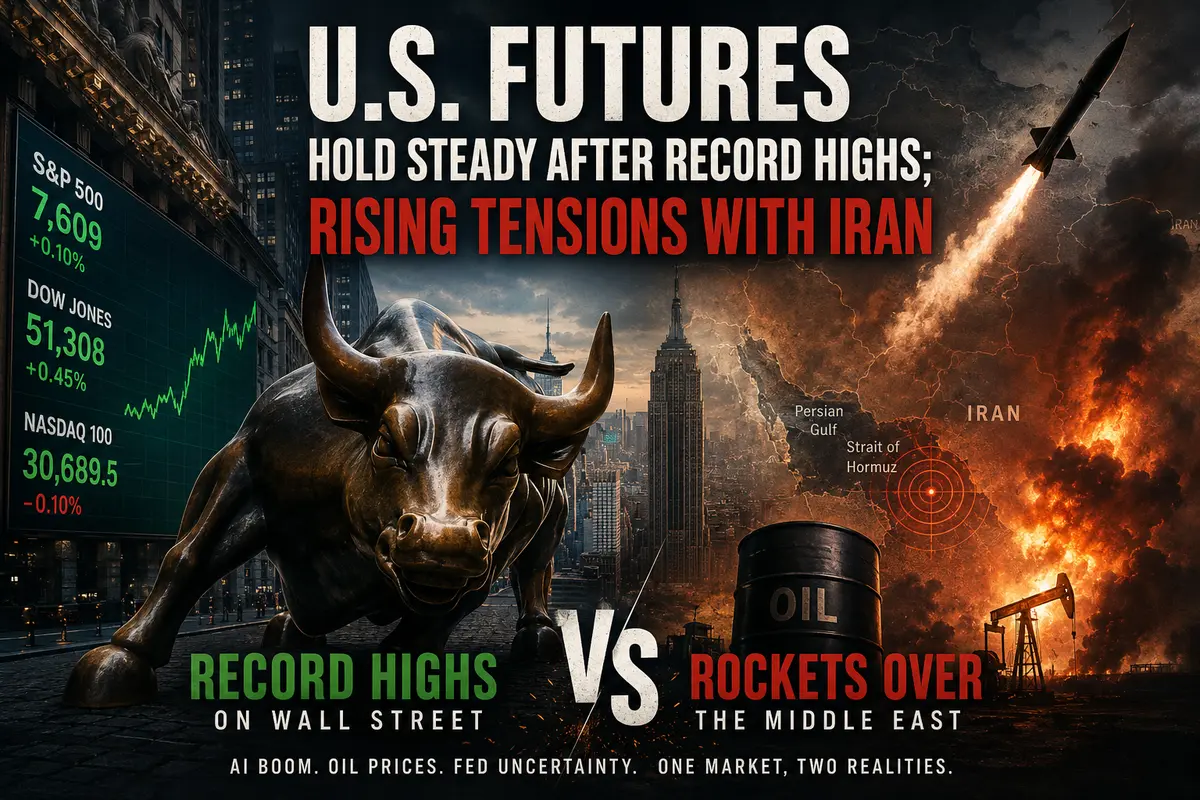
U.S. Futures Hold Steady After Record Highs Amid Rising Tensions With Iran
U.S. Futures Hold Steady After Record Highs Amid Rising Tensions With Iran
When Records Meet Rockets

Tuesday evening brought a nervous mood to the U.S. market. Not because investors were panicking. Quite the opposite — everyone seemed frozen in place. Futures on the major Wall Street indexes settled into a strange state of calm: the S&P 500 was virtually unchanged, the Dow Jones Industrial Average stood still, and the Nasdaq 100 edged slightly lower, slipping by just one-tenth of a percent. At 30,689.5 points, Nasdaq futures looked impressive on paper — but the number carried an undertone of unease.

That unease has a name: Iran.

A country that has dominated global headlines in recent weeks once again commanded attention — not through words, but through actions. New airstrikes against neighboring targets marked the third such incident in a week. The United States responded, and now the financial world is holding its breath, watching the Middle East and asking a crucial question: is this merely another chapter in a long-running confrontation, or the beginning of something far larger and more dangerous?

The paradox of the day is that only hours before these developments, Wall Street was celebrating. Major indexes had reached fresh all-time highs. The S&P 500 climbed to 7,609 points. The Dow Jones crossed the 51,000 mark. The Nasdaq advanced as well. Technology stocks — especially semiconductor manufacturers — staged a remarkable rally. Against that backdrop of optimism came news of missile strikes and stalled negotiations.

The market suddenly found itself caught between two powerful forces. On one side stood enthusiasm for artificial intelligence, record profits from technology giants, and the belief that a prosperous future has already arrived. On the other stood geopolitical turmoil, the threat of disruptions in the Strait of Hormuz, rising oil prices, and the prospect of renewed inflation that few had anticipated.

In the face of these...
Continue reading...
0
0

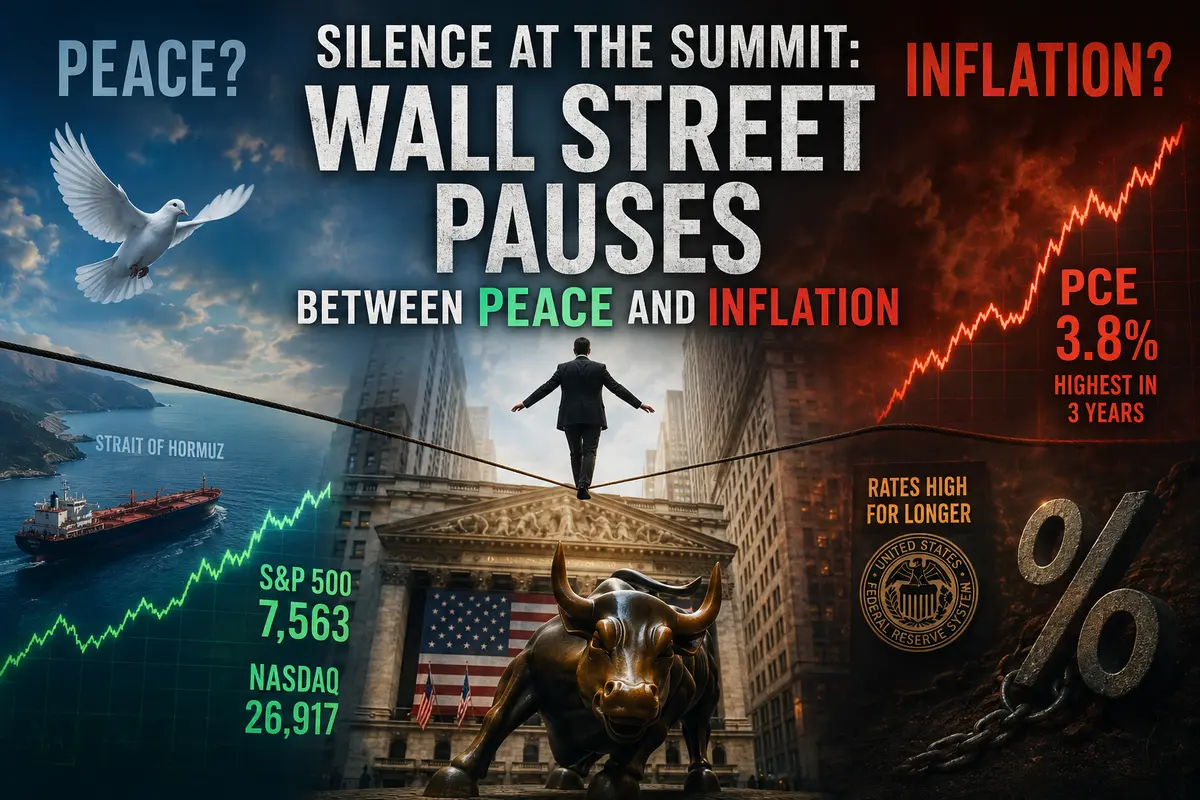
Silence at the Summit: Wall Street Pauses Between Peace and Inflation

Silence at the Summit: Wall Street Pauses Between Peace and Inflation

Thursday evening on the U.S. stock market was marked by a wait-and-see mood. S&P 500 futures gained a symbolic 0.1%, while the Nasdaq and Dow Jones remained virtually unchanged. This stillness may seem dull on the surface, but it conceals enormous tension. The market has just closed at record highs for the second consecutive session. The S&P 500 reached 7,563 points, while the NASDAQ Composite surged to 26,917. Such milestones are usually celebrated, yet traders are in no hurry to pop champagne today. They are waiting. Waiting to see whether the ceasefire with Iran holds. Waiting for what Trump will say. Waiting for inflation to finally begin easing. And in that waiting lies the essence of the current market environment.

Ceasefire on the Horizon: The Market Wants to Believe

The main catalyst behind the rally that pushed indexes to record highs was reports that the United States and Iran had reached a preliminary agreement to extend the ceasefire for sixty days. Axios reported that the deal includes reopening the Strait of Hormuz, which would represent a major breakthrough after months of conflict. The market reacted immediately and enthusiastically. Oil prices moved lower, while equities moved higher.

The logic behind the move is straightforward. Reopening the strait means restoring oil supplies. Restored supplies mean lower energy prices. Lower energy prices mean reduced inflationary pressure. Reduced inflation means the Federal Reserve may not need to continue tightening policy—or could even begin considering easing. And easier monetary policy is a favorable environment for equities, especially technology stocks, whose future earnings are discounted at lower rates.

Yet the market is experienced enough to understand that a wide gap exists between a preliminary agreement and lasting peace. The proposed deal still requires President Trump’s approval. Trump is known for unexpected policy shifts. Meanwhile, Iranian media...

Continue reading...
0
0
Navigation menu
