

The Dollar Catches Its Breath After the Bond Storm
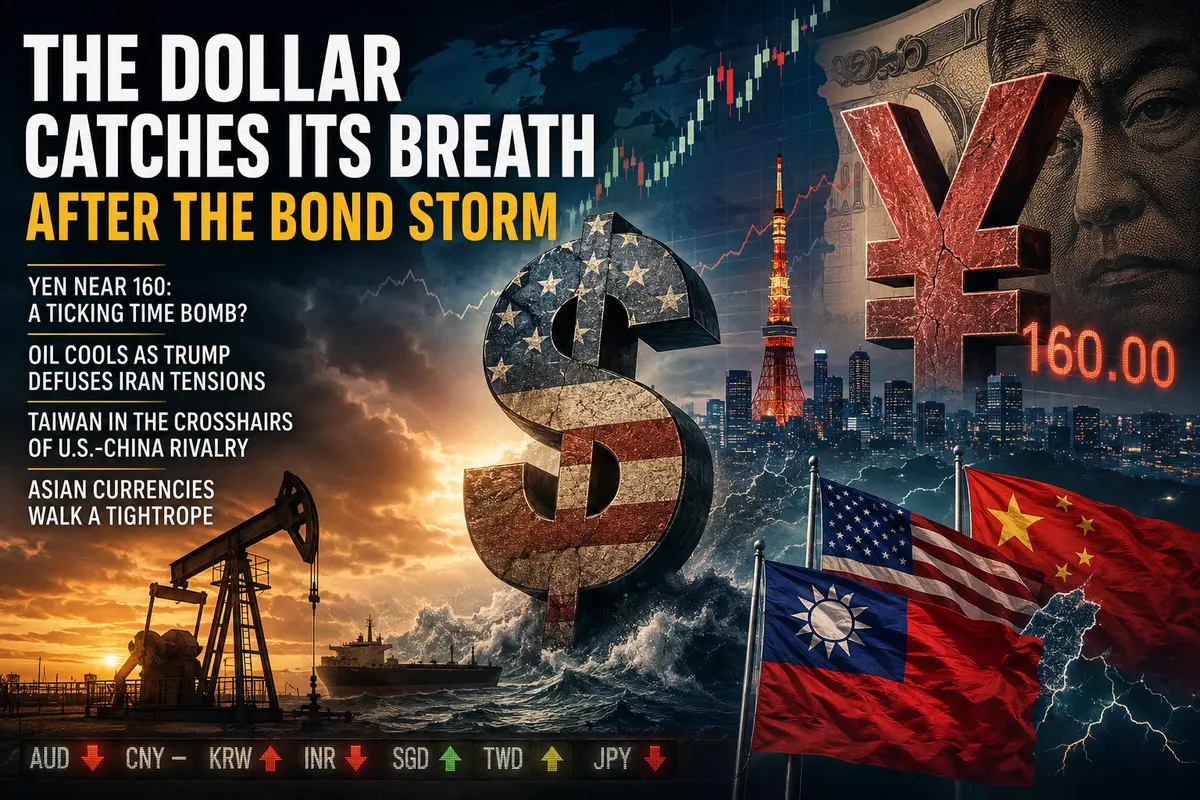
Tuesday morning on the currency market began in relative calm. The U.S. dollar index and dollar futures stabilized during Asian trading, offering a long-awaited pause after several days of relentless selling in the bond market that had dragged virtually every other asset down with it. Investors, exhausted by surging yields and constant repricing of interest-rate expectations, stepped back to reassess the situation and consider what might come next.
Two factors helped trigger this temporary relief.
The first was a technical correction in the Treasury market. Yields on 10-year U.S. government bonds fell by half a percentage point from levels that had hovered near yearly highs just a day earlier. Thirty-year yields dropped by two-tenths of a percentage point after coming within arm’s reach of their highest levels in nineteen years. Nineteen years ago is so far back that many traders sitting at their terminals today were still in school — or had not even considered a career in finance.
The second factor was oil. The bond selloff eased alongside declining energy prices. The reason for that decline has a name: Donald Trump. The American president stated that he had postponed a planned military operation against Iran and that negotiations were progressing successfully. Markets, which had spent recent weeks bracing for the possibility of another Middle East war, interpreted the statement as a cautiously optimistic signal. Oil moved lower, and bonds calmed down with it.
Still, this calm remains highly conditional. Oil prices continue to hold onto much of their recent gains, and the inflationary consequences of the Iranian conflict have not disappeared. Markets remain tense — just slightly less tense today than yesterday.
The Japanese Paradox: The Economy Grows, the Yen Falls
The most intriguing story of Tuesday revolves around the Japanese yen. The dollar-yen pair rose by one-tenth of a percent, bringing the yen once again close to the dangerous threshold of 160 yen per dollar — the very level that triggered multi-billion-dollar interventions from Tokyo earlier this month.
The paradox is that the yen is weakening despite fairly strong Japanese first-quarter GDP data. The economy expanded more than expected thanks to two engines: robust exports and improved domestic consumption. Under normal circumstances, a strong economy should support the national currency. But in Japan’s case, that familiar mechanism has broken down.
Why? The answer lies in the same bond market discussed earlier. Japanese government bond yields remain near record highs. In theory, that should attract capital into the yen. But U.S. yields have risen even faster, and the widening gap between them continues to pressure Japan’s currency. On top of that, elevated energy prices — even after the recent correction — continue to increase import costs for Japanese companies, boosting demand for dollars.
Analysts at Capital Economics added another layer of skepticism by questioning the sustainability of Japan’s growth. Disruptions in energy markets caused by the conflict with Iran could quickly erase the gains of the first quarter. Japan, which relies heavily on imported oil and gas, remains extremely vulnerable to such shocks, and experts believe it is far too early to celebrate one strong quarter.
The Bank of Japan and the Temptation of a June Rate Hike
Nevertheless, strong GDP figures give the Bank of Japan something it has lacked for years: room to maneuver. If the economy is growing, the central bank can afford to raise rates without immediately choking off the recovery. Tuesday’s data strengthened expectations that the BOJ could hike rates as early as June.
Yet the yen barely reacted to those expectations. The market seems to be saying: we have seen too many false dawns in Japanese monetary policy to believe in a genuine turning point. Yes, the Bank of Japan may raise rates — but by how much? A quarter point? Half a point? Even that would still be insufficient to close the enormous gap with U.S. rates enough to make the yen truly attractive.
Meanwhile, the approach toward the 160 yen-per-dollar mark adds even more drama. Traders remember that this was the exact level where Tokyo intervened previously, spending tens of billions of dollars to support the yen. Now the pair is edging back toward that red line, and market participants are waiting anxiously: will Japanese authorities intervene again, or allow the currency to break through the psychological barrier?
Asian Currencies: Every Country for Itself
The broader backdrop for Asian currencies on Tuesday was mixed. On one hand, lower oil prices and hopes for de-escalation in the U.S.-Iran conflict should have supported regional currencies. Cheaper oil means less inflationary pressure and fewer dollar-denominated energy import costs. On the other hand, rising tensions between the United States and China over Taiwan, along with a deep selloff in equity markets, weighed heavily on sentiment.
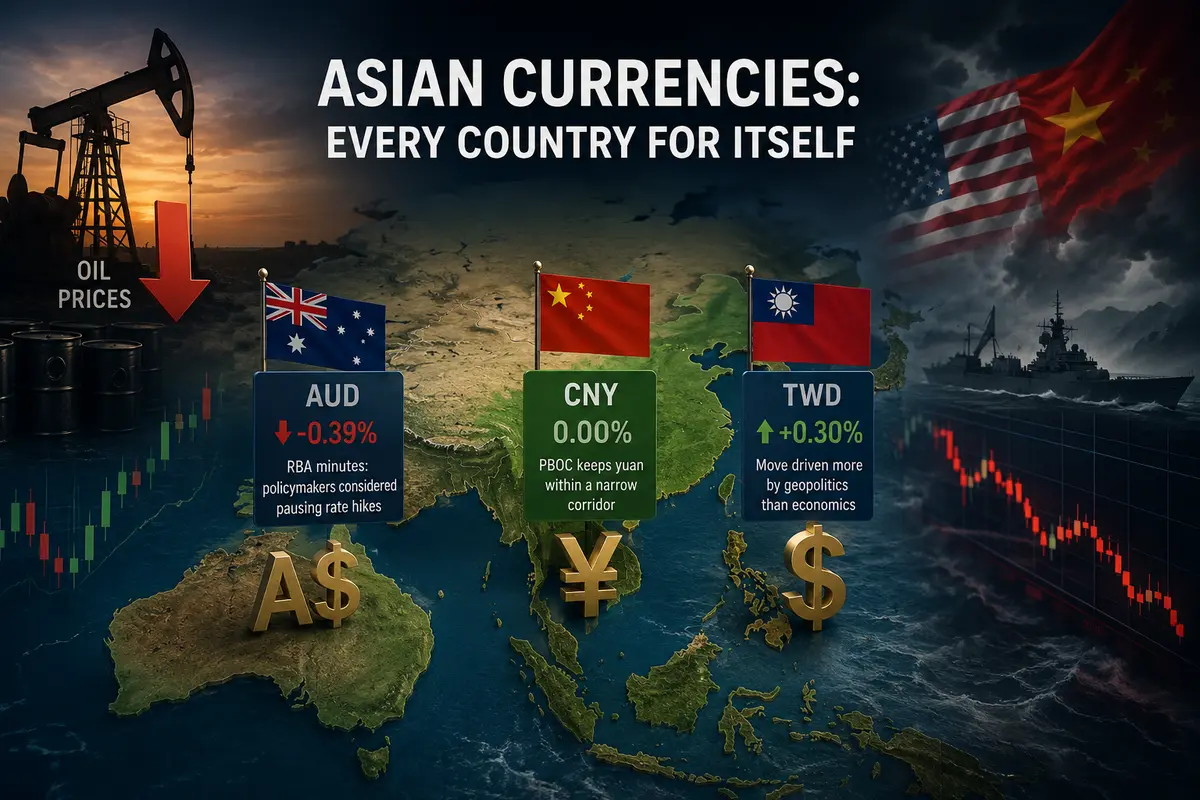
The Australian dollar fell nearly four-tenths of a percent after minutes from the Reserve Bank of Australia revealed something unexpected: policymakers had considered pausing further rate hikes. They merely discussed the possibility — but that alone was enough for markets to interpret it as a sign that the tightening cycle may be nearing its end.
China’s yuan remained unchanged — the usual stability backed by the heavy hand of the People’s Bank of China, which continues to keep the currency within a narrow corridor. The Taiwanese dollar rose by three-tenths of a percent, though the move reflected geopolitics more than economics.
The Taiwan Knot: Lai Ching-te Speaks Out
Tensions surrounding Taiwan became one of the key pressure points for Asian markets on Tuesday. Taipei expressed concern over the recent U.S.-China summit, during which the issue of American arms sales to the island was reportedly discussed. Arms sales to Taiwan are nothing new — they have continued for decades. But the fact that the topic surfaced at the highest level between Trump and Xi Jinping gives it added significance.
Taiwanese President Lai Ching-te made a statement that leaves little room for ambiguity. He wrote on social media that Taiwan would not be sacrificed or turned into a bargaining chip, and would not abandon its free way of life under pressure. This was more than rhetoric — it was a signal that Taipei fears becoming a pawn in the larger geopolitical game between Washington and Beijing. If Trump and Xi reached understandings behind Taiwan’s back, the island wants the world to know it does not consent and intends to resist.
For currency markets, this means the Taiwanese dollar is likely to remain under pressure from uncertainty. Investors dislike the prospect of geopolitical conflict involving the world’s major powers.
Won, Rupee, Singapore Dollar: A Mosaic of Moves
The South Korean won became one of the day’s biggest losers, jumping nearly one percent against the dollar. South Korea, like Japan, depends heavily on imported energy, and although oil prices corrected lower, they remain high enough to pressure the country’s trade balance. In addition, the Korean economy is deeply tied to Chinese demand, and weak Chinese data released earlier failed to inspire confidence.
The Indian rupee continues to hover near record lows against the dollar — above 96 rupees per dollar. The rupee’s weakness reflects structural issues: heavy energy imports, capital outflows from emerging markets, and rising dollar-denominated debt.
The Singapore dollar gained two-tenths of a percent — a modest move in line with the broader trend. As the region’s financial hub, Singapore tends to react more sharply to global capital flows, and today was no exception.
Calm After the Storm — or the Silence Before Another One?
Currency markets took a breather on Tuesday. The dollar stabilized, bonds stopped falling, and oil retreated from recent highs after Trump’s conciliatory remarks. But this calm may prove deceptive. Beneath the surface, the same forces that have shaken markets in recent weeks continue to churn: the Iranian conflict, inflation fears, the geopolitical struggle over Taiwan, the weakening yen, and Asian currencies squeezed between expensive oil and an expensive dollar.
The yen near 160 is a ticking time bomb. If Tokyo intervenes again, shockwaves could ripple across the entire foreign-exchange market. If Trump and Xi continue bargaining over Taiwan’s future, regional nervousness will only intensify. And if oil resumes climbing — which remains entirely possible given the unresolved situation in the Strait of Hormuz — this fragile calm could collapse in an instant.
For now, traders are enjoying a brief respite. But experience suggests that in financial markets, periods of calm rarely last long — especially when the world is balancing on the edge of so many simultaneous conflicts.

Comments
No comments yet. Be the first to share your thoughts!
Authentication Required
You must be logged in to post a comment.