SK Hynix Soars: The Korean Giant Gains Momentum Amid the AI Boom and Record Expectations
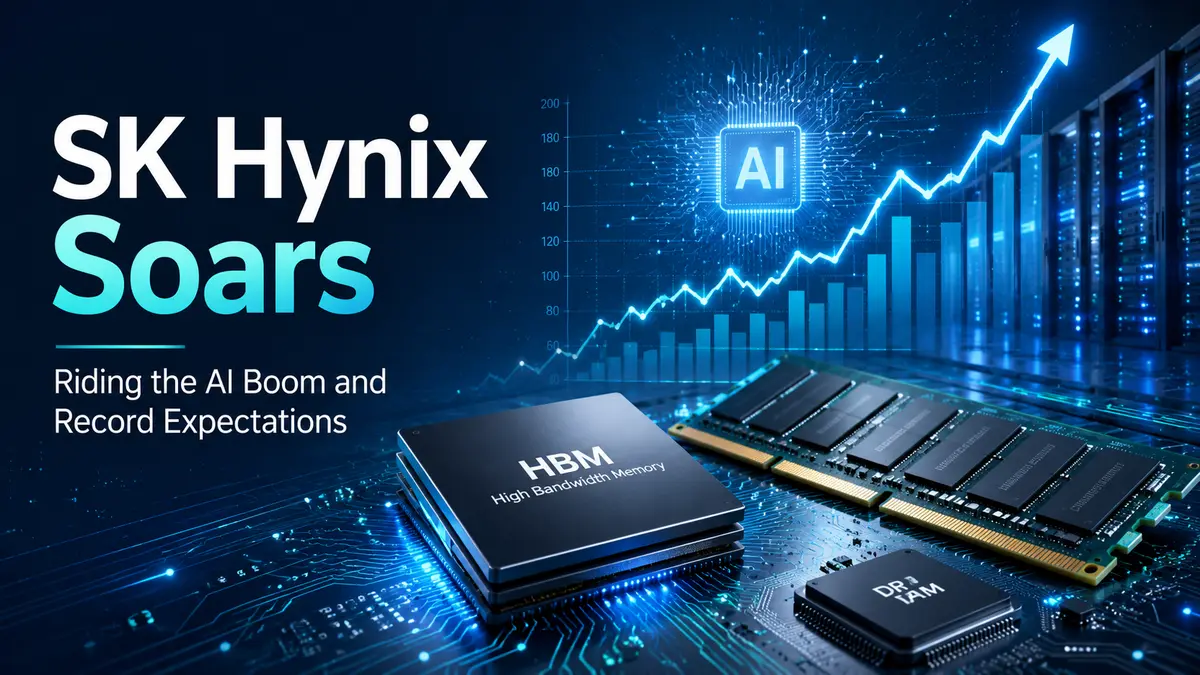
A Promising Morning: SK Hynix Shares Rise 6.2%
Monday morning proved bright and promising for SK Hynix shares. The company’s American depositary receipts (ADRs) jumped 6.2% in U.S. premarket trading, reaching $164.20 per share. The increase mirrored positive momentum in the Korean market, where SK Hynix shares also posted a strong advance, gaining 3.24% during the session.
What is driving this optimism? Investors appear to be positioning themselves ahead of the company’s second-quarter 2026 earnings report, scheduled for July 29. Analysts expect revenue of approximately 84 trillion won and a potentially record-high operating margin, supported by rising DRAM and NAND prices. These are not merely strong figures—they could represent historic results confirming that SK Hynix stands at the center of the AI-driven memory supercycle.
However, internal expectations are not the only factor pushing the shares higher. On Saturday, the South Korean government announced new artificial intelligence initiatives worth $950 billion, involving Samsung, SK Group, and U.S. technology companies. The announcement provided an additional catalyst, reinforcing the view that South Korea intends to become a global hub for AI infrastructure. As one of the leading suppliers of memory used in artificial intelligence systems, SK Hynix is positioned to become one of the primary beneficiaries of this trend.
The $950 Billion Initiative: How the Government Is Accelerating the AI Race
Saturday’s announcement of a $950 billion South Korean government initiative aimed at developing artificial intelligence sent an important signal to the market. This is not simply a financial commitment—it is a strategic government-level decision that could reshape the competitive landscape of the entire semiconductor industry.
Major corporations such as Samsung and SK Group, along with U.S. technology companies, will play key roles in the initiative. The objective is to address the shortage of faster chips required for the development of advanced AI...