
Bar Pipa
We pay for a post of 10$

stock

Tom Maffin

Chalco Plunges 9%: Goldman Sachs Says “Sell,” and Investors Run for the Exits
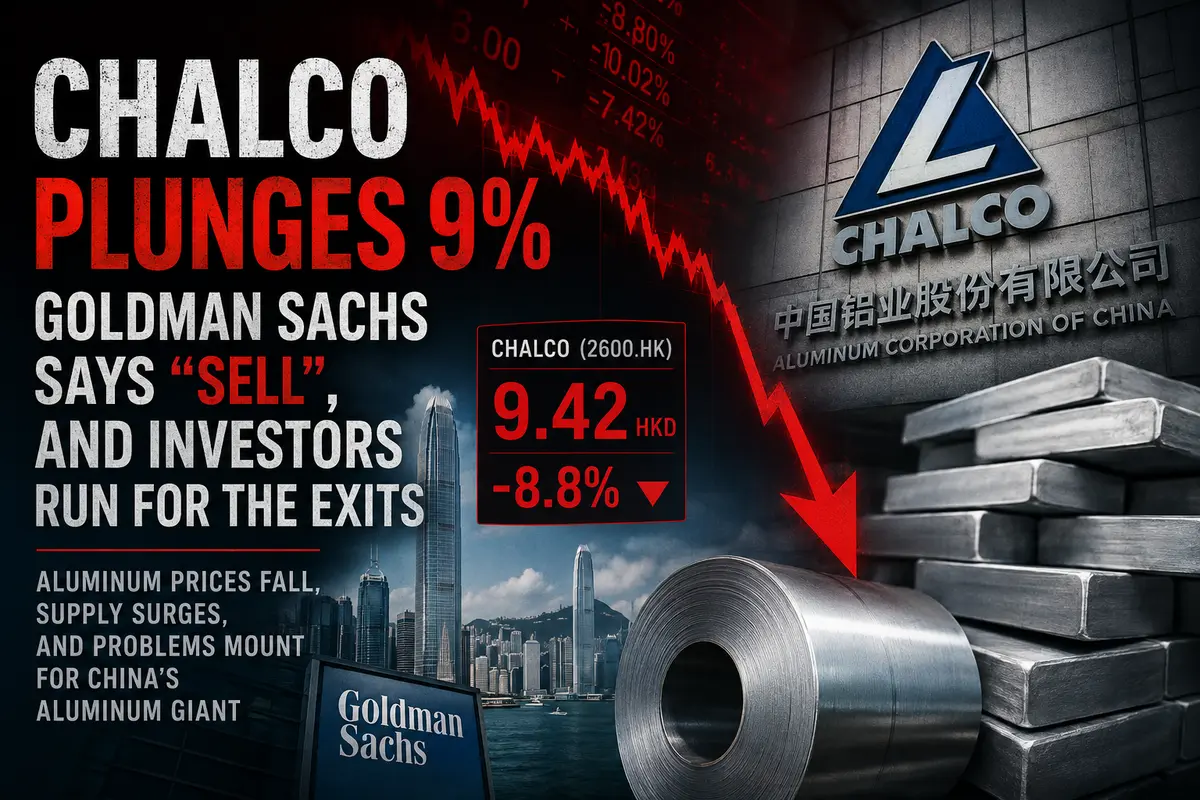
Chalco Plunges 9%: Goldman Sachs Says “Sell,” and Investors Run for the Exits

Monday: A Day of Red Numbers and Green Analysts

Monday was not kind to everyone on the Hong Kong Stock Exchange. Shares of Aluminum Corporation of China (Chalco) — China’s largest aluminum producer, a state-owned giant that carries much of the country’s non-ferrous metals industry on its shoulders — fell 8.8%. The stock dropped to HK$9.42 per share. At one point, losses reached 10%, before recovering slightly to around 8.8% by midday.

What happened? Why did a company that just a month ago seemed to embody China’s industrial strength suddenly become the target of a major selloff?

The answer: Goldman Sachs.

The U.S. investment bank, one of the most influential financial institutions in the world, downgraded Chalco from “Neutral” to “Sell” and cut its price target from HK$12.50 to HK$7.50. In other words, Goldman believes the stock could still fall another 20% from current levels.

A downgrade from Goldman is more than just an opinion. It is a signal followed by hundreds of institutional funds. When Goldman says “sell,” many investors sell first and ask questions later. That is exactly what happened on Monday.

But Goldman’s call was only part of the story. Chalco also faces several fundamental challenges: rising aluminum supply in China and globally, declining metal prices, a stronger U.S. dollar weighing on commodities, and evidence that investors have been pulling money out of the stock through the Stock Connect program.

Let’s break it down.

Goldman Sachs: What They Said and Why

Goldman Sachs is not just another brokerage. Alongside Morgan Stanley and JPMorgan, it is one of America’s largest investment banks. Its analysts rarely make dramatic rating changes. Typically, recommendations move gradually from “Buy” to “Hold” to “Sell.” Cutting a price target by 40% in a single move is unusual.

So what prompted Goldman to...

Continue reading...
0
0
Lin Brings

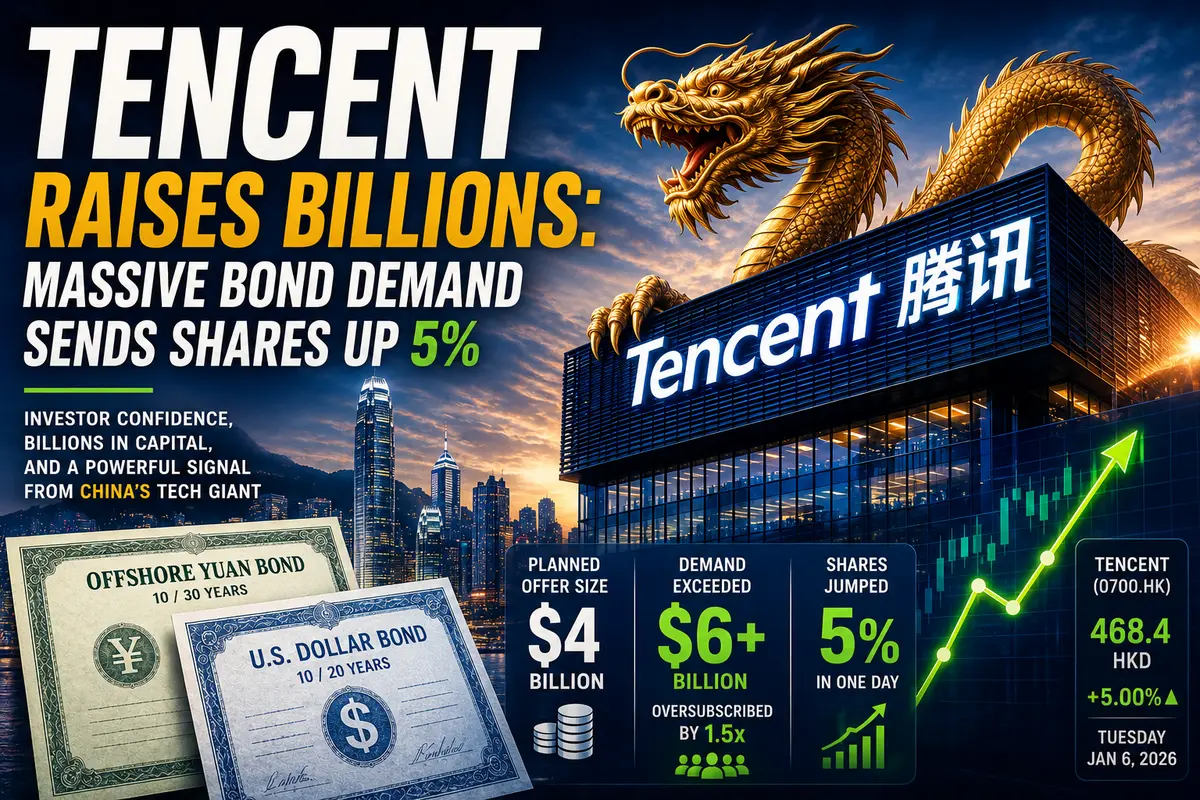
Tencent Raises Billions: Massive Bond Demand Sends Shares Up 5%

Tencent Raises Billions: Massive Bond Demand Sends Shares Up 5%

When China’s Internet Dragon Goes Hunting

On Tuesday morning, something happened on the Hong Kong Stock Exchange that many had anticipated, but few expected on such a scale. Shares of Tencent—the company that means as much to China as Google, Facebook, and Amazon combined mean to America—jumped 5%. The stock reached HK$468.4 per share.

A 5% move for a giant like Tencent, whose market capitalization is measured in hundreds of billions of dollars, is more than just a green arrow on a chart. It represents billions of dollars in added market value in a single day.

What caused such optimism? Bonds. At first glance, they seem like ordinary debt securities. But these were anything but ordinary.

Tencent entered the market with a dual-currency offering—in U.S. dollars and offshore Chinese yuan. The company aimed to raise about $4 billion. Instead, it received orders exceeding $6 billion.

Investors were willing to lend Tencent more than $6 billion. That is trust. That is confidence. And it is a signal the market finds difficult to ignore.

Let’s take a closer look at what happened, why investors lined up to buy these bonds, and what it means for Tencent, China’s technology sector, and global markets as a whole.

The Dry Numbers Behind an Ocean of Money

Let’s start with the details, because in finance, that’s often where the most interesting part of the story lies.

Tencent offered investors two types of bonds:

  • Offshore yuan-denominated bonds with maturities of 10 and 30 years.

  • U.S. dollar-denominated bonds with maturities of 10 and 20 years.

A fairly standard structure for a large multinational company seeking long-term financing.

What was not standard was the market’s reaction.

Demand for the yuan-denominated bonds reached 20.5 billion yuan, or approximately $3.02 billion at current exchange rates. Demand for the dollar-denominated bonds exceeded...

Continue reading...
0
0
Lin Brings

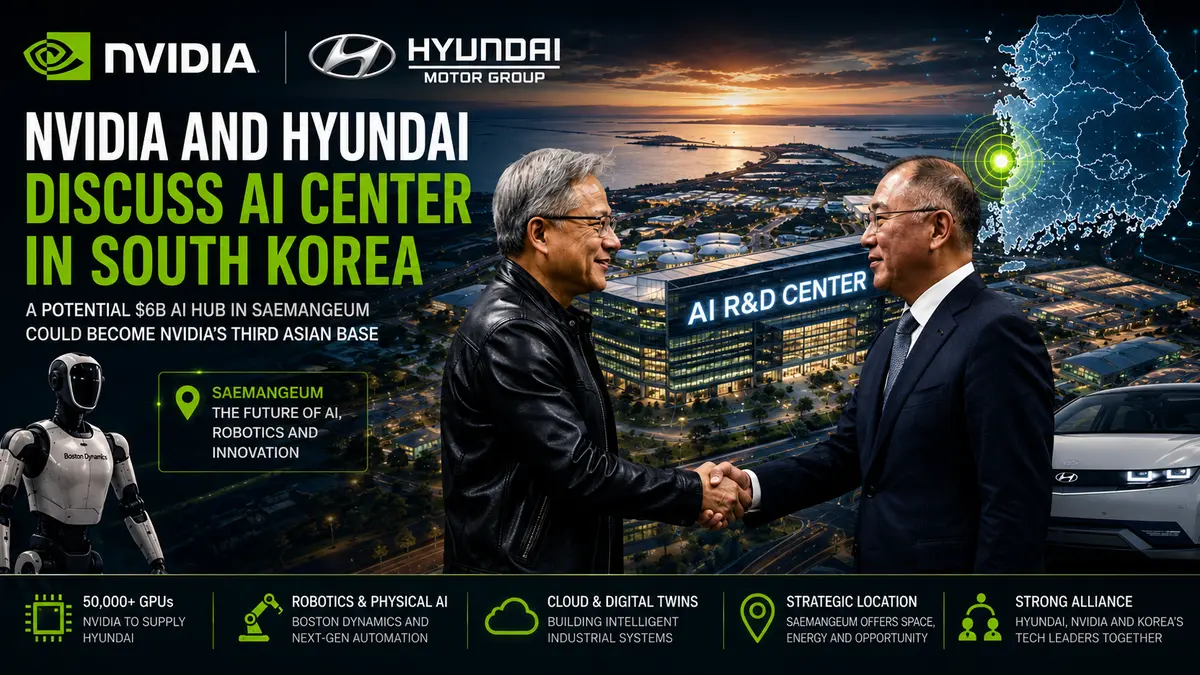
Nvidia and Hyundai Discuss an AI Center in South Korea

Nvidia and Hyundai Discuss an AI Center in South Korea

When Two Giants Sit Down at the Same Table

In the world of high technology, some developments make markets pause and watch closely. The ongoing talks between Nvidia and Hyundai Motor Group are one of those moments. Not because the two companies have never worked together before—they have, and quite extensively. Rather, it is because the scale of what is now being discussed goes far beyond a standard business partnership.

At the center of the discussions is the creation of an artificial intelligence technology hub in South Korea. Not merely an office or a university-affiliated research lab, but a full-scale R&D center that could become Nvidia’s third major base in Asia, alongside its existing hubs in Singapore and Taiwan.

Reports that negotiations have entered their final stage emerged Thursday in The Korea Economic Daily, citing government and industry officials. There has been no official confirmation yet. A Hyundai Motor Group spokesperson stated that no final decisions have been made regarding the project, its timeline, or its location. However, the fact that details surfaced just before Nvidia CEO Jensen Huang’s visit to Seoul is telling.

The timing is significant. In October 2025, Hyundai, Nvidia, and South Korea’s Ministry of Science and ICT signed a memorandum of understanding. Nvidia committed to supplying GPUs to Hyundai and jointly developing AI facilities in the country. Six months later, the partnership appears to be moving from broad commitments to concrete implementation.

Now attention has shifted to the final details: site selection, project structure, and strategic alignment. Huang is expected to arrive in Seoul on Friday and meet Hyundai Motor Group Executive Chair Euisun Chung. According to reports, an informal dinner is planned in Seoul’s Seongsu-dong district, with executives from SK Group, LG Group, and Naver also expected to attend.

The rumored menu? Korean pork belly...

Continue reading...
0
0
Navigation menu
instaforex banner