Bar Pipa
We pay for a post of 10$

Energy Shock

Istanbul, Thursday: The Numbers Everyone Feared
Istanbul, Thursday: The Numbers Everyone Feared

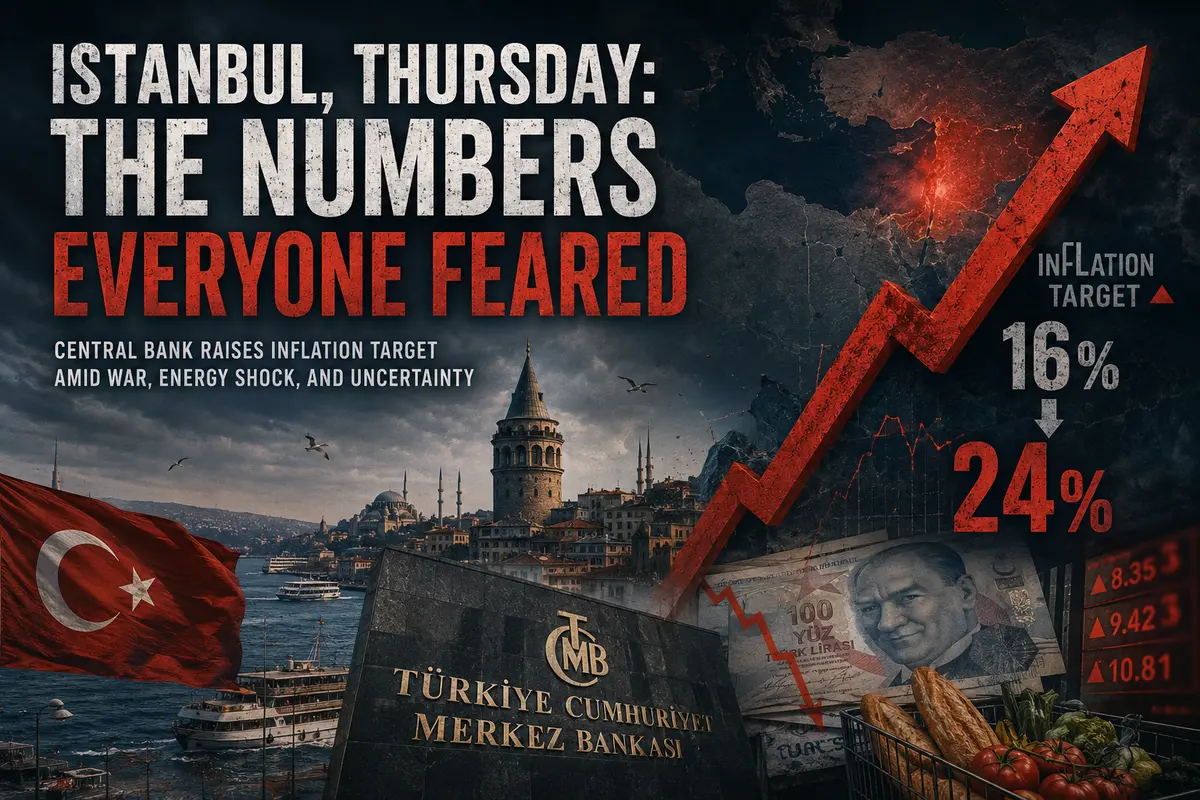
On Thursday in Istanbul, the Central Bank’s quarterly inflation report presentation took place — an event that only a few years ago was a routine bureaucratic procedure, but now feels more like a wartime emergency briefing. Central Bank Governor Fatih Karahan stepped before the press and announced figures that likely made Turkish households reach for a strong cup of tea.

The interim year-end inflation target was raised from 16 percent to 24 percent. In a single stroke — an increase of eight percentage points.

This was not a minor adjustment, a technical clarification, or some statistical footnote that could be blamed on imperfect models. It was an admission that reality has turned out far harsher than even the most pessimistic analysts expected. And the main culprit was identified directly: the war involving Iran and its inflationary consequences, which, according to Karahan, will remain significant in the short term.

The Bank did not hide behind euphemisms or vague references to “geopolitical uncertainty.” The source of the shock was named explicitly.

A Chain of Revisions: 2027, 2028, and Beyond

But the revision did not stop with the current year. Karahan also announced that the Bank had raised its interim target for the end of 2027 from 9 percent to 15 percent. A new benchmark of 9 percent was then set for the end of 2028.

These figures tell an entire story on their own.

The Bank is effectively acknowledging that inflation will remain in double digits for at least another two years. The road downward will be long, painful, and filled with obstacles. Even by the end of 2028 — two and a half years from now — inflation, according to the Central Bank’s own projections, is still expected to stand at 9 percent.

That is not a number any central banker...

Continue reading...
0
0
Tom Maffin

The Energy Shock That Rewrote the Rulebook

The Energy Shock That Rewrote the Rulebook

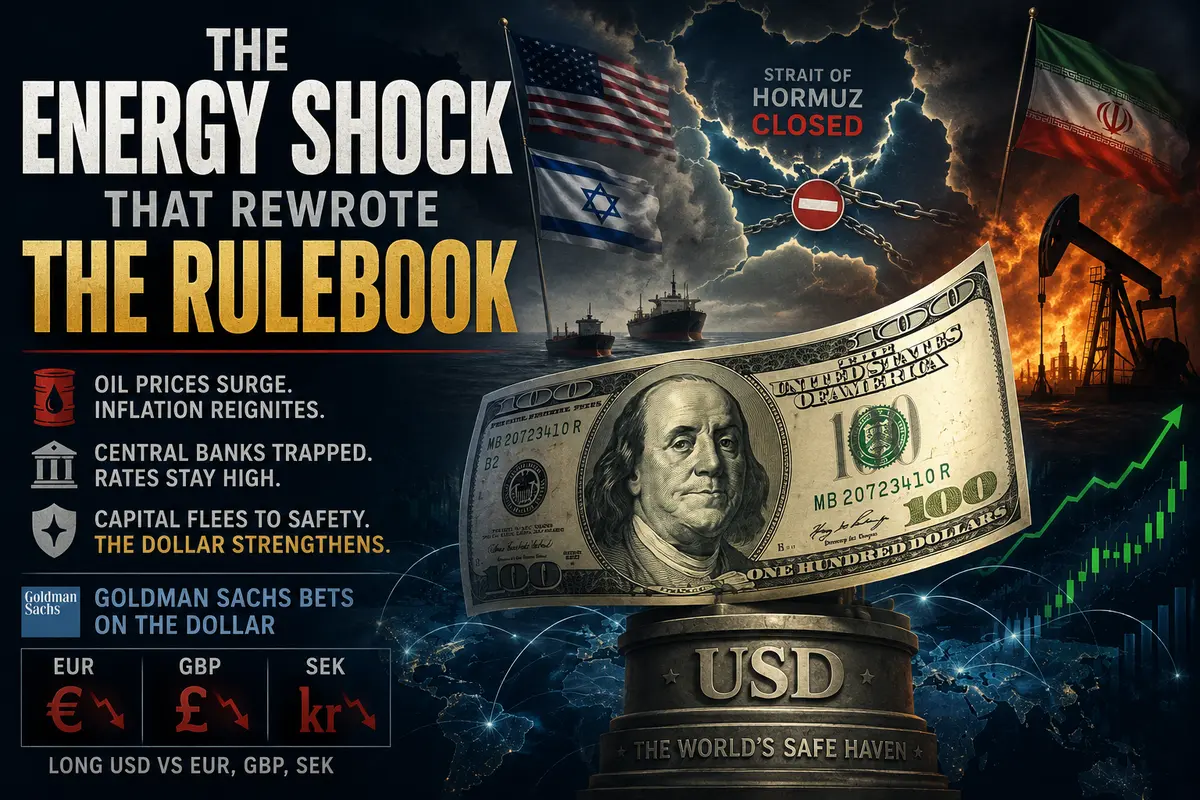
What happened in late February is still reverberating through global markets. The joint American and Israeli strikes on Iran didn't just become another line in the news feed — they physically reshaped the global energy market. The Strait of Hormuz, through which a fifth of the world's oil passes, was effectively closed to normal shipping. This isn't the kind of shock the market can digest in a couple of weeks and forget. It's a tectonic shift whose consequences will be felt for months.

The first reaction was a sharp spike in oil prices. But as always happens in these stories, a whole chain of consequences followed the oil surge. Inflation, which had seemed to be losing steam, suddenly got fresh fuel to accelerate. Central banks around the world, already starting to entertain the idea of easing policy, found themselves trapped: cutting rates now means risking a new inflationary spiral. Not cutting them means squeezing already fragile economic growth. It's at this crossroads that the renewed strength of the U.S. dollar is born.

Goldman Sachs Bets on the Dollar

Currency strategists at one of the most influential banks on Wall Street have released a fresh research note, and its core message sounds unambiguous: the dollar will keep strengthening. In the near term, an almost perfect storm is brewing for the greenback — not the kind that sinks ships, but the kind that fills sails.

Karen Reichgott Fishman, a strategist at Goldman Sachs, laid out the picture without embellishment. Macroeconomic reality, in her words, is playing squarely in the dollar's favor. Here's why. On one hand, inflation is gaining momentum again, stoked by expensive oil. On the other, the U.S. economy is showing enviable resilience to external shocks. Unlike Europe, which sits far closer to the epicenter of the conflict and is...

Continue reading...
0
0

Energy Shock Pushes Small-Cap Companies Into the Spotlight

Energy Shock Pushes Small-Cap Companies Into the Spotlight

The first quarter of this year delivered several surprises for investors focused on small-cap companies, and the biggest one came from the oil rally. Analysts reviewed the performance of more than three dozen exchange-traded funds targeting small-cap stocks and discovered an interesting pattern. Topping the list with a return of 8.6% was a fund focused on small-cap value stocks. The secret behind its success lies in the portfolio structure: eight of its ten largest holdings belong to the energy sector.

The flagship holding of the leading fund was oil and gas producer Kosmos Energy, which owns assets in Africa and the Gulf of Mexico. Its shares surged alongside oil prices after tensions escalated in the Middle East. The same factor also pushed another fund to the top among international small-cap ETFs: nearly half of its portfolio is concentrated in the financial and consumer sectors, while energy accounts for one-fifth of its holdings. This combination of industries allowed the fund to ride the wave of the oil shock especially effectively.

The market logic is both simple and brutal. When conflict erupts in the Middle East and tankers are forced to take longer routes, every extra day at sea effectively reduces the available shipping fleet. Freight rates climb, oil prices rise, and companies involved in extracting or transporting crude become the biggest beneficiaries.

Peloton Teams Up With Spotify: Rescue or Temporary Relief?

Fitness equipment maker Peloton, whose market capitalization has long slipped into small-cap territory, announced a partnership with streaming giant Spotify. Fitness and wellness content will now be available to Spotify Premium subscribers in most of the platform’s operating markets. Investors welcomed the news enthusiastically: the company’s stock gained 2.5% in a single day, reaching its highest level since early February.

However, behind this short-term optimism lies a far more complicated...

Continue reading...
0
0
Navigation menu
instaforex banner