

Gold Plunges in U.S. Trading: The Yellow Metal Loses Its Shine
Introduction: The Wednesday When the Safe-Haven Asset Stopped Providing Safety
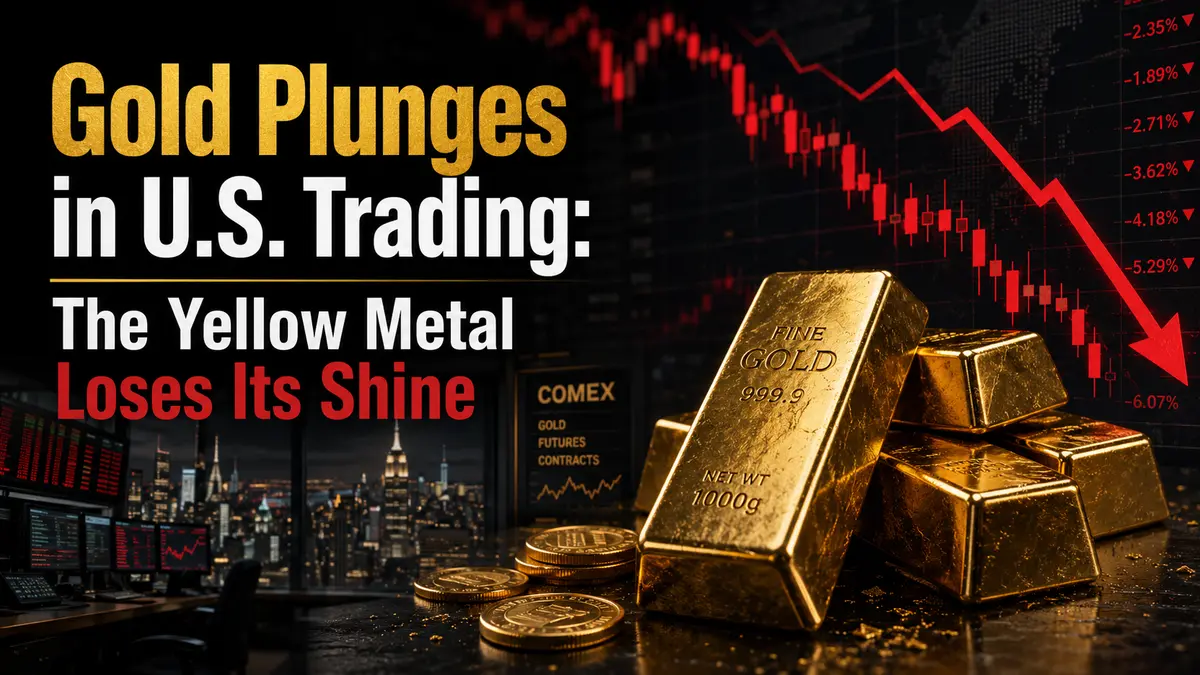
Wednesday, U.S. trading session. New York, COMEX. Traders who are used to seeing gold as a reliable safe haven during periods of uncertainty are now watching their confidence collapse. Gold futures for August delivery are plunging by 1.53% to $4,093.80 per troy ounce. This is not just a correction — it is the sharpest decline in recent weeks.
What happened? The yellow metal, which usually rises on geopolitical risks, is today ignoring the escalation of the conflict between the United States and Iran. Instead of rising, gold is falling. Silver, gold’s loyal companion, is falling even harder — down 3.92% to $58.93 per ounce. Copper is losing 1.48% to $6.13 per pound.
The technical picture is also discouraging. Gold found support at $4,032.37 and resistance at $4,215.50. The current price of $4,093.80 is closer to the lower boundary of this range. If gold continues to decline, it may test support at $4,032.37. If it reverses, resistance at $4,215.50 will become the next target.
The U.S. Dollar Index fell by 0.05% to 100.73 points. This is a minor decline, but it is not helping gold. The reason for the fall is not the dollar. It is something else.
Let’s examine why gold has plunged despite the geopolitical crisis and what this means for the precious metals market.
Why Gold Is Falling: Solving the Paradox
Inflation Expectations and Interest Rates
The main reason for gold’s decline is inflation expectations. The geopolitical crisis in the Middle East has led to higher oil prices. Higher oil prices mean higher inflation. Higher inflation means higher interest rates. Higher interest rates mean a stronger dollar. And a stronger dollar weighs on gold.
Gold is traditionally considered a hedge against inflation. But when inflation leads to higher interest rates, gold comes under pressure. This is because high interest rates make alternative assets, such as Treasury bonds, more attractive.
Today, we are seeing this dynamic in action. Investors are selling gold and buying the dollar and Treasury bonds, expecting the Fed to keep rates high in order to fight inflation.
Fed Minutes: Hawkish Signals
The minutes of the Fed’s June meeting, published on Wednesday, also played a role. Although policymakers were divided on the need for further rate hikes, the minutes showed growing concern about the persistence of inflation.
This means that the Fed is likely to keep rates high in the coming months. This supports the dollar and puts pressure on gold.
Profit-Taking
Gold has risen by almost 30% since the beginning of the year. Many investors have locked in profits, creating pressure on prices.
Profit-taking is a normal process in any market. After a strong rally, a correction always follows.
Silver and Copper: A Decline Across Metals
Silver: Down 3.92%
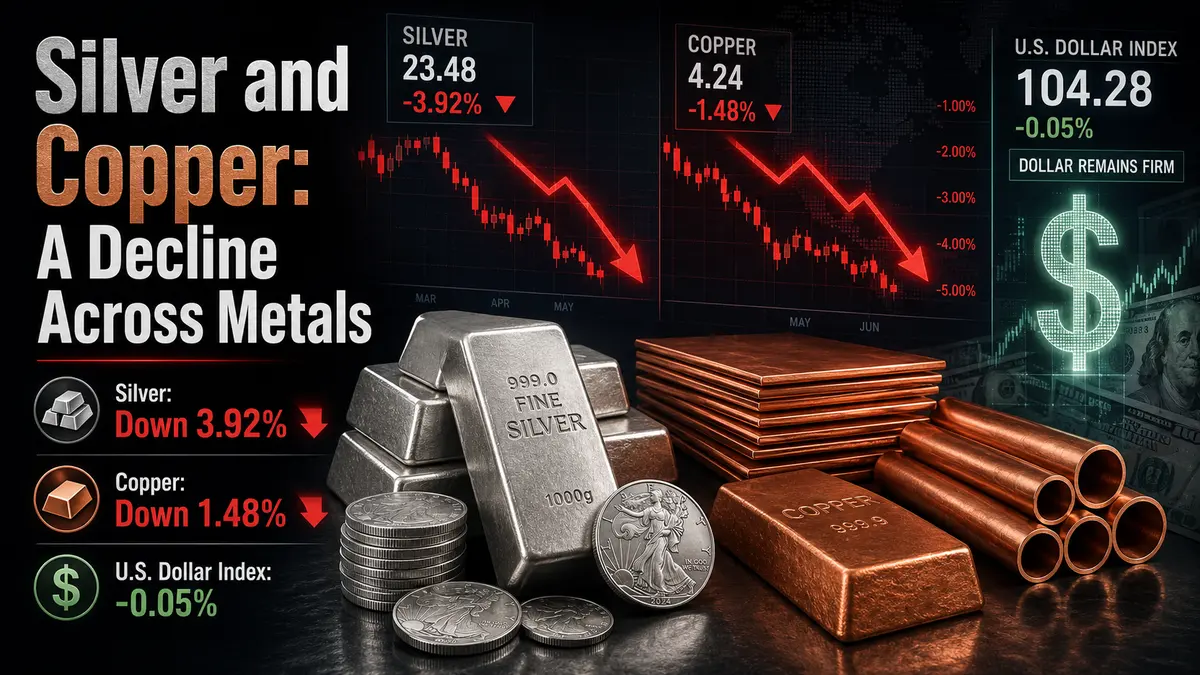
Silver plunged by 3.92% to $58.93 per ounce. This decline is sharper than gold’s, which is typical for silver, as it is more volatile.
Silver is both a precious metal and an industrial metal. Its price depends not only on investment demand but also on the state of industry. Expectations of an economic slowdown amid high interest rates are also weighing on silver prices.
Copper: Down 1.48%
Copper lost 1.48% to $6.13 per pound. Copper is sensitive to macroeconomic signals. Expectations of high interest rates and an economic slowdown are creating pressure on this metal.
The Dollar: Stability Despite the Decline
The U.S. Dollar Index Fell by 0.05%
The U.S. Dollar Index fell by 0.05% to 100.73 points. This is a small decline, but it is not helping gold.
The dollar remains near the 13-month highs reached in June. Investors continue to move into the dollar as a safe-haven asset amid geopolitical uncertainty.
What This Means for Gold
When the dollar is strong, gold becomes more expensive for holders of other currencies. This reduces demand for physical gold and puts pressure on prices.
What Awaits Gold in the Coming Days
Geopolitical Tensions
If the conflict between the United States and Iran continues to escalate, geopolitical uncertainty may support gold. However, for now, inflation expectations and high interest rates are dominating.
Inflation Data
If U.S. inflation data comes in above expectations, this will intensify concerns about high interest rates and put pressure on gold.
If the data comes in below expectations, it may weaken the dollar and support gold.
Fed Minutes as a Long-Term Factor
The Fed minutes showed disagreements within the regulator, creating uncertainty about the future path of monetary policy. If the Fed continues to signal a hawkish stance, gold will remain under pressure. If it shifts toward a dovish stance, gold may receive support.
Conclusion: Gold at a Crossroads
Gold plunged during U.S. trading on Wednesday. Futures for August delivery lost 1.53% to $4,093.80 per troy ounce. This decline occurred against the backdrop of geopolitical tensions in the Middle East, which usually support gold.
The reason for the decline is inflation expectations and high interest rates. The geopolitical crisis has led to higher oil prices, strengthening concerns about persistent inflation. The Fed minutes confirmed the regulator’s concern about inflation persistence, which supports the dollar and weighs on gold.
Silver plunged by 3.92% to $58.93 per ounce, while copper lost 1.48% to $6.13 per pound. The U.S. Dollar Index fell by 0.05% to 100.73 points.
Technically, gold has support at $4,032.37 and resistance at $4,215.50. If gold continues to fall, it may test support. If it reverses, resistance will become the next target.
Gold is at a crossroads. Geopolitical uncertainty and macroeconomic signals will determine its fate in the coming days and weeks. For now, the yellow metal is losing its shine, but the potential for recovery remains if investors begin to perceive it as a safe-haven asset amid growing uncertainty.

Comments
No comments yet. Be the first to share your thoughts!
Authentication Required
You must be logged in to post a comment.