

Gold Under Pressure Again: A Technical Correction or the Beginning of a New Trend?
Introduction: A Pullback Following Weak Inflation Data
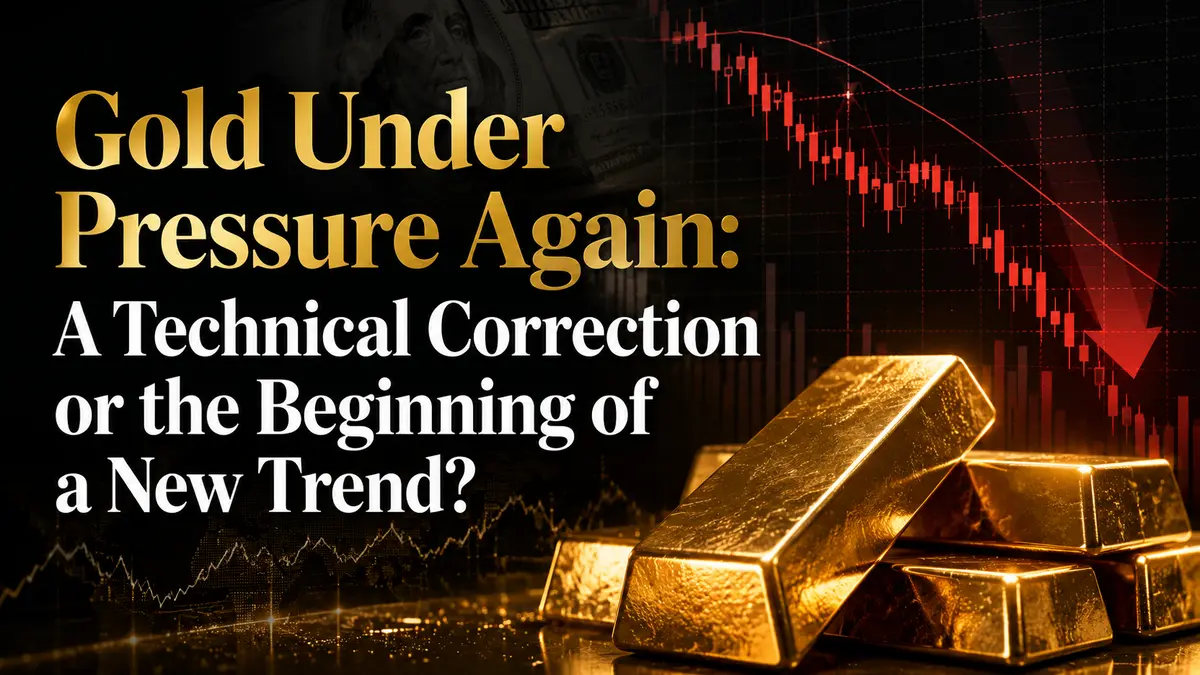
Wednesday began with another round of correction for gold. August gold futures fell by 0.90% to $4,032.87 per troy ounce. Silver also declined by 0.81% to $58.63. This is happening against the backdrop of a weaker US dollar, which fell by 0.09% to 100.63 points.
What is happening? Why is gold falling while the dollar is weakening? A weaker dollar usually supports gold prices, but today this correlation has broken down. The reason lies in US inflation data, which came in below expectations, and comments from Federal Reserve Chair Kevin Warsh, who maintained a hawkish stance.
Investors are reassessing their positions. Lower inflation reduces demand for gold as protection against currency depreciation, while the Fed’s tough rhetoric creates expectations that interest rates will remain high. In this article, we will examine all the factors affecting gold, assess the key technical levels, and try to determine where the metal may move in the coming days.
Inflation Data: Easing Pressure
A Weak CPI Report
US inflation data for June came in below expectations. The Consumer Price Index fell by 0.4% month over month, while annual inflation stood at 3.5%, compared with the projected 3.8%. Core CPI increased by 2.6%, also below forecasts.
This decline in inflation reduces demand for gold as a safe-haven asset. Investors are becoming less concerned about currency depreciation, weakening one of the key factors that has supported gold prices.
The Dollar’s Reaction
The US dollar weakened by 0.5% following the release of the data, but this did not help gold maintain its position. A weaker dollar usually supports gold, but today this effect was outweighed by other factors.
Falling inflation and hawkish signals from the Federal Reserve created pressure on the metal that proved stronger than the currency factor.
Impact on Interest Rate Expectations
Lower inflation reduces the likelihood of further interest rate increases by the Federal Reserve. However, Fed Chair Kevin Warsh maintained a tough stance, stating that the committee has “no tolerance” for persistently high inflation.
This creates uncertainty. On the one hand, the data indicates that inflation is slowing. On the other hand, the Fed continues to signal that it is prepared to act aggressively. For gold, this means that pressure is likely to remain.
Hawkish Signals from the Federal Reserve
Warsh’s Statement
Federal Reserve Chair Kevin Warsh stated that committee members have “no tolerance” for persistently high inflation and intend to curb price growth, which has remained elevated for the past five years. This is a strong statement that leaves little doubt about the central bank’s determination.
“If we get the policy right — and we will — the inflation surge of the past five years will be behind us,” Warsh said. This is a signal to the markets that the Federal Reserve does not intend to ease monetary policy prematurely.
Impact on Gold
High interest rates increase the opportunity cost of holding gold, which does not generate interest income. The higher the rates, the less attractive gold becomes compared with interest-bearing debt instruments.
Even as inflation declines, the continuation of high interest rates puts pressure on the metal. This is exactly what we are seeing today.
Risks of Further Monetary Tightening
Markets estimate the probability of an interest rate increase at the July FOMC meeting at approximately 50%. This creates uncertainty and discourages investors from actively purchasing gold.
Should the Federal Reserve raise rates, gold could suffer another setback. Should rates remain unchanged, the metal may receive short-term support.
Technical Overview: Key Levels to Watch
A Decline of 0.90%
Gold fell by 0.90% to $4,032.87. This represents a return to the levels tested by the metal at the beginning of the week. The decline is taking place despite the weakening dollar, indicating strong bearish pressure.
Support is located at $3,991.90. The price may retreat to this level should the correction continue. Should this level be broken, gold could move toward the $3,800–$3,900 range.
Resistance at $4,148.40
Resistance is located at $4,148.40. Gold must rise above this level to begin a meaningful recovery. At present, this appears unlikely given the current pressure.
A breakout above resistance could signal a trend reversal, but this would require positive signals from the Federal Reserve or new inflation data.
The Role of the Weaker Dollar
The dollar’s decline of 0.09% to 100.63 points failed to provide support for gold. This suggests that other factors, particularly inflation and interest rates, are having a stronger influence.
Investors should continue monitoring the correlation between the dollar and gold. Should the dollar continue to weaken, it could create conditions for a recovery in the metal.
Silver and Copper: Diverging Performance
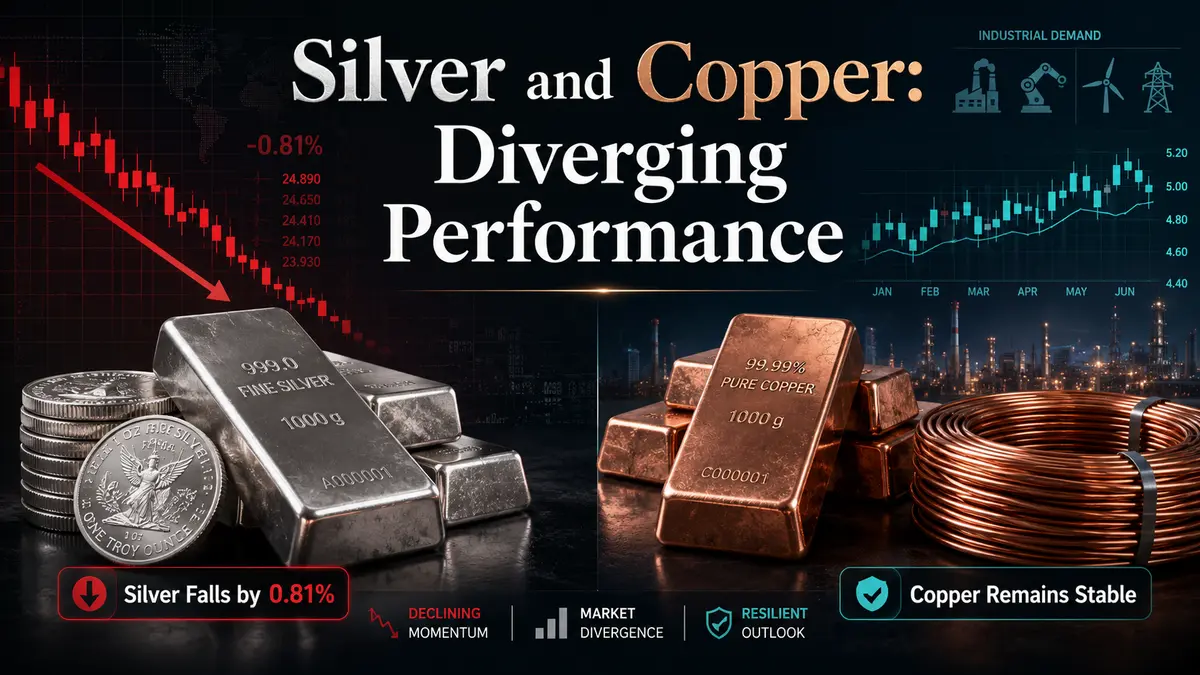
Silver Falls by 0.81%
September silver futures declined by 0.81% to $58.63 per ounce. XAGUSD ... traditionally follows gold, but it is also influenced by industrial demand.
The decline in silver reflects the broader pressure on precious metals. However, industrial demand could support silver in the future should the economy continue to recover.
Copper Remains Stable
September copper futures increased by 0.03% to $6.37 per pound. HGUSD ... , often referred to as “Doctor Copper” because of its ability to reflect economic conditions, remains stable, indicating that industrial demand is holding up.
Copper’s stability amid falling gold and silver prices suggests that investors continue to believe in an economic recovery.
Market Psychology: Fear and Hope
Why Gold Is Falling
XAUUSD ... is falling despite the weaker dollar because inflation expectations are declining and hawkish signals from the Federal Reserve are creating pressure. Investors are reassessing their positions and choosing to take profits following the recent rally.
Lower inflation reduces demand for gold as protection against currency depreciation. At the same time, persistently high interest rates increase the opportunity cost of holding the metal.
Hope for a Recovery
Despite the current decline, many investors remain hopeful that gold will recover. Geopolitical uncertainty, rising government debt, and inflation risks remain factors that could support the metal in the future.
Should geopolitical tensions intensify or new signs of inflationary pressure emerge, gold could receive fresh upward momentum.
What Comes Next: Possible Scenarios
Optimistic Scenario
Should inflation data continue to decline and the Federal Reserve signal a move toward easier monetary policy, gold could receive support and begin to recover. Under this scenario, the metal could test resistance at $4,148.40.
Geopolitical uncertainty could provide additional support if it outweighs concerns about declining inflation.
Realistic Scenario
A more likely scenario is that uncertainty will continue. Inflation may remain at a level that does not require immediate action from the Federal Reserve but is still too high to justify monetary easing. Gold could trade within the $4,000–$4,150 range.
Under this scenario, technical levels and macroeconomic data will remain the main market drivers.
Pessimistic Scenario
Should the Federal Reserve raise interest rates while inflation continues to decline, gold could break below the $3,991.90 support level and fall toward the $3,800–$3,900 range. In this case, investors may begin exiting the metal on a large scale.
This scenario is possible if economic data indicates that the economy remains resilient and that further monetary tightening is necessary.
What This Means for Investors
Short-Term Risks
The current decline in gold creates risks for short-term investors. Volatility remains elevated, and sharp price movements could result in losses.
Investors should closely monitor technical levels and macroeconomic data.
Long-Term Prospects
From a long-term perspective, gold remains an attractive asset. Geopolitical uncertainty, rising government debt, and inflation risks continue to support demand for the metal.
Gold investments can form part of a diversified portfolio, particularly during periods of uncertainty.
Conclusion: Gold Awaits New Signals
The 0.90% decline in gold futures to $4,032.87 reflects a combination of factors: falling inflation, hawkish signals from the Federal Reserve, and a technical correction. The weaker dollar failed to support the metal, indicating strong bearish pressure.
The key technical levels remain support at $3,991.90 and resistance at $4,148.40. A breakout above resistance could signal a trend reversal, while a move below support could lead to a continuation of the decline.
Inflation data and statements from the Federal Reserve continue to determine gold’s direction. Lower inflation reduces demand for the metal as a safe-haven asset, while the central bank’s tough rhetoric creates pressure through expectations of persistently high interest rates.
For investors, this is a time for caution. The current decline may prove temporary, but risks remain high. A careful assessment of fundamental factors and technical levels can help investors make informed decisions.

Comments
No comments yet. Be the first to share your thoughts!
Authentication Required
You must be logged in to post a comment.