


Bar Pipa
We pay for a post of 10$
NVIDIA Corporation

NVIDIA Corporation

NVDA NASDAQ

$212.06
+2.3%

Key Statistics

Market Cap
$5.14 T
Volume
128,176,151
Open
$205.81
Day Range
204.95 - 214.39
52W Range
164.07 - 236.54
Price AVG 50
$209.68

About NVIDIA Corporation

NVIDIA Corporation stands as a prominent provider of advanced graphics, computational, and networking solutions, operating across the United States, Taiwan, China, and numerous international markets. Its Graphics division encompasses GeForce GPUs, central to PC gaming and personal computing experiences, along with the GeForce NOW cloud gaming service and its supporting infrastructure, as well as dedicated solutions for various gaming platforms. For professional visualization, it provides Quadro and NVIDIA RTX GPUs for enterprise workstations, further offering vGPU software designed for cloud-centric visual and virtual computing, automotive platforms for in-vehicle infotainment, and the Omniverse software suite, facilitating 3D design and virtual world creation. The Compute & Networking segment is a cornerstone for AI, high-performance computing (HPC), and accelerated data center platforms. It integrates Mellanox networking and interconnect solutions, delivers automotive AI Cockpit technologies, fosters autonomous driving development through strategic agreements, and offers comprehensive autonomous vehicle solutions. This segment also manufactures cryptocurrency mining processors, supplies Jetson platforms for robotics and other embedded applications, and offers enterprise AI software, including NVIDIA AI Enterprise. These diverse offerings find widespread application across the gaming, professional visualization, data center, and automotive sectors. NVIDIA distributes its portfolio through a broad ecosystem, engaging original equipment and device manufacturers, system integrators, add-in board makers, retail channels, software vendors, internet and cloud service providers, automotive companies (both manufacturers and tier-1 suppliers), mapping firms, nascent technology ventures, and other industry stakeholders. A notable strategic partnership exists with Kroger Co. Founded in 1993, NVIDIA Corporation maintains its corporate headquarters in Santa Clara, California.

Asset Type: Common Stock
Sector: Technology
Industry: Semiconductors

Discussion

Authentication Required

You must be logged in to post a comment.

John Madnes

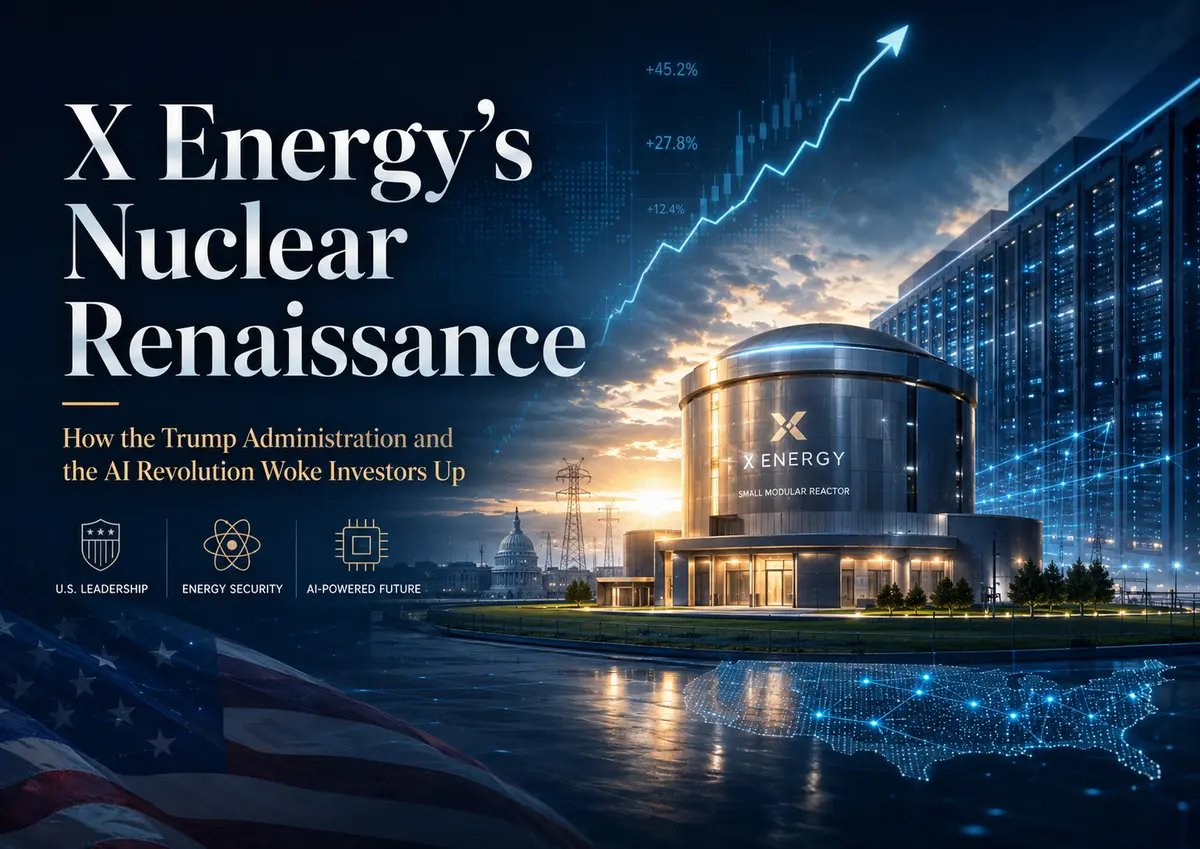
X Energy’s Nuclear Renaissance: How the Trump Administration and the AI Revolution Woke Investors Up
X Energy’s Nuclear Renaissance: How the Trump Administration and the AI Revolution Woke Investors Up

After-Hours Momentum: A 4.8% Gain in Just a Few Hours of Trading

When the closing bell rang on Wall Street on Tuesday evening, most investors had already turned their attention to the next day’s coffee and market charts. For X Energy shareholders, however, the evening marked the beginning of a genuine celebration. The company’s shares surged 4.8% in after-hours trading, and the move was far from a random spike. It was driven by news that could reshape the future not only of the company itself but of the entire US energy industry.

Citing people familiar with the matter, Bloomberg reported that X Energy had become part of a major $200 million federal initiative personally backed by the Trump administration. The program, which the US Department of Energy was preparing to officially unveil, is designed to dramatically accelerate the development of next-generation nuclear reactors.

The purpose of this race is not simply to produce environmentally friendly electricity and satisfy green-energy targets. The reality is both more practical and more ambitious: nuclear reactors are needed to power artificial intelligence data centers, which consume electricity like hungry monsters.

The development came as a complete surprise to many analysts. Although X Energy had long appeared on lists of promising developers of small modular reactors, its shares had not recorded significant growth in recent months. Now, however, the situation has changed dramatically. The government is extending a helping hand, while Microsoft and Nvidia are reportedly among the initiative’s participants.

X Energy is no longer merely an ambitious technology startup. It is becoming a key component of the United States’ national strategy for artificial intelligence and energy security.

Why Artificial Intelligence Needs Nuclear Energy More Than Ever

To understand why the news generated so much excitement, it is necessary to look at the heart of the...

Continue reading...
0
0

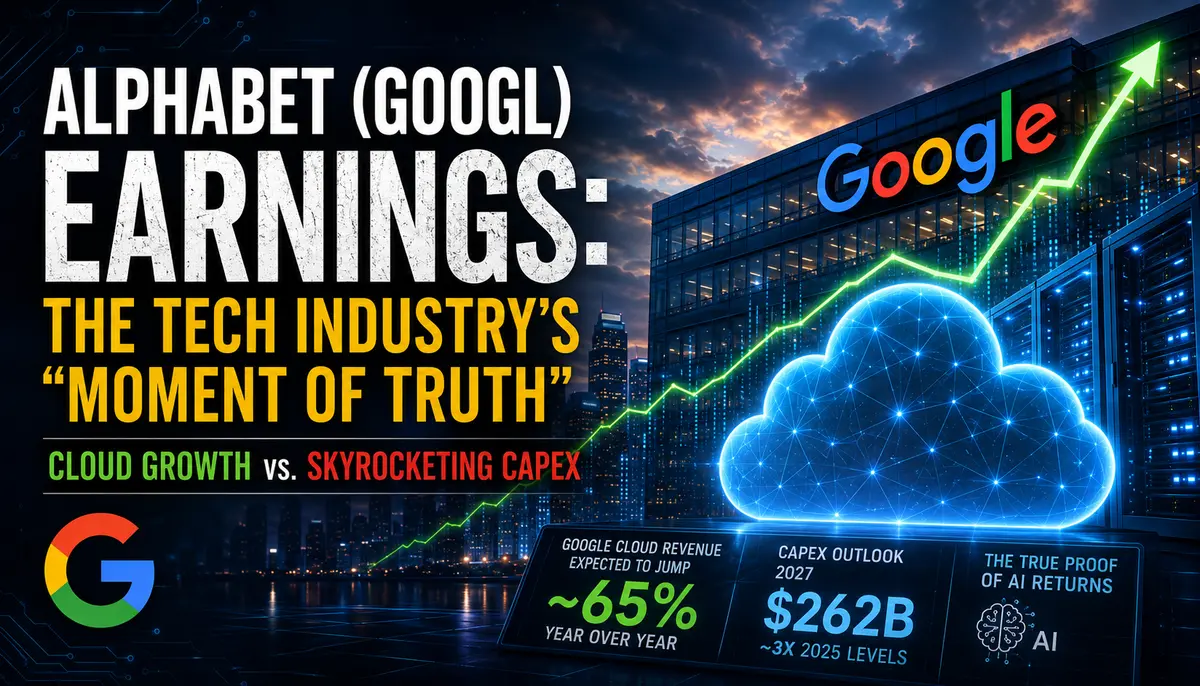
Alphabet (GOOGL) Earnings: The Tech Industry’s "Moment of Truth" – Cloud Growth vs. Skyrocketing Capex

Alphabet (GOOGL) Earnings: The Tech Industry’s "Moment of Truth" – Cloud Growth vs. Skyrocketing Capex

The Divergence: Magnificent Seven vs. Semiconductors

A fascinating shift has occurred in the market over the past month. We are seeing a widening performance gap between the "Magnificent Seven" and semiconductor stocks. While chipmakers have been the primary beneficiaries of the AI gold rush, the companies actually paying for those chips — the hyperscalers like Alphabet — have seen their forward free cash flow projections come under intense scrutiny.

Analysts at institutions such as Deutsche Bank are closely watching this divergence. The market is currently undecided whether the circular relationship between semiconductor demand and Big Tech spending is sustainable. If Alphabet reports a strong beat today and raises its Capex guidance, it could act as a catalyst to lift both the Mag 7 and the struggling semi-sector together. However, if the news is lackluster, the "buy the dip" mentality for chips could quickly evaporate.

Cloud Computing: The True Proof of AI Returns

According to Bloomberg AI analysis, the "make or break" metric for Alphabet this afternoon will be Google Cloud. Investors are demanding evidence that the billions of dollars poured into AI infrastructure are yielding a clear return on investment. The projections are ambitious: Google Cloud sales are expected to jump nearly 65 percent from a year ago, reaching approximately $22.4 billion.

This growth is essential because Alphabet’s search business, while still dominant, faces a new era of competition. The focus has shifted to how effectively Google can monetize its AI tools for enterprise clients. In this landscape, the integration of AI into global business processes — often managed through platforms like SAP ... — becomes a key indicator of long-term utility. If Alphabet can beat the 63 percent growth rate seen in the previous quarter, it will give the market confidence that its spending is prudent.

The Capex Arms Race...

Continue reading...
0
0
Lin Brings

SK hynix’s American Dream: How the Korean Giant Could Take Over Intel’s Ohio Fab

SK hynix’s American Dream: How the Korean Giant Could Take Over Intel’s Ohio Fab

Ohio Emerges as a New Hub for Korean Chips

When Intel began construction of its massive campus in New Albany, Ohio, in 2022, the project looked like the return of an iconic American manufacturer to its home soil after decades of expanding production overseas. Four hundred hectares of land, enough space for eight semiconductor fabrication plants, and promises of hundreds of billions of dollars in investment were all supposed to symbolize the revival of the American semiconductor industry. However, as often happens, reality introduced some harsh adjustments.

Today, four years later, this ambitious project is hanging by a thread, and its future may end up in the hands of a competitor: South Korea’s SK hynix. Negotiations over a possible acquisition of the Ohio campus are reportedly taking place behind closed doors. Although the potential purchase price remains closely guarded, the very possibility of such a transaction has shaken the markets and prompted analysts to reconsider the balance of power within the global semiconductor industry.

For SK hynix, this would not simply be another deal aimed at increasing production capacity. It would be a strategic move capable of completely transforming the company’s position in the US market while also satisfying growing political pressure from Washington. For several years, the US administration has urged semiconductor manufacturers to move production facilities to American soil and reduce their dependence on Asian manufacturing. SK hynix appears ready to answer that call—not by building an entirely new factory from scratch, but by purchasing infrastructure that is already close to completion.

Interestingly, the Korean company already has experience working with former Intel assets. In 2020, SK hynix agreed to acquire Intel’s NAND flash memory business for $9 billion, making it the largest transaction in the company’s history. Now, another piece of Intel’s former empire may be up...

Continue reading...
0
0
Tim Drening

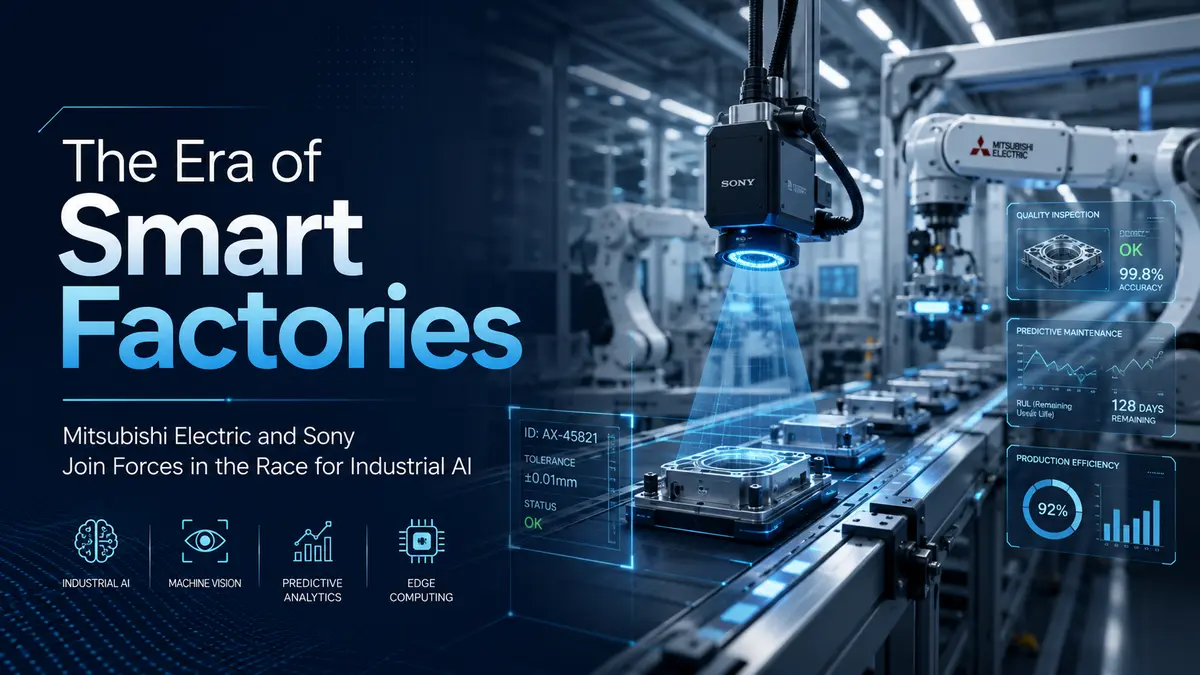
The Era of Smart Factories: Mitsubishi Electric and Sony Join Forces in the Race for Industrial AI

The Era of Smart Factories: Mitsubishi Electric and Sony Join Forces in the Race for Industrial AI

A Partnership of Giants: When Vision Meets Automation

Japanese industry, which has always been renowned for its technological excellence, is taking another enormous step into the future. MSBHF ... Electric, a veteran of factory automation with decades of experience, and SNEJF ... Semiconductor Solutions, a recognized leader in sensors and imaging technology, have announced the creation of a joint venture. The future company will be called Advanced Vision Solutions—a name that sounds more like a promise than a simple sign on the door of a new office.

The partnership between these two corporate giants is far more than another business deal. It is an attempt to unite two different philosophies, two engineering traditions, and two approaches to what the factory of the future should look like. Mitsubishi Electric knows virtually everything about robots, conveyor systems, and manufacturing control technologies. Sony, meanwhile, has spent years perfecting imaging technology and learning how to convert light into digital data with extraordinary precision. When these two worlds collide, they create something greater than the sum of their parts.

The joint venture is scheduled to be established in October 2026, although this is merely the formal launch date. Engineers and managers are already working actively to ensure that the company can operate at full capacity from its very first day. Mitsubishi Electric will hold a controlling 60% stake, which makes sense because it will serve as the primary integrator of the solutions at real manufacturing facilities. Sony will retain 40%, but its role should not be underestimated: without its sensors, the entire project would have little practical meaning.

This ownership structure is more than a collection of numbers. It sends a clear message to the market about which company will take the leading role and which will serve as the key technology partner. In reality, however, experience...

Continue reading...
0
0
Big Pip

Understanding the Investor: Roles, Strategies, Rights, and Responsibilities in Global Markets

Understanding the Investor: Roles, Strategies, Rights, and Responsibilities in Global Markets

An investor is an individual or an entity that allocates financial capital with the primary expectation of generating a future financial return. In essence, investors act as the lifeblood of the global capitalist economy. By committing funds to various assets, they provide the necessary liquidity and capital that businesses, startups, and governments need to innovate, scale, and build infrastructure.

The landscape of modern investing spans a massive spectrum of asset classes, from traditional equities and fixed-income securities to global real estate, venture capital, and digital assets. Regardless of their scale, all investors operate under a fundamental economic principle: balancing risk against potential reward.

1. The Spectrum of Investors: From Retail to Institutional Giants

Not all investors are created equal. The global financial markets are shaped by a diverse array of participants, each possessing distinct capital structures, regulatory boundaries, and investment objectives.

Retail Investors: The Power of the Individual

Retail investors are individual, non-professional market participants who invest their personal savings. Historically, retail investors were limited by high brokerage fees and information asymmetry. However, the digital revolution and the rise of zero-commission platforms like Charles Schwab, Robinhood, and eToro have democratized access to Wall Street, London, and Tokyo exchanges.

Retail investors often invest for personal milestones — such as retirement planning through accounts like a 404(b) or an IRA, funding education, or buying property.

While individual retail accounts may be small, their collective power can influence market sentiment and drive significant liquidity into popular consumer brands like Apple AAPL ... , Microsoft MSFT ... , or Nvidia NVDA ... .

Institutional Investors: The Heavyweights of Wall Street

Institutional investors are highly specialized organizations that pool massive amounts of capital from millions of individual clients or taxpayers to invest on a grand scale. Because they execute trades worth hundreds of millions of dollars, their market...

Continue reading...
0
0

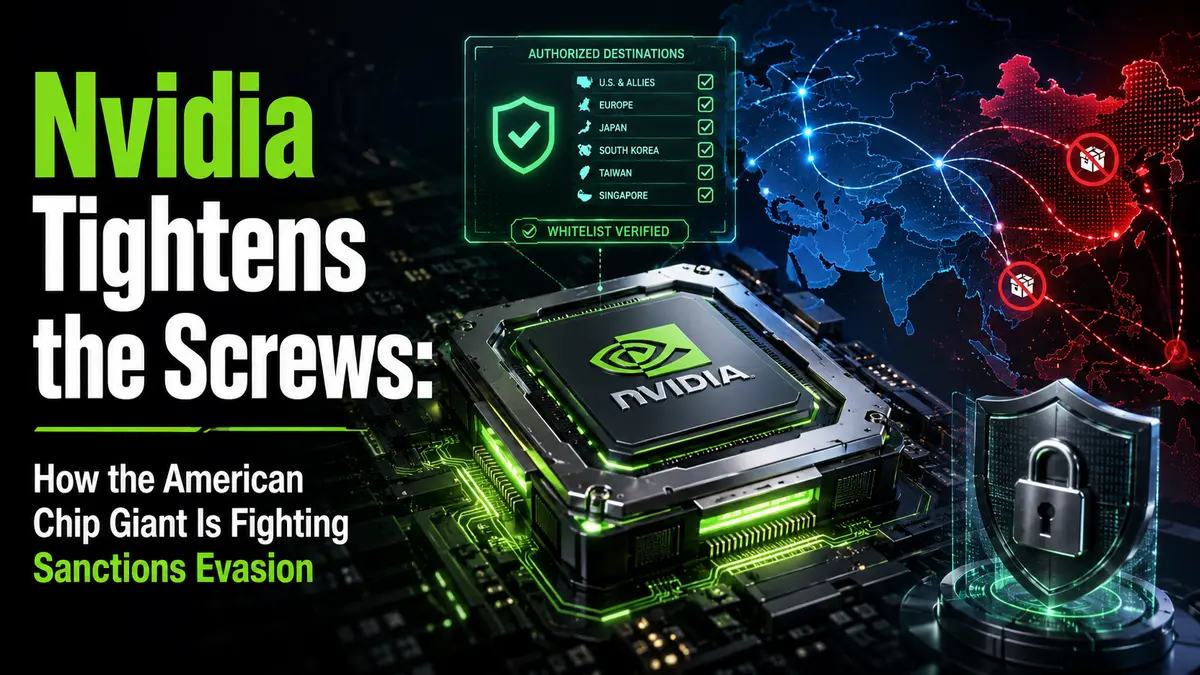
Nvidia Tightens the Screws: How the American Chip Giant Is Fighting Sanctions Evasion

Nvidia Tightens the Screws: How the American Chip Giant Is Fighting Sanctions Evasion

Introduction: A Whitelist Instead of Gray-Market Schemes

In the world of advanced technology, where artificial intelligence chips have become a strategic resource, the struggle to control their distribution is entering a new phase. Nvidia ( NVDA ... ) , the leading manufacturer of graphics processors used for AI, has reduced by more than half the number of Asian customers authorized to purchase its products. The decision is part of stricter compliance procedures designed to prevent the circumvention of export restrictions.

The company has created a new whitelist of approved Asian buyers and strengthened its customer due diligence procedures in Singapore, Malaysia, and Japan. According to the Financial Times, the new screening process excluded more than half of Nvidia’s previous customers. However, companies may reapply after addressing the identified compliance issues.

These measures come amid broader US efforts to close loopholes that allow Chinese companies to gain access to Nvidia’s advanced chips despite strict export restrictions. This article examines the reasons behind the tighter rules, assesses their impact on the market, and considers what may lie ahead for the industry.

Reasons for the Crackdown: Pressure from Washington and the Fight Against Smuggling

Export Restrictions on AI Chips

Washington has imposed strict export restrictions on the sale of AI chips to China since at least 2021. These measures are intended to prevent China from gaining access to advanced technologies that could be used for military purposes and to strengthen the country’s economic capabilities.

As a key manufacturer of AI chips, Nvidia is under close scrutiny from US authorities. The company must balance compliance with US legislation against its desire to retain access to the profitable Chinese market.

Allegations of $2.5 Billion in Chip Smuggling

In March, US prosecutors charged one of Supermicro’s co-founders and two company employees with allegedly organizing the smuggling of...

Continue reading...
0
0
Navigation menu
instaforex banner