The Era of Smart Factories: Mitsubishi Electric and Sony Join Forces in the Race for Industrial AI
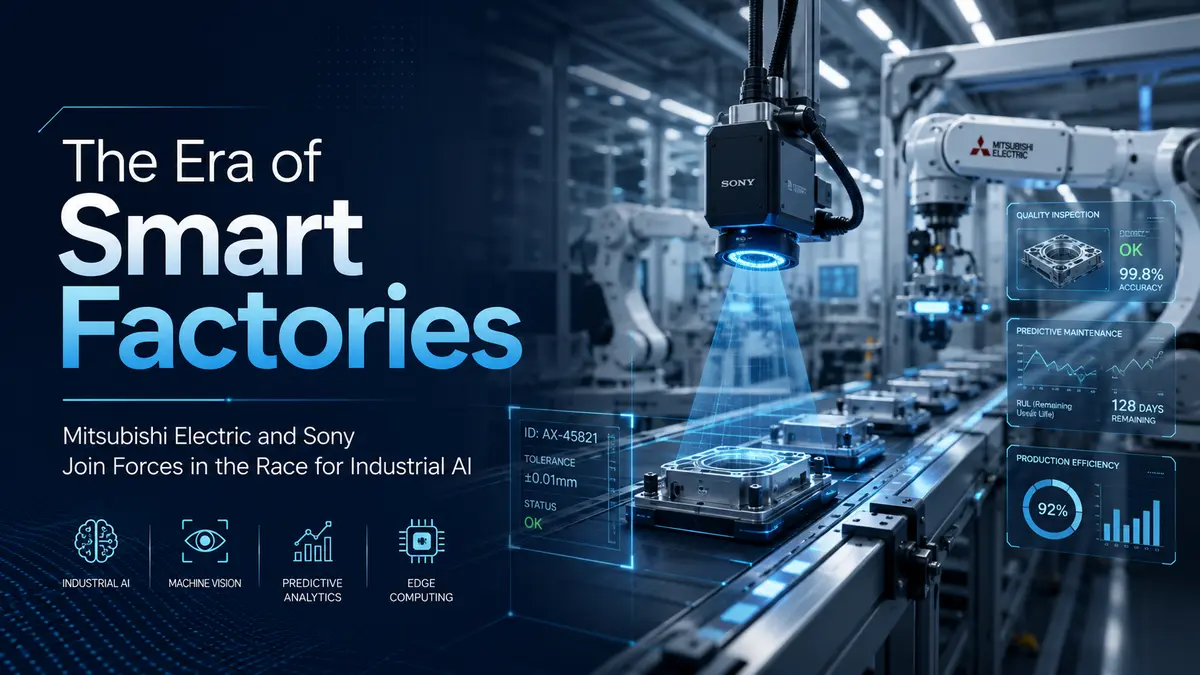
A Partnership of Giants: When Vision Meets Automation
Japanese industry, which has always been renowned for its technological excellence, is taking another enormous step into the future. MSBHF ... Electric, a veteran of factory automation with decades of experience, and SNEJF ... Semiconductor Solutions, a recognized leader in sensors and imaging technology, have announced the creation of a joint venture. The future company will be called Advanced Vision Solutions—a name that sounds more like a promise than a simple sign on the door of a new office.
The partnership between these two corporate giants is far more than another business deal. It is an attempt to unite two different philosophies, two engineering traditions, and two approaches to what the factory of the future should look like. Mitsubishi Electric knows virtually everything about robots, conveyor systems, and manufacturing control technologies. Sony, meanwhile, has spent years perfecting imaging technology and learning how to convert light into digital data with extraordinary precision. When these two worlds collide, they create something greater than the sum of their parts.
The joint venture is scheduled to be established in October 2026, although this is merely the formal launch date. Engineers and managers are already working actively to ensure that the company can operate at full capacity from its very first day. Mitsubishi Electric will hold a controlling 60% stake, which makes sense because it will serve as the primary integrator of the solutions at real manufacturing facilities. Sony will retain 40%, but its role should not be underestimated: without its sensors, the entire project would have little practical meaning.
This ownership structure is more than a collection of numbers. It sends a clear message to the market about which company will take the leading role and which will serve as the key technology partner. In reality, however, experience...