Bar Pipa
We pay for a post of 10$

USDT

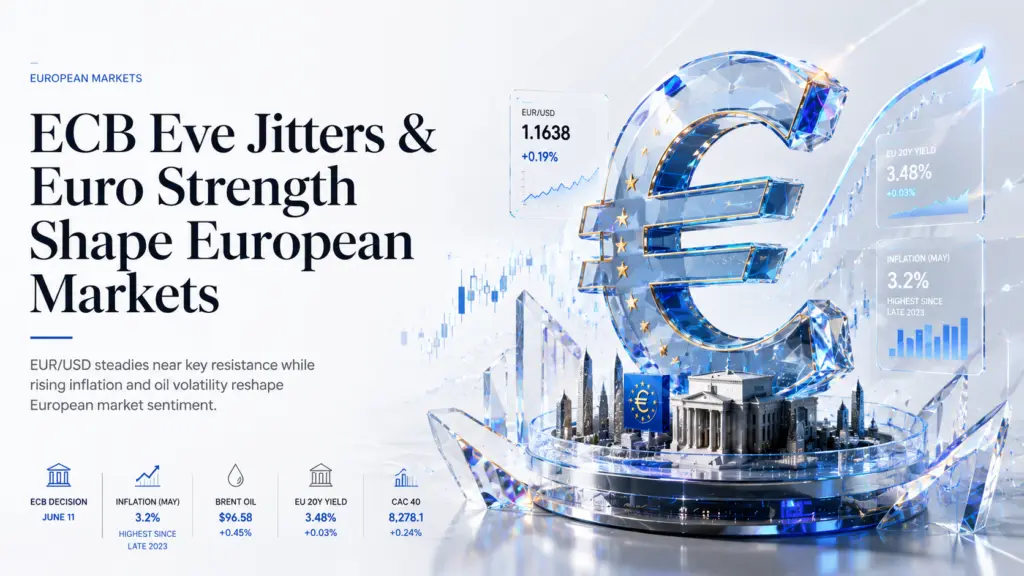
ECB Eve Jitters, Euro Firms on Inflation Data & CAC 40 Steadies Friday, 5 June 2026 | European Session — London Open | Capital Street FX Research Desk

ECB Eve Jitters, Euro Firms on Inflation Data & CAC 40 Steadies Friday, 5 June 2026 | European Session — London Open | Capital Street FX Research Desk

KEY EVENT: ECB Rate Decision — June 11  |  25bp Hike 90% Priced  |  ECB Deposit Rate 2.00%  |  Euro CPI 3.2% (May, highest since late 2023)

EUR/USD 1.1638  ·  EUR/GBP 0.8644  ·  Lead $2,014.51/T  ·  Corn 420.56¢/bu  ·  CAC 40 8,278.1  ·  AstraZeneca £13,150  ·  EU 20Y 3.48%  ·  USDT $1.0001  ·  BNB/USD $594.5


Session Overview — European Markets

Friday's European session opens with an unusual and defining tension: the euro is firming ahead of a rate hike that is already almost fully priced — a reminder that in modern markets, anticipation can both deliver and disappoint. With the European Central Bank's June 11 decision six days away and May eurozone inflation confirmed at 3.2%, the question is no longer whether the ECB will hike, but how hawkish the guidance will be and what comes next.

The macro backdrop is dense. Eurozone inflation rose to 3.2% in May — its highest reading since late 2023, with core at 2.5% and services inflation surging to 3.5%. These data points have pushed money markets to price a near-certain 25 basis-point hike at the June 11 meeting, lifting the ECB deposit rate from 2.00% to 2.25%, with a second hike priced for September and a third increasingly likely before year-end. ECB Governing Council member Isabel Schnabel on Monday added a hawkish note: it is too early to determine the exact number of rate hikes — a deliberate signal that the ECB is not inclined to front-run market guidance. Bank of Italy Governor Fabio Panetta was equally pointed: the forward-looking picture calls for a recalibration to counter the risk of persistent inflationary tensions.

Beneath the ECB narrative, the geopolitical picture remains the dominant risk overlay. Iran hostilities continue to disrupt oil supply chains and push energy-driven inflation across Europe. A conditional Lebanon...

Continue reading...
0
0

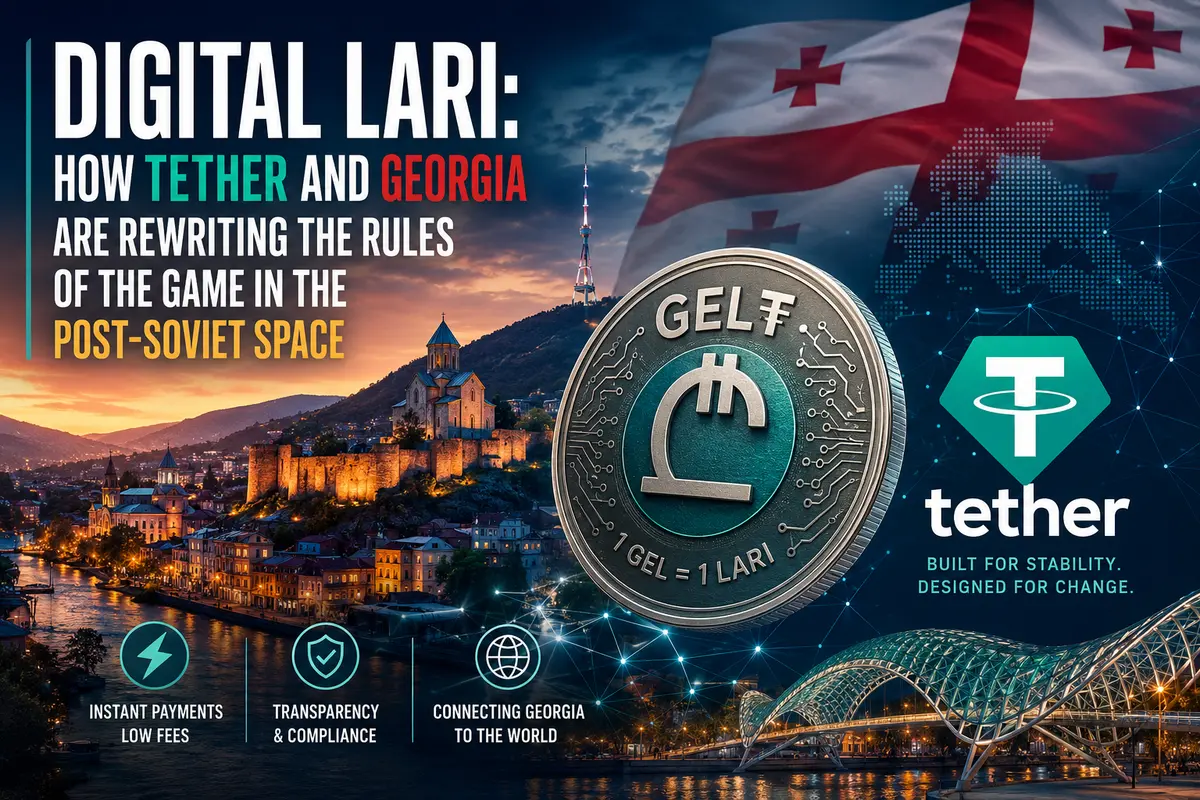
Digital Lari: How Tether and Georgia Are Rewriting the Rules of the Game in the Post-Soviet Space

Digital Lari: How Tether and Georgia Are Rewriting the Rules of the Game in the Post-Soviet Space

Tbilisi rarely makes headlines in global financial news. Mountain landscapes, ancient wineries, khachapuri, and hospitality — those are usually the first things that come to mind when people think of Georgia. But today, this small country at the crossroads of Europe and Asia has taken a step that could turn it into one of the world’s most intriguing testing grounds for digital currency experiments.

Tether, the issuer of the world’s largest dollar-backed stablecoin, USDT, with a market capitalization of $189 billion, has announced the launch of GEL₮ — a stablecoin pegged to the Georgian lari. And this is not a private initiative carried out around the authorities. The project is being implemented with the direct support of the Georgian government. The world has never seen an alliance between a state and the crypto industry quite like this.

What Is GEL₮ and Why Does It Matter?

GEL₮ is a digital token whose value is tied to the Georgian lari. One token equals one lari. Unlike volatile cryptocurrencies such as Bitcoin, a stablecoin does not swing wildly in price. It performs the same function as ordinary money, but within a digital environment.

Transfers, payments, and transaction settlements can all be carried out using GEL₮ faster, cheaper, and more transparently than through the traditional banking system.

Tether describes the advantages in the same language tech companies use to market their products: lower transaction costs, near-instant settlements, programmable payments, and efficient movement of funds within digital financial infrastructure. Behind these technical terms lies a simple reality: GEL₮ could become the bridge connecting Georgia’s traditional economy with the world of decentralized finance.

A Georgian farmer selling wine to Europe could receive payment instantly in stablecoins, without waiting weeks for an international bank transfer and without losing margins to fees. A Georgian freelancer working for overseas...

Continue reading...
0
0
Navigation menu