

Three Reasons Why HSBC Expects Decisive Action from the Bank of Japan
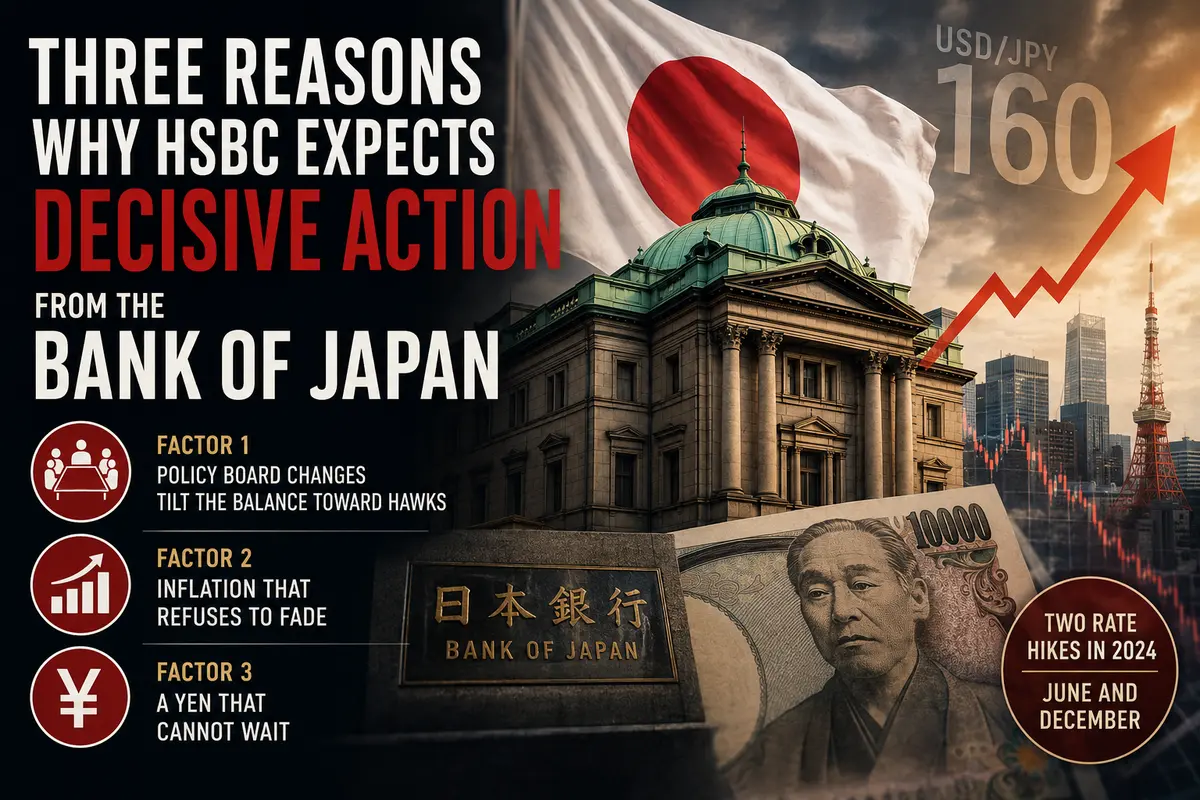
For decades, the Bank of Japan has been synonymous with monetary easing. While the Federal Reserve, the European Central Bank, and the Bank of England raised interest rates, fought inflation, and adopted more hawkish rhetoric, Tokyo remained an island of cheap money in a world of expensive capital. But that island now appears to be sinking.
HSBC has revised its forecast and now expects the Japanese central bank to raise rates twice this year. The first hike is projected for June rather than July, as previously anticipated. The second is expected in December. By year-end, the policy rate is forecast to reach 1.25%.
For a country that has spent decades with zero or even negative interest rates, this is close to a revolution. HSBC economist Frederik Neumann outlined three factors behind the revised outlook, and each deserves close attention.
Factor One: Changes on the Policy Board
Central banks are not abstract institutions run by algorithms. They are run by people—specific men and women who sit around a table, debate, vote, and make decisions. The fate of entire economies can depend on who occupies those seats. At the Bank of Japan, a changing of the guard is underway that could shift the balance of power toward the hawks.
Junko Nakagawa, a member of the Policy Board, will leave her post on June 29. Her final meeting will take place on June 16—the very meeting at which HSBC believes a rate hike could be approved. Nakagawa was one of three dissenting members who voted in favor of a rate increase at the previous meeting. In other words, she was already part of the hawkish camp. Yet her departure could paradoxically strengthen that camp’s influence.
Her likely successor is Ayano Sato, whom HSBC characterizes as more inclined toward accommodative monetary policy. This means...
