Bar Pipa
We pay for a post of 10$

Analytics

Lin Brings

Asia’s Red Screen: How a Samsung Strike, the Oil Crisis, and Rate Fears Crushed Markets

Asia’s Red Screen: How a Samsung Strike, the Oil Crisis, and Rate Fears Crushed Markets

Asian markets were painted deep red on Wednesday — and this was no mild correction. It was a full-scale selloff, triggered by a wave from Wall Street and intensified by local disasters. Three consecutive sessions of declines in U.S. indexes, a collapsing tech sector dragging everything else down with it, and South Korea’s KOSPI plunging more than two and a half percent to lead regional losses. This is what happens when several storms converge at one point: geopolitics pushes oil higher, oil fuels inflation, inflation drives interest rates up, and higher rates crush technology stocks. And in the middle of all this sits Samsung’s own drama, adding another canister of fuel to an already raging fire.

KOSPI and Samsung: When a Labor Dispute Becomes a Systemic Risk

South Korea’s KOSPI didn’t just fall — it collapsed, and the main culprit was the company that for decades symbolized national pride. Shares of Samsung Electronics, which erased early gains and plunged more than four percent, dragged the entire index down with them. The breakdown of negotiations with the labor union, reported by Yonhap, became exactly the trigger the market feared but hoped until the last moment to avoid.

The strike scheduled for Thursday, May 21, now looks almost inevitable. Forty-eight thousand workers, eighteen days of potential shutdowns, and no sign that the two sides will reach an agreement in time. For investors, this means an immediate repricing of risk. Samsung is not just another stock in the index — it is the pillar supporting a substantial portion of the Korean market’s capitalization. When that pillar shakes, the whole building trembles. The KOSPI’s drop of more than two and a half percent reflects growing recognition that Samsung’s problems may not be a short-term incident, but the beginning of a prolonged conflict with unpredictable...

Continue reading...
0
0

Gold in a Trap: Caught Between the Iranian Crisis and Suffocating Interest Rates

Gold in a Trap: Caught Between the Iranian Crisis and Suffocating Interest Rates

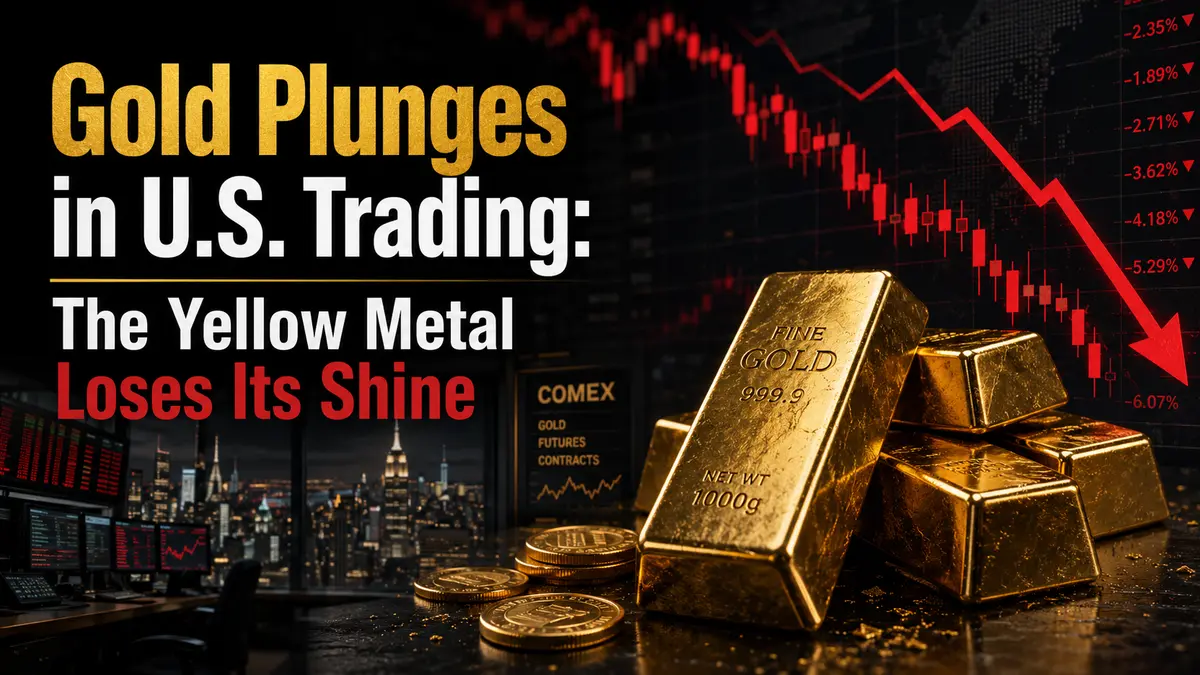
Gold has frozen. It’s a strange, almost unnatural state for an asset that for centuries symbolized movement — either a panicked flight to safety or a violent collapse driven by profit-taking. But Wednesday’s Asian session showed a market that seemed paralyzed. Spot gold hovered around $4,488 per ounce, futures near $4,490 — neither rising nor falling, but holding its breath. Gold, which by all logic should be soaring amid a war disrupting oil supplies and fueling geopolitical chaos, instead lingers near its lowest levels since early April. And within this paradox lies perhaps the most important story of today’s financial world — the story of how timeless truths stop working when monetary policy and inflation fears enter a deadly collision.

Why War Hasn’t Sent Gold Prices Soaring

To understand the drama surrounding the yellow metal, one must rewind the tape and remember how gold behaved during previous geopolitical crises. Escalation in the Middle East, the closure of the Strait of Hormuz, warships facing each other at close range — any one of these headlines would once have triggered a massive gold rally. Investors would have rushed into bars and coins, driving prices toward historic highs. But now, when President Trump and Vice President Vance report progress in peace negotiations and gold barely reacts, it becomes clear: the market no longer dances to the tune of geopolitics the way it once did.

The reason is that the current conflict with Iran is not just a war — it is a war that generates inflation. And inflation, once an old friend of gold, has returned wearing a more dangerous face. Traditionally, rising prices benefited gold because people bought it to protect themselves against the erosion of paper currencies. But today’s inflation is not the result of loose monetary policy. It is a...

Continue reading...
0
0

Calm After the Storm: Oil Takes a Breather, but the Fire Isn’t Out

Calm After the Storm: Oil Takes a Breather, but the Fire Isn’t Out

Wednesday’s Asian trading session brought something the oil market has rarely felt in recent weeks — near stillness. July WTI crude futures slipped only marginally, settling at $104.05 per barrel. A decline of four hundredths of a percent is hardly a pullback; it is statistical noise, the faint breathing of a market trying to recover after a marathon. Yet it is precisely during these moments of deceptive calm, when prices hover between support at $95.12 and resistance at $105.21, that the real drama unfolds. Behind this sideways movement lies a battle of fears, expectations, and calculations that will determine where oil heads next — upward toward new highs, or downward, offering relief to the exhausted global economy.

The Thin Line Between Support and Resistance

To understand what is happening in oil right now, one must look beyond fractions of a percentage point and focus on the levels trapping the price. Support at $95.12 is the threshold below which the market refuses to let gravity take over. Whenever oil approached this level in previous sessions, buyers immediately stepped in. This suggests that the fundamental backdrop — supply disruptions, geopolitical tensions, and shrinking inventories — remains so strong that even aggressive sellers hesitate to assault this fortress.

On the other side, resistance at $105.21 acts like an invisible ceiling. Every time prices near this boundary, automated sell orders trigger, profit-taking intensifies, and perhaps traders’ secret hopes emerge that the madness may soon end.

This oscillation between two poles perfectly illustrates the market’s schizophrenia. On one hand, everyone sees the physical shortage of crude. Tankers are avoiding the Strait of Hormuz, insurance premiums have soared, and alternative routes simply cannot compensate for the loss of Iranian and broader Middle Eastern supply. On the other hand, diplomatic efforts remain on the horizon, and every...

Continue reading...
0
0

Calm Before the Storm: Asian Currencies Freeze in the Shadow of War and Looming Rate Hikes

Calm Before the Storm: Asian Currencies Freeze in the Shadow of War and Looming Rate Hikes

At first glance, Asian currency markets looked almost sleepy on Wednesday. Most pairs drifted within narrow ranges, traders seemed to hit pause, and price action resembled the heartbeat monitor of a patient under heavy sedation. But this silence is deceptive. Beneath the surface calm of sideways trading lies enormous tension ready to erupt at any moment. When three forces converge at once — a war disrupting one-fifth of global oil supplies, renewed fears of Federal Reserve rate hikes, and deepening geopolitical fractures among major powers — markets do not calm down; they become paralyzed, trying to calculate where the first blow will come from.

The Heavyweight Dollar and the Ghost of Tightening

The dollar index hovering near six-week highs is the perfect barometer of global anxiety. Whenever the world starts shaking, money inevitably rushes into the dollar, and the current situation is no exception. But what makes this moment unique is that the dollar is rising not only as a safe haven, but also as a currency that could become even more profitable. Markets have once again started talking about something they tried to forget over recent months — another Fed rate hike.

This narrative did not emerge out of nowhere. Remarks by Philadelphia Federal Reserve Bank President Anna Paulson, made almost casually on Tuesday evening, became the detonator. When a senior Fed official says it is reasonable for markets to speculate about possible rate increases, it is not just rhetoric — it is a signal. Central bankers rarely speak carelessly. Behind such comments lies growing concern within the Fed over energy-driven inflation, which has begun accelerating again after the conflict with Iran disrupted supplies through the Strait of Hormuz.

Inflation caused by a supply shock is the most unpleasant type of inflation for central banks. It cannot be fought...

Continue reading...
0
0
Navigation menu