

Slippage Explained: Why Your Crypto Trade Almost Never Fills at the Exact Price You Saw
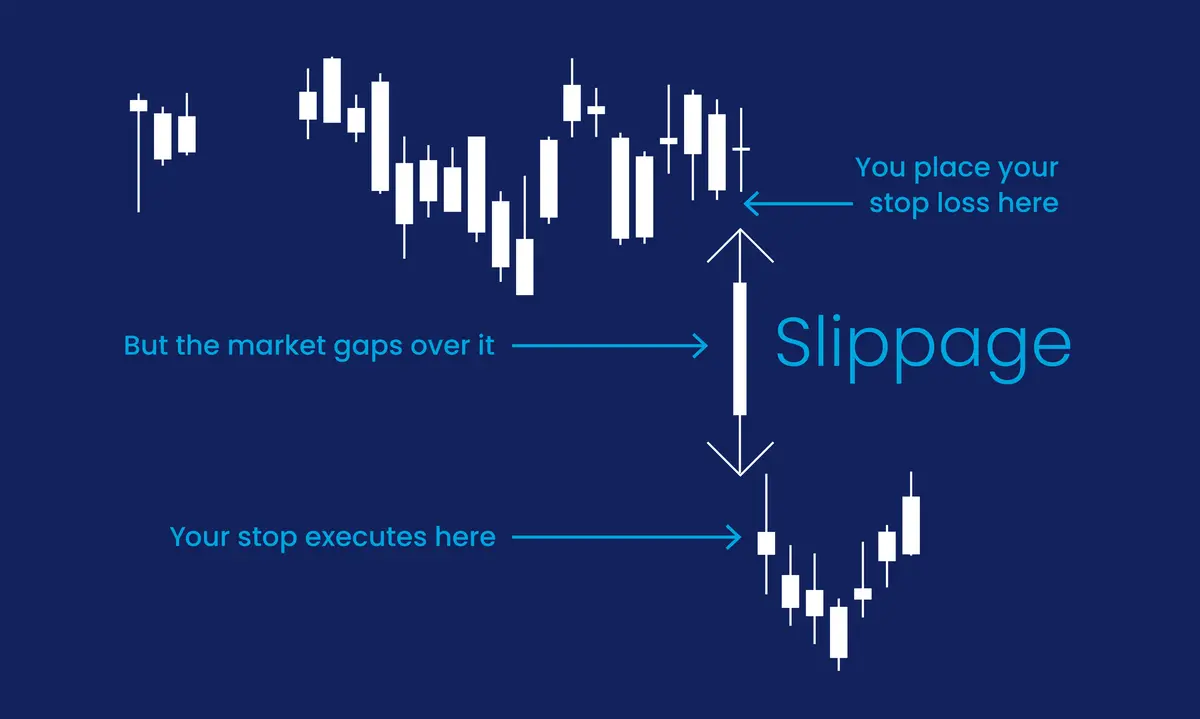
You tap “swap” on your favorite DEX. The screen says you’ll get 1,000 USDC for your ETH. You confirm. Ten seconds later, the transaction lands — and you actually got 994 USDC. Nobody stole from you. No hack. No bug.
You just met slippage, one of the most misunderstood concepts in crypto trading. Whether you’re swapping on Uniswap, filling an order on a centralized exchange, or aping into a fresh memecoin, slippage is quietly shaping every price you touch. Understanding it is the difference between a trader who feels ripped off and one who knows exactly what happened.
What Slippage Actually Is
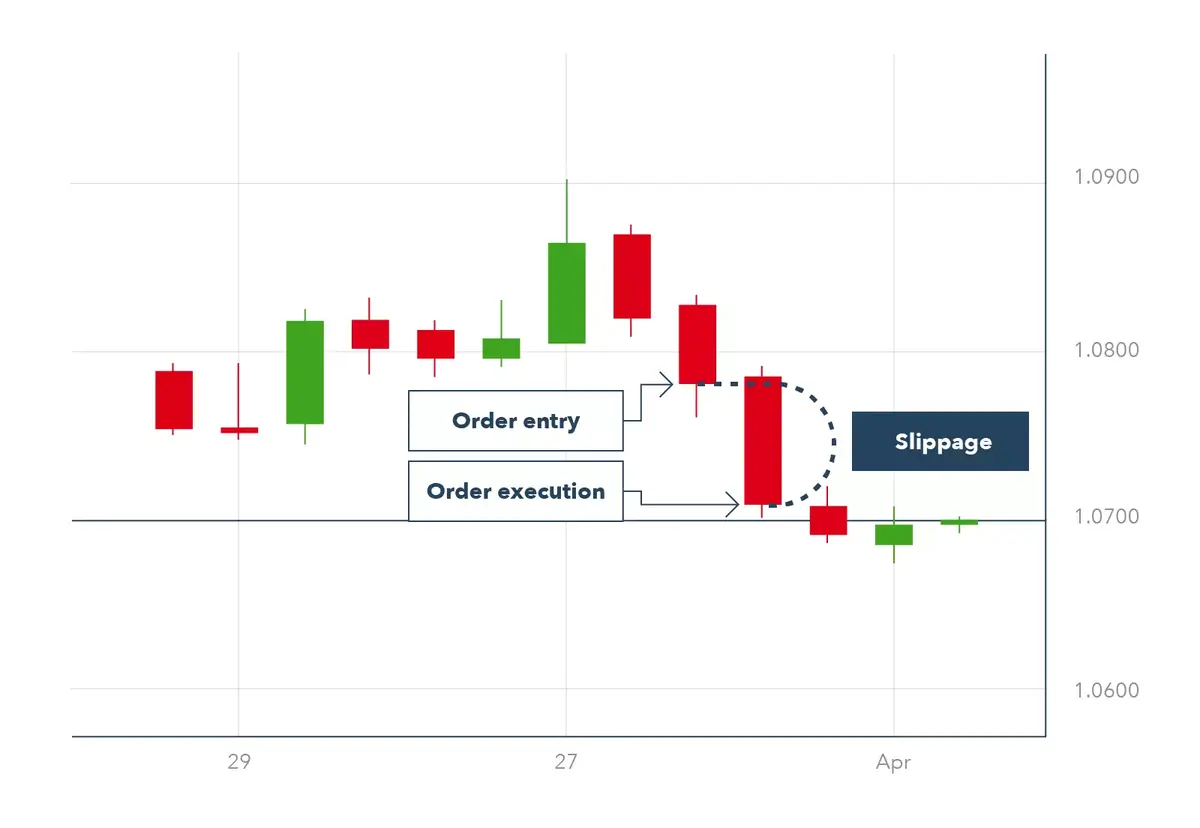
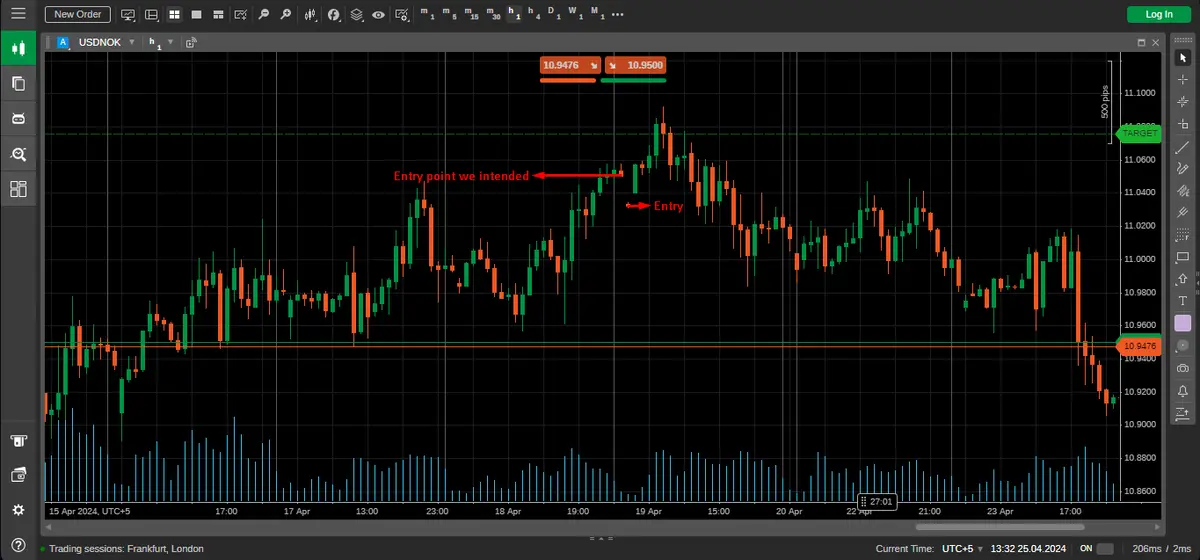
Slippage is the difference between the price you expected to get and the price you actually got.
If you expected to buy ETH at $3,000 and you paid $3,015, that’s $15 of slippage — half a percent. If you expected to sell 1 SOL for $150 and you received $148.50, that’s $1.50 of slippage — one percent.
Slippage can be positive too. Sometimes you get a slightly better price than expected. But in practice, especially when you’re the one initiating a trade, slippage almost always works against you. There’s a structural reason for that, and we’ll get to it.
The key insight: slippage is not a fee. Nobody charges it. It’s not a hidden tax collected by the exchange. It’s simply a consequence of how markets — and especially blockchain markets — actually work.
Why Slippage Exists
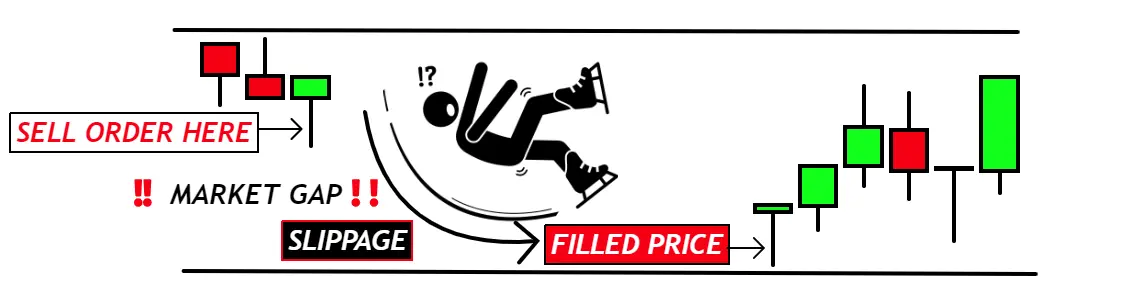
Imagine a farmer’s market with one apple seller. She has ten apples at $1 each. You buy two — easy, $2 total. Now imagine you want fifteen apples. You buy all ten at $1, then have to find another seller who might charge $1.50 for the extra five. That $0.50 premium is your slippage.
Every market works this way. There’s a stack of orders — some people selling at low prices, others only at higher prices. A big buy walks up the stack, eating cheaper offers first, then paying more for later ones. The bigger your trade relative to available supply at each price level, the worse your slippage.
Slippage on Centralized Exchanges
On a centralized exchange like Coinbase or Binance, the market is organized as an order book. Buyers post bids (“I’ll pay up to $2,999 for 1 ETH”), sellers post asks (“I’ll sell 1 ETHUSD ... for $3,001″), and the exchange matches them.
When you place a market order, your order eats through the book. If the top ask is only for 0.5 ETH and you want 5 ETH, you’ll fill 0.5 at the best price, then 0.5 at the next-best, and so on. Your average fill price ends up higher than the price on the ticker.
This is why professional traders watch depth, not just price. A market can display “ETH: $3,000” but only have 2 ETH available there. Buy 100 ETH and the last coin might cost you $3,050.
Slippage on Decentralized Exchanges
DEXs are where slippage gets really interesting, because most of them don’t use order books at all. They use automated market makers, or AMMs.
An AMM is a smart contract holding two pools of tokens — say, ETH and USDC. The rules of the contract set the price based on the ratio of the two pools. The most common formula is: the amount of ETH multiplied by the amount of USDC must always equal a constant number. This is the famous “x times y equals k” equation.
Here’s what that means in practice. Suppose the pool has 100 ETH and 300,000 $USDC. The price of 1 ETH is 3,000 USDC. Now you come along and want to buy 10 ETH.
To keep the product constant, after your trade the pool must still satisfy x times y equals 30,000,000. If you remove 10 ETH, the pool has 90 ETH left. So the USDC side must become 30,000,000 divided by 90, which is 333,333. That means you paid 33,333 USDC for your 10 ETH — an average price of 3,333 per ETH, not 3,000.
Your slippage was over 11 percent, just because your trade was large relative to the pool.
This is the fundamental trade-off of AMMs. They’re beautifully simple and permissionless, but the deeper you dip into the pool, the worse your price gets. Small trades in deep pools have almost no slippage. Big trades in small pools can be brutal.
The Difference Between Slippage and Price Impact
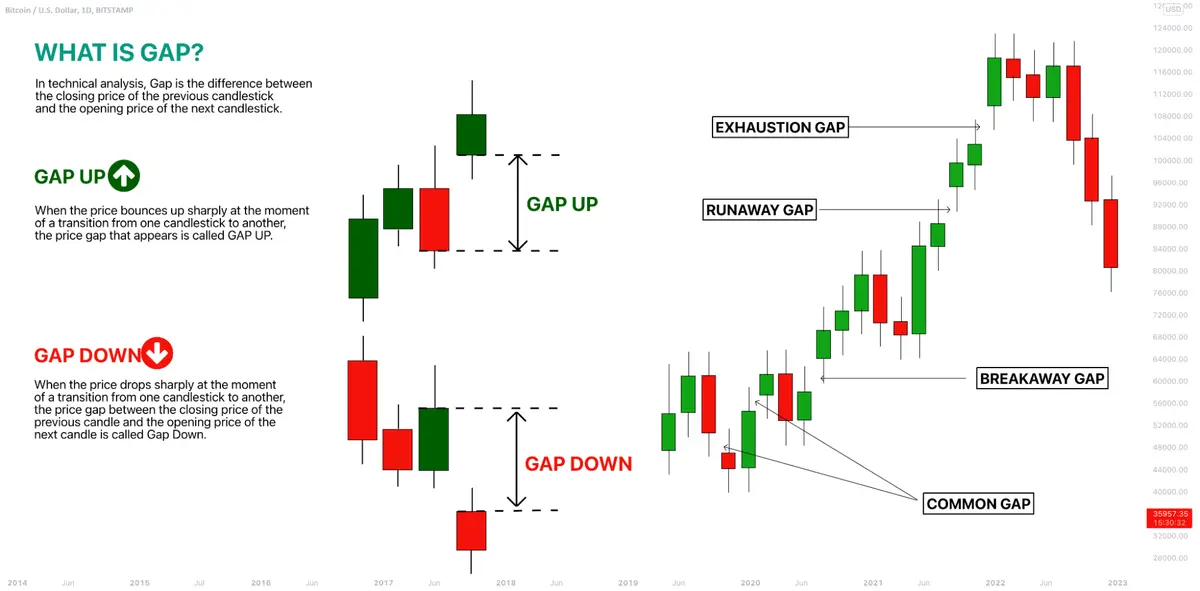
People often mix these up, so let’s separate them clearly.
Price impact is the change in price caused by your trade itself. It’s the mathematically guaranteed component. In the example above, moving from 100 ETH to 90 ETH shifted the pool’s price permanently. That shift is price impact — and it’s baked into the AMM math.
Slippage is the broader term, including price impact plus anything else that changes the price between when you clicked confirm and when your transaction actually executed. On a blockchain, that gap can be several seconds. During those seconds, someone else’s trade might land first, moving the pool before you.
On centralized exchanges, price impact and slippage roughly merge into one thing. On DEXs, they’re separate — and understanding both is critical.
Slippage Tolerance: The Setting That Saves You
Every DEX interface lets you set a slippage tolerance. This is a promise from the smart contract: if the actual price ends up worse than your expected price by more than X percent, the transaction reverts and nothing happens (you still pay gas, but you don’t get a bad trade).
Set it too low, and your trade will keep failing during volatile moments. Set it too high, and you’re inviting a specific type of attack.
That attack is called a sandwich. A bot watches the pending transactions in the mempool. It sees your swap heading to the pool with a 5 percent slippage tolerance. Before your transaction executes, it front-runs you with its own buy, pushing the price up. Your trade fills at that inflated price — near the edge of your tolerance. Then the bot immediately sells, capturing the difference. You paid too much, and the bot pocketed the spread.
The higher your tolerance, the more room the bot has to squeeze you. For stable pairs like USDC/USDT, 0.1 percent is plenty. For blue-chip pairs like ETH/USDC, 0.5 percent is usually safe. For newly launched or thin memecoins, you might need 5 or 10 percent just to get filled — but you’re accepting sandwich risk in exchange.
Why Slippage Feels Worse in Crypto
Traditional markets have deep liquidity and centralized clearing, so slippage is small for retail-sized trades. Crypto is different for three reasons.
First, liquidity is fragmented across hundreds of exchanges and thousands of pools. A token might have $10 million of daily volume total, but split across a dozen venues. No single pool has real depth.
Second, blockchains are slow compared to markets. Ethereum blocks come every 12 seconds. That gap between “I confirm” and “it executes” is where mempool watchers live.
Third, most DEXs use AMMs, which have mathematically unavoidable slippage. Order books can offer zero price impact for small trades. AMMs cannot — every trade, no matter how small, shifts the price.
How to Minimize Slippage
You can’t eliminate slippage, but you can dramatically reduce it.
Split large trades into smaller pieces spread over time, so no single trade moves the pool too much. Use aggregators like 1inch, CoWSwap, or Matcha — they route your trade across multiple pools and exchanges to find the cheapest overall path. Trade on deeper pools even if the fee is slightly higher; a 0.3 percent fee on a deep pool beats a 0.05 percent fee on a shallow one when your trade is meaningful. Set tight but realistic slippage tolerances, and use tools like Flashbots or private mempools to hide your transaction from sandwich bots.
The Bigger Picture
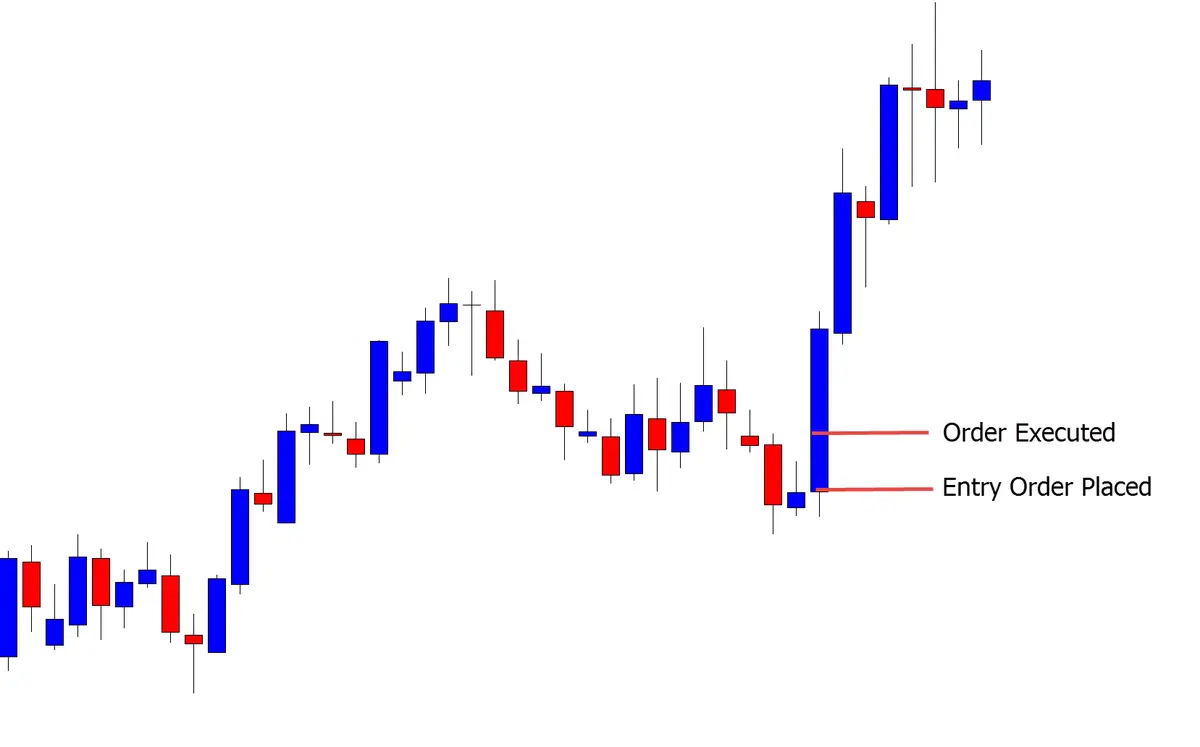
Slippage is not a bug. It’s the market pricing your urgency. You wanted the trade to happen right now, on-chain, with certainty. The market’s answer is: fine, but you’ll pay for that convenience.
Understanding slippage transforms you from someone who feels cheated by every trade into someone who reads the environment and picks the right tool for each situation. Small stablecoin swap? Any DEX will do. Six-figure ETH sale? You want an aggregator, private routing, and maybe a limit order. Fresh memecoin launch? Accept the pain, set your tolerance realistically, and remember that the slippage is often the price of entry.
Next time you swap and the numbers don’t quite match, don’t blame the exchange. Blame — or thank — the math of markets meeting the physics of blockchains. Now you know what’s actually happening under the hood.

Comments
No comments yet. Be the first to share your thoughts!
Authentication Required
You must be logged in to post a comment.