


Bar Pipa
We pay for a post of 10$

U.S. Dollar / Indian Rupee

USDINR FOREX

95.7800
-0.13%

Key Statistics

Open
95.9000
Day Range
95.6325 - 95.9100
52W Range
86.6490 - 96.9600
Price AVG 50
95.3300
Prev Close
95.9000

About U.S. Dollar / Indian Rupee

U.S. Dollar / Indian Rupee is a foreign exchange currency pair. It represents the relative value between the two currencies and is traded on the global decentralized forex market.

Asset Type: Currency Pair
Base Currency: INR

Discussion

Authentication Required

You must be logged in to post a comment.

John Madnes
John Madnes

Asia Holds Its Breath: Currency Markets Freeze Ahead of a Decisive Fed Week
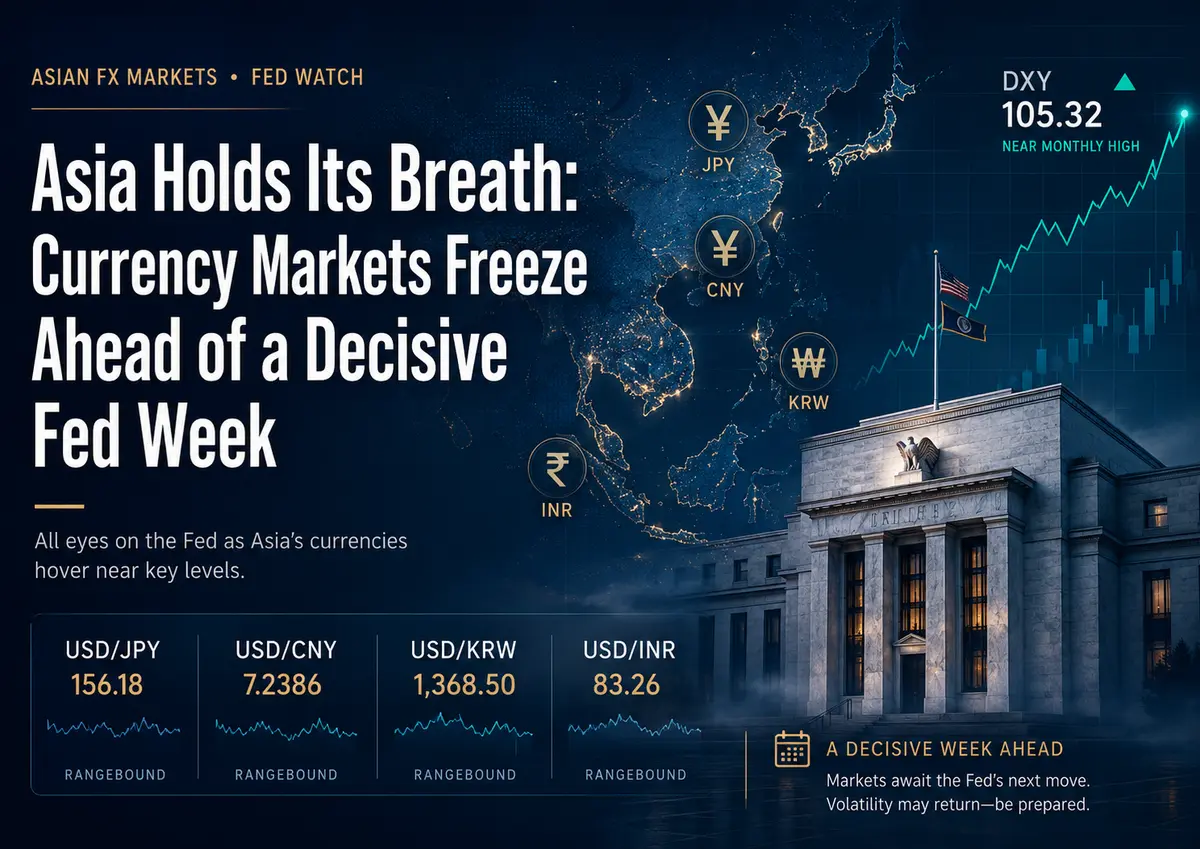
Asia Holds Its Breath: Currency Markets Freeze Ahead of a Decisive Fed Week

Tuesday Morning: The Calm Before the Storm

Tuesday 28.07.2026 began across Asian currency markets with the kind of unusual silence that typically precedes major events. Most regional currencies traded within narrow ranges, as though holding their breath ahead of the US Federal Reserve meeting scheduled for Wednesday. Meanwhile, the US dollar remained close to a one-month high, creating tension that could be felt in every movement of the exchange rates.

The US Dollar Index fell by 0.1% to 101.46. The decline was barely noticeable, but it highlighted the market’s indecision. Investors were reluctant to open new positions, preferring to wait for signals from the Fed. Even the decline in oil prices, which normally reduces inflation concerns and may put pressure on the dollar, failed to move the market out of its standstill. Traders remained frozen in anticipation.

Markets currently estimate the probability of a 25-basis-point Fed rate increase on Wednesday at approximately 38%. This is not the dominant scenario, but the probability is high enough to make investors cautious. Should the Fed raise rates, the decision could surprise many market participants and trigger sharp movements across global markets. Should rates remain unchanged, attention will shift to comments from Chair Kevin Warsh, who may provide signals regarding the future direction of monetary policy.

Additional uncertainty comes from the upcoming US GDP and core PCE inflation data, which are also scheduled for release this week. These indicators may provide further guidance on monetary policy and influence investor expectations.

The Yen Near Multi-Year Lows: Awaiting the Bank of Japan

The Japanese yen remains the main victim of the current market environment. USDJPY ... was virtually unchanged at 163.72 yen, keeping the Japanese currency close to multi-year lows. Traders are eagerly awaiting the Bank of Japan’s decision on Friday, hoping to receive new guidance regarding...

Continue reading...
joy
joy

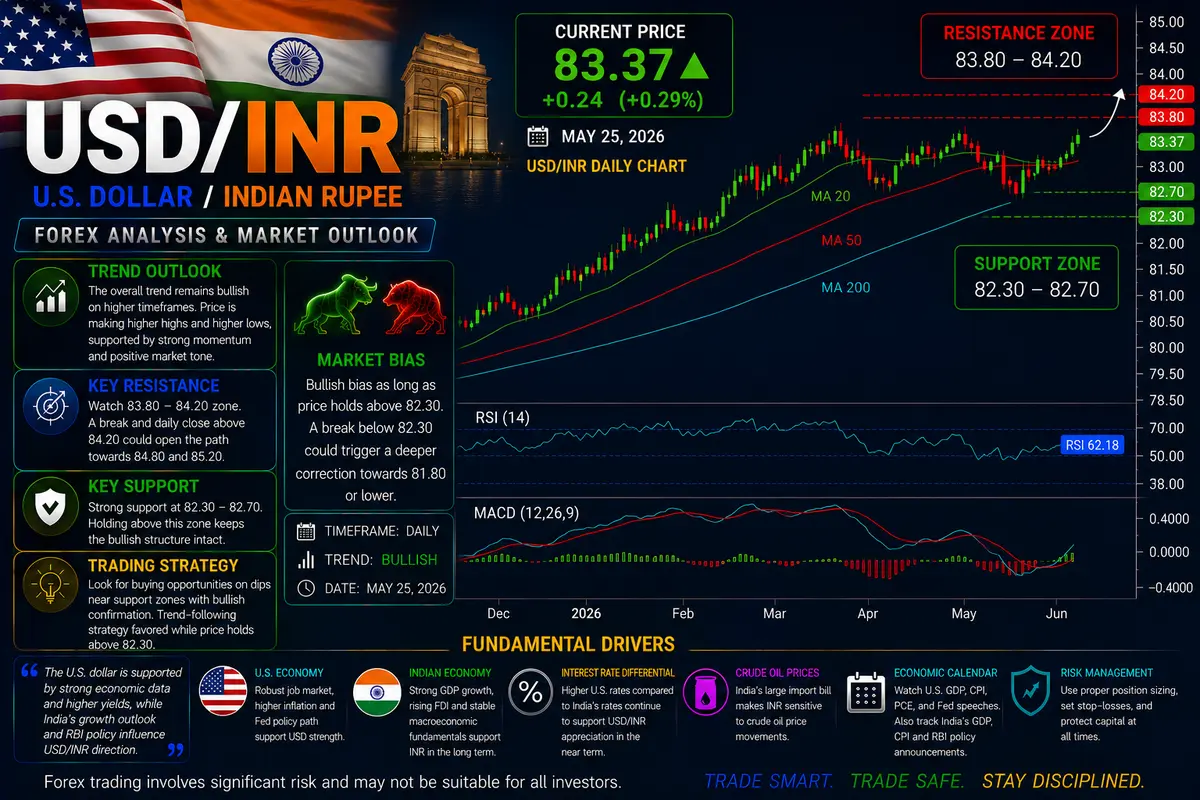
USD/INR – RBI Reserve Accumulation, Crude Import Burdens, and Offshore NDF Market Dynamics

USD/INR – RBI Reserve Accumulation, Crude Import Burdens, and Offshore NDF Market Dynamics

If you take a look at the USD/INR chart over almost any multi-month period, you’ll notice something strange compared to other emerging market currencies. Where pairs like USDZAR ... or USDMXN ... move in wide, jagged swings, USDINR ... trades in flat, horizontal steps separated by sudden, controlled shifts.

That isn't organic price discovery. It's the footprint of the Reserve Bank of India (RBI).

The Rupee operates under a managed float where the central bank acts as the dominant buyer and seller on the order book. To trade this pair profitably, you can't rely on standard technical breakouts. You need to understand how the RBI manages liquidity, how crude oil imports drive commercial dollar demand, and how offshore trading desks interact with the onshore market.

1. How the RBI Controls the Order Book

The Reserve Bank of India doesn't try to lock the currency to a fixed rate. Instead, its primary goal is to suppress intraday and weekly volatility.

This intervention style alters standard market behavior in two distinct ways:

  • Inflow Absorption: When international capital flows into Indian equities or corporate debt, the RBI steps in as a dollar buyer. By absorbing foreign currency, the central bank builds its reserve balance while preventing the Rupee from strengthening too quickly.

  • Outflow Smoothing: During global panics or oil price shocks, foreign capital leaves domestic markets. The RBI responds by selling dollars directly into the interbank market, supplying liquidity to meet import demands and dampening potential upside spikes.

Because the central bank operates as a counterparty on both sides of the market, momentum breakouts frequently fail. When price approaches obvious support or resistance zones, central bank intervention usually absorbs the volume, pushing price back into range-bound consolidation.

2. The Crude Oil Transmission Mechanism

India's current account balance has a permanent structural weakness: a heavy reliance on...

Continue reading...
Navigation menu
instaforex banner
