Pound on the Defensive: How Iranian Bombs and Political Calm Put Sterling Back Under the Dollar’s Shadow
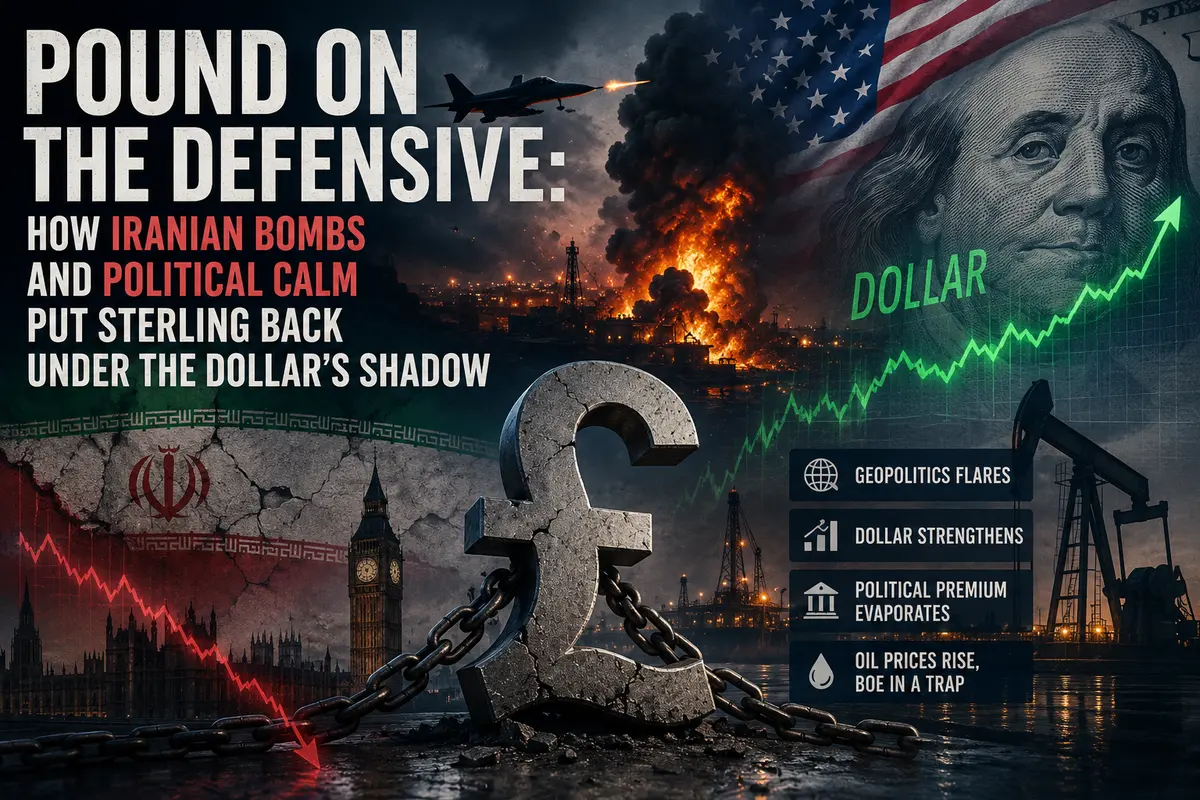
Thursday brought a dose of reality to the currency market. The pound sterling, which had recently been trying to find footing for a recovery, came under pressure once again. GBP/USD slipped 0.16% to 1.3405. The move itself was modest, but the direction speaks volumes. Sterling is losing what little support it still had and is reverting to a state of near-total dependence on the dollar narrative. Several factors converged at once: geopolitical tensions flared up again, the dollar reclaimed its safe-haven crown, and Britain’s domestic political story—which had provided at least some independent driver for the pound—has largely run out of steam.
Bandar Abbas and the Retaliation: The Escalation Markets Feared
The night between Wednesday and Thursday shattered the fragile balance markets had been trying to build around negotiations with Iran. U.S. forces struck a military facility near Bandar Abbas, the strategically important port city in southern Iran located at the entrance to the Strait of Hormuz. This was not just another airstrike. It targeted the heart of Iran’s logistical infrastructure and a location that oversees access to one of the world’s most critical oil arteries.
Iran’s response was swift. The Islamic Revolutionary Guard Corps launched an attack on a U.S. airbase, describing it as a “serious warning.” This was no longer a defensive maneuver or a limited operation that could be framed as deterrence. It marked a direct escalation, with both sides exchanging blows and each new strike raising the stakes. The ceasefire that diplomats had been discussing only recently now appears little more than a fiction.
Donald Trump added to the picture by ruling out sanctions relief or the unfreezing of Iranian assets. That erased the cautious optimism seen on Wednesday and triggered broad-based demand for the dollar. Francesco Pesole of ING captured the mood succinctly: the market...