
The Shadow of AI: Why Google Is Increasing Spending While the Market Punishes Its Stock
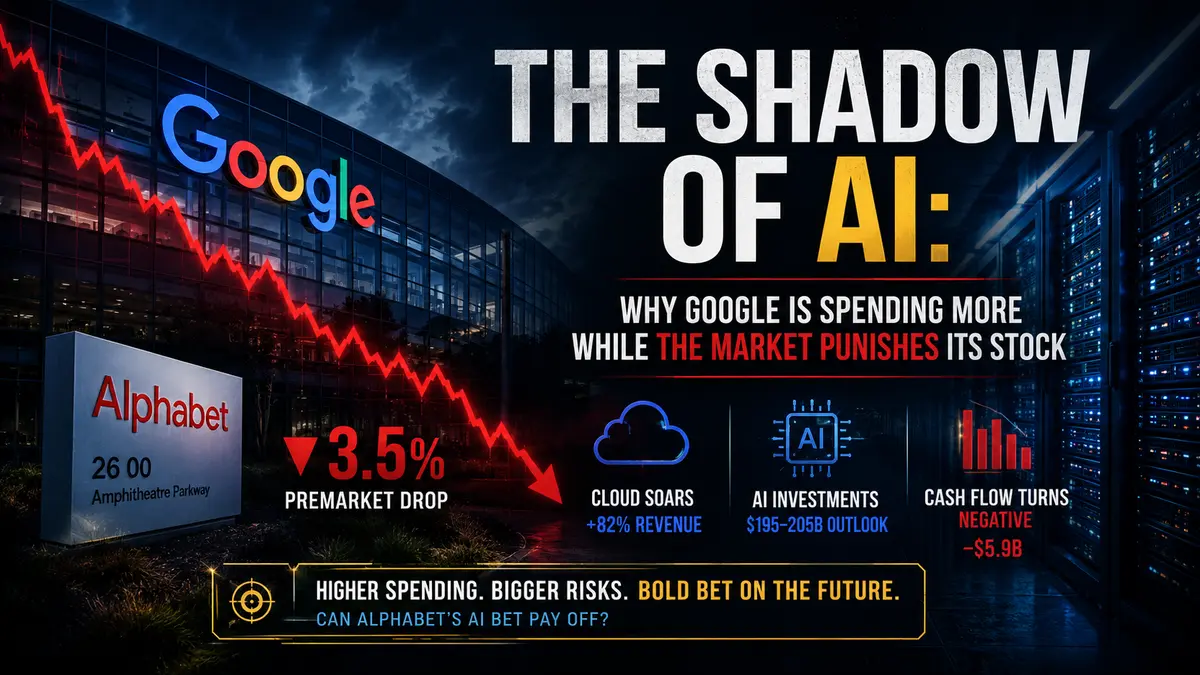
The Day When an Excellent Earnings Report Failed to Save the Stock
Thursday morning began with a cold shower for GOOGL ... investors. Shares of Google’s parent company fell 3.5% in premarket trading, and the decline was not simply a reaction to bad news. It was the price the company paid after the market found something in its financial results that raised doubts about its future, despite the otherwise brilliant figures.
The earnings report for the second quarter of 2026, released the previous day, was genuinely impressive. Revenue increased by 24% to nearly $120 billion. Earnings per share reached $9.11, significantly exceeding Wall Street forecasts. Google Cloud, the cloud division that had been unprofitable only a few years earlier, became the true star of the report: its revenue soared by 82% to $24.8 billion, while its operating margin exceeded 35%.
At first glance, this appeared to be the perfect earnings report—one that should have sent the stock soaring. However, the market decided otherwise.
What went wrong? The answer lies in capital expenditure. Alphabet’s capital spending doubled year over year, reaching nearly $45 billion in a single quarter. At the same time, the company raised its full-year 2026 capital expenditure forecast to between $195 billion and $205 billion.
These are astronomical amounts that Alphabet is spending on building data centers, purchasing equipment, and developing artificial intelligence infrastructure. The company’s free cash flow turned negative, falling to minus $5.9 billion. This means that despite rising revenue, Alphabet is currently spending more cash than it generates.
For investors accustomed to viewing Alphabet as a powerful cash-generating machine, this came as a shock. They began asking whether Google was spending too much on AI—and, more importantly, whether these investments would ever pay off.
When Chief Financial Officer Anat Ashkenazi said that the company was “still...